
Tabelog 100 #23
Our verdict
Pocket sits in Osaka’s Momodani-Ikuno orbit, where yoshoku has less to do with nostalgia as decoration than with practical, repeatable craft. Its Tabelog 100 Yoshoku WEST 2025 selection, 2020 selection history, 49-seat format, and steak-curry-yoshoku range place it in a serious local category rather than a casual Western-style detour.

Pearl is the En Primeur Club membership app, where members save venues, book tables and use the concierge.
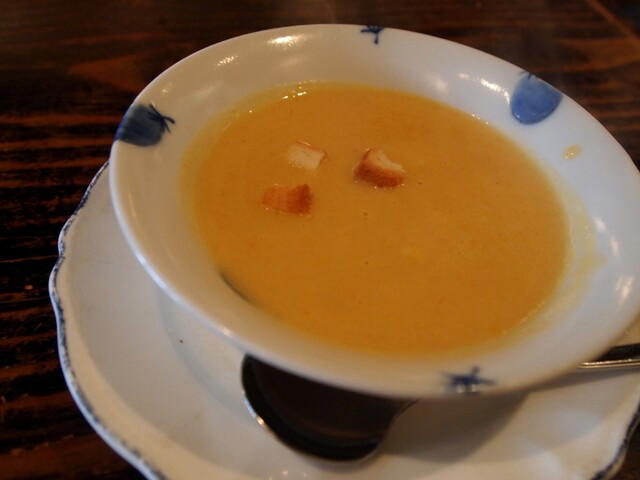
Osaka’s restaurant culture is not built only around grand entrances. Its rhythm often feels practical and local: counter meals, table rooms, regular suppers, planned gatherings, and dining rooms where everyday appetite stays deliberately close. In that setting, Pocket belongs to Osaka’s yoshoku tradition, a category that rewards patience over spectacle. Its durable appeal comes through Western-derived forms adapted to Japanese habits of portioning, service, and repetition.
That matters because environmental consciousness in everyday restaurants rarely arrives as manifesto. In yoshoku, it appears through format: sauces that reward batch discipline, curry that absorbs time and technique, and menus suited to regular use rather than once-a-year excess. Pocket’s listed categories, yoshoku, steak, and curry, sit inside that practical Osaka grammar. The point is not a declared sustainability program; it is a cooking culture built around utility, continuity, and low theatre.
Yoshoku in Osaka works when restraint beats nostalgia
Yoshoku can be misread by visitors as comfort food in Western clothing. In Osaka, the better examples are more exacting. A kitchen must manage browning, sauce consistency, curry depth, rice timing, and grilled proteins without hiding behind ceremony. Pocket’s inclusion in Tabelog 100 Yoshoku WEST 2025 places it among restaurants judged within that tradition rather than against French, sushi, or kappo benchmarks. Its Tabelog score of 3.66 is another useful signal in a local-review ecosystem where incremental differences matter, especially in categories with loyal repeat diners.
The competitive frame helps. Osaka’s casual dining strength is broad: specialists such as Kamigata Rainbow, neighborhood okonomiyaki institutions such as Okonomiyaki Omoni Honten, and Korean-leaning rooms such as Sora Tsuruhashi souhonten and Samgyetang Niru all run on repetition, appetite, and local familiarity. Pocket occupies a different lane. Yoshoku asks a kitchen to make Western-influenced dishes feel native to a Japanese dining cadence. Its steak and curry categories reinforce that role, treating the genre more seriously than “Western-style” suggests in English.
For readers mapping Osaka by category rather than neighborhood alone, Pocket fits beside the city’s small-format specialists rather than destination-counter dining. It is closer in spirit to other disciplined Osaka dining rooms than to a luxury tasting-menu template. The comparison is about scale, repeatability, and restaurants that do one narrow thing with discipline, not cuisine.
A local room gives the cooking a social register
The room format tells its own story without needing luxury signals. Pocket should be understood as a usable Osaka restaurant rather than a theatrical destination built only for visitors. That matters in a city where friends, colleagues, solo diners, and couples often need a meal that can feel direct without hotel-restaurant formality. The appeal is in the category and its regularity: yoshoku that can sit comfortably inside everyday Osaka dining habits.
That structure also shapes the cooking. Yoshoku is not improved by excessive ceremony. It benefits from tempo: a lunch service that can function, a dinner room that can hold different appetites, and a menu clear enough for regular use without becoming vague. In sustainability terms, that is not automatically a formal environmental claim, but in neighborhood dining it can soften the all-or-nothing split between special-occasion excess and abandoning a restaurant meal altogether.
Readers should treat Pocket less like a neutral business-dining room and more like a local yoshoku restaurant with inherited social codes. Travelers seeking a completely controlled luxury environment may want a different kind of room. Those interested in how Osaka eats outside the most obvious visitor circuit will find the category more revealing.
Where it fits in an Osaka itinerary
Osaka’s dining identity is not only takoyaki queues and late-night neon. Stronger food days often join several registers: a bakery or cafe stop, a yoshoku lunch, dinner elsewhere in the city, then a bar or another informal stop. Pocket works as the yoshoku anchor in that itinerary, especially for readers who care about local categories that do not translate neatly into international luxury shorthand.
The broader Osaka map helps. Use Our full Osaka restaurants guide for restaurant planning, then cross-check other Osaka travel resources if the meal is part of a wider trip. For Japanese category comparisons beyond this restaurant, it is better to think generically: curry specialists, casual grills, everyday counters, and other dining rooms that show how local formats can carry serious technique without luxury theatre.
The editorial case for Pocket is concise: yoshoku here is a serious Osaka category, not a sentimental side note. The Tabelog 100 Yoshoku WEST 2025 recognition gives it external validation, the Osaka setting makes it usable across several occasions, and the steak-curry-yoshoku spread gives the kitchen a clear lane. Readers looking for environmental claims should not project a formal sustainability program onto the restaurant; the more credible reading is cultural, a cuisine of continuity, portion discipline, and repeat dining rather than luxury excess.
Frequently asked questions
What price level is Pocket?
Pricing at Pocket is listed as Dinner: JPY 5,000 - JPY 5,999; Lunch: JPY 1,000 - JPY 1,999.
What time does Pocket open and close?
Specific opening hours are not provided here; check directly with Pocket before visiting.
What's the address for Pocket?
Osaka.
What do critics highlight about Pocket?
Critics point first to the Tabelog 100 Yoshoku WEST 2025 selection, which places Pocket among restaurants singled out for the category. Its listed categories are yoshoku, steak, and curry, and its Tabelog score is 3.66.
Can Pocket handle vegetarian requests?
Pocket’s listed categories are yoshoku, steak, and curry, so vegetarian diners should expect a narrow fit rather than a dedicated plant-based menu. The practical approach is to ask directly when booking.
Comparable Options
Comparable venues to anchor price and recognition.
| Venue | Cuisine | Price | Awards | Notes |
|---|---|---|---|---|
| PocketThis venue (the venue you are viewing) | Japanese Yoshoku (Western-style) restaurant with steak and curry | $30–50 | Tabelog 100 #23 | Not listed |
| Kamigata Rainbow | Creative Modern Ramen | $10–20 | Michelin Bib Gourmand · Tabelog 100 #35 | Ramen |
| Okonomiyaki Omoni Honten | Osaka okonomiyaki house-restaurant | $20–30 | Tabelog 100 #21 | JPY 2,000 - JPY 2,999 JPY 1,000 - JPY 1,999 View spending breakdown |
| Man masa | Yakiniku (Japanese BBQ) | $30–50 | Tabelog 100 #46 | JPY 6,000 - JPY 7,999 |
| Samgyetang Niru | Samgyetang-focused Korean restaurant | $20–30 | Tabelog 100 #87 | JPY 2,000 - JPY 2,999 JPY 2,000 - JPY 2,999 |
| Sora Tsuruhashi souhonten | Traditional Osaka yakiniku & horumon | $30–50 | Tabelog 100 #97 | JPY 4,000 - JPY 4,999 JPY 2,000 - JPY 2,999 |
Recognition history
Dated appearances from independent guides and award organizations, with the underlying list record or original source where available.
Tabelog 100 #23 · No. 23
Tabelog · Tabelog 100 - Yoshoku - WEST - 2025
Continue exploring
More in Osaka
Restaurants in Osaka
All restaurants in Osaka →



Bars in Osaka
All bars in Osaka →
Hotels in Osaka
All hotels in Osaka →


Wineries in Osaka
Browse all →
Details
- Cozy
- Classic
- Solo
- Casual Hangout
- Family
- Standalone
- A La Carte
Current opening hours
- Monday
- Closed
- Tuesday
- 11:30 AM–2 PM, 5:30–10 PM
- Wednesday
- 11:30 AM–2 PM, 5:30–10 PM
- Thursday
- 11:30 AM–2 PM, 5:30–10 PM
- Friday
- 11:30 AM–2 PM, 5:30–10 PM
- Saturday
- 11:30 AM–2 PM, 5:30–10 PM
- Sunday
- 11:30 AM–2 PM, 5:30–10 PM
Hours can change for holidays and private events. Hours as of .