
Pluto occupies a deliberate address at 44 Rue Sainte-Croix de la Bretonnerie, the social spine of Le Marais in Paris's 4th arrondissement. The street has been the neighbourhood's most active evening corridor for decades, cycling through reinvention from community bar culture to a more technically competitive independent scene. A visit here engages with that history directly.
Pearl is the En Primeur Club membership app — saves, bookings, and concierge access live there. Same editors, same standards.
- Address
- 44 Rue Sainte-Croix de la Bretonnerie, 75004 Paris, France
- Website
- instagram.com
- Directions
- Get directions
 Saves & bookings on Pearl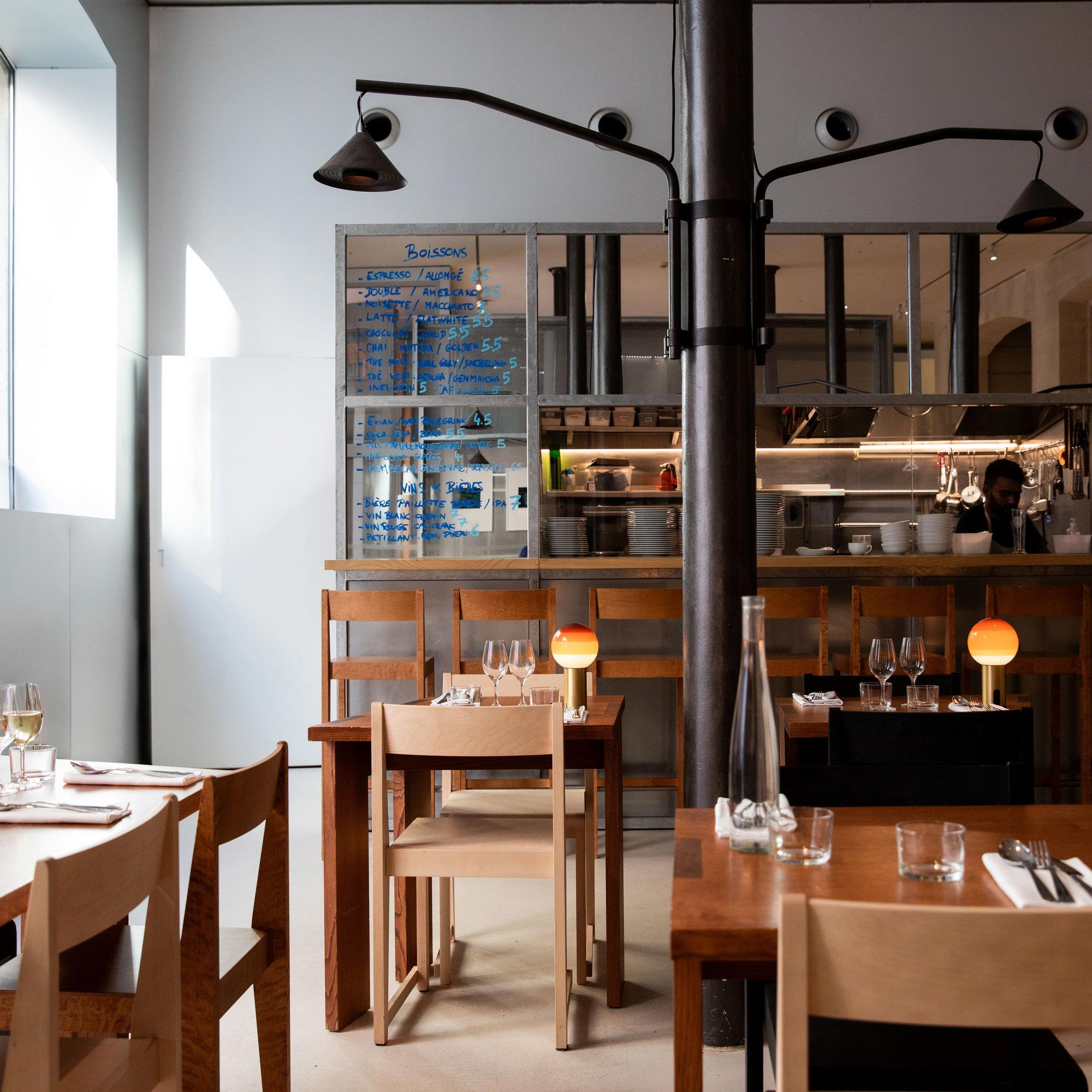
Le Marais After Dark: What a Bar Address on Rue Sainte-Croix de la Bretonnerie Signals
Rue Sainte-Croix de la Bretonnerie sits at the social centre of Le Marais, the stretch of the 4th arrondissement that has cycled through reinvention more consistently than almost any other strip in Paris. What began as a working neighbourhood of artisan trades became, through the 1980s and 1990s, the city's most recognisable LGBTQ+ quarter, and has since evolved into among the more densely programmed bar and nightlife corridors in the capital. A venue at number 44 on that street enters a conversation with its address before it opens a door. Pluto operates within that context, on a block where the physical environment does a great deal of work: the street is narrow, the buildings close, and the foot traffic is late and intentional.
The Evolution of Le Marais Bar Culture
To understand where Pluto sits, it helps to trace the broader arc of Le Marais drinking. The neighbourhood's early bar scene was defined by small, densely packed rooms where community identity was the primary draw and atmosphere was generated by volume and proximity rather than programme or product. That model dominated well into the 2000s. The shift came gradually, as rising rents and a broader Parisian interest in cocktail culture pushed operators to differentiate on offer rather than location alone. By the 2010s, the quarter had begun producing venues that competed on drink quality and format while retaining the social intensity that had always characterised the area.
Paris as a whole moved in the same direction during this period. The city's cocktail culture, long overshadowed by its wine identity, developed a more visible technical vocabulary: house-made syrups, precise ice programmes, spirits sourced by region and producer. Venues in Le Marais were among the faster adopters, partly because their clientele skewed younger and more internationally aware, and partly because the competition density made product differentiation a commercial necessity. That trajectory is the backdrop against which any current Marais bar should be read.
For a broader map of where Pluto's neighbourhood fits within Paris's wider dining and drinking geography, the EP Club Paris guide covers the full range of the city's current addresses.
The Physical Environment at 44 Rue Sainte-Croix de la Bretonnerie
The approach to a bar on this street is part of the experience before you arrive. Le Marais in the evening hours operates on compressed time: galleries close, restaurants fill, and the narrow pavements shift from daytime tourist traffic to something more purposeful. By 9pm on a weekend, the Rue Sainte-Croix de la Bretonnerie is operating at a different register entirely. A venue at street level here receives foot traffic that is already primed, already sociable, already at a remove from the formality that governs dining rooms a few arrondissements west.
This matters for how the room functions. Unlike the grands salons of the 8th, where the physical scale reinforces a certain solemnity, a Marais bar operates in tighter geometry. The expectation at an address like this is for proximity, noise at a useful level, and a programme that rewards return visits rather than one-off spectacle.
Positioning Within the Paris Bar Tier
Paris's bar scene currently splits across several identifiable tiers. At one end sit the palace hotel bars, where the price of entry buys a room that carries its own history and the ceremony of white-jacketed service. Places like Le Cinq at the Four Seasons George V represent that pole, where the bar is inseparable from the hotel's formal identity. At the other end are the neighbourhood pivots, places without institutional weight that compete on programme and personality.
Le Marais venues occupy a distinct middle position. They carry neighbourhood prestige without the overhead of palace-level expectations. A bar on Rue Sainte-Croix de la Bretonnerie is not trying to be the bar at the Crillon; it is operating on a different social contract, one where the room's energy is generated by the crowd and the offer, not by the building's age. The comparison set for Pluto is the cohort of technically serious independent bars that have emerged across the Right Bank over the past decade, not the fine-dining adjacencies of the 1st and 8th.
For reference on where serious French cooking sits at the summit of the Paris market, addresses like Arpège, L'Ambroisie, Alléno Paris au Pavillon Ledoyen, and Kei define one end of the hospitality spectrum in the city. Pluto operates at a different point on that spectrum, in a neighbourhood where the evening's architecture is social rather than ceremonial.
French culinary ambition beyond Paris has its own constellation of addresses worth tracking, from Mirazur in Menton and Flocons de Sel in Megève to Troisgros in Ouches, Bras in Laguiole, Auberge de l'Ill in Illhaeusern, Les Prés d'Eugénie in Eugénie-les-Bains, La Table du Castellet, Georges Blanc in Vonnas, Auberge du Vieux Puits in Fontjoncouse, and the foundational weight of Paul Bocuse in Collonges-au-Mont-d'Or. Internationally, the French dining influence travels as far as Le Bernardin in New York. The point is simply that Paris and its surrounding hospitality geography contain a wide range of registers, and Le Marais bars occupy a specific and deliberate position within that range.
Venues that have taken a more format-driven approach to experiential dining, such as Lazy Bear in San Francisco, illustrate that the move toward programming and atmosphere as product differentiators is not distinctive to Paris. Le Marais bars have arrived at a similar conclusion through a different cultural route.
Know Before You Go
- Address: 44 Rue Sainte-Croix de la Bretonnerie, 75004 Paris, France
- Neighbourhood: Le Marais, 4th arrondissement
- Getting there: Hôtel de Ville (lines 1 and 11) is the closest Metro stop, approximately a five-minute walk along Rue de Rivoli and into the heart of Le Marais.
- Timing: The street operates on a late schedule; arriving before 9pm on a weekend will give you the room at its quietest. Peak hours run from 10pm onward.
- Booking and hours: Reservations are recommended, and the restaurant is open Wednesday to Saturday from 12:30 to 11 PM and Sunday from 12:30 to 5 PM.
- Pricing: Expect about $50 per person.
Price Lens
Comparable venues nearby, for context on price, style, and recognition.
| Venue | Cuisine | Price | Notes |
|---|---|---|---|
| PlutoThis venue — the venue you are viewing | Le Marais, Creative French Fusion | $$$ | Not listed |
| narro | Not listed | $$$ | Quartier Latin / Contrescarpe, French-Japanese Bistronomic |
| Pépite | Folie-Méricourt, Modern French Bistro | $$$ | Not listed |
| Le Diamant Bleu - Dîner Croisière | Not listed | $$$ | Austerlitz, French Gastronomic Dinner Cruise |
| BANG | Not listed | $$$ | Place-Vendôme, Contemporary French Bistro |
| La Traversée | Not listed | $$$ | 18th Arrondissement, Modern French Bistro |
Recognition history
Dated appearances from independent guides and award organizations, with the underlying list record or original source where available.
Michelin Plate
Michelin
Continue exploring
More in Paris
Restaurants in Paris
Browse all →
Bars in Paris
Browse all →
Hotels in Paris
Browse all →




At a Glance
- Modern
- Trendy
- Intimate
- Date Night
- Casual Hangout
- Group Dining
- Open Kitchen
- Design Destination
Current opening hours
- Monday
- Closed
- Tuesday
- Closed
- Wednesday
- 12:30–11 PM
- Thursday
- 12:30–11 PM
- Friday
- 12:30–11 PM
- Saturday
- 12:30–11 PM
- Sunday
- 12:30–5 PM
Hours can change for holidays and private events. Last verified .