Pizzicotto
On Kensington High Street, Pizzicotto occupies a corner of West London's Italian dining scene where neighbourhood familiarity and careful kitchen craft tend to matter more than spectacle. The address places it among a residential clientele that rewards consistency over novelty, positioning it as a reliable reference point in a part of the city that rarely generates headlines but sustains serious regulars.
- Address
- 267 Kensington High Street, London, W8 6NA, United Kingdom
- Phone
- 020 7602 6262
- Website
- pizzicotto.co.uk
- Directions
- Get directions
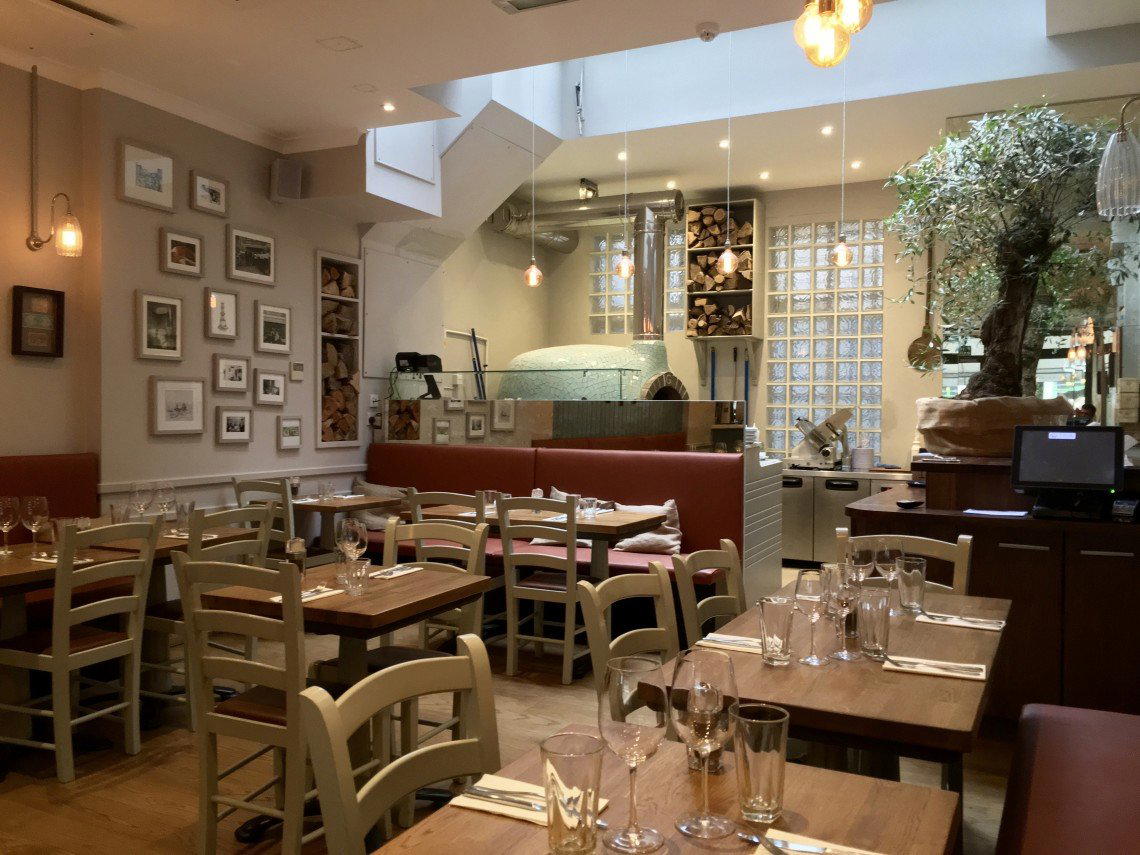
Kensington's Italian Register
West London's Italian restaurants have always operated on different terms from their Central London counterparts. Where Mayfair Italian rooms chase theatre and price-point prestige, the stretch of Kensington High Street around W8 tends to reward something quieter: a kitchen that holds a consistent standard across a full week's service, a floor team that recognises returning faces, and a wine list that does not require a sommelier appointment to decode. Pizzicotto is a restaurant at 267 Kensington High Street, London, W8 6NA. It serves Neapolitan Pizza & Emilia Romagna Osteria cuisine and is priced at about $60 per person. It sits in that register. Its address alone signals something about intent: this is not a destination built for tourists navigating a bucket-list itinerary, but a room that earns its place through the rhythms of a neighbourhood that eats out regularly and notices when things slip.
Italian dining in London has fragmented considerably over the past decade. At one end, you have the Mayfair and Marylebone rooms commanding prices that track against starred Modern European tables, venues operating in the same tier as CORE by Clare Smyth or The Ledbury in terms of occasion and expenditure. At the other, a wave of casual pizza and pasta concepts that price against delivery platforms. The middle tier, neighbourhood Italian restaurants with genuine kitchen ambition and a loyal local following, is the category under most pressure, and also the one that, when it works, produces the satisfying kind of restaurant experience London offers.
The Collaboration at the Counter
The editorial angle worth examining at any neighbourhood Italian of Pizzicotto's type is not the individual who owns the kitchen, but how the room functions as a team. In Italian restaurant culture, as distinct from the tasting-menu model dominant at places like Sketch's Lecture Room and Library or Restaurant Gordon Ramsay, the floor and the kitchen carry roughly equal weight in what the guest actually experiences. A pasta that arrives two minutes past its window, or a wine recommendation that undersells the kitchen's register, costs a neighbourhood room repeat business in a way it rarely costs a destination room where the diner has already bought into the experience before they arrive.
This dynamic matters particularly in a district like Kensington, where the clientele is internationally mobile but residentially rooted. Regulars at this price point have often eaten at Dinner by Heston Blumenthal a mile away at the Mandarin Oriental, or travelled to Le Manoir aux Quat'Saisons in Great Milton. They carry calibrated expectations. A neighbourhood Italian that holds their loyalty does so because the service-kitchen alignment is sufficiently tight that the experience feels considered without being formal. The sommelier, where present, tends to function less as a guided-tasting authority and more as a shortcut to the right bottle at the right margin, a different skill set entirely, and one that neighbourhood rooms in this part of London have historically done well.
The Kensington High Street Context
Kensington High Street as a dining address has undergone several cycles. The retail anchor of the area, the former Barkers department store, the High Street Kensington tube station at its eastern end, generates a daytime footfall that does not automatically translate into evening dining. The restaurants that survive on this stretch over multiple years tend to be those that have built a genuinely local customer base rather than depending on transient trade. That requires consistency of a kind that is harder to maintain than it looks: menu pricing that makes sense across a full week rather than just Friday and Saturday, a wine list refreshed with enough frequency to give regulars a reason to ask what's new, and kitchen output that does not visibly decline at Tuesday lunch.
Kensington sits between the higher-density dining districts of Notting Hill to the north and Chelsea to the south, and the room's positioning on the High Street rather than on a residential side street tells you something about the kind of passing trade it is set up to absorb alongside its regulars. Comparable Italian positioning can be found at Moor Hall-calibre regional rooms outside London, though the comparison there is more about the premium neighbourhood model than the cuisine category itself.
Italian Craft in a British Context
Italian cooking in London benefits from supply lines that have improved markedly over two decades. The availability of DOP-certified ingredients, quality Italian flour, and regional wines beyond the standard Chianti-Barolo axis is no longer restricted to specialist importers serving professional kitchens. That access has raised the floor across the category, but it has also made the differentiators subtler. What separates a neighbourhood Italian worth returning to from one that merely satisfies is increasingly about execution discipline: pasta cooked to the right texture on a busy Friday, a broth that has not been thinned for speed, a panna cotta that sets correctly rather than being rushed. These are not glamorous distinctions, but they are the ones that experienced diners in Kensington notice and act on.
The wine dimension at Italian restaurants in London has also shifted. Italy's regional wine output, from Campania through Friuli to the Alto Adige, now lands in London with far greater representation than it did a decade ago. A well-managed Italian room in W8 that goes beyond Amarone and Soave into Nerello Mascalese or Verdicchio is signalling something about kitchen confidence as much as wine knowledge. For those interested in the city's wine culture more broadly,
Placing Pizzicotto in the comparable set
Within its immediate geography, Pizzicotto's comparable set is the cluster of neighbourhood Italian rooms serving W8 and the surrounding postcodes rather than the destination rooms drawing from across the capital. The relevant comparison is not with starred addresses, not with The Fat Duck or L'Enclume, but with the other neighbourhood Italians on this stretch and in Notting Hill, where a room's longevity is reliable proxy for quality in the absence of formal recognition. Restaurants at this level in Kensington rarely accumulate awards, but the ones that last ten or more years in a high-rent, informed-residential location are making a credible case on the terms that matter to their actual audience.
Those interested in comparable precision cooking in different registers might look at Gidleigh Park in Devon or The Hand and Flowers in Marlow for how British regional rooms handle the same neighbourhood-loyalty model. International reference points in the precision-Italian or high-craft register include Le Bernardin and Atomix in New York City, both rooms where team alignment between kitchen and floor sets the standard for what coordinated service looks like at its ceiling. For a fuller picture of what London's experiences offer beyond restaurants,
Planning Your Visit
Pizzicotto is located at 267 Kensington High Street, London, W8 6NA, a short walk from High Street Kensington Underground station on the District and Circle lines. Address: 267 Kensington High Street, London, W8 6NA. Getting there: High Street Kensington station (District/Circle line) is the closest Underground stop, placing the restaurant within easy walking distance of the station exit. Reservations are recommended. Dress code is casual. Budget: about $60 per person.
Where the Accolades Land
Comparable venues nearby, for context on price, style, and recognition.
| Venue | Cuisine | Price | Notes |
|---|---|---|---|
| PizzicottoThis venue — the venue you are viewing | Neapolitan Pizza & Emilia Romagna Osteria | $$ | Not listed |
| Pizza Metro Pizza | Neapolitan Pizza al Metro | $$ | Battersea |
| The Lucky Pig | Italian Pizza & Cocktails | $$ | Fitzrovia |
| Osteria Otello | Authentic Italian Regional | $$ | River Thames |
| Ave Mario | Modern Italian Trattoria | $$ | Covent Garden |
| Spring Street Pizza | New York-Style Pizza | $$ | Bankside |
Continue exploring
More in London
Restaurants in London
Browse all →
Bars in London
Browse all →
Hotels in London
Browse all →


At a Glance
- Lively
- Cozy
- Classic
- Rustic
- Casual Hangout
- Group Dining
- Family
- Date Night
- Open Kitchen
- Standalone
- Extensive Wine List
- Craft Cocktails
- Farm To Table
- Organic
- Local Sourcing
Warm and welcoming with a buzzy, happy vibe; old soul soundtrack playing, tongue and groove panelling painted teal, charred wood-fired oven aromas, and a family-run atmosphere.