Our verdict
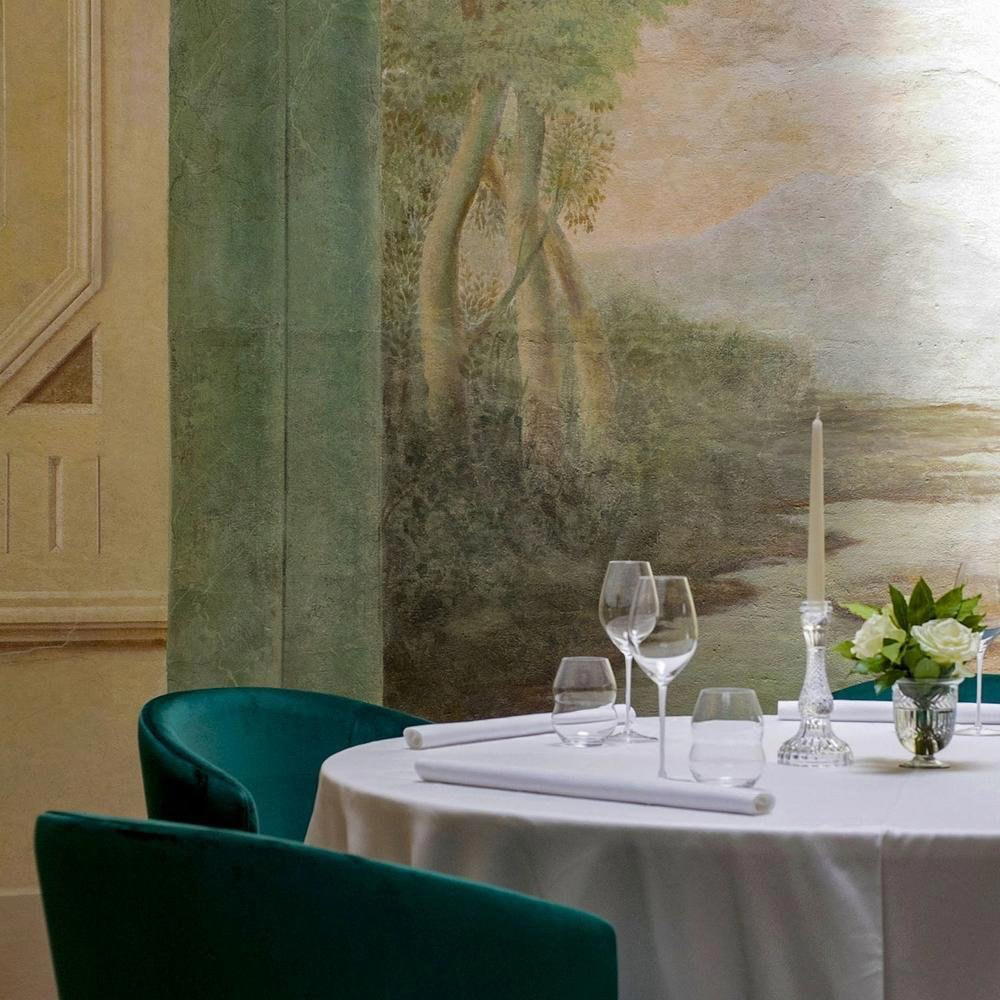
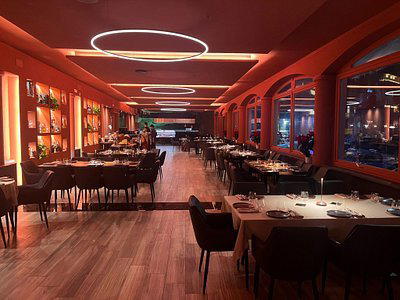
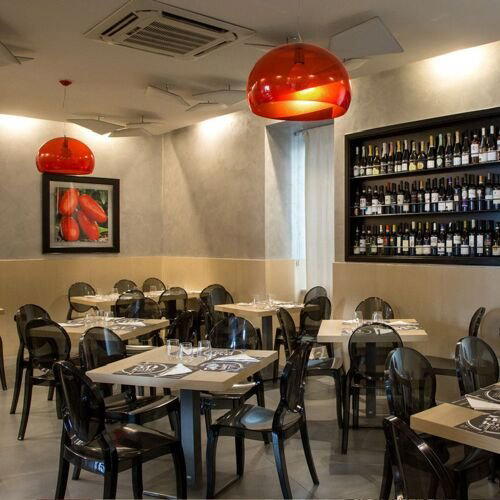
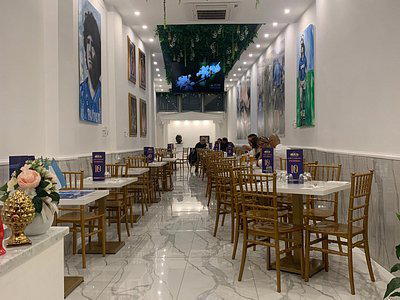
Pizzeria Vincenzo Capuano on Piazza Vittoria operates within a global artisan chain founded by a third-generation Neapolitan pizzaiolo whose contemporary approach centres on long-leavened, highly-hydrated dough and ingredient sourcing that takes the Neapolitan tradition seriously. In a city where pizza is both civic religion and daily bread, this address positions itself at the intersection of craft heritage and deliberate production method.

Pearl is the En Primeur Club membership app, where members save venues, book tables and use the concierge.
The menu
What to order
- Provola e Pepe Contemporanea
- Cornicione Ripieno
- Salsiccia e Friarielli
- Pizza Tetti Illuminati
Piazza Vittoria and the Weight of Neapolitan Pizza
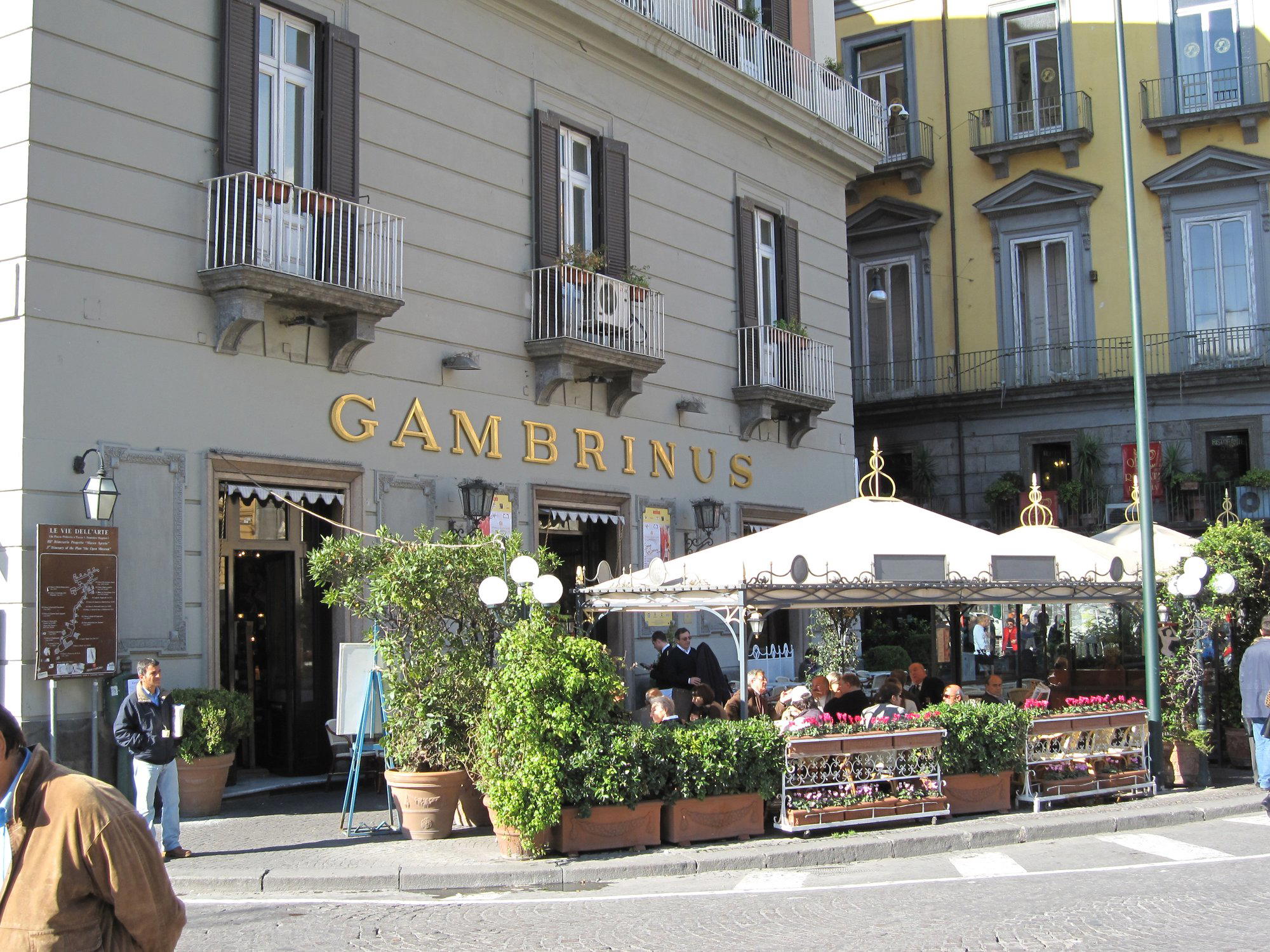
Step onto Piazza Vittoria on a warm evening and the square does what southern Italian urban spaces do well: it holds people. The gulf light flattens against the facades, scooters negotiate the perimeter, and the low hum of conversation carries from pavement tables. It is into this setting that Pizzeria Vincenzo Capuano places itself, at number 8 on the square, drawing on a production philosophy that is as much about process discipline as it is about place. Naples has always eaten pizza as infrastructure, not occasion. The question any serious pizzeria must answer here is not whether the dough is good, but what it is built on and how it was made.
Contemporary Pizza in the City That Invented It
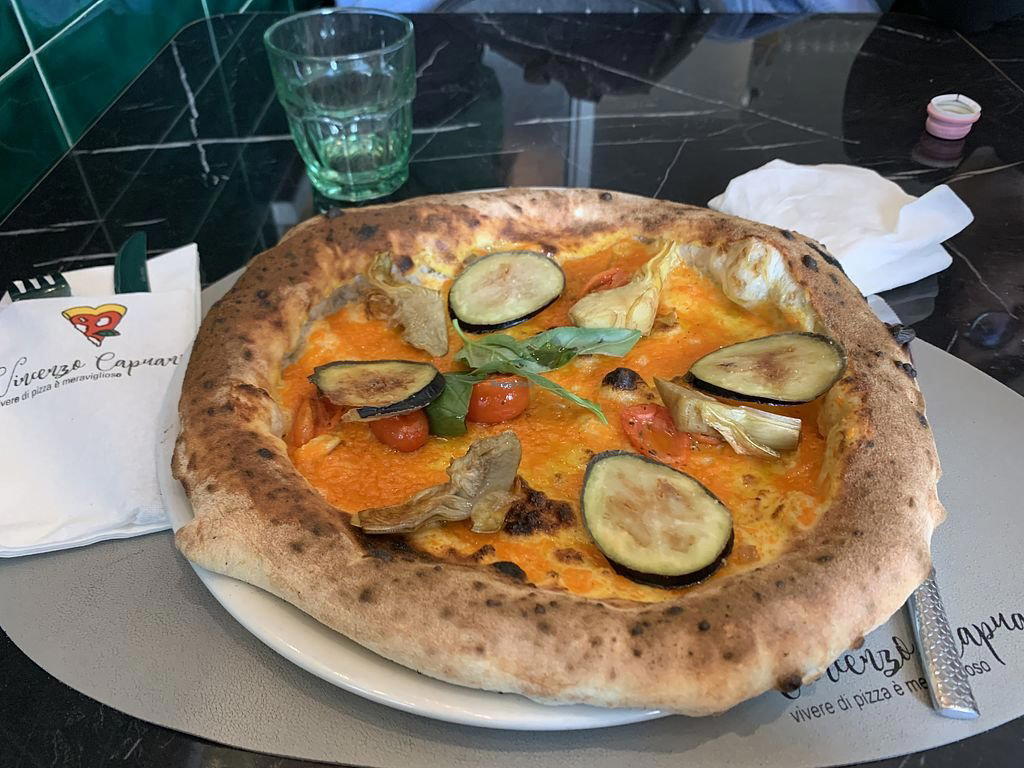
Naples' pizza scene has divided into at least two legible camps over the past decade. The traditionalist camp defends the Associazione Verace Pizza Napoletana specifications with near-doctrinal commitment: high-temperature wood-fired baking, a prescribed dough hydration range, San Marzano tomatoes, fior di latte or buffalo mozzarella from designated zones. The contemporary camp, smaller but increasingly visible, asks what happens when you extend fermentation times, push hydration higher, and treat the dough as a living product that rewards patience. Vincenzo Capuano belongs to the second group. His method involves long-leavened, highly-hydrated dough, a process that produces a lighter, more open crumb and a crust that carries char without density.
This is not a trivial distinction. Higher hydration demands tighter technical control at every stage, mixing, folding, proofing, shaping, and the critical seconds at the oven mouth. The margin for error compresses. Done well, the result is a pizza that sits more easily after eating, a consequence of extended fermentation breaking down gluten structures and reducing the dough's glycaemic load. Done poorly, it produces a wet, structurally collapsed base. The fact that this method has been extended to multiple locations worldwide, under the Vincenzo Capuano name, signals a degree of process codification that many artisan producers struggle to achieve.
The Sustainability Case Built Into the Method
There is a sustainability argument embedded in long-fermentation pizza that often goes unstated in how these places are described. Extended fermentation reduces the need for commercial yeast, a resource-intensive industrial product, in favour of slow, natural leavening cultures that can be maintained indefinitely with minimal inputs. High-quality, carefully sourced ingredients, when used in a dough that ferments slowly, also leave less waste: the flavour development that comes from time in the dough means less reliance on toppings volume to carry the product. Vincenzo Capuano's documented emphasis on ingredient quality feeds directly into this logic. When the base ingredient, the dough itself, is doing more work, you need fewer things on top of it, and each of those things can be sourced with more specificity.
Campania is one of Italy's most biodiverse agricultural regions, producing San Marzano tomatoes under DOP protection, buffalo mozzarella from Caserta and Salerno provinces under its own DOP, and a range of local vegetables that have supported the Neapolitan kitchen for centuries. A contemporary Neapolitan pizzeria that takes sourcing seriously is operating inside a supply chain that exists largely within a two-hundred-kilometre radius. That proximity reduces transport load and supports agricultural producers whose methods have, in many cases, been in continuous practice far longer than the concept of sustainability entered food discourse. Alongside the Vincenzo Capuano address on Piazza Vittoria, Naples offers other points of reference for this kind of ingredient-led thinking: Veritas applies Campanian produce to a fine dining register, while 177 Toledo works Italian contemporary technique into a similarly regionally grounded kitchen.
Where This Fits in Naples' Pizza Field
Naples' pizza at the serious end of the market is not a single category. 50 Kalò holds a Michelin recommendation and operates in the contemporary-technique bracket, emphasising digestibility through extended fermentation in a way that parallels the Capuano approach. 3.0 Ciro Cascella represents another node in the city's artisan pizza network. These pizzerias are not competing for the same customer as George Restaurant, which operates in the fine dining tier at the opposite end of the price and format spectrum. The Capuano address sits in the accessible, high-craft tier where the quality signal is carried by production method rather than service ceremony.
The global chain dimension is worth addressing directly. Vincenzo Capuano operates locations in multiple countries. For some readers, that fact triggers scepticism about whether the product at any individual address can match the quality of a single-site artisan operation. The counterargument is operational: if a precise, technically demanding method is codified and taught consistently across locations, the chain format can actually enforce quality floors that vary more in non-franchised operations where the founding craftsperson may or may not be present on a given service. Whether the Piazza Vittoria address meets that standard on any given visit is a question individual experience will answer, but the founding credentials, third-generation Neapolitan pizza-making lineage, provide the baseline from which the method was derived.
Italy's Wider Fine Dining Reference Points
For visitors moving through Italy who want to understand where Neapolitan pizza craft sits within the country's broader culinary hierarchy, the range is instructive. At the upper register, Osteria Francescana in Modena and Enoteca Pinchiorri in Florence represent the formal tasting-menu peak. Enrico Bartolini in Milan and Atelier Moessmer Norbert Niederkofler in Brunico show how the sustainability argument plays out at the Michelin multi-star level. Quattro Passi in Marina del Cantone and Dal Pescatore in Runate anchor the coastal and rural ends of Italian fine dining. Neapolitan pizza, at its most considered, operates in a different register from all of these but shares the same underlying conviction: that Italian culinary quality is inseparable from material specificity and producer relationships.
For readers planning time in the city, the full range of dining options is covered in our full Naples restaurants guide. Accommodation planning is supported by our full Naples hotels guide, and the city's drinking culture, which has its own distinct character, is mapped in our full Naples bars guide. The region's wine producers and cellar experiences are covered in our full Naples wineries guide, and cultural and experiential programming appears in our full Naples experiences guide.
Planning a Visit
Frequently asked questions
How do I find Pizzeria Vincenzo Capuano?
Pizzeria Vincenzo Capuano is located at P.za Vittoria, 8, 80121 Napoli NA, Italy, Naples.
Does Pizzeria Vincenzo Capuano have a Michelin star or similar recognition?
Pizzeria Vincenzo Capuano has received recognition including: Pizzeria Vincenzo Capuano is a global artisan pizza chain founded by master pizzaiolo Vincenzo Capuano, a third-generation Neapolitan pizza maker. Known for his "contemporary pizza" style, he uses long-leavened, highly-hydrated dough and hi….
What should I eat at Pizzeria Vincenzo Capuano?
Vincenzo Capuano built his reputation on contemporary Neapolitan pizza made with highly-hydrated, long-leavened dough and high-quality ingredients, the pizza is the focus here, not a broader menu. The extended fermentation process produces a lighter, more digestible base than standard Neapolitan versions, which is the technical point that distinguishes the style. Order around the dough, not around toppings.
Is Pizzeria Vincenzo Capuano reservation-only?
Given the Chiaia district setting and Capuano's profile as a globally recognised pizzaiolo, arriving without a reservation at peak evening hours carries risk. Contacting the venue directly before visiting is the practical approach.
What makes Pizzeria Vincenzo Capuano worth seeking out?
Capuano is a third-generation Neapolitan pizza maker operating within the contemporary camp of Naples' pizza scene, which prioritises long fermentation and dough hydration over the strict AVPN traditionalist framework. That technical distinction matters in Naples specifically, where the debate between camps is active and substantive. The Piazza Vittoria location puts this style of pizza in direct conversation with the city's broader pizza culture.
Is Pizzeria Vincenzo Capuano allergy-friendly?
No allergen or dietary accommodation data is confirmed. Naples pizzerias at this level typically work with wheat-based dough as a structural core of the product, meaning gluten concerns are directly relevant to the offering. Anyone with serious dietary requirements should contact the restaurant before visiting.
Credentials Lens
A compact comparison to help you place this venue among nearby peers.
| Venue | Cuisine | Price | Awards | Notes |
|---|---|---|---|---|
| Pizzeria Vincenzo CapuanoThis venue (the venue you are viewing) | Contemporary Neapolitan Pizza | $20–30 | Not listed | Not listed |
| 50 Kalò | Pizza | Not listed | Not listed | Not listed |
| Di Martino Sea Front Pasta Bar | Modern Neapolitan Pasta Bar | $50–100 | Michelin Plate | Pasta Bar, Italian |
| Gino Sorbillo | Authentic Neapolitan Pizza | $10–20 | Michelin Plate | Pizzeria, Pizza |
| Palazzo Petrucci | Modern Neapolitan Fine Dining | $150–200 | Michelin Plate | Italian, Creative |
| George Restaurant | Modern Campanian Fine Dining | Not listed | 2 Michelin Stars · La Liste Top Restaurants | Contemporary |
Recognition history
Dated appearances from independent guides and award organizations, with the underlying list record or original source where available.
50 Top Pizza 50 Top World Artisan Pizza Chains #43
50 Top Pizza