
A compact Osaka pizzeria in Honjonishi, Pizzeria Sukunittsuo da Shigeo belongs to the city’s serious Neapolitan pizza tier rather than its casual slice culture. Tabelog Pizza 100 selections across multiple years give it a clear quality signal, while the counter-led room and wood-fired oven format keep the experience close to the craft.
Pearl is the En Primeur Club membership app — saves, bookings, and concierge access live there. Same editors, same standards.
- Address
- 大阪府大阪市北区本庄西2丁目4-7
- Phone
- +819011901676
- Website
- pizzeria-scugnizzo.com
 Saves & bookings on Pearl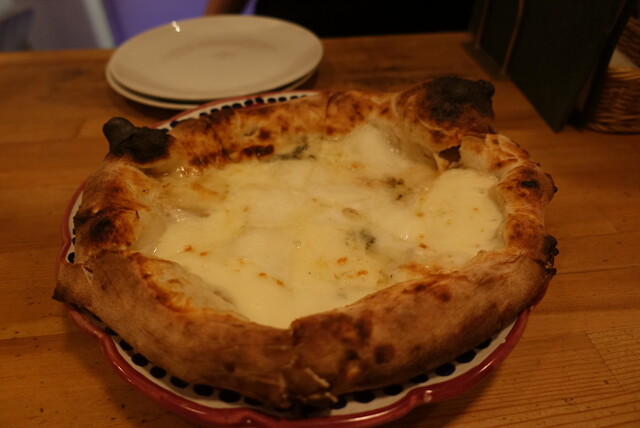
Honjonishi is not Osaka’s neon restaurant corridors or station-basement food courts. North of the louder eating zones, the approach feels residential, shifting the tempo before the first order. Inside, the experience narrows to counter seating, a small room, and a wood-fired stone oven imported from Acunto in Naples. In Japan’s better pizzerias, the oven is not decorative theatre; it sets pace, heat, and the brief window in which Neapolitan dough turns from raw to blistered.
Osaka’s dining identity is often reduced to takoyaki, okonomiyaki, kushikatsu, and late-night counter food, but the city has a serious Italian streak. Pizza occupies a demanding corner because the reference point is external and specific: Naples, not a loose international style. Pizzeria Sukunittsuo da Shigeo fits that lineage through format rather than rhetoric: a small room, explicit cooking method, and measurable recognition through Tabelog Pizza 100 selection in 2025, with prior selections in 2023, 2021, 2019, 2018, and 2017.
Honjonishi gives the pizza room to feel local, not imported
The neighbourhood framing is part of the appeal. Near a major station, a pizzeria can become a convenience choice; in a quieter pocket, it must work as a destination. Honjonishi, within Kita-ku but outside obvious tourist dining lanes, gives this meal a different register: Osaka Italian filtered through a local rhythm, compact, counter-focused, and less performative than the city’s grander dining rooms.
That matters against Osaka’s wider premium spread. At one end are expensive specialist counters such as Higashichaya Nakamura and NAKATSU WONIKU, where tariff alone shifts the meal into another social category. At the other are everyday neighbourhood options, from Sodaisho to Cafe Fate, with a more casual spend pattern. This pizzeria sits in the middle: craft-led, recognized, intimate, but not a ceremonial tasting-menu event.
For readers mapping Osaka by appetite rather than district, it belongs beside focused addresses, not broad-category restaurants. The city’s Italian conversation can stretch from a canto (Italian) to 99 Pizza Napoletana Gourmet, while casual bakery and cafe culture sits elsewhere through 52CHO-ME BAKERY and .cafe. For a broader read, use Our full Osaka restaurants guide, then place pizza as one strand in a city better known for flour, sauce, griddles, and street-level eating.
A counter pizzeria with Tabelog Pizza 100 weight
The Tabelog Pizza 100 signal is useful because pizza in Japan can be hard to judge from category labels alone. “Italian” may mean pasta lunch, wine bar, family trattoria, or a technical pizzeria built around dough fermentation and high-heat baking. Here, the category clearly narrows to pizza and Italian, with take-out also listed. The practical shape reinforces that focus: small seating count, counter emphasis, no private rooms, and a non-smoking room.
The cooking credentials sit in the equipment rather than a chef biography. An Acunto oven imported from Naples places the kitchen in a recognizable Neapolitan tradition, where heat retention, floor temperature, and bake speed shape the result. That does not make every pizza equal, but it separates this format from electric-oven casual dining and delivery-led pizza culture. For Osaka, already fluent in flour-based comfort food, the appeal is less novelty than discipline: a foreign form handled with Japanese small-room precision.
Drink details point to more than a quick pie. Wine and cocktails are listed, with emphasis on wine, putting the experience closer to a compact pizzeria-trattoria than a fast lunch stop. Families, dates, and friends are all plausible, but the L-shaped counter changes group dynamics: less private table sprawl, more watching a small operation work at close range.
Osaka rewards lateral dining across categories. A day might run from pork buns at 551 Horai (551蓬莱) to counter pizza, then into the drinking map covered in Our full Osaka bars guide. Hotels, wineries, and experiences are separate planning layers for travellers building a full trip; the relevant city indexes are Our full Osaka hotels guide, Our full Osaka wineries guide, and Our full Osaka experiences guide.
Where it sits in a Japan-wide eating itinerary
For travellers moving beyond Osaka, the useful comparison is the broader Japanese habit of specialization. Small restaurants often make one narrow promise and execute it repeatedly: beef in one room, curry in another, sake and snacks elsewhere. That pattern appears nationwide, from -Grilled beef Sukiyaki- KAMAKURA TANUKIAN 鎌倉 たぬき庵 in Kamakura to. 鮪と炭火焼き うお炭 秋葉原店 in Tokyo.know in Kumamoto, (Shoku) Vietnam in Kawasaki, [Curry Senmon Ten] Maruyama Kyoju. in Sapporo, and [ki:] in Kyoto.
That specialization explains why an Osaka pizzeria with repeated Tabelog Pizza 100 selections deserves attention without inflated language. The question is not whether pizza belongs in Osaka; it already does, beside the city’s better-known comfort foods. The better question is whether a small Honjonishi counter gives enough evidence of seriousness to justify leaving the obvious dining zones. On the evidence available, yes: recognized pizza category performance, a Naples-made wood-fired oven, compact counter format, and a neighbourhood setting that keeps the meal grounded rather than staged.
International readers can file it with focused Japanese food experiences abroad, not because the cuisines match, but because the tight-format commitment does. In Los Angeles, Jōdo Saké Bar in Los Angeles speaks to Japanese drinking culture through another lens; in Pasadena, Onigiri Time in Pasadena shows how single-format Japanese food can travel. In Osaka, the point reverses: Neapolitan pizza lands inside a Japanese counter culture that knows how to make small rooms feel exacting.
Reputation First
Comparable venues in the metro at similar price points.
| Venue | Cuisine | Price | Notes |
|---|---|---|---|
| Pizzeria Sukunittsuo da ShigeoThis venue — the venue you are viewing | Traditional Neapolitan Pizzeria | $$ | Not listed |
| anello | Casual Italian Trattoria & Wine Bar | $$ | Kita |
| PIZZERIA NAPOLETANA ASSO DA YAMAGUCHI at Nakazaki-cho | Authentic Neapolitan Pizzeria | $$ | Kita |
| La Pinata | Southern Italian (Puglia-focused) trattoria | $$$ | Chūō |
| Toyo (とよ) | Seafood Izakaya | $$ | Miyakojima Ward |
| Lilo Coffee Kissa | Japanese Specialty Coffee Kissa | $$ | Chuo Ward, Shinsaibashi |
Recognition history
Dated appearances from independent guides and award organizations, with the underlying list record or original source where available.
Tabelog 100 #76 · No. 76
Tabelog · Tabelog 100 - Pizza - 2025
Continue exploring
More in Osaka
Restaurants in Osaka
Browse all →




Bars in Osaka
Browse all →




Hotels in Osaka
Browse all →



Wineries in Osaka
Browse all →
At a Glance
- Cozy
- Intimate
- Classic
- Date Night
- Group Dining
- Casual Hangout
- Celebration
- Late Night
- Private Event
- Chefs Counter
- Open Kitchen
- Standalone
- Private Dining
A small, warm counter-focused space centered around a bright red wood-fired oven, with a relaxed, homely feel where guests can watch pizzas blister and rise in the oven; intimate yet lively when the 12-seat counter fills up.