The Team Equation: Kitchen, Floor, and Glass
Across American fine and premium-casual dining, the most sustained rooms are rarely those defined by a single personality at the pass. The model that has produced the most durable reputations over the past two decades, from Lazy Bear in San Francisco to Atomix in New York City, involves tight triangulation between kitchen vision, floor execution, and beverage program. When those three functions are co-authoring the experience rather than operating in parallel, the result is a room where the guest feels held rather than processed.
In Phoenix, that model is still developing in ways it has matured in cities with older fine-dining infrastructures. Vincent Guerithault on Camelback represents the city's long-running example of a chef-led room with genuine staying power, operating at the French Southwestern intersection that Guerithault essentially defined locally. Elsewhere in the city, places like Lom Wong and Bacanora show that the team-driven model works equally well in specialist cuisine formats, where the kitchen's depth of knowledge has to be communicated clearly by a floor team that understands it. The rooms that struggle tend to be those where the front-of-house is a layer of polish applied over a kitchen that hasn't been adequately explained to the people serving it.
Phoenix's dining population has grown sophisticated enough to notice the difference. The city's restaurant audience has expanded substantially in the past decade, and that audience now includes enough well-travelled guests to hold rooms to higher contextual standards. The comparison set for a serious Phoenix room is no longer just local: guests who have eaten at The French Laundry in Napa, Providence in Los Angeles, Addison in San Diego, or Blue Hill at Stone Barns in Tarrytown bring those reference points to every room they enter. A dining room on East Camelback is, whether it chooses to be or not, in conversation with that wider field.
Arcadia in Seasonal Context
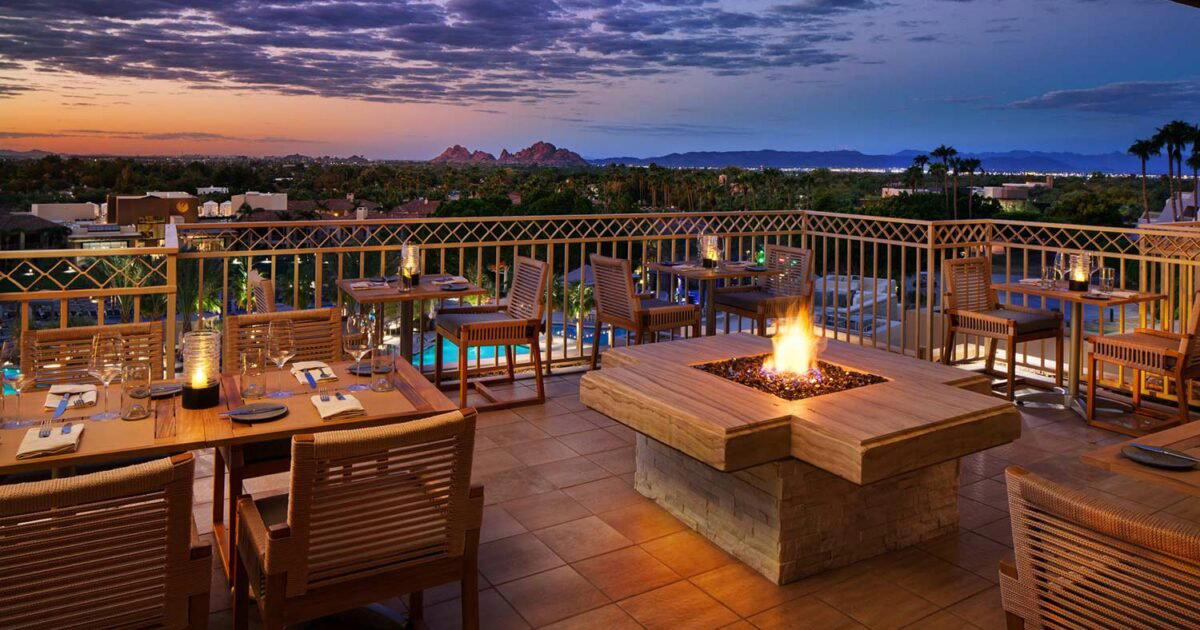
Phoenix dining has a pronounced seasonal rhythm that shapes how any room on this corridor functions across the year. The October-to-April window, when temperatures drop to genuinely pleasant ranges, is peak season for outdoor seating, longer evenings, and the kind of relaxed pacing that suits a considered meal. Rooms that use patios or open-air formats become categorically different propositions during this period compared to the summer months, when Phoenix temperatures routinely exceed 110°F and the logic of every restaurant shifts inward.
For guests planning a visit to Pink Dolphin, the timing calculation is worth making deliberately. The fall and spring shoulder months, specifically November, March, and early April, tend to offer the most comfortable combination of weather and availability. The summer slowdown that affects many Phoenix rooms can work in a visitor's favour from a booking standpoint, though the dining room atmosphere across the city shifts noticeably when the local population thins.
The beverage side of any Phoenix room also responds to season in ways that differ from coastal markets. Lighter, acid-forward wine programs and cocktail menus built around brightness and citrus tend to extend their relevance further into the year here than in San Francisco or New York. Rooms that understand this seasonality and build their glass programs accordingly tend to feel more coherent across the calendar. It is one of the less-discussed aspects of what separates the rooms at the top of the Phoenix tier from those that feel transplanted from a different climate.
Phoenix in a National Frame
Phoenix sits at an interesting distance from the coastal markets that have historically set the pace for American fine dining. The comparison restaurants that EP Club readers most often reference when framing a Phoenix visit include rooms like Le Bernardin in New York City, Alinea in Chicago, Single Thread Farm in Healdsburg, The Inn at Little Washington in Washington, and Emeril's in New Orleans. Phoenix does not yet have the density of formally recognised rooms that those cities do, but the gap has been narrowing, and the Camelback corridor in particular has absorbed serious operators who are building toward longer-term reputations.
International comparisons are useful here too. Rooms like 8 1/2 Otto e Mezzo Bombana in Hong Kong illustrate how a city can develop a sophisticated dining tier relatively quickly once the population of educated regular guests reaches critical mass. Phoenix's trajectory over the past decade suggests something similar is underway, and the East Camelback corridor is where much of that development is most visible. Our full Phoenix restaurants guide maps the broader picture for those planning a longer visit.
For context at a more casual register, Pane Bianco and 5 & Diner represent the city's more accessible tier, where Phoenix does extremely well and where the team dynamic operates at a different but equally readable level.
Planning a Visit
The venue sits at 4360 E Camelback Rd, Phoenix, AZ 85018, within easy reach of the Arcadia neighbourhood's main concentration of restaurants and retail. Camelback Road sees high traffic during peak evening hours, so arriving slightly ahead of a reservation is sensible. The fall-to-spring window remains the most comfortable period for the full East Camelback experience, and guests planning a first visit would do well to build in time to explore the corridor beyond a single dinner.
Questions About Pink Dolphin
- Is Pink Dolphin okay with children?
- Camelback Road at this address skews toward adult dining, and the surrounding tier of restaurants in this corridor is generally oriented toward evening guests rather than family-format meals.
- What's the vibe at Pink Dolphin?
- The East Camelback corridor in Phoenix sets a particular register: neighbourhood-serious rather than hotel-formal. Guests familiar with the tone of that stretch will have a reasonable working expectation.
- What should I eat at Pink Dolphin?
- EP Club does not have confirmed menu or chef data on record for Pink Dolphin at this time, so specific dish recommendations would be speculative. For a room on this corridor in Phoenix, the general principle applies: ask the floor team what the kitchen is doing well on the evening you visit. In a room where the front-of-house and kitchen are working in close alignment, that question will get a useful answer.
- How far ahead should I plan for Pink Dolphin?
- On East Camelback in Phoenix, rooms at the more serious end of the local tier can book out several weeks ahead during the October-to-April high season. Planning two to three weeks out for a weekend reservation in that window is a reasonable working assumption until more specific data is available.
- Does Pink Dolphin fit into a broader Phoenix dining itinerary alongside other Camelback-area restaurants?
- The East Camelback corridor is dense enough to support a multi-evening Phoenix itinerary without much repetition. Pink Dolphin at 4360 E Camelback Rd shares the corridor with rooms across several cuisine registers, from the French Southwestern anchor of Vincent Guerithault on Camelback to the Sonoran-focused kitchen at Bacanora. Guests building a Phoenix visit around this corridor will find that the rooms here are distinct enough in approach that multiple evenings in the area rarely feel redundant.