Phở Hoàng

Michelin Bib Gourmand
Our verdict
A consecutive Michelin Bib Gourmand recipient in 2024 and 2025, Phở Hoàng on Nguyễn Tri Phương sits in District 10's dense street-dining corridor and serves phở at the entry price tier. Relative to the city's recognised phở houses, it occupies the same Bib bracket as several peers but draws repeat recognition from Michelin's inspectors for consistent execution at street-level prices.

Pearl is the En Primeur Club membership app — saves, bookings, and concierge access live there. Same editors, same standards.
- Address
- 460 Nguyễn Tri Phương, Phường 8, Quận 10, Thành phố Hồ Chí Minh, Vietnam
- Phone
- +84 28 3927 1390
- Hours
- Daily 6 AM–2 PM
- Website
- foody.vn
- Directions
- Get directions
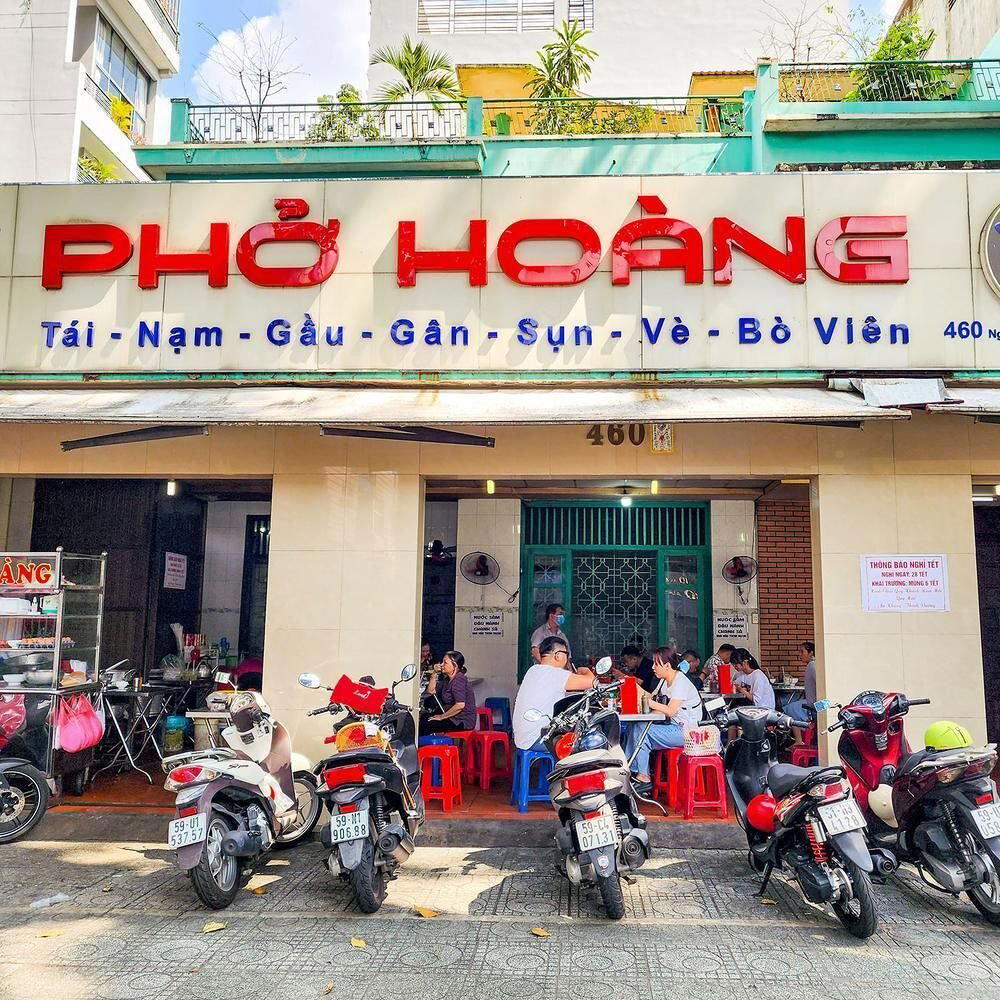
District 10 and the Street-Dining Logic Behind Phở
Nguyễn Tri Phương Street runs through Quận 10 as one of Ho Chi Minh City's more functional dining corridors: a stretch where the buildings are low-slung, the plastic stools are in permanent deployment, and the food is priced for the neighbourhood rather than for tourism. This is not the part of the city where branding travels well. Reputation here is built bowl by bowl, across years of consistent output, in a format where the comparison is always the shop three doors down.
Phở, the northern-origin broth dish that became a national constant, operates on an ingredient logic that the street makes visible. The broth is the record of sourcing: what bones were used, how long they were worked, whether the aromatics — charred ginger, roasted onion, star anise, cinnamon — were handled with patience or convenience. In a city where phở shops number in the thousands, the difference between a bowl that reads as well-constructed and one that reads as thin or over-seasoned almost always traces back to raw material quality and time. There is no shortcut that the broth doesn't eventually expose.
What Two Consecutive Bib Gourmands Communicate
Phở Hoàng received the Michelin Bib Gourmand in both 2024 and 2025. The Bib Gourmand designation, for readers unfamiliar with how Michelin structures its tiers, is awarded to addresses where inspectors judge the food to deliver quality above what the price point would predict. It is explicitly not a starred category, it sits below that threshold, but it is a positive signal about consistency and value, applied by the same inspection framework. Consecutive recognition matters because it rules out a single strong visit; the kitchen held its standard across two separate assessment cycles.
Within Ho Chi Minh City's phở field, Phở Hoàng sits in a recognisable peer bracket. Phở Bò Phú Gia (District 3) and Phở Chào occupy related positions within the city's Michelin-recognised noodle category, and Phở Hùng (District 1) operates in the same broad price tier. The Bib across multiple addresses suggests a pattern: Michelin's Vietnam guides have systematically identified phở houses at the ₫ price point as carrying genuine quality signals, rather than reserving recognition for the higher-spend end of the city's dining range.
Visitors who leave reviews at this category of restaurant tend to do so because the experience diverged from expectation in one direction or another. A flat 4.0 across that count is a signal of reliability rather than volatility.
The Sourcing Argument in a Bowl of Phở Bò
The editorial angle for phở as a dish class is, at its core, a sourcing argument. The broth in a well-made phở bò represents hours of extraction from beef bones, typically knuckle and marrow combinations, and that extraction is only as good as the raw material. In Vietnam's established phở houses, bone sourcing tends to be local and relationship-based: the same supplier, the same cut, the same early-morning delivery schedule that keeps the bones fresh and the production cycle consistent. When that supply chain breaks, the broth breaks with it.
The aromatics follow a parallel logic. Charring ginger and onion over direct flame before adding them to the broth is a technique that dates to the dish's development in northern Vietnam, and it creates a caramelised depth that dried spice additions alone cannot replicate. Doing it correctly requires both the technique and the ingredient quality, flat, low-grade ginger produces a different result than the more fibrous, higher-oil varieties. These are not details that appear on a menu, but they are present in the bowl, and they are what Michelin's inspectors are, in effect, assessing when they apply the Bib standard.
Street-tier phở pricing in Ho Chi Minh City, at the ₫ range, leaves almost no margin for ingredient substitution without the result becoming immediately apparent. This is, counterintuitively, why some of the most careful sourcing in the city happens at the lowest price points: the format is unforgiving, and the customer base is local, return-visit-driven, and entirely capable of detecting a change in broth quality. The comparison with higher-spend formats, like the innovative cooking at Phở Chào or the distance between this price tier and addresses like CieL at ₫₫₫₫, clarifies what the Bib designation is recognising: not luxury inputs, but disciplined execution with honest materials.
The District 10 Context
Quận 10 has a different dining character from District 1's more tourist-trafficked streets or the expat-facing corridors of District 2 and District 7. It is a residential and commercial zone where eating out is a daily habit rather than an occasion, and where the food businesses that survive do so on repeat neighbourhood custom. This shapes how a place like Phở Hoàng functions: the model is high-frequency, the seating is fast-turnover, and the measure of quality is whether the same customers come back the following week.
The broader street-dining culture of Ho Chi Minh City, visible in adjacent categories like the beef noodle specialisation at Bún Bò Huế Cô Như or the mixed Vietnamese format at Hồng Phát (District 3), operates on the same neighbourhood-accountability logic. Michelin's Ho Chi Minh City guides have, since their introduction, demonstrated an awareness of this tier, applying Bib recognition across multiple districts and dish types in a way that reflects the city's actual eating patterns rather than just its aspirational dining segment.
For readers interested in how phở fits within the wider regional noodle tradition, the comparison extends beyond Vietnam. The relationship between broth discipline and ingredient sourcing visible in Ho Chi Minh City's leading phở houses has direct parallels in other Asian noodle categories: A Niang Mian Guan in Shanghai, A Bing Bao Shan Mian in Hangzhou, and Ajisai in Taichung each carry Bib recognition in their respective cities, and each represents a version of the same argument: that at the street and casual tier, the gap between good and mediocre is almost entirely a sourcing and technique question. A Kun Mian in Taichung, A Xin Xian Lao in Fuzhou, and Bà Diệu in Da Nang extend that pattern further across the region.
For the full scope of recognised dining in Vietnam across price tiers and formats, Hibana by Koki in Hanoi and La Maison 1888 in Da Nang illustrate what the upper end of the recognition spectrum looks like, while Phở Hoàng holds down the street tier in Ho Chi Minh City with consistent credibility.
A Lean Comparison
| Venue | Cuisine | Price | Awards | Notes |
|---|---|---|---|---|
| Phở Hoàng (Nguyen Tri Phuong Street)This venue — the venue you are viewing | Traditional Vietnamese Phở | $1–10 | Michelin Bib Gourmand | Not listed |
| Anan Saigon | Modern Vietnamese Street Food Fine Dining | $50–100 | 1 Michelin Star · World's 50 Best #86 | Vietnamese Street Food, ₫₫ |
| CieL | Modern Vietnamese Fusion Fine Dining | $100–150 | 1 Michelin Star · The Best Chef One Knife | Innovative, ₫₫₫₫ |
| Coco Dining | Progressive Vietnamese Fine Dining | $150–200 | 1 Michelin Star | Innovative, ₫₫₫ |
| Long Trieu | Michelin-Starred Cantonese | $50–100 | 1 Michelin Star · La Liste Top Restaurants | Cantonese, ₫₫₫₫ |
| Bánh Xèo 46A | Traditional Vietnamese Bánh Xèo | $10–20 | Michelin Bib Gourmand | Vietnamese, ₫ |
Recognition history
Dated appearances from independent guides and award organizations, with the underlying list record or original source where available.
Michelin Bib Gourmand
Michelin
Full recognition history (3 entries)
Michelin Bib Gourmand
Michelin
Michelin Bib Gourmand
Michelin
Continue exploring
More in Ho Chi Minh City
Restaurants in Ho Chi Minh City
Browse all →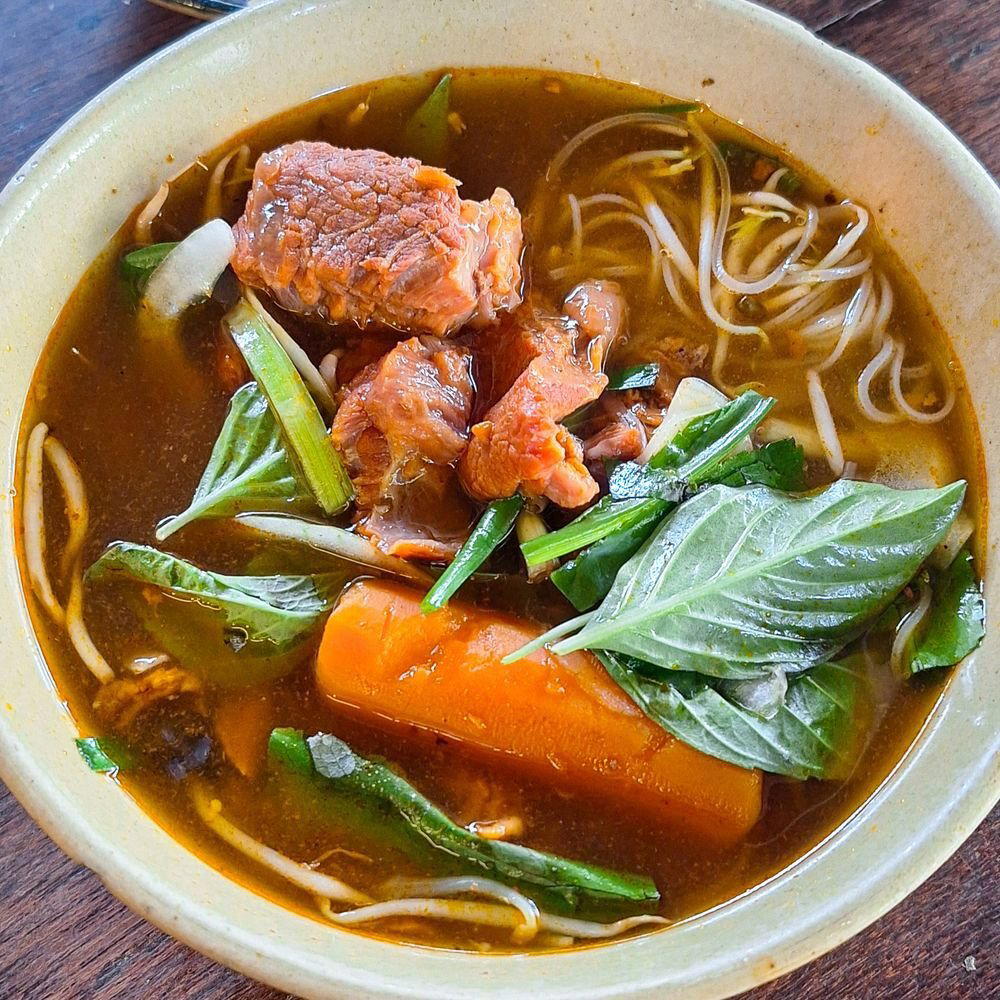
Bars in Ho Chi Minh City
Browse all →
Details
- Rustic
- Classic
- Solo
- Casual Hangout
- Family
- A La Carte
- Counter Dining
- Herbal Tea
- Vegetarian Friendly
Current opening hours
- Monday
- 6 AM–2 PM
- Tuesday
- 6 AM–2 PM
- Wednesday
- 6 AM–2 PM
- Thursday
- 6 AM–2 PM
- Friday
- 6 AM–2 PM
- Saturday
- 6 AM–2 PM
- Sunday
- 6 AM–2 PM
Hours can change for holidays and private events. Last verified .
Direct, unpretentious dining environment with plastic chairs and tables; modest shop focused on authentic food and efficient service rather than decor.