Peluso's Italian Specialties
A Market Street fixture in Clifton, New Jersey, Peluso's Italian Specialties carries the weight of Italian-American deli tradition in a region where that tradition runs deep. The shop sits in a part of northern New Jersey where Italian immigrant communities planted firm roots across the twentieth century, and the address at 76 Market Street places it squarely within that cultural geography. Visitors come for the kind of provisions that define the category: cured meats, prepared foods, and imported staples.
- Address
- 76 Market St, Clifton, NJ 07012
- Phone
- +1 973 471 3991
- Directions
- Get directions
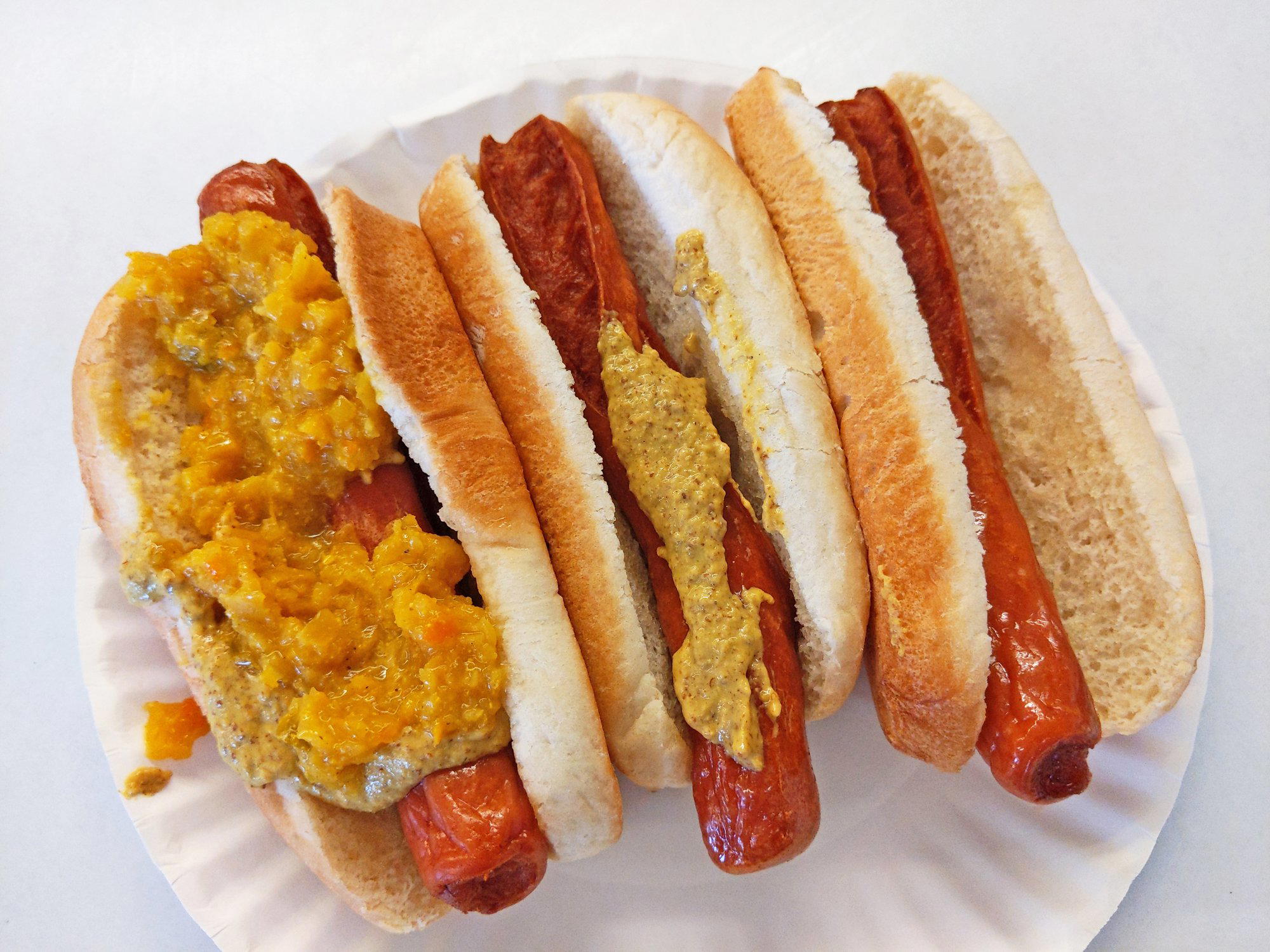
Market Street and the Weight of Italian-American Provision
There is a particular kind of shop that defines Italian-American communities across northern New Jersey: the specialty provisions store, part deli, part import counter, part neighbourhood institution. These are not restaurants in any formal sense, but they function as keepers of culinary memory, stocking the cured meats, aged cheeses, and imported pantry goods that first- and second-generation Italian families carried with them from regions like Campania, Sicily, and Calabria. Peluso's Italian Specialties, at 76 Market St in Clifton, NJ 07012, belongs to that category and to that tradition.
Clifton itself sits in Passaic County, a stretch of northern New Jersey where Italian immigration concentrated heavily through the mid-twentieth century. The density of Italian surnames on storefront signs, the persistence of feast-day celebrations, and the continued demand for specialty provisions distinguish this corridor from suburbs that have largely shed their immigrant-community character. A shop operating under a family name in this context is not incidental branding; it is a direct signal of the ownership lineage and the community it serves.
The Italian-American Provisions Tradition in Context
To understand what a store like Peluso's represents, it helps to understand the broader arc of Italian-American food retail. The provisions shop model arrived with Italian immigrants in the late nineteenth and early twentieth centuries, filling a gap that mainstream American grocery infrastructure could not address: imported cheeses, proper salumi, fresh pasta, and house-made prepared foods built around regional Italian technique. These shops became anchors for their communities, and in many cases outlasted the communities themselves, continuing to serve customers who had relocated to suburbs but returned for provisions they could not find elsewhere.
Northern New Jersey became one of the most concentrated zones for this type of retail in the United States. The proximity to New York City created import infrastructure; the density of Italian-American households created sustained demand; and the generational persistence of food culture kept the category alive long after assimilation might have erased it elsewhere. Shops operating on named-family models in Clifton, Nutley, Garfield, and Lodi have collectively maintained a regional food culture that city-based observers sometimes overlook in favour of Manhattan's more visible Italian food scene.
The Italian-American specialty provisions model differs meaningfully from its Italian counterpart. Where a salumeria in Naples or Bologna stocks product drawn from a hyperlocal supply chain shaped by centuries of regional regulation, the American version has always operated as a translation exercise: sourcing the closest available equivalent to remembered originals, importing where possible, and developing house-made items that carry the flavor logic of regional Italian cooking without identical raw materials. The leading shops in this tradition are not pale copies of their Italian antecedents; they are documents of adaptation, recording what Italian food became when it crossed an ocean and took root in a different soil.
Clifton's Dining Scene: Where Peluso's Sits
Clifton's restaurant and food retail scene reflects the city's layered immigrant history. Alongside Italian-American provisions shops, the city supports Portuguese, Latin American, and broader American dining options. Portuguese Tavern represents the strong Lusophone community that settled adjacent to the earlier Italian-American neighbourhoods, while Tio Taco + Tequila reflects more recent demographic shifts. On the Italian side, Trattoria Villagio and Trummer's on Main occupy the sit-down restaurant tier, while a provisions shop like Peluso's serves a different function: the pantry and prepared-food role that restaurants cannot fill.
These are distinct categories, and conflating them misses the point of what a specialty provisions operation does. Restaurants serve occasions; provisions shops serve daily life and the kind of home cooking that community members have maintained across generations. For a full picture of what Clifton offers across both categories, the EP Club Clifton restaurants guide maps the broader scene.
Italian Specialties in the American Fine Dining Frame
It is worth placing the provisions tradition in relation to the formal Italian and Italian-influenced dining that has defined American restaurant culture at its upper end. Venues like Le Bernardin in New York City, Alinea in Chicago, and The French Laundry in Napa operate at a tier of technical ambition and institutional recognition that bears little resemblance to the provisions shop model. Similarly, Blue Hill at Stone Barns in Tarrytown, Single Thread Farm in Healdsburg, and Providence in Los Angeles represent farm-driven and ingredient-focused American fine dining that draws on European culinary lineages in a quite different way.
Further afield, 8 1/2 Otto e Mezzo Bombana in Hong Kong shows how Italian culinary tradition has traveled globally into formal fine dining contexts, while Addison in San Diego, Bacchanalia in Atlanta, Atomix in New York City, The Inn at Little Washington, Lazy Bear in San Francisco, and Emeril's in New Orleans collectively illustrate the range of American fine dining as a category. The provisions shop sits at an entirely different point in this ecosystem: it is the source material, the home-cooking infrastructure, the carrier of the food culture that the fine dining tier occasionally references but rarely replicates.
Planning a Visit
Peluso's Italian Specialties operates at 76 Market St, Clifton, NJ 07012. As with most specialty provisions shops in the Italian-American tradition, the experience is oriented around browsing, counter service, and the kind of direct transaction that requires no reservation and no dress code. The practical approach is direct: arrive with a list if you have specific products in mind, but leave room for the counter to show you what is available on the day. Provisions shops of this type reward the customer who is willing to ask questions and take direction from whoever is working the counter.
Budget and Context
| Venue | Price |
|---|---|
| Peluso's Italian SpecialtiesThis venue — the venue you are viewing | This venue |
Continue exploring
More in Clifton
Restaurants in Clifton
Browse all →
Bars in Clifton
Browse all →
Hotels in Clifton
Browse all →








At a Glance
- Classic
- Cozy
- Casual Hangout
- Beer Program
Know Before You Go
- Getting there
- 76 Market St, Clifton, NJ 07012