Pappy & Harriet's
Our verdict
Pappy & Harriet's sits on Pioneertown Road in the high desert of San Bernardino County, where a former movie set backdrop has hosted live music and open-fire cooking for decades. The venue draws a cross-section of desert locals, Joshua Tree weekenders, and Los Angeles day-trippers who make the two-hour drive for barbecue, cold beer, and acts that have included Paul McCartney and Vampire Weekend. It is the kind of place that earns its reputation without chasing it.

Pearl is the En Primeur Club membership app, where members save venues, book tables and use the concierge.
The menu
What to order
- Baby back ribs
- Tri-tip
- Chili nachos
Where the High Desert Sets the Table
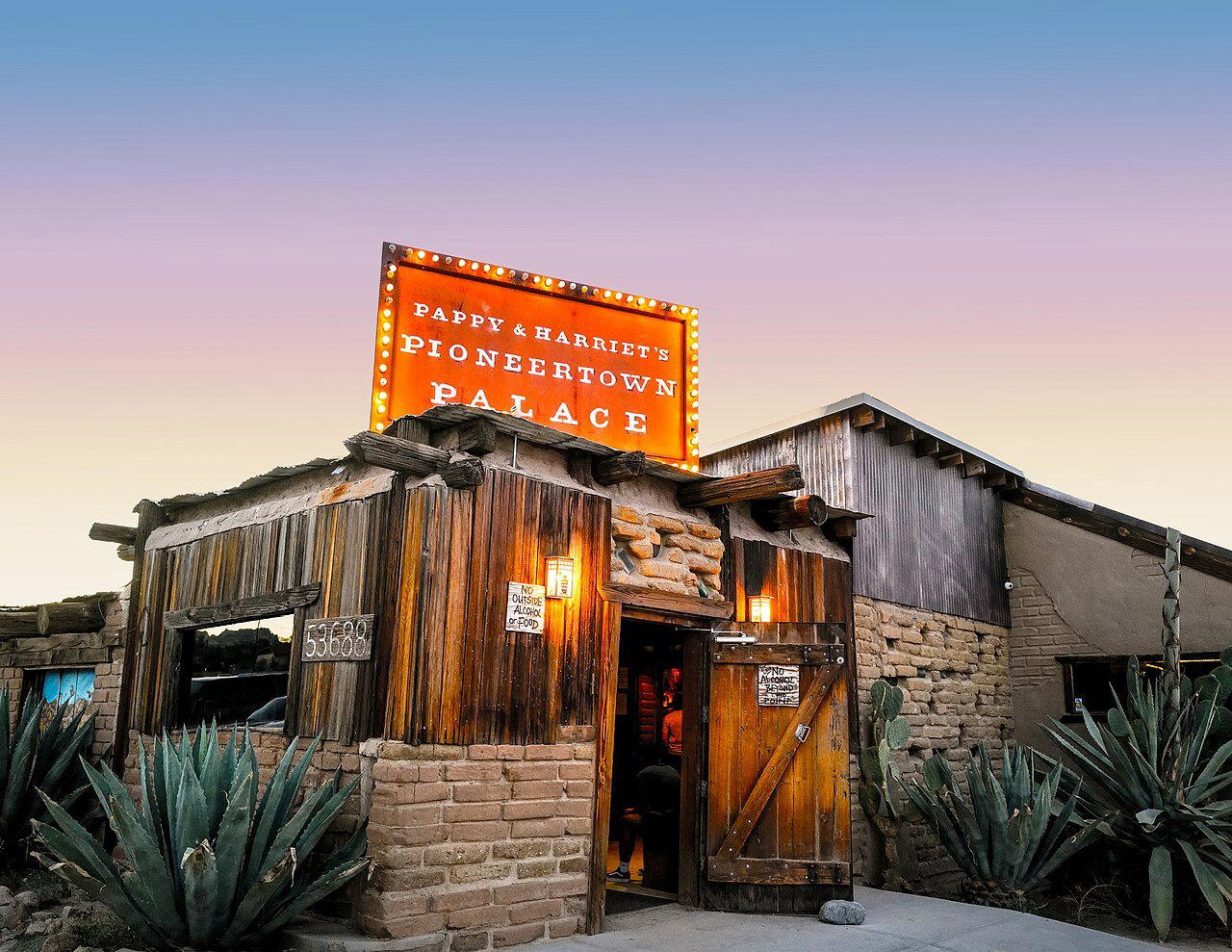
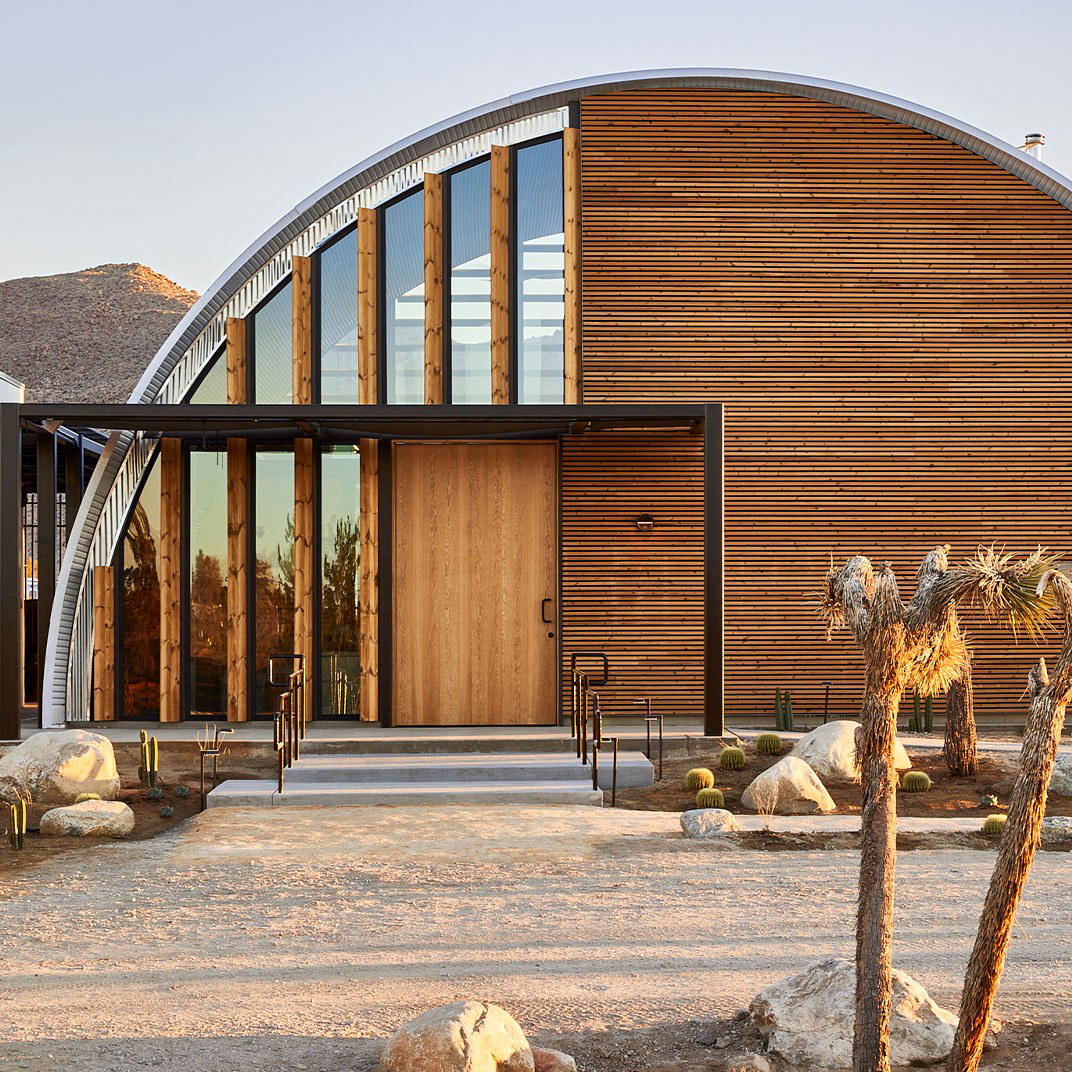
Pioneertown exists in a category of American place that has no clean equivalent elsewhere: a functioning community built in the 1940s as a permanent Old West film set, where the weathered storefronts and unpaved streets were designed for the camera rather than for commerce. Coming off the Yucca Valley highway and onto Pioneertown Road, the elevation sits around 4,000 feet, the air carries a dry sage quality that lowland California rarely offers, and the landscape shifts from Joshua Tree scrub to a harder, more angular terrain. It is the kind of approach that tells you, before you arrive, that whatever is at the end of this road operates on its own terms. Pappy & Harriet's Pioneertown Palace sits at the terminus of that drive, a low-slung roadhouse with a stage, a patio, and a kitchen that has been feeding desert visitors for decades. The building's corrugated metal and worn timber are not a design choice so much as an accurate record of what this structure has been through.
Open-Fire Cooking in a Region That Earns It
The editorial tradition around farm-to-table sourcing has, in many fine-dining contexts, become a branding exercise disconnected from any actual agricultural relationship. The high desert of San Bernardino County presents different conditions. At elevations above 3,500 feet with low humidity, significant day-to-night temperature swings, and proximity to working ranches across the Inland Empire and the broader Southern California agricultural corridor, the sourcing context here is environmental rather than aspirational. Open-fire cooking in this setting is not a technique imported from a culinary trend cycle; it is the logical response to the terrain and the tradition of outdoor cooking that defines Mojave-adjacent communities.
Pappy & Harriet's has long operated a mesquite-fired kitchen, and mesquite is the relevant detail. It is the native hardwood of the Sonoran and Mojave desert margins, burning hotter than oak and imparting a smoke character that is sharper and more mineral than the sweeter fruitwoods used in Tennessee or Texas barbecue traditions. Cooking with local fuel over live fire is, in this context, an expression of where the food is made rather than a technique selected for its aesthetic. The result sits somewhere between Southwestern barbecue and California open-fire cooking, drawing on two traditions without fully belonging to either. Venues like Single Thread Farm in Healdsburg operate with an exhaustive farm-to-kitchen sourcing model across multiple Northern California growing zones; Pappy & Harriet's approach is less systematic but more directly tied to its specific geography in a way that fewer venues can claim.
For readers tracking how American restaurants connect cooking technique to landscape, the comparison set is instructive. Blue Hill at Stone Barns in Tarrytown and Smyth in Chicago operate with formal sourcing transparency and tasting-menu structures built around seasonal supply chains. Oyster Oyster in Washington, D.C. frames its entire menu around environmental sourcing ethics. Pappy & Harriet's sits outside that fine-dining tier entirely, but the underlying premise, that what grows or lives nearby should determine what gets cooked, translates across price points.
A Stage That Does Real Work
The music program at Pappy & Harriet's is not incidental to the dining experience; it is co-equal with it, and on many nights it is the primary reason people are there. The venue has hosted an improbable range of acts given its 29-Palms Highway address, from major touring musicians seeking an off-grid show to desert rock bands with regional cult followings. This is a function of capacity and atmosphere. A small room in the middle of the high desert, with no immediate competition for fifty miles in any direction, creates the conditions for performances that do not happen in conventional venues. The intimacy is structural rather than designed. Booking patterns here reward flexibility: the calendar shifts by season, with spring and fall drawing higher-profile acts as desert temperatures become manageable for outdoor audiences, and summer evenings cooling enough after sundown to make the patio workable.
This positions Pappy & Harriet's in the same category of destination-with-a-reason that venues like Lazy Bear in San Francisco or The Inn at Little Washington in Washington occupy, though for entirely different reasons. The draw is not a tasting menu or a wine list; it is the combination of place, live performance, and a kitchen that functions well enough that the food does not undermine the evening. That is, in the desert roadhouse context, exactly what is required.
The Joshua Tree Circuit and Where This Fits
San Bernardino County's dining circuit has expanded considerably as Joshua Tree National Park and the surrounding high desert communities absorbed a sustained wave of visitor interest over the past decade. The county's restaurant profile across that period shifted from purely utilitarian highway stops toward a more varied range, though the area has not attempted to replicate the chef-driven fine-dining formats found in Addison in San Diego or Providence in Los Angeles. See our full San Bernardino County restaurants guide for the broader context of where the county's dining sits now. Nearby, Mt Baldy represents another dimension of the county's terrain-driven dining character.
Pappy & Harriet's has remained consistent in format across this period of regional change, which is itself a positioning statement. In a county where many venues have repositioned to capture visitor spending with updated aesthetics and refined price points, the Pioneertown roadhouse has not redesigned its identity. That constancy has market value in a context where authenticity, or the appearance of it, commands a premium. The trade-off is that the food and service operate at a standard appropriate to a casual roadhouse rather than a destination restaurant, and visitors arriving with fine-dining expectations will find those expectations misaligned.
Planning the Drive
Pioneertown sits roughly two hours east of Los Angeles via the 10 East and Highway 62, with Yucca Valley as the last substantive stop for fuel and provisions. The venue draws most heavily on weekends, and the combination of live music nights and limited desert accommodation means that same-day drive-ins from Los Angeles are common, as is staying in Joshua Tree or Yucca Valley. Spring weekends, particularly during the Joshua Tree wildflower season in March and April, bring the highest visitor volumes to the area. For readers comparing the drive against the draw, the relevant point is that no single element, the food, the music, or the setting, carries the experience independently; it is the convergence of all three in a location that requires deliberate effort to reach that defines what the visit delivers. Venues like Frasca Food & Wine in Boulder, The Wolf's Tailor in Denver, Emeril's in New Orleans, Le Bernardin in New York City, ITAMAE in Miami, Atomix in New York City, and Atelier Moessmer Norbert Niederkofler in Brunico each require their own kind of intentional travel; Pappy & Harriet's requires a different calculation, one where the journey through the desert is part of what the evening means.
Frequently asked questions
Can I bring kids to Pappy & Harriet's?
Pappy & Harriet's operates as a full roadhouse with a dining room and live music stage, and families do visit during earlier evening hours before shows ramp up. The outdoor setting along Pioneertown Road in San Bernardino County gives kids room to move, which helps. On nights with ticketed concerts, the crowd density and volume make it better suited to adults.
What kind of setting is Pappy & Harriet's?
It occupies a former film set, Pioneertown was built in the 1940s as a working Western movie location, so the physical structure reads as genuinely weathered rather than themed. The property sits at roughly 4,000 feet elevation on Pioneertown Road in San Bernardino County, with an outdoor stage area, a bar, and a dining room that fits somewhere between diner and saloon. The desert surroundings are not decorative; they are the actual context.
Is Pappy & Harriet's worth the drive from Los Angeles for a concert night?
The venue sits roughly two hours east of Los Angeles via the 10 East and Highway 62, which puts it in range for a one-night or weekend trip rather than a casual evening out. Pappy & Harriet's has hosted artists across rock, country, and Americana on its outdoor stage, enough of a track record that the music program draws attendees specifically from the LA basin. Pairing a ticketed show with dinner at the same address in Pioneertown, San Bernardino County, removes the logistical separation that most desert music venues require.
What do people recommend at Pappy & Harriet's?
The open-fire grill is the consistent reference point across editorial coverage, mesquite-smoked preparations have defined the kitchen's identity in the high desert for decades. The Santa Maria-style BBQ format draws direct comparisons to California's Central Coast tradition, which is a meaningful culinary anchor for a venue this far into the desert. Specific menu items and prices are not fixed here, so checking current offerings before the drive from Yucca Valley or the 10 East corridor is advisable.
How It Stacks Up
Comparable venues nearby, for context on price, style, and recognition.
| Venue | Cuisine | Price | Notes |
|---|---|---|---|
| Pappy & Harriet'sThis venue (the venue you are viewing) | Santa Maria-Style BBQ & American | $20–30 | Not listed |
| Luella | Refined Comfort Food with Mediterranean & Southern Influences | Not listed | Russian Hill |
| Nourish Cafe SF | 100% Plant-Based Healthy Cafe | Not listed | Lower Nob Hill |
| Belle’s Bagels, Sierra Madre | Modern Jewish Deli Bagels | $10–20 | Sierra Madre |
| 94th Aero Squadron San Diego | American Steakhouse with Seafood | Not listed | Kearny Mesa |
| Lanesplitter Pizza Pit Stop | Pizza Pub | $20–30 | West Berkeley |
Continue exploring
More in Pioneertown
Restaurants in Pioneertown
All restaurants in Pioneertown →
Bars in Pioneertown
Browse all →

Details
- Rustic
- Lively
- Well Known
- Energetic
- Casual Hangout
- Group Dining
- Late Night
- Live Music
- Historic Building
- Craft Cocktails
- Beer Program
- A La Carte
- Vegetarian Friendly
- Gluten Free Options
Current opening hours
- Monday
- 11 AM–11 PM
- Tuesday
- 11 AM–11 PM
- Wednesday
- 11 AM–11 PM
- Thursday
- 11 AM–11 PM
- Friday
- 11 AM–11 PM
- Saturday
- 11 AM–11 PM
- Sunday
- 11 AM–11 PM
Hours can change for holidays and private events. Hours as of .