Ouezeri

Ouezeri on Wale Street brings a considered, contemporary reading of Cypriot and Greek regional cooking to Cape Town's city centre. The menu draws on the Mediterranean tradition of shared plates and communal eating, reframed for a modern South African table. It sits in a dining category that has few direct competitors in the city, making it a specific destination for those tracking where Cape Town's restaurant range is expanding.
Pearl is the En Primeur Club membership app — saves, bookings, and concierge access live there. Same editors, same standards.
- Address
- 58 Wale St, Cape Town City Centre, Cape Town, 8000, South Africa
- Phone
- +27 61 533 9071
- Website
- ouzeri.co.za
- Directions
- Get directions
 Saves & bookings on Pearl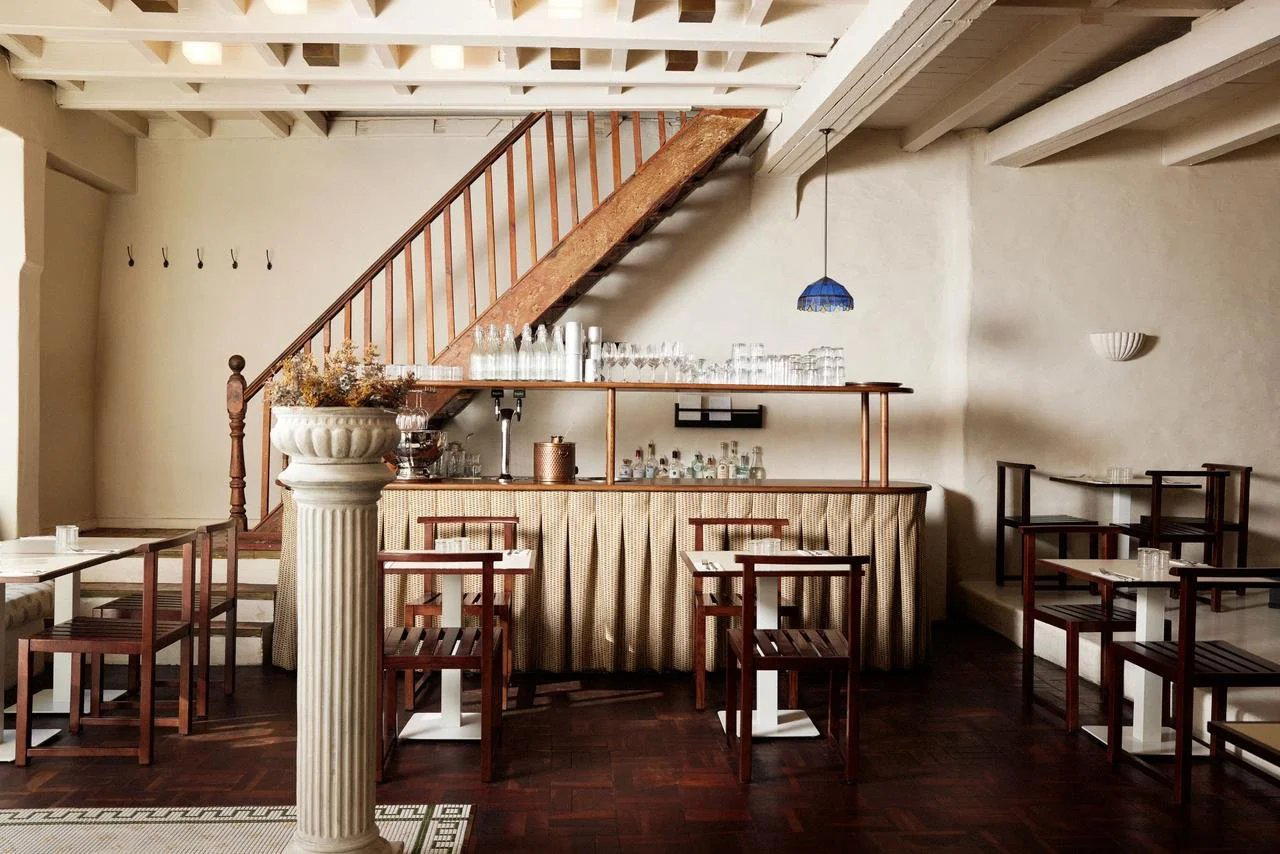
Where the Eastern Mediterranean Meets the Cape
Cape Town's city centre dining has expanded steadily beyond its earlier concentration of casual cafés and a handful of white-tablecloth rooms. Wale Street, running through the heart of the Bo-Kaap and CBD boundary, carries some of that expansion energy: it is a working street rather than a curated dining strip, which means restaurants here tend to attract guests who arrived with a specific destination in mind rather than those browsing from a pavement. Ouezeri, at number 58, fits that pattern. It is a contemporary restaurant built around the regional cooking traditions of Cyprus and Greece, a culinary reference point that has no deep bench of competitors in the city. In a Cape Town scene where frequently discussed rooms tend to cluster around South African produce-led cooking, as at La Colombe, or around high-concept fusion, as at Fyn, a restaurant anchored in Aegean and Levantine-adjacent tradition occupies a genuinely distinct position.
The Mediterranean Shared-Plate Tradition, Read Through a Cape Town Lens
Greek and Cypriot cooking is among the more misrepresented Mediterranean traditions in restaurant form outside of Greece and Cyprus themselves. The ouzeri format, from which this restaurant takes its name, is a specific cultural institution: a casual gathering place built around meze, small plates of cured, pickled, grilled, and braised food, consumed collectively and slowly, alongside spirits or wine. The word derives from the Greek ouzo-serving houses that proliferated in port towns and urban neighbourhoods across the Aegean. What distinguishes a serious ouzeri from a generic Greek restaurant is the same thing that separates a proper Spanish tapas bar from a plate of deep-fried calamari served to tourists: it is about the depth and specificity of the regional repertoire, not the format alone.
Ouezeri signals that orientation through its name and its stated commitment to traditional regional recipes rendered in a contemporary way. That framing places it in the same general conversation as restaurants elsewhere in the city that treat a specific culinary tradition as the organising principle of the menu, rather than using a cuisine as a loose backdrop.
The Role of Team Dynamics in an Ingredient-Led Format
The shared-plate format that defines Cypriot and Greek table culture places specific demands on a restaurant team. Pacing, sequencing, and the translation of an unfamiliar culinary tradition to guests who may not have a reference point for Cypriot cooking all require coordination that goes beyond kitchen execution alone. In the leading versions of this format, the conversation between kitchen, floor, and the drinks program is what makes the meal cohere. A well-run meze service reads differently from a tasting menu or an à la carte room: the front-of-house team carries more interpretive responsibility, guiding guests through a menu where the logic is cumulative and the dishes are designed to interact with each other and with what is being poured.
This is the kind of operation where a knowledgeable floor team is a structural asset, not a hospitality nicety. The drinks program in a restaurant drawing on Aegean tradition has obvious access to Greek and Cypriot wine, a category that has undergone significant quality improvement over the past fifteen years, alongside indigenous grape varieties that remain largely unknown to international diners. The format creates both the incentive and the opportunity to do so. Restaurants that handle the meze format well tend to treat the drinks program as a co-equal part of the experience rather than an afterthought.
City Centre Context and What It Implies for a Visit
Wale Street's location in the Cape Town city centre puts Ouezeri within reasonable distance of the V&A; Waterfront and the Company's Garden neighbourhood, but it is not a tourist-circuit address in the way that some of the Waterfront's dining options are. That positioning typically correlates with a more local and intentional clientele, and with a restaurant that does not need to calibrate its menu to the broadest possible expectation of what Greek food should look like. It is the kind of address that rewards some prior knowledge of the tradition.
Cape Town's broader fine and mid-tier dining scene has developed a strong identity around South African produce and wine, anchored by rooms like The Test Kitchen and Salsify at the Roundhouse. Ouezeri operates in a different register, drawing on a culinary tradition from outside the country and using it as the lens through which the meal is organised. That kind of referential cooking, where a foreign regional tradition is taken seriously on its own terms rather than absorbed into a locally-inflected hybrid, has precedent in cities like London, Sydney, and New York, but remains relatively rare in Cape Town. It positions Ouezeri closer to specialist restaurants like Arthur's Mini Super in the sense that both occupy a category with few direct competitors in the city.
For those extending a trip beyond the city into the Winelands, the wider Western Cape offers its own notable dining, including Le Quartier Français in Franschhoek, Wolfgat in Paternoster, Dusk in Stellenbosch, and Delaire Graff Lodges and Spa on Helshoogte Pass. Accommodation options mapped to the city are in our full Cape Town hotels guide, including waterfront and city-centre properties close to Ouezeri's address.
Planning a Visit
Ouezeri is at 58 Wale Street in Cape Town's city centre, a location accessible on foot from the CBD and a short drive from the Bo-Kaap and De Waterkant. Given that the restaurant's format is built around shared eating and a tradition that rewards unhurried dining, it is worth reserving enough time in the evening rather than treating it as a quick meal before or after another engagement. Reservations are recommended. Those with specific dietary requirements should communicate these at the time of booking.
Where It Fits
Comparable venues nearby, for context on price, style, and recognition.
| Venue | Cuisine | Price | Notes |
|---|---|---|---|
| OuezeriThis venue — the venue you are viewing | Contemporary Greek-Cypriot | $$$ | Not listed |
| The Athletic Club & Social | Mediterranean Tapas & Sharing Plates | $$$ | Bo-Kaap |
| Baia Seafood Restaurant | Contemporary Seafood | $$$ | Schotschekloof |
| Café Sofi Longkloof | Mediterranean-leaning café & bistro by tashas | $$ | Longkloof Precinct, Gardens |
| Thali | Modern Indian Tapas | $$$ | City Bowl |
| The Stack | Authentic French Brasserie | $$$ | City Bowl |
Recognition history
Dated appearances from independent guides and award organizations, with the underlying list record or original source where available.
Star Wine List
Star Wine List
Continue exploring
More in Cape Town
Restaurants in Cape Town
Browse all →
Bars in Cape Town
Browse all →
Hotels in Cape Town
Browse all →


At a Glance
- Trendy
- Cozy
- Elegant
- Intimate
- Date Night
- Special Occasion
- Group Dining
- Open Kitchen
- Extensive Wine List
- Natural Wine
- Local Sourcing
Current opening hours
- Monday
- Closed
- Tuesday
- 6–9:45 PM
- Wednesday
- 12–2:30 PM, 6–9:45 PM
- Thursday
- 12–2:30 PM, 6–9:45 PM
- Friday
- 12–2:30 PM, 6–9:45 PM
- Saturday
- 12–2:30 PM, 6–9:45 PM
- Sunday
- Closed
Hours can change for holidays and private events. Last verified .
Breezy whitewashed interiors with mosaicked entrance, white plaster walls, arched niches, tapestries, and playful modern touches evoking a traditional Cypriot café.