
Tabelog 100 #26
Our verdict
Osteria Austro belongs to Yokohama’s small-format Italian tier: pasta, bistro cooking, wine, and a fish-conscious kitchen set inside a compact Bashamichi room. Its Tabelog Italian EAST 100 selection in 2025 gives it a clear recognition signal, while the limited seating and mixed counter-table format make planning part of the experience rather than an afterthought.

Pearl is the En Primeur Club membership app, where members save venues, book tables and use the concierge.
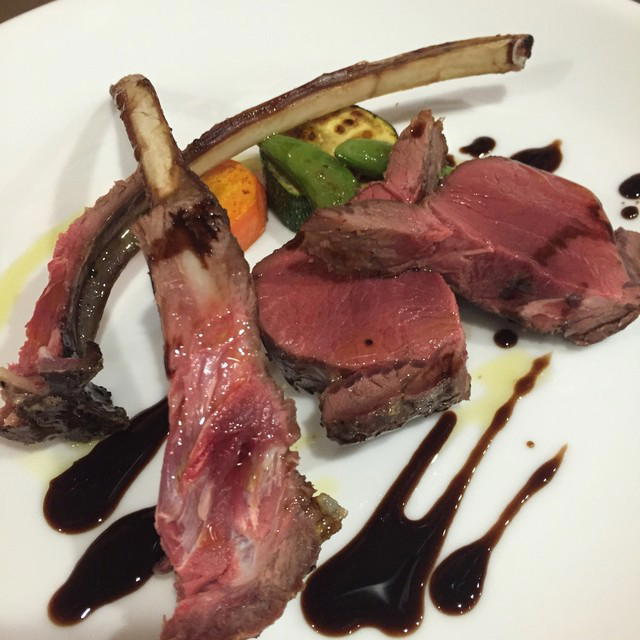
The menu
What to order
- Game meat dishes
- Seasonal vegetable dishes
- Tagliatelle with bamboo shoot ragù
Approach Yokohama with a dinner plan rather than a loose wander and the mood changes from a broad city outing to something more intentional: choosing the right room, checking the timing, and matching appetite to the kind of meal you want. Osteria Austro sits in a Yokohama category that Tokyo diners sometimes underestimate: listed Italian, pasta, and bistro cooking with enough local recognition to make logistics matter.
Yokohama Italian with a smaller-room discipline
Italian dining in Yokohama has never been a single story. Across the city, the scene splits between more formal dining, casual pasta counters, wine-forward bistros, and specialist rooms that reward advance planning. That range is useful for travellers, because it makes the city more than a fallback to Tokyo. In that context, Osteria Austro is not competing with the scale of SUIRINKAKU or the everyday utility of VANILLABEANS Minatomirai honten; it belongs in the more intentional end of the city’s dining map.
The restaurant’s category listing, Italian, pasta, and bistro, says more than it first appears to. In Japan, Italian restaurants often become broad comfort formats, but the stronger rooms usually narrow the signal: pasta as structure, a bistro frame, and a kitchen identity that can shift with the meal without becoming a generic all-purpose option. Here, the public markers position the restaurant away from vague comfort dining and closer to the Japanese-Italian habit of treating familiar formats with local precision.
The trust signal is also concrete. Recognition in the 2025 Tabelog Hyakumeiten context places it inside a curated Italian conversation rather than in a generic local recommendation pool. That matters in Kanagawa, where the audience has access to Tokyo, Kamakura, Kawasaki, and the wider coastal corridor. A Yokohama Italian room has to earn attention against a large commuter dining radius, not only against its immediate neighbours.
The booking experience is part of the meal's shape
Restaurants in Japan often turn planning into part of the experience. When a meal is treated as a specific booking rather than an improvised stop, the evening naturally becomes more time-sensitive than a casual drop-in. That affects how the meal feels: food, drinks, and conversation need to fit the restaurant’s service rhythm, and diners who treat it as a loose walk-in option may miss the point.
This is where Yokohama differs from Tokyo in useful ways. Tokyo’s harder-to-book Italian counters can feel like a competitive sport; Yokohama’s better planned meals tend to be less performative, but they still reward discipline. Lunch and dinner serve different purposes in this category. Lunch is the strategic play for diners testing a kitchen before committing to a longer evening; dinner is where pacing and the bistro side of the format become more relevant. The smarter choice depends less on prestige than on tempo.
Compared with Sumibi Kappou An and Arai Ya Bankokubashi ten, both sitting in a considered-dinner lane, this address gives Yokohama diners a different answer to the same question: where to go when the meal should feel planned but not ceremonial. Tachinomi Shokudo Ultra Suzuki sits in a looser drinking-and-eating lane, while this room asks for more intention. That distinction is useful for visitors building a Yokohama itinerary around city texture rather than a single trophy booking.
The surrounding city helps. Yokohama has a layered dining character: port-city history, office traffic, restored streetscapes, and quick access between polished areas and quieter restaurant pockets. It is a strong setting for Italian and bistro formats because the city already understands short walks, after-work meals, and destination dinners folded into a wider evening. For broader planning across the city, Our full Yokohama restaurants guide is the natural companion, with Our full Yokohama bars guide, Our full Yokohama hotels guide, Our full Yokohama wineries guide, and Our full Yokohama experiences guide filling in the rest of the trip.
How to read it against the wider Japan dining map
The useful way to place Osteria Austro is not as a standalone Italian address, but as part of Japan’s broader habit of absorbing foreign formats and tightening them through local service norms. Pasta and bistro cooking are familiar, but a planned restaurant meal in Yokohama changes the contract: fewer distractions, more visible pacing, and a narrower margin for loose plans.
That makes it a different kind of choice from Yokohama casual staples and other everyday local formats. Those rooms point to Yokohama’s range across skewers, Chinese cooking, curry, sweets, standing bars, and long-running neighbourhood dining; this room represents the city’s European small-restaurant lane in a broader sense. For travellers extending the comparison beyond Yokohama, the same planning logic applies across sharply defined formats elsewhere in Japan: know the category, book with intent, and avoid assuming that a familiar format means an easier table.
Internationally, the appeal is easy to understand for diners who already value format-led rooms: the draw is not size or spectacle, but clarity. A defined cuisine lane, a bistro signal, listed dinner and lunch budgets, and recognised placement in a 2025 Tabelog Hyakumeiten context give the booking its argument. For Yokohama, that is enough reason to plan rather than improvise.
Frequently asked questions
What should I budget for a meal at Osteria Austro?
Pricing at Osteria Austro is listed as Dinner: JPY 8,000 - JPY 9,999; Lunch: JPY 1,000 - JPY 1,999.
What time does Osteria Austro open and close?
Current opening hours are not provided here; confirm directly with Osteria Austro when planning your visit.
Where is Osteria Austro in Yokohama?
Yokohama.
What is Osteria Austro known for?
Osteria Austro is known for its 2025 Tabelog Hyakumeiten recognition and its listed categories of Italian, pasta, and bistro in Yokohama.
Is Osteria Austro allergy-friendly?
Specific allergy accommodations are not provided here, so the safest approach is to state allergy needs clearly when reserving and confirm directly with the restaurant.
Where It Fits
Comparable venues for orientation by cuisine and category.
| Venue | Cuisine | Price | Awards | Notes |
|---|---|---|---|---|
| Osteria AustroThis venue (the venue you are viewing) | Seasonal Italian Osteria | $50–100 | Tabelog 100 #26 | Not listed |
| LA FIGLIA DEL PRESIDENTE | Authentic Neapolitan Pizzeria | $20–30 | Tabelog 100 #31 | Naka |
| クローチフィッソ | Authentic Sicilian Italian | $50–100 | Tabelog 100 #6 | Kanagawa |
| hectopascal | Modern Neapolitan Pizza & Italian in a House-Restaurant Hideout | $50–100 | Tabelog 100 #38 | Asahi |
| 中華菜館同發本館 | Traditional Cantonese Roasted Meats | $30–50 | Not listed | Yokohama Chinatown |
| Ten Shichi | Classic Seasonal Tempura | $50–100 | Tabelog 100 #100 | Naka |
Recognition history
Dated appearances from independent guides and award organizations, with the underlying list record or original source where available.
Tabelog 100 #26 · No. 26
Tabelog · Tabelog 100 - Italian - EAST - 2025
Continue exploring
More in Yokohama
Restaurants in Yokohama
All restaurants in Yokohama →



Bars in Yokohama
Browse all →








Details
- Romantic
- Cozy
- Intimate
- Sophisticated
- Date Night
- Special Occasion
- Business Dinner
- Standalone
- Extensive Wine List
- Local Sourcing
- Street Scene
- A La Carte
- Set Menu
- Wine
- Vegetarian Friendly
Current opening hours
- Monday
- Closed
- Tuesday
- 11:30 AM–1:30 PM, 6–9 PM
- Wednesday
- 11:30 AM–1:30 PM, 6–9 PM
- Thursday
- 11:30 AM–1:30 PM, 6–9 PM
- Friday
- 11:30 AM–1:30 PM, 6–9 PM
- Saturday
- 11:30 AM–3 PM, 6–9 PM
- Sunday
- 11:30 AM–3 PM, 6–9 PM
Hours can change for holidays and private events. Hours as of .
A quiet, stylish, and date-friendly neighborhood osteria with a small, cozy dining room and an intimate feel.