Osteria Amore
On Salt Lake City's east side at 224 East 1300 South, Osteria Amore brings an Italian osteria format to a city still defining its fine-dining identity. The address places it within reach of the Avenues and Sugar House neighbourhoods, situating it alongside a small cohort of independent restaurants pushing against the chain-heavy mid-market. For Italian dining in a landlocked western city, it occupies a specific and considered position.
Pearl is the En Primeur Club membership app — saves, bookings, and concierge access live there. Same editors, same standards.
- Address
- 224 1300 E, Salt Lake City, UT 84102
- Phone
- +13852705606
- Website
- osteriaamore.com
- Directions
- Get directions
 Saves & bookings on Pearl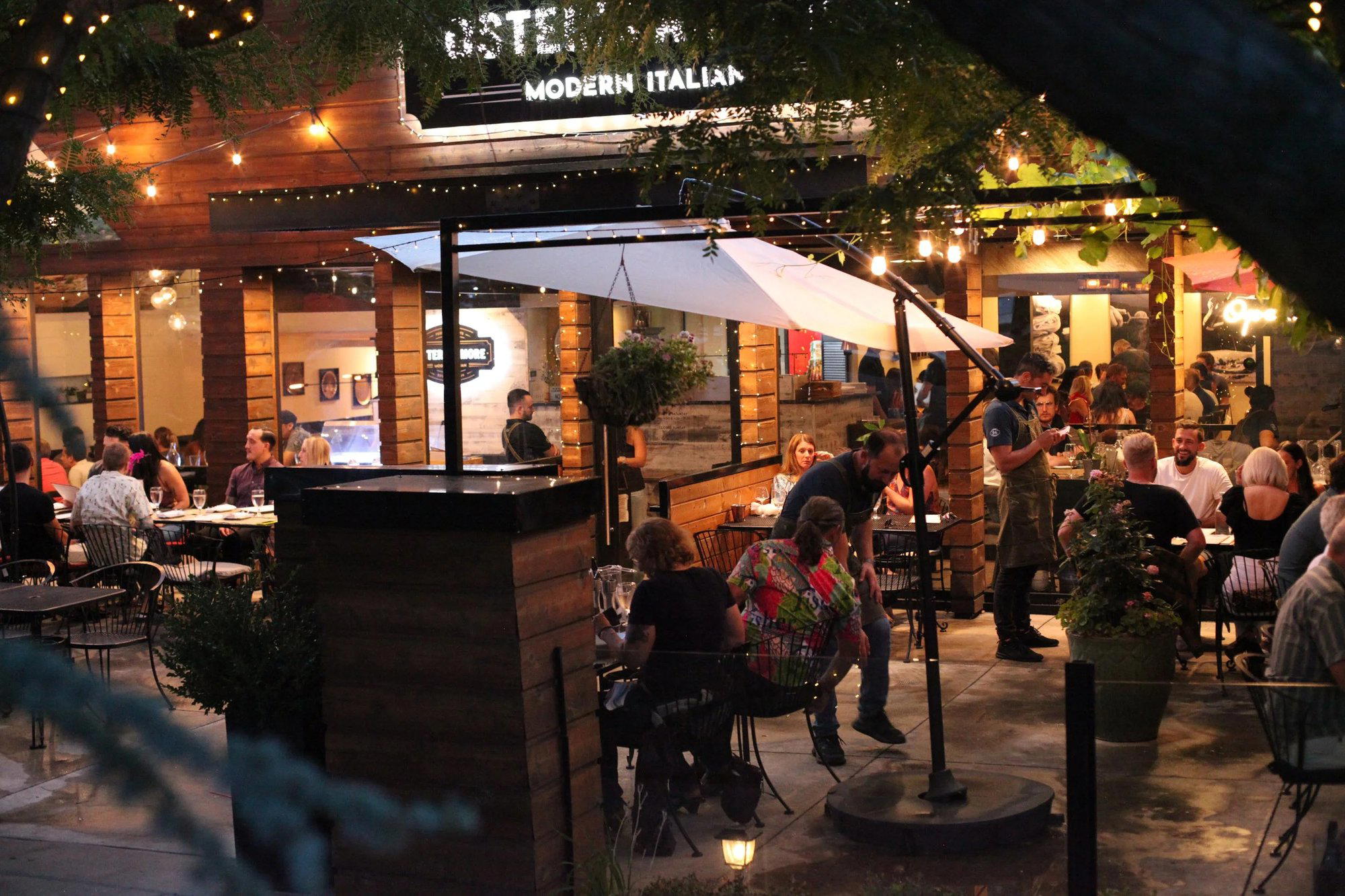
Where East-Side Salt Lake City Meets the Osteria Tradition
The osteria as a format has a specific logic to it: fewer flourishes than a ristorante, more substance than a trattoria, and a room that rewards return visitors over first-time spectacle. On East 1300 South, that format lands in a part of Salt Lake City where independent restaurants have been steadily building out the dining scene. The neighbourhood draws a mix of university-adjacent residents and east-bench regulars who tend to favour places with a point of view over those chasing broad appeal. Osteria Amore sits in that current.
Salt Lake City's Italian dining scene is small enough that each serious operator occupies a distinct position. Cosmica takes a brighter, more contemporary approach to Italian-adjacent cooking. Fresco Italian Cafe has held down a neighbourhood-institution role on the east side for years. Osteria Amore enters that conversation with a name that signals classical register, the word osteria does real work here, implying a certain informality of service alongside deliberate cooking.
The Room and What It Tells You
Approaching a venue on a residential stretch of 1300 East, you expect something scaled to the street rather than to a downtown address. The osteria format historically favours rooms with moderate seat counts, where the noise level stays conversational and the pace is set by the kitchen rather than a turn-time. That physical register, compact, warm, lit for dinner rather than Instagram, is what separates an osteria from a neighbourhood pizza spot with ambitions. The front-of-house dynamic in rooms like this tends to be more collaborative than hierarchical: servers who know the menu deeply, a floor that communicates with the kitchen in real time, and a wine approach that treats the list as a working document rather than a trophy case.
In the broader American context, coherent Italian dining rooms operate as ensemble performances. Places like Le Bernardin in New York City or Providence in Los Angeles demonstrate how tightly coordinated floor-kitchen communication shapes the guest experience at a different price point, but the principle scales down. At an east-side osteria, the version of that coordination shows up in smaller gestures: a sommelier who steers toward lesser-known northern Italian producers, a server who can distinguish between two pasta preparations without consulting anyone, a kitchen that times courses to the table's pace rather than the printer's.
Italian Dining in a Landlocked Western City
Utah's dining scene has undergone genuine structural change since roughly 2015. The state's liquor laws, long a constraint on restaurant economics, have been navigated with increasing sophistication by independent operators. Avenues Proper established that a serious beer and wine program was viable in this market. Arlo Restaurant and Bambara Salt Lake City occupy different positions in the mid-to-upper tier, while Blind Rabbit Kitchen and Adelaide demonstrate that the city now has room for operators with distinct culinary identities rather than just reliable crowd-pleasers.
Italian cooking in this context faces a particular challenge: the genre's reference points are so deeply embedded in American dining culture that differentiation requires either regional specificity (Venetian, Ligurian, Sicilian), product obsession (house-milled pasta, aged salumi, single-origin olive oil), or a front-of-house program coherent enough to carry the room when the cooking is direct. The osteria name suggests the third path is at least part of the intention.
For context on what the format looks like at its most refined elsewhere in the country, the collaborative kitchen-floor model has been executed at high intensity at places like Single Thread Farm in Healdsburg and Blue Hill at Stone Barns in Tarrytown, where the team dynamic is explicitly part of the dining proposition. At a more accessible register, Lazy Bear in San Francisco showed how a smaller, intimate room can carry a collaborative service ethos without formal fine-dining infrastructure. These are not direct comparisons to an east-side osteria in Salt Lake City, but they establish what the format is capable of when the team coordination is genuine.
The Italian Tradition the Name Invokes
Historically, the osteria was a wine-forward eating house: the list was the point, and the food existed to keep guests at the table. That origin has been refined into a modern format where the wine and food programs carry equal weight, and the sommelier role is as formative as the chef's. In Italian cities, the leading contemporary osterias, in Bologna, in Turin, in smaller Piedmontese towns, tend to run tight menus that rotate with seasonal produce and feature producers from the immediate region. The American translation of that model works well when the operator resists the temptation to broaden the menu in the name of accessibility.
The Italian dining tradition also carries specific pasta logic that a room calling itself an osteria is implicitly measured against. Hand-rolled, house-made pasta changes texture with the season's humidity and the day's batch. A kitchen committed to that process communicates a different set of priorities than one using dried pasta as a base and building upward with sauce. At osteria-format restaurants, pasta is often one reliable signal of kitchen discipline. See how the Italian format operates at the highest international level at 8 1/2 Otto e Mezzo Bombana in Hong Kong, where the Italian canon is executed with notable precision outside its home country.
Planning a Visit
Osteria Amore is located at 224 East 1300 South, Salt Lake City, UT 84102, placing it on a manageable east-side stretch with street parking available in the surrounding blocks. The address is accessible from downtown in under ten minutes by car and within range of the University of Utah campus. For current hours, reservation availability, and menu details, checking directly with the restaurant is advisable. Given the format and the neighbourhood's dining density, advance contact before arriving is the sensible approach.
The east side's independent restaurant cluster suggests that Salt Lake City diners now expect more deliberate execution than they did a few years ago. The restaurant addresses that expectation directly through its format choice.
Side-by-Side Snapshot
Comparable venues nearby, for context on price, style, and recognition.
| Venue | Cuisine | Price | Notes |
|---|---|---|---|
| Osteria AmoreThis venue — the venue you are viewing | Modern Italian Osteria | $$ | Not listed |
| Caffé Molise | Regional Italian | $$ | Clark Learning Office Center |
| Cosmica | Modern Roman & Southern Italian | $$ | Downtown |
| Manoli's | Modern Greek Small Plates | $$ | Central City |
| Matteo Ristorante Italiano | Traditional Italian from Modena | $$$ | Clark Learning Office Center |
| Zest Kitchen & Bar | Plant-Based Global Fusion | $$ | Clark Learning Office Center |
Continue exploring
More in Salt Lake City
Restaurants in Salt Lake City
Browse all →
Bars in Salt Lake City
Browse all →
Hotels in Salt Lake City
Browse all →

Wineries in Salt Lake City
Browse all →
At a Glance
- Cozy
- Romantic
- Intimate
- Rustic
- Date Night
- Special Occasion
- Open Kitchen
- Extensive Wine List
- Local Sourcing
- Organic
Current opening hours
- Monday
- 11 AM–2 PM, 4:30–9:30 PM
- Tuesday
- 11 AM–2 PM, 4:30–9:30 PM
- Wednesday
- 11 AM–2 PM, 4:30–9:30 PM
- Thursday
- 11 AM–2 PM, 4:30–9:30 PM
- Friday
- 11 AM–2 PM, 4:30–10 PM
- Saturday
- 11 AM–2 PM, 4:30–10 PM
- Sunday
- Closed
Hours can change for holidays and private events. Last verified .
Cozy and historic neighborhood setting with a warm, homey atmosphere evoking grandma's kitchen, surrounded by dearest friends.