Ostalapia
Our verdict
Set along the Basque Country's inland farming corridor between Saint-Pée-sur-Nivelle and Ahetze, Ostalapia draws from one of France's most coherent regional larders: Espelette pepper, Ossau-Iraty cheese, free-range Basque pork, and Atlantic seafood within an hour's drive. The address alone signals a commitment to place over spectacle, positioning this as a destination for those who want the Pays Basque on a plate rather than a performance.

Pearl is the En Primeur Club membership app, where members save venues, book tables and use the concierge.
The menu
What to order
- Carpaccio of porcini mushrooms
- Pan-fried sweetbreads
- Smoked Banka trout
- Matured prime rib
Where the Basque Interior Meets the Table
The road between Saint-Pée-sur-Nivelle and Ahetze runs through a version of France that resists easy categorisation. The Pyrénées-Atlantiques department sits at the convergence of Atlantic moisture, mountain foothills, and a centuries-old farming culture that has stubbornly maintained its own language, its own architecture, and, most relevant here, its own food system. The farmhouses along Chemin d'Ostalapea are working properties, not heritage scenery, and the rhythm of the landscape communicates something that most urban restaurant experiences have to simulate: genuine proximity to where food originates.
Ostalapia occupies that geography directly. The address at 2621 Chemin d'Ostalapea, Ahetze places it inside one of the Basque Country's most productive agricultural corridors, where the combination of mild Atlantic climate and volcanic-influenced soils produces ingredients with a specificity that serious kitchens elsewhere spend considerable effort trying to source from a distance. For a dining room in this postcode, those same ingredients are local in the unambiguous sense of the word.
The Basque Larder: What 'Local' Actually Means Here
France's regional food cultures vary enormously in how intact their ingredient supply chains remain. Burgundy has its wine infrastructure, Lyon its bouchon tradition, Brittany its coastline. The Pays Basque is unusual in that its land-based and sea-based larders operate almost in parallel, both within reach of kitchens in this corner of Pyrénées-Atlantiques.
Inland from the coast by roughly thirty kilometres, the Saint-Pée-sur-Nivelle area sits close enough to Bayonne and Saint-Jean-de-Luz to access Atlantic fish and shellfish on the same morning markets that carry free-range Basque pork (the dark-coated Kintoa pig holds an AOC designation), Ossau-Iraty sheep's milk cheese from the mountain shepherds to the southeast, and Espelette peppers, AOP since 2000, grown in the eponymous village a short drive east. These are not generic French ingredients with premium positioning. Each carries documented provenance and protected status that places them in a different category from their commodity equivalents. Cooking from this larder is less a creative challenge than a discipline of restraint: the regional product is often the point, and the kitchen's job is to not get in the way.
This is the culinary tradition that restaurants in the French Basque interior navigate. The most accomplished rooms in the broader region, from the coast up into the hills, tend to treat the Espelette pepper as seasoning rather than spectacle, the Kintoa pork as a structural ingredient rather than a garnish, and the local cheeses as course anchors rather than afterthoughts. Context for that approach can be found by looking at France's decorated regional tables more broadly: the ingredient-led philosophy that has shaped houses like Bras in Laguiole or Auberge du Vieux Puits in Fontjoncouse demonstrates how rural French kitchens have long drawn competitive advantage from rootedness rather than from metropolitan technique.
The Wider French Fine Dining Field
Understanding where a rural Basque address sits requires some mapping of the broader French dining spectrum. At the decorated end, tables like Mirazur in Menton, Alléno Paris au Pavillon Ledoyen, and Flocons de Sel in Megève operate in a tier defined by Michelin recognition, multi-course tasting formats, and significant price points. Established institutions like Paul Bocuse - L'Auberge du Pont de Collonges, Maison Lameloise in Chagny, and Auberge de l'Ill in Illhaeusern carry decades of regional authority. At the other end of the spectrum, resort-adjacent addresses like Le 1947 à Cheval Blanc in Courchevel and La Vague d'Or in Saint-Tropez function as destination dining anchored to luxury hotel infrastructure.
The Pays Basque operates somewhat outside all of those categories. This is terrain where the ingredient story often carries more weight than the Michelin page count, and where the most interesting tables are frequently those that resist over-formatting what the region produces. Tables at the quality tier that Ostalapia occupies in this corridor tend to attract visitors from Biarritz and San Sebastián alike, the latter city being one of the most concentrated accumulations of serious dining in Europe and a point of comparison that Basque Country kitchens on both sides of the border live with daily.
Further afield, the approach to place-driven cooking in high-end American rooms, Lazy Bear in San Francisco exemplifies this in a different cultural register, demonstrates that the commitment to local sourcing as a structural principle rather than a marketing note is a global dining conversation, not a specifically French one. The Basque version of that conversation is older and more geographically coherent than most.
Reaching Ostalapia and Planning the Visit
The address at Ahetze is most practically reached by car. Biarritz airport (BIQ) handles connections to Paris and several European cities, and the drive from there runs approximately fifteen to twenty minutes depending on traffic through the coastal towns. Bayonne, with its TGV connections to Paris Montparnasse, is a comparable distance. The surrounding area warrants a night or two: Saint-Pée-sur-Nivelle, the nearby Rhune mountain, and the coast between Hendaye and Biarritz form a compact circuit that rewards a slower pace than a day trip allows. For a broader orientation to what the area offers, our full Saint-Pée-sur-Nivelle restaurants guide covers the local dining field in more depth. Bookings and contact details are best confirmed directly, as operational information for Ostalapia changes seasonally.
Frequently asked questions
Is Ostalapia suitable for children?
Ostalapia sits in a rural setting outside Ahetze in the Pyrénées-Atlantiques, which typically suits families travelling by car through the Basque interior.
What's the overall feel of Ostalapia?
The address on Chemin d'Ostalapea in Ahetze places the venue firmly in the Basque rural interior, removed from the coastal resort energy of Biarritz. The surrounding Pyrénées-Atlantiques landscape frames a quieter, more deliberate dining pace than you find on the Côte Basque. Specific interior details have not been confirmed, but the location itself signals a destination meal rather than a casual drop-in.
Is Ostalapia worth the drive from Biarritz for a meal in the Basque interior?
Biarritz airport (BIQ) sits within practical driving distance of the Ahetze address, making Ostalapia accessible as a standalone destination from the coast. The Pyrénées-Atlantiques corridor between Saint-Pée-sur-Nivelle and the foothills represents some of the most intact Basque food culture in France, with ingredient provenance that coastal tourist restaurants rarely match. Whether the specific kitchen warrants the detour depends on current form, so cross-referencing recent local editorial coverage before booking is worthwhile.
What should I order at Ostalapia?
The Pyrénées-Atlantiques larder gives any serious kitchen in this area access to Basque pork, Espelette pepper, aged sheep's cheese from the Ossau-Iraty tradition, and Atlantic fish from nearby Saint-Jean-de-Luz.
What's Ostalapia's location?
Ostalapia is located at 2621 Chem. d'Ostalapea, 64210 Ahetze, France, Saint Pee Sur Nivelle.
How hard is it to get a table at Ostalapia?
Booking pressure at rural Basque addresses in the Pyrénées-Atlantiques has grown notably since the region gained wider editorial attention, and smaller tables at destination restaurants outside Ahetze and Saint-Pée-sur-Nivelle can fill weeks ahead, particularly in summer. Specific booking lead times for Ostalapia are not confirmed, so early contact is advisable for weekend or peak-season visits.
Comparison Snapshot
Comparable venues nearby, for context on price, style, and recognition.
| Venue | Cuisine | Price | Awards | Notes |
|---|---|---|---|---|
| OstalapiaThis venue (the venue you are viewing) | Authentic Basque French Bistro | $30–50 | Not listed | Not listed |
| La Table de l'Auberge Basque Restaurant | Modern Basque Gastronomique | $150–200 | 1 Michelin Star · Relais Chateaux Award | Helbarron |
| La Table de Cédric Béchade - L'Auberge Basque | Modern Basque Gastronomique | $150–200 | 1 Michelin Star · Relais Chateaux Award | Saint-Pée-sur-Nivelle |
| Etxola Bibi | Casual Coastal Basque Bistro | $20–30 | Not listed | Côte des Basques |
| Café Mère Poule | New French café-bistro with cakes and estate wines | $20–30 | Relais Chateaux Award | Eugénie-les-Bains village |
| Chez Poulette | French Rotisserie | Not listed | Not listed | Lacanau-Ocean |
Continue exploring
More in Saint-Pée-sur-Nivelle
Restaurants in Saint-Pée-sur-Nivelle
All restaurants in Saint-Pée-sur-Nivelle →
Bars in Saint-Pée-sur-Nivelle
Browse all →
Details
- Rustic
- Cozy
- Scenic
- Special Occasion
- Family
- Terrace
- Local Sourcing
- Mountain
- A La Carte
Current opening hours
- Monday
- 12–2 PM, 7:30–10 PM
- Tuesday
- Closed
- Wednesday
- Closed
- Thursday
- 12–2 PM, 7:30–10 PM
- Friday
- 12–2 PM, 7:30–10 PM
- Saturday
- 12–2 PM, 7:30–10 PM
- Sunday
- 12–2 PM, 7:30–10 PM
Hours can change for holidays and private events. Hours as of .
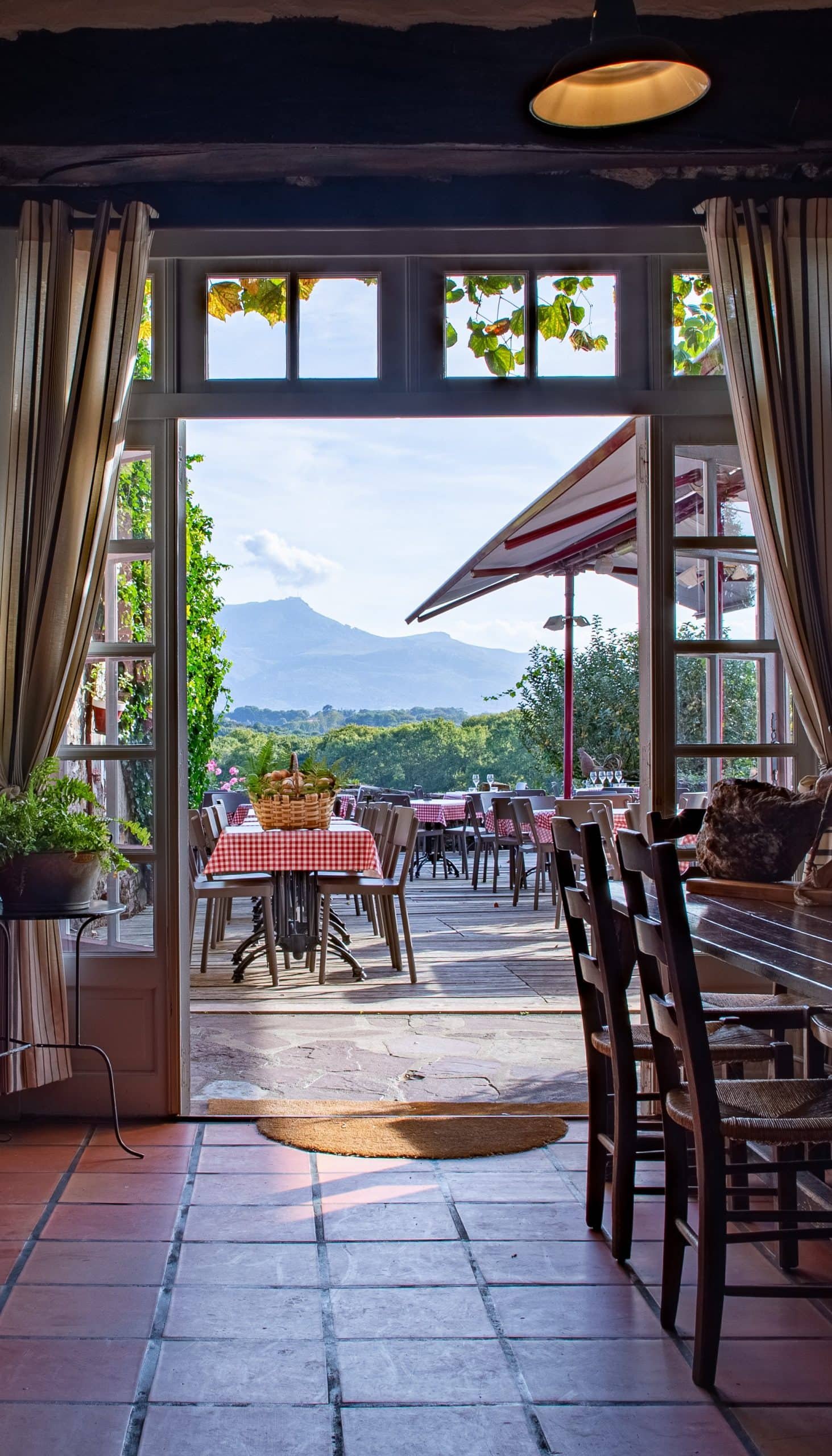
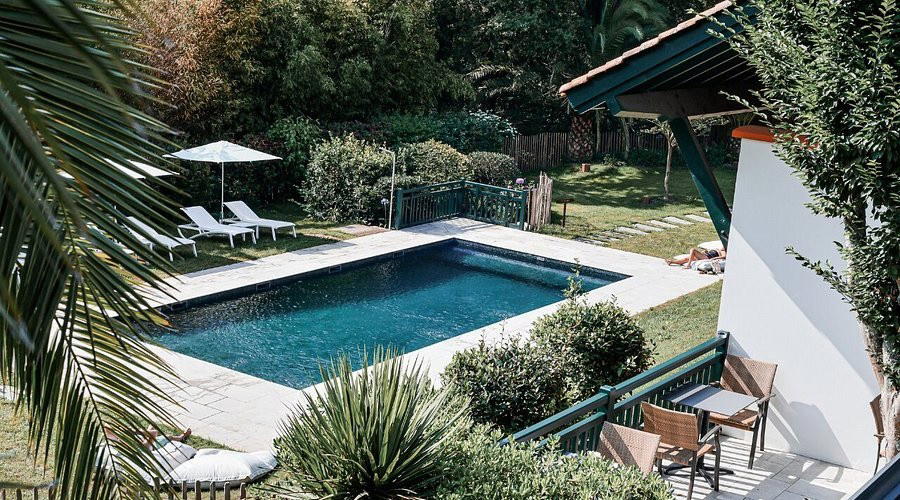
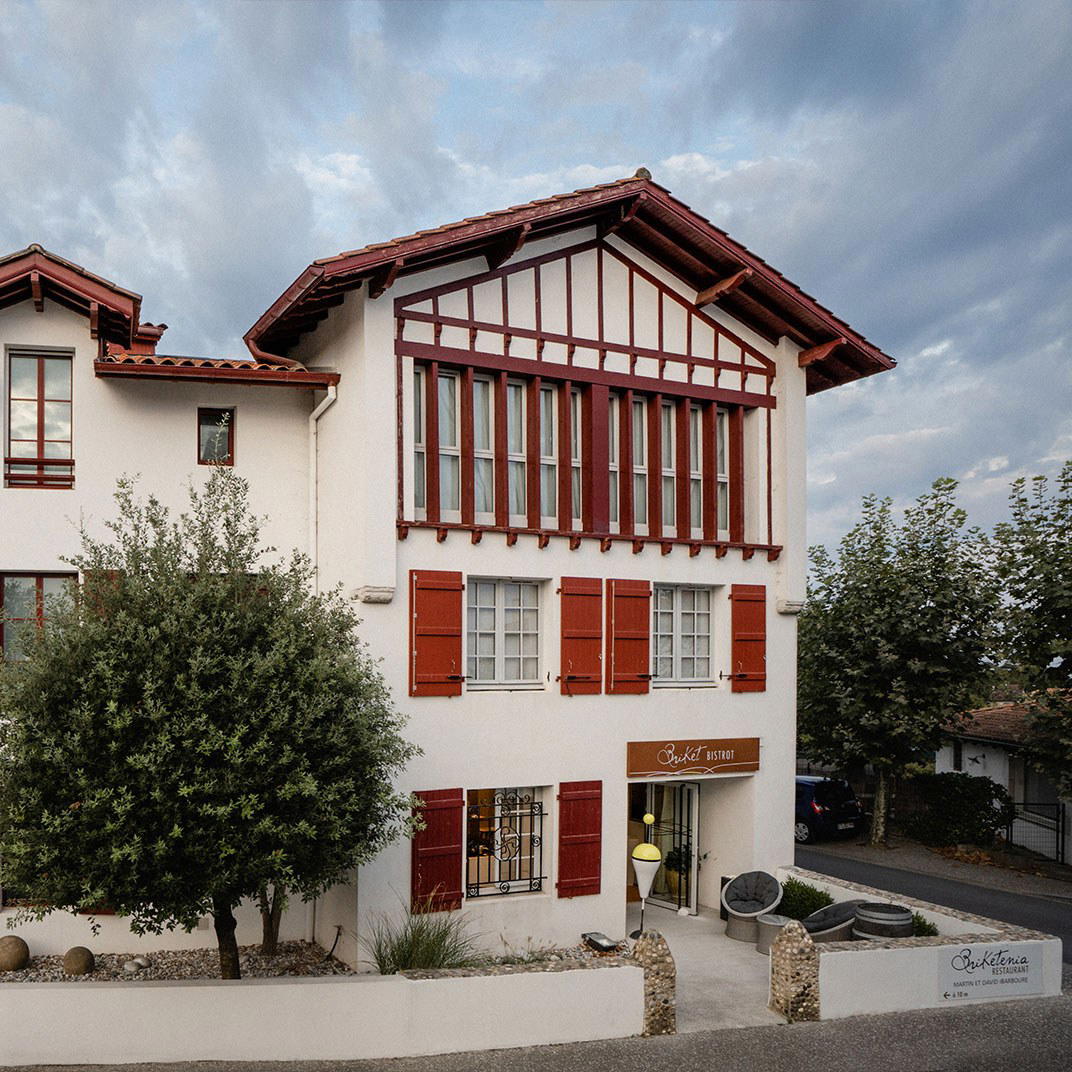
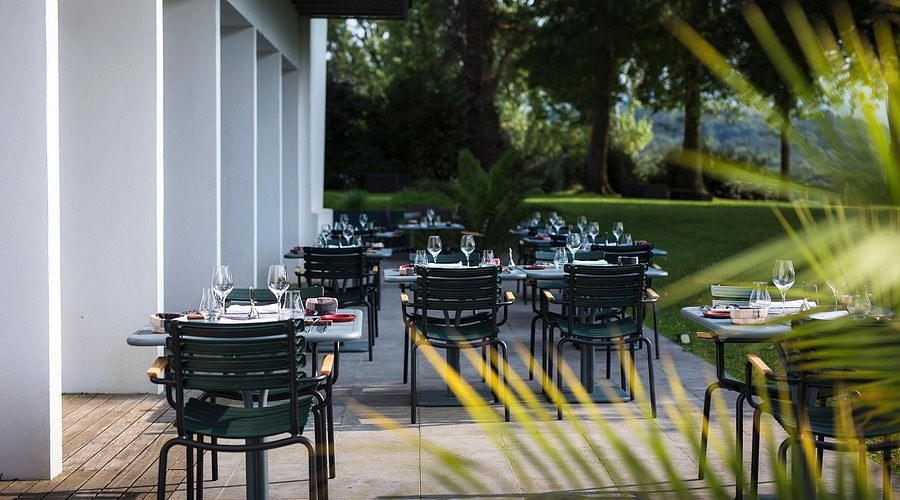
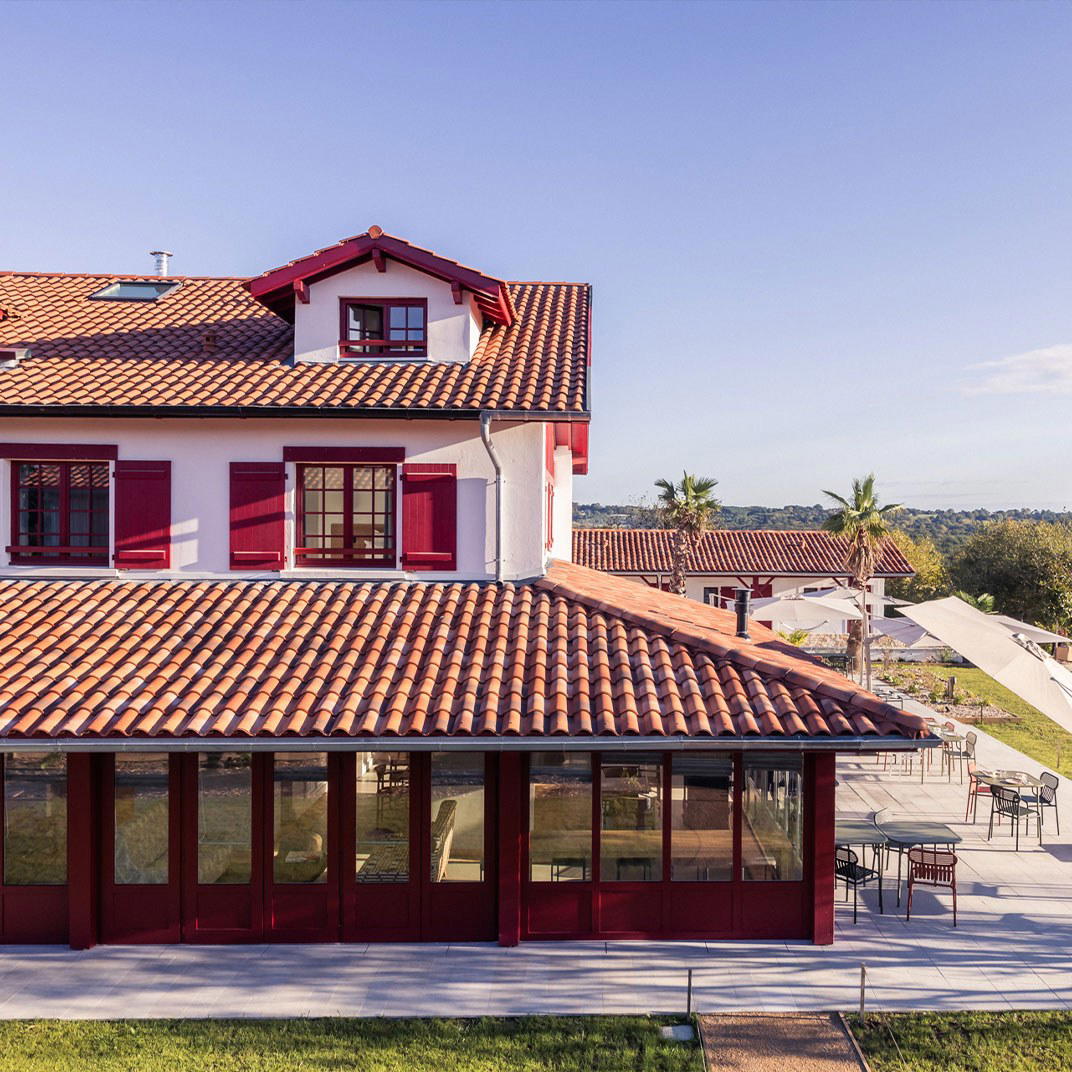
Warm and rustic atmosphere in a beautifully decorated farmhouse with cozy terrace and scenic countryside setting.