Osmose

Michelin Plate
Our verdict
On the main square of Armentières, a town in French Flanders best known as Dany Boon's birthplace, Osmose runs a surprise-only menu built around seasonal Northern French ingredients, Steenvoorde pigeon, Mimolette, mackerel, sharpened by Japanese and Nordic technique. A Michelin Plate recognition. Price range sits at €€€.

Pearl is the En Primeur Club membership app, where members save venues, book tables and use the concierge.
Red Brick, Refined Plate: Dining in French Flanders
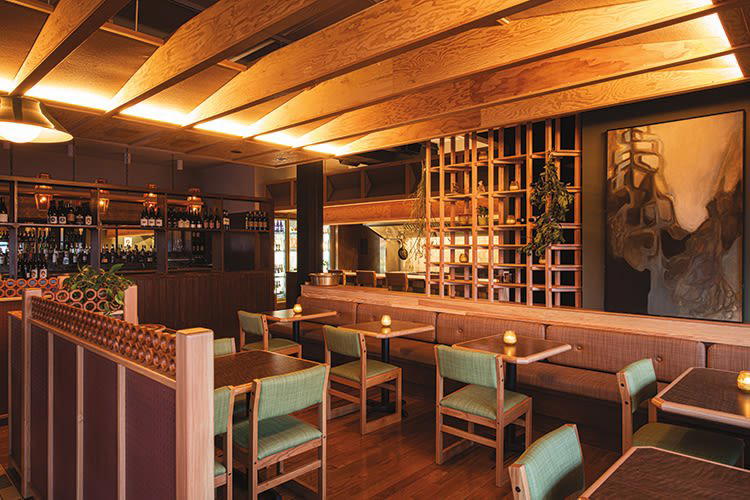
The ground floor of an Armentières red-brick building on Place Saint-Vaast looks, from the outside, like dozens of other addresses in this part of French Flanders. The architecture is typical of the Nord department: solid, functional, the kind of civic streetscape that runs from Lille to the Belgian border without much variation. Step inside Osmose and the register changes. Minimalist decor strips the room back to surfaces and light, creating a backdrop that asks you to focus on what arrives at the table rather than on the room itself. That restraint is not accidental. In Northern France, where the dining tradition has historically leaned toward hearty regional cooking, carbonnade, potjevleesch, Maroilles-inflected sauces, a restaurant that chooses sparse design and a surprise menu is making a deliberate argument about where it wants to sit.
Where the Ingredients Come From
The editorial logic of Osmose's kitchen is clearest when you read the sourcing signals embedded in its menu descriptions. Steenvoorde pigeon is a notable marker: Steenvoorde is a small Flemish town roughly 40 kilometres southwest, and pigeon from that area carries a specific character shaped by local feed and rearing conditions that differ from the more generic French pigeon supply chain. Mackerel, abundant in the North Sea and the Channel, appears here as a serious protein rather than an afterthought, a fish that Nordic kitchens have treated with technical rigor for decades and that Japanese cuisine has long valued for its fat content and textural range. Celeriac, a root vegetable that thrives in the cooler soils of Northern France and Belgium, brings the kind of earthy depth that works across both Nordic and French culinary traditions. Mimolette cheese, a Noord-Holland-influenced orange-hued fromage produced around Lille, ties the sourcing geography back to the immediate region. Juniper, used in Nordic cooking for its resinous, astringent quality, adds a layer that does not belong to classic French technique but reads coherently against this particular range of ingredients.
This kind of sourcing specificity is what separates a kitchen that uses regional provenance as decoration from one that uses it as structure. At Osmose, the ingredients listed in its Michelin Plate recognition are not garnishes on a menu designed elsewhere, they are the menu's architecture. The French Flanders larder is genuinely distinctive: proximity to the Belgian border means access to Flemish brewing and dairy traditions; proximity to the Channel means quality North Sea fish; the inland plains produce strong root vegetables and heritage grain. A kitchen that reads that geography accurately and then applies cross-cultural technique to it is doing something more specific than simply cooking French food with Nordic and Japanese accents.
Michelin Plate and What It Signals in This Context
A Michelin Plate, awarded in 2024, indicates that the Guide's inspectors found cooking of consistent quality worth noting, a signal that sits below the star tier but above anonymous inclusion. In the context of Armentières, a mid-sized town of roughly 25,000 people better known internationally as the birthplace of comedian Dany Boon than as a fine dining address, the recognition carries more weight than it might in a saturated city market. The €€€ price range places Osmose at the higher end of local dining while remaining well below the four-symbol tier occupied by, for instance, Alléno Paris au Pavillon Ledoyen in Paris or Assiette Champenoise in Reims.
A high average score over a smaller sample in a non-tourist city typically indicates repeat visitors and deliberate travellers rather than incidental footfall, the kind of audience that tends to assess a table on its own terms.
The Surprise Menu Format and Its Implications
Choosing to offer only a surprise menu, no à la carte, no selection of courses, is a position that narrows the audience deliberately. It signals that the kitchen sets the terms, which in turn implies a level of confidence in ingredient sourcing and seasonal timing. The format has become more common in ambitious European restaurants over the past decade, partly because it allows the kitchen to work with exactly what is available at peak quality on a given week rather than maintaining a static menu around predictable supply. For a restaurant built on ingredients like local pigeon and North Sea mackerel, that flexibility matters: both proteins are seasonal in their quality peaks, and both benefit from being served when conditions, rather than menu commitments, dictate timing.
The cross-cultural reference points, Japanese, Nordic, that Osmose applies to Northern French ingredients are consistent with a broader movement in European cooking that reached its clearest articulation in the early 2010s and has since dispersed into regional kitchens. What distinguishes thoughtful applications of this approach from superficial ones is whether the technique genuinely unlocks something in the local ingredient or simply adds borrowed visual language. At the ingredient level described in Osmose's recognition, mackerel handled with Japanese precision, pigeon from a specific Flemish provenance, the case for genuine integration is stronger than for cosmetic influence. For a broader frame of reference on how Nordic precision operates at the highest level, Frantzén in Stockholm and its international iteration FZN by Björn Frantzén in Dubai illustrate the technical standard against which cross-cultural modern cuisine is often assessed.
Planning Your Visit
Osmose sits at 20 Place Saint-Vaast, the main square in Armentières, which is accessible by train from Lille in under 30 minutes, the town is on a direct regional line. The €€€ price tier implies a considered spend rather than a casual one; this is a meal you plan rather than stumble into. Given the surprise-only format, dietary requirements should be communicated at the time of booking. No phone or website details are currently listed in public directories, so booking is leading approached by direct enquiry at the address or through restaurant reservation platforms that cover the Nord department. The Michelin Plate recognition means the restaurant appears in the current Guide, which is the most reliable channel for up-to-date contact information.
For further reading on dining and staying in the area, see our full Armentières restaurants guide, our Armentières hotels guide, our Armentières bars guide, our Armentières wineries guide, and our Armentières experiences guide. If you are building a broader itinerary around serious French regional cooking, Mirazur in Menton, AM par Alexandre Mazzia in Marseille, Flocons de Sel in Megève, Au Crocodile in Strasbourg, Paul Bocuse in Collonges-au-Mont-d'Or, and Auberge du Vieux Puits in Fontjoncouse represent the wider geography of what France's regional kitchen does at its most considered.
Frequently asked questions
What's the pricing like at Osmose?
Pricing at Osmose is listed as €€€.
What's the address for Osmose?
Osmose is located at 20 Pl. Saint-Vaast, 59280 Armentières, France, Armentières.
How It Stacks Up
| Venue | Cuisine | Price | Awards | Notes |
|---|---|---|---|---|
| OsmoseThis venue (the venue you are viewing) | Modern French with Japanese and Nordic influences | $100–150 | Michelin Plate | Not listed |
| Alléno Paris au Pavillon Ledoyen | Modern French Fine Dining | $150–200 | 3 Michelin Stars · World's 50 Best #79 | Creative |
| Kei | Contemporary French, Modern Cuisine | Not listed | Michelin 3 Star | Not listed |
| L'Ambroisie | Classic French Haute Cuisine | $300–500 | 2 Michelin Stars · World's 50 Best #23 | French, Classic Cuisine |
| Le Cinq - Four Seasons Hôtel George V | Modern French Fine Dining | $300–500 | 3 Michelin Stars · World's 50 Best #24 | French, Modern Cuisine |
| Plénitude | Modern French Sauce-Led Fine Dining | $300–500 | 3 Michelin Stars · World's 50 Best #14 | Contemporary French |
Recognition history
Dated appearances from independent guides and award organizations, with the underlying list record or original source where available.
Michelin Plate
Michelin
Full recognition history (3 entries)
Michelin Plate
Michelin
Michelin Plate
Michelin
Continue exploring
More in Armentières
Restaurants in Armentières
All restaurants in Armentières →
Bars in Armentières
Browse all →
Hotels in Armentières
Browse all →

Wineries in Armentières
Browse all →
Details
- Minimalist
- Elegant
- Cozy
- Modern
- Intimate
- Date Night
- Special Occasion
- Business Dinner
- Open Kitchen
- Extensive Wine List
- Local Sourcing
- Street Scene
- Tasting Menu
Current opening hours
- Monday
- Closed
- Tuesday
- 12–1:15 PM, 8–9:15 PM
- Wednesday
- 12–1:15 PM, 8–9:15 PM
- Thursday
- 12–1:15 PM, 8–9:15 PM
- Friday
- 12–1:15 PM, 8–9:15 PM
- Saturday
- 12–1:15 PM, 8–9:15 PM
- Sunday
- 12–1 PM
Hours can change for holidays and private events. Hours as of .
Minimalist decor with vegetal ambiance around massive wooden tables, elegant and cozy.