Osha Thai Noodle Cafe
Our verdict
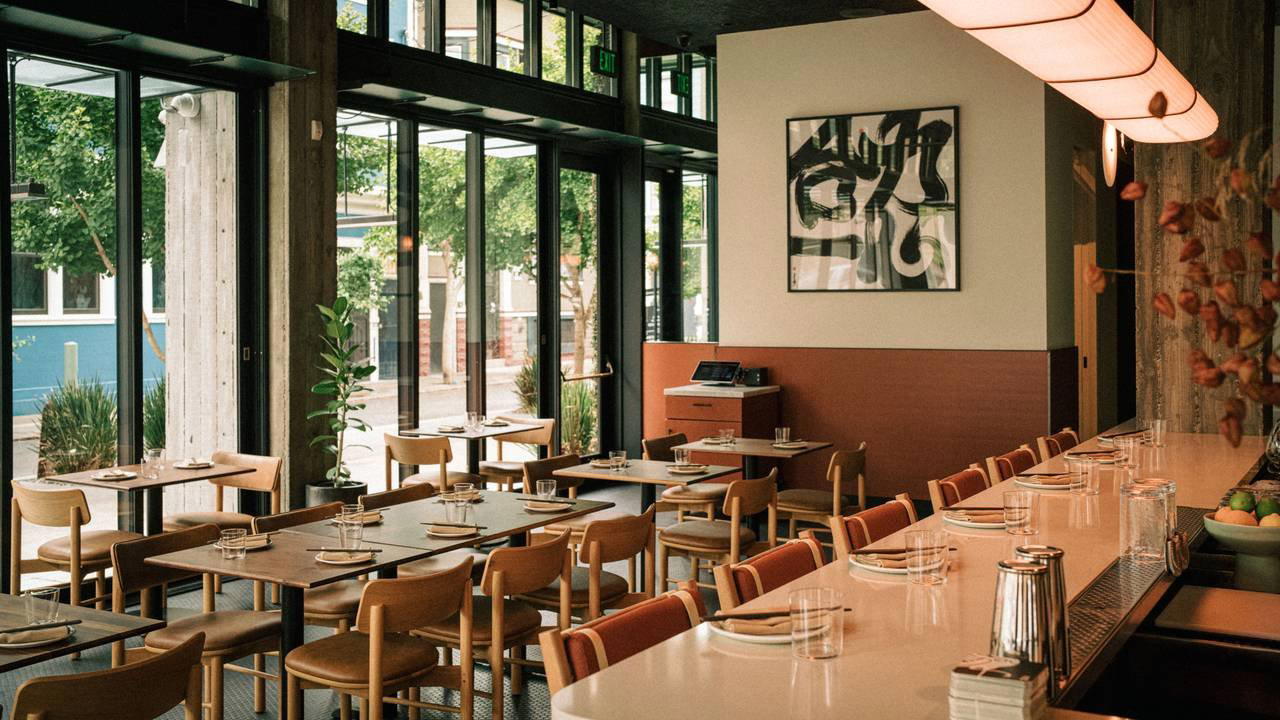
Located on Geary Street in the Tenderloin-adjacent stretch of San Francisco, Osha Thai Noodle Cafe sits within a city that has long debated how to reconcile fast-casual Thai cooking with California's growing pressure toward ethical sourcing and reduced waste. The cafe occupies the accessible end of the city's Thai dining tier, a useful counterpoint to the tasting-menu dominance that defines much of SF's restaurant conversation.

Pearl is the En Primeur Club membership app, where members save venues, book tables and use the concierge.

The menu
What to order
- Pineapple Fried Rice
- Pad Khee Mao
- Chicken Satay
Thai Noodles on Geary: Where the City's Casual Dining Meets Its Sustainability Pressures
San Francisco's restaurant culture is defined at its upper tier by commitment and expense: the omakase counter, the farm-driven tasting menu, the hyper-local sourcing program. Venues like Lazy Bear, Atelier Crenn, and Benu operate in a stratum where sourcing decisions are documented, seasonal rotations are announced, and sustainability credentials are part of the dining proposition itself. But these conversations do not stay contained to the $$$$ tier. They ripple downward, and the question of how Thai noodle cafes, casual ramen counters, and neighbourhood spots respond to those pressures is, increasingly, part of how food-literate San Franciscans read a restaurant.
Osha Thai Noodle Cafe on Geary Street sits in that middle space: not a fine-dining institution with a published sourcing manifesto, but also not operating in isolation from a city that has passed some of the country's most stringent composting laws, that mandates food waste diversion, and that has driven many casual operators toward rethinking supply chains in ways that would have seemed impractical a decade ago.
The Tenderloin Corridor and What It Asks of a Restaurant
The stretch of Geary Street around the 600 block runs through the edge of the Tenderloin, one of San Francisco's most densely populated and economically mixed neighbourhoods. Dining here operates under different conditions than the Ferry Building or Hayes Valley. The expectation is value, consistency, and accessibility, not necessarily the provenance-first storytelling that defines spots like Quince or Saison.
This neighbourhood context matters for how any cafe on Geary is evaluated. The question is not whether a Thai noodle spot is practicing the same kind of ethical sourcing as Single Thread Farm in Healdsburg or Blue Hill at Stone Barns. The question is whether it is responding to the structural sustainability requirements that San Francisco has built into its food-service operating environment, composting mandates, single-use plastic restrictions, food donation programs, and whether those requirements are changing how the kitchen thinks about what it orders, how much it prepares, and what happens to what is left over.
City-wide composting compliance and food waste diversion, both mandatory for San Francisco food businesses since 2009 legislation, mean that even a casual noodle cafe on Geary is legally required to engage with waste reduction infrastructure that most American cities have not yet mandated. That is not a marketing talking point; it is a baseline condition of operation in this city.
Thai Cuisine in a City Built on Restaurant Conversation
Thai food in San Francisco occupies a broad spectrum. At one end, there are the neighbourhood standbys that have served pad see ew and green curry to the same zip codes for two decades. At the other, a smaller cohort of modern Thai kitchens has started applying the rigour more typically associated with Japanese or New American formats: attention to regional specificity within Thailand, herb sourcing, fermentation timelines. The Osha group, which has operated multiple locations in San Francisco over the years, belongs to the accessible, multi-location tier of that spectrum, a Thai cafe operation built for volume and regularity rather than occasion dining.
That positioning means the sustainability conversation looks different here than it does at a single-location tasting menu restaurant. A multi-location Thai operation's environmental footprint is shaped by purchasing scale, supplier relationships, and kitchen processes across sites. The efficiency questions, how produce is ordered to reduce spoilage, how prep waste is managed, whether portion structures minimise trim, are the practical terrain of sustainability at this level, not single-origin sourcing narratives.
Casual Thai kitchens, by nature of their noodle and curry formats, tend to work with ingredient lists that lend themselves to efficient prep: aromatics used across multiple dishes, proteins purchased in quantities that allow systematic use, broths that can incorporate trim that would otherwise be waste. Whether any specific cafe is applying these efficiencies deliberately or simply by the logic of its format is something only kitchen-level observation can confirm, but the structural affordances of the cuisine type are relevant context.
How Osha Thai Sits Relative to San Francisco's Broader Restaurant Map
To understand what Osha Thai Noodle Cafe on Geary represents in the city's dining map, it helps to understand what it is not competing with. The Michelin-starred tier, Benu, Atelier Crenn, Lazy Bear, draws a national and international audience willing to book months ahead. National fine-dining benchmarks like Le Bernardin in New York City, Alinea in Chicago, or The French Laundry in Napa operate in an entirely different competitive conversation. Osha Thai's competitive set is the city's working Thai restaurant tier: spots where a bowl of noodle soup costs what it should cost, where the room turns over multiple times on a weeknight, and where the value proposition is directness and reliability.
That positioning is not a lesser one. San Francisco's restaurant culture depends on this tier in ways the tasting-menu conversation sometimes obscures. The casual Thai cafe, the neighbourhood ramen counter, the order-at-the-counter Vietnamese spot, these are where the city actually eats on most nights. And the sustainability pressures that shape how these businesses operate are, arguably, more consequential in aggregate than the sourcing decisions of any single fine-dining kitchen, precisely because of their scale and frequency of service.
For readers comparing the SF dining scene to other cities, it is worth noting that the regulatory environment here, food waste diversion, composting infrastructure, packaging restrictions, is more demanding than most American markets, including the ones served by restaurants like Providence in Los Angeles, Addison in San Diego, Bacchanalia in Atlanta, or Emeril's in New Orleans. The bar for what counts as basic compliance is higher in San Francisco, and that baseline shapes every food business operating here, regardless of price point.
Planning Your Visit
Osha Thai Noodle Cafe is located at 696 Geary Street, San Francisco, CA 94102. Reservations: Given the cafe format and Tenderloin-area foot traffic patterns, walk-in is typically the operating model for casual Thai spots at this address; confirm current policy directly with the venue. Timing: Weekday lunches and early dinners tend to offer the most direct service at neighbourhood noodle cafes in this corridor. Budget: Casual Thai noodle cafe pricing in San Francisco generally runs in the $15-25 per person range for a full meal, though this should be confirmed at time of visit. Getting there: Geary Street is served by multiple Muni bus lines; the 38 and 38R operate along the corridor and connect to downtown and the Richmond District. For a fuller picture of where this fits in the city's dining map, see our full San Francisco restaurants guide.
Frequently asked questions
What's the address for Osha Thai Noodle Cafe?
Osha Thai Noodle Cafe is located at 696 Geary St, San Francisco, CA 94102, San Francisco.
How does Osha Thai Noodle Cafe on Geary Street fit into San Francisco's Thai food scene?
San Francisco's Thai restaurant range runs from neighbourhood staples to destination-level spots with editorial recognition, Osha Thai Noodle Cafe at 696 Geary Street sits in the accessible, community-serving tier. The Tenderloin location means it serves a mixed clientele of residents, nearby workers, and transit-linked visitors rather than a destination-dining crowd.
What's the best thing to order at Osha Thai Noodle Cafe?
Thai noodle cafes in this format typically anchor their menus around broth-based dishes and stir-fried noodles, pad see ew, boat noodles, and curry-based options are common pillars. Ask staff at 696 Geary St what is prepared fresh that day.
Should I book Osha Thai Noodle Cafe in advance?
Osha Thai Noodle Cafe operates in a cafe format on Geary Street, a high-foot-traffic corridor in the Tenderloin, which generally means walk-ins are accommodated rather than advance reservations. Arriving during off-peak hours, mid-afternoon or early evening, is the more reliable strategy for avoiding a wait.
What's Osha Thai Noodle Cafe best at?
Osha Thai on Geary occupies the accessible, neighbourhood-serving tier of San Francisco's Thai dining scene rather than the chef-driven or tasting-menu bracket. Its positioning at 696 Geary St places it squarely in the Tenderloin's working dining corridor, where consistency and value carry more weight than culinary prestige. That context defines the venue's function: reliable Thai noodles at a street-level price point in a city where casual dining faces serious cost pressure.
Peers Worth Knowing
| Venue | Cuisine | Price | Awards | Notes |
|---|---|---|---|---|
| Osha Thai Noodle CafeThis venue (the venue you are viewing) | Thai Noodle Cafe | $20–30 | Not listed | Not listed |
| Lazy Bear | Modern American Tasting Menu | Not listed | 2 Michelin Stars · World's 50 Best #25 | Progressive American, Contemporary |
| Atelier Crenn | Contemporary French Fine Dining | $300–500 | 3 Michelin Stars · World's 50 Best #44 | Modern French, Contemporary |
| Benu | Modern Asian Fusion Fine Dining | $150–200 | 3 Michelin Stars · World's 50 Best #33 | French - Chinese, Asian |
| Quince | Contemporary Californian | $300–500 | 3 Michelin Stars · World's 50 Best #48 | Italian, Contemporary |
| Saison | Modern Fire-Forward Fine Dining | $300–500 | 2 Michelin Stars · World's 50 Best #22 | Progressive American, Californian |