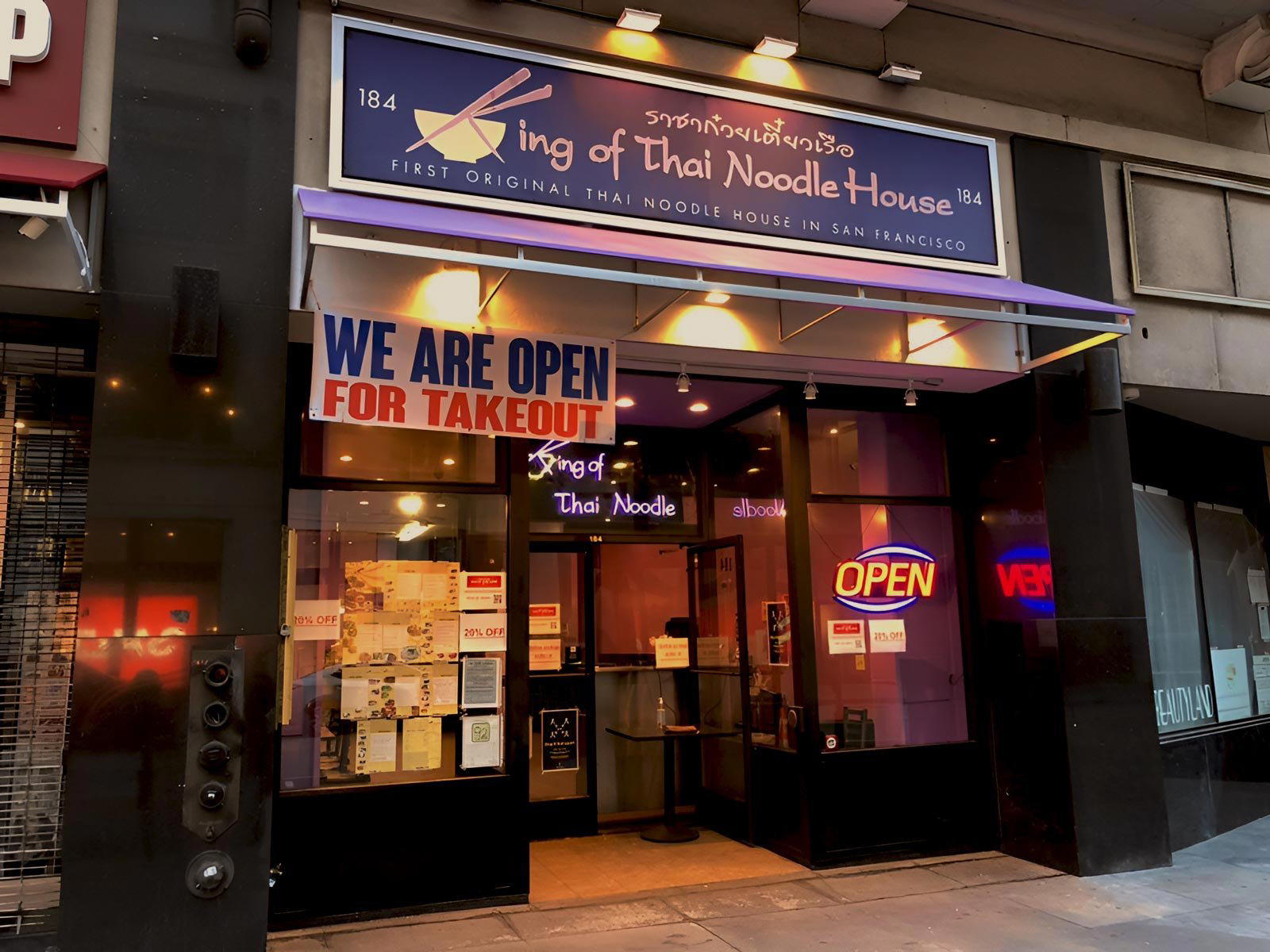
King of Thai Noodle House
Our verdict
On O'Farrell Street in the Tenderloin, King of Thai Noodle House sits in a district that has long served as San Francisco's most cost-honest dining corridor. The menu is built around Thai noodle formats, placing it within a tradition where broth depth and condiment logic matter more than tableside ceremony. For travelers used to spending significantly more at nearby fine-dining addresses, it offers a useful calibration point.

Pearl is the En Primeur Club membership app, where members save venues, book tables and use the concierge.
The menu
What to order
- Pineapple Fried Rice
- Pad Thai
- Tom Yum Soup
The O'Farrell Street Setting
The Tenderloin is the neighborhood that San Francisco's fine-dining consensus tends to route around. While the city's critical attention concentrates on SoMa tasting counters, Hayes Valley wine bars, and the Michelin-tracked rooms of Benu, Atelier Crenn, and Quince, the Tenderloin operates on a different register: higher density, lower price points, and a dining population that eats out of necessity and habit as much as occasion. O'Farrell Street sits at the northern edge of that district, close enough to Union Square to catch foot traffic from hotel guests but far enough to retain the neighborhood's functional, non-performative character. King of Thai Noodle House at 184 O'Farrell occupies that in-between geography, and the room reflects it: the priority here is throughput and value, not atmosphere curation.
What the Menu Structure Reveals
Thai noodle menus, when they're working from tradition rather than trend, are architecturally specific. They divide along a few clear axes: noodle width and type (rice noodles from thin sen mee to wide sen yai, egg noodles, glass noodles), broth base (clear, coconut, tom yum-acidic), and protein, with condiment stations completing the dish at the table. This is a format where the kitchen's job is largely done before service, and the diner's job is calibration: spice level, sweetness, additional fish sauce, dried chili. The menu at King of Thai Noodle House follows this grammar. It is a document of categories and permutations rather than a list of named chef compositions, which places it in a different tradition from the tasting-menu formats that define San Francisco's critical conversation at Lazy Bear or Saison.
That structural approach carries editorial information about what the restaurant is for. A menu organized around noodle type and protein matrix is designed for repeat visitors who know the format, not for first-timers navigating a curated progression. It assumes familiarity, rewards customization, and prices accordingly. Comparing it to the fixed, course-driven formats of Quince or the farm-anchored progression at Single Thread Farm in Healdsburg makes the contrast plain: these are different instruments for different purposes, and evaluating King of Thai Noodle House against fine-dining benchmarks misreads what the menu is actually proposing.
Pad Thai and the Broader Noodle Tradition in San Francisco
San Francisco's Thai restaurant population skews toward mid-register neighborhood operations, several of which have maintained consistent quality over decades in the Richmond, the Sunset, and the Tenderloin. The city's Thai food scene does not occupy the same critical spotlight as, say, its Japanese or Californian-produce-driven categories, but it has a stable, loyal audience and a number of operations that have outlasted many of the fine-dining projects that opened and closed around them. Within that peer group, Tenderloin Thai spots compete on price consistency, portion scale, and reliability of the core noodle dishes. Pad thai, pad see ew, and boat noodle variants are the reference points most diners use to assess a room, and the condiment presentation (typically dried chili, fish sauce, sugar, and vinegar with chilies) is the clearest signal of whether a kitchen respects the format or has simplified it for a less-informed audience.
The presence of this kind of operation on O'Farrell matters in the context of the broader city dining map. San Francisco's premium restaurant tier, which includes rooms like Atelier Crenn and addresses further afield such as The French Laundry in Napa or Providence in Los Angeles, operates at price points that price out most of the city's working population on anything but a special-occasion basis. The Tenderloin's Thai and Southeast Asian corridors function as the city's most accessible everyday dining infrastructure, and King of Thai Noodle House is a working part of that system.
Placing It in the San Francisco Dining Spectrum
San Francisco's restaurant conversation in recent years has concentrated heavily on tasting-menu formats, Californian produce sourcing, and chef-driven concept restaurants. The city's Michelin coverage rewards complexity and innovation, which pulls critical attention toward rooms like Benu and away from category-specialist spots. That concentration of attention does not mean the specialist spots are less technically consistent; it means they operate in a different evaluation framework. Internationally, this pattern repeats: the cities with the most decorated fine-dining ecosystems, from New York (Le Bernardin, Atomix) to Chicago (Alinea), also contain the most durable everyday ethnic-food operations that rarely intersect with the awards apparatus but carry significant institutional knowledge.
For a reader who has spent a week in San Francisco moving through the premium tier, a Tenderloin noodle house visit functions as a reset: different pacing, different pricing logic, different service contract. The comparison is not invidious in either direction. You can read our full San Francisco restaurants guide for a broader map of where these different tiers sit geographically and categorically.
Planning Your Visit
Location: 184 O'Farrell St, San Francisco, CA 94102, at the edge of the Tenderloin near Union Square. Getting there: Powell Street BART and Muni station is within a short walk; street parking in this corridor is difficult during peak hours. Timing: Tenderloin Thai spots in this category typically see lunch and early dinner as the highest-volume periods; arriving outside those windows usually means shorter waits. Reservations: Likely walk-in only, consistent with the format, though confirming directly before visiting is advisable given the absence of confirmed booking data. Budget: Consistent with Tenderloin pricing norms, this category of operation runs significantly below the $$$$ tier that defines much of San Francisco's reviewed fine-dining, including neighbors in the critical conversation like Lazy Bear or Saison.
Frequently asked questions
Where exactly is King of Thai Noodle House?
King of Thai Noodle House is located at 184 O'Farrell St, San Francisco, CA 94102, San Francisco.
Is King of Thai Noodle House a good option for a quick solo meal near Union Square in San Francisco?
The address at 184 O'Farrell St places King of Thai Noodle House within a short walk of Union Square, making it one of the few Thai noodle counters within that radius. Noodle house formats in this part of San Francisco typically serve quickly and suit solo diners eating at the counter or a small table. It represents a practical alternative to the hotel-adjacent dining that dominates the immediate Union Square corridor.
What's the must-try dish at King of Thai Noodle House?
The noodle-focused menu at 184 O'Farrell St follows the structural logic of traditional Thai cooking, where dish selection is guided by noodle width, broth base, and preparation style. Pad thai is the reference point most visitors reach for first, though a Thai noodle house operating in this register typically anchors its credibility in broth-based dishes like boat noodles or rice noodle soups. Ask staff what's been on the menu longest, that tends to signal where the kitchen's confidence sits.
What do critics highlight about King of Thai Noodle House?
What the venue's positioning does reflect is a broader truth about San Francisco's Thai restaurant scene: the operations that hold ground in the Tenderloin over time do so through consistency of execution rather than profile. The O'Farrell Street address places it in a corridor that mainstream dining coverage tends to overlook, which can work in a regular's favor.
Is King of Thai Noodle House good for vegetarians?
Traditional Thai noodle menus typically include vegetable-based preparations and tofu options alongside meat and seafood, though broth bases can vary in their use of animal stock. Asking at the counter about broth composition is the practical step for anyone with dietary requirements.
How It Stacks Up
Comparable venues nearby, for context on price, style, and recognition.
| Venue | Cuisine | Price | Notes |
|---|---|---|---|
| King of Thai Noodle HouseThis venue (the venue you are viewing) | Thai Noodle House | $10–20 | Not listed |
| Rooster & Rice | Thai Chicken & Rice | Not listed | Financial District/South Beach |
| Lao Table | Laotian & Thai Fusion | $30–50 | Financial District/South Beach |
| Sai Jai Thai | Authentic Thai Comfort Food | $20–30 | Tenderloin |
| Osha Thai Restaurant & Lounge | Modern Thai | $30–50 | Embarcadero |
| Marnee Thai Restaurant | Authentic Thai | $20–30 | Inner Sunset |