

1 Michelin Star · Guía Repsol 1 Sol
Our verdict
Orobianco holds a Michelin star for its convergence of Italian technique and Costa Blanca ingredients, served with views of the Peñón de Ifach in Calp. Chef Paolo Casagrande's kitchen works across two set menus, threading Italian culinary foundations through local cuttlefish, red prawns, and Mediterranean produce. Among Calp's upper-tier dining options, it occupies a distinct niche where Italian craft meets Spanish coastal identity.

Pearl is the En Primeur Club membership app — saves, bookings, and concierge access live there. Same editors, same standards.
- Address
- Partida Colina del Sol, 49A, 03710 Calp, Alicante, Spain
- Phone
- +34 966 80 66 61
- Hours
- Mon–Tue ClosedWed–Sat 1–2:30 PM, 8–9:30 PMSun Closed
- Website
- orobianco.es
- Directions
- Get directions
- Booking
- Book on the venue's website
The menu
What to order
- Cuttlefish tagliatelle
- Watercress risotto with red prawns
- Spaghettoni with pil-pil sauce
Where the Peñón Meets the Plate
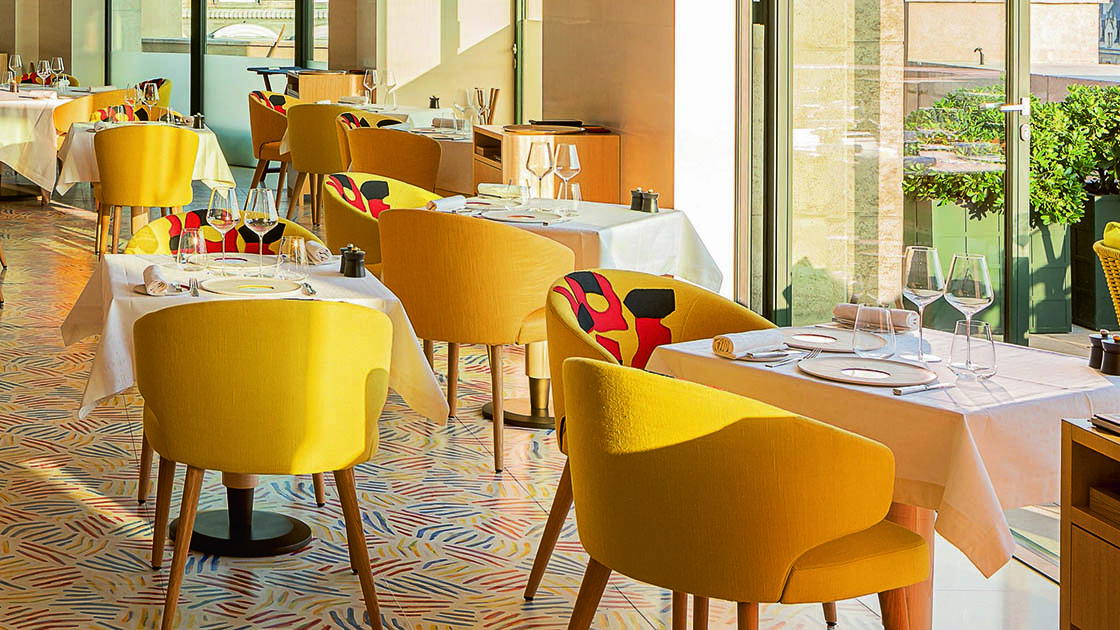
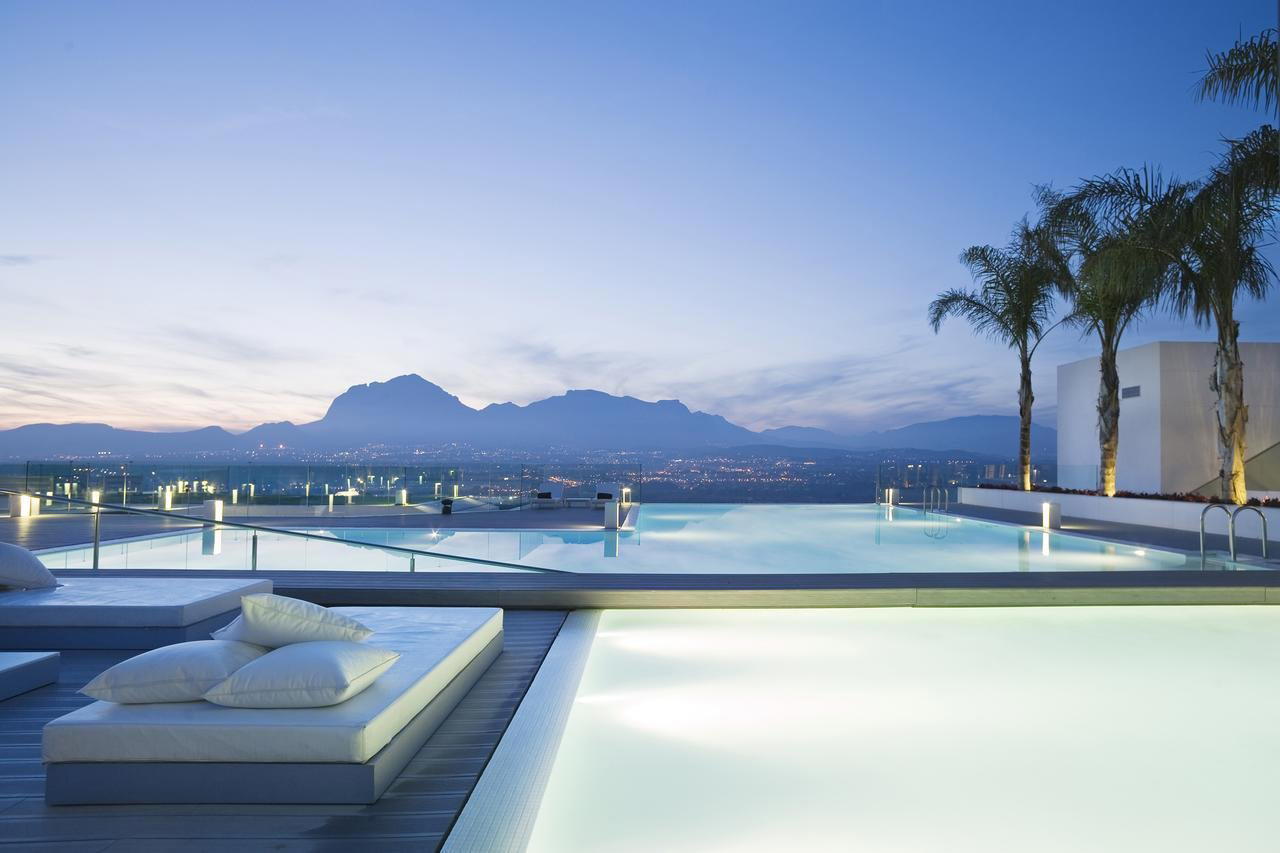
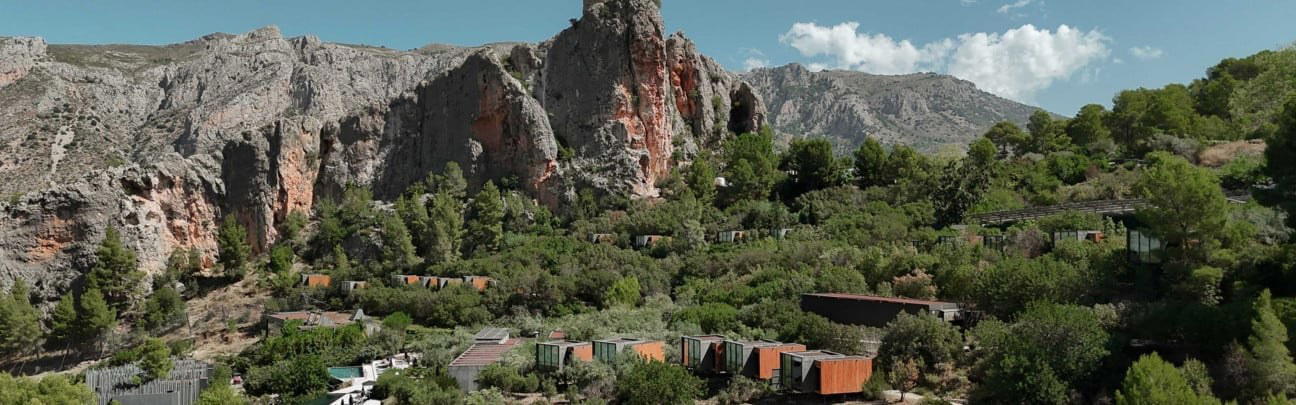
Calp announces itself through geology. The Peñón de Ifach, a 332-metre limestone outcrop that rises almost vertically from the Mediterranean, dominates the town's visual identity in a way few natural features dominate a destination. Approaching Orobianco at Partida Colina del Sol, that rock fills the horizon. Before a menu is opened or a glass poured, the setting does considerable work — and the kitchen is aware of it. The dining room frames the view deliberately, and the architecture of an evening here begins with what you see before you sit down.
This is a useful entry point into understanding what Orobianco is, and what it is not. It is not a Spanish fine-dining restaurant that happens to serve Italian food, nor is it an Italian trattoria transplanted to the Costa Blanca. It occupies a more specific position: a Michelin-starred kitchen (one star, awarded 2024) where Italian culinary grammar is applied to Mediterranean coastal ingredients, and where the tension between those two identities is the whole point.
Italian Structure, Spanish Ingredients
The broader question of what Italian cooking becomes when it leaves Italy is one of the more interesting conversations in contemporary European dining. Italian cuisine, more than most traditions, travels with strong structural rules — the primacy of technique, the insistence on ingredient quality, the refusal to complicate what simplicity does better. Those rules tend to survive transplantation, but what changes is the raw material, and with it, the flavour register.
Orobianco's kitchen, under award-winning chef Paolo Casagrande, works this tension directly. The menu includes cuttlefish tagliatelle, watercress risotto with red prawns, and spaghettoni with a pil-pil sauce, a Basque emulsification technique applied to pasta. Each of these dishes places Italian format in conversation with produce that is unambiguously Mediterranean Spanish: the red prawn (gamba roja) is among the most prized shellfish along this coastline, and pil-pil is a sauce with deep roots in northern Spanish cuisine. The result is a cooking style that sits closer to the Italian Contemporary category than fusion, because the Italian frameworks remain legible even as the ingredients shift geography.
Two set menus, a shorter and a longer format, structure the experience. This is standard practice at the Michelin one-star level across Spain, where the tasting menu has become the dominant formal dining vehicle. At comparable €€€€-tier restaurants in Calp, including Beat (Mediterranean Cuisine) and Audrey's (Creative), the set menu format prevails, though each kitchen applies it to a different culinary tradition. Orobianco's dual-menu approach gives diners a meaningful choice: the shorter format is suited to a single sitting at a measured pace, the longer to an evening that earns its length through progression.
The Pairing Logic: Italian Wine at a Spanish Table
The editorial angle that Italian food demands Italian wine is one of the most durable orthodoxies in restaurant culture, and it holds here with particular force. Italian cuisine, especially in its fine-dining form, is built around acidity and structural restraint, and Italian winemaking has spent centuries calibrating to exactly those qualities. The high-acid reds of Piedmont and the structured whites of Friuli and Alto Adige exist, in part, because the cooking they accompany needs that acidity to function.
At a restaurant like Orobianco, where the menu crosses Italian structure with coastal Spanish produce, the pairing question becomes more nuanced. Dishes built around red prawn or cuttlefish can move in multiple directions: a mineral, saline Vermentino from Sardinia works against the brininess of shellfish; a restrained Soave or Gavi holds its own alongside a risotto without dominating it; a lighter Nebbiolo or Frappato from Sicily bridges the gap between Italian structure and the warmer flavour register of Mediterranean coastal ingredients.
The spaghettoni with pil-pil sauce is the most instructive pairing case on the stated menu. Pil-pil is a gelatin-rich emulsion made from salt cod and its own natural proteins, producing a sauce that is simultaneously fatty, saline, and delicate. Italian white varieties with enough texture to match the sauce's weight, a serious Greco di Tufo, or a barrel-aged Fiano, would perform better here than lighter options.
The artisanal Italian bread selection noted in the awards record is worth flagging in this context. In Italian dining culture, bread is not incidental: it anchors the table before the first course and serves as the vehicle for olive oil, for sauce, for finishing a plate cleanly. A serious bread programme at a tasting-menu restaurant signals kitchen priorities that extend to the table's smallest details.
Calp's Fine-Dining Position on the Costa Blanca
Costa Blanca's restaurant scene has developed unevenly. The coastline running from Dénia south through Calp and Altea to Alicante contains some of the most awarded kitchens in Spain, but recognition has clustered around specific anchors. Quique Dacosta in Dénia holds three Michelin stars and operates as a reference point for avant-garde Spanish coastal cuisine in the same way that El Celler de Can Roca in Girona, Disfrutar in Barcelona, Arzak in San Sebastián, Azurmendi in Larrabetzu, Martin Berasategui in Lasarte-Oria, Aponiente in El Puerto de Santa María, and DiverXO in Madrid anchor their respective regions.
Calp sits in a distinct position within this geography: a town whose identity is shaped more by its landscape than by institutional dining recognition, which makes Orobianco's one-star status read differently than the same award would in a city. In a town where the majority of dining options are casual and tourism-facing, a Michelin-starred kitchen operating at the €€€€ tier alongside Beat and Audrey's represents a meaningful concentration of serious cooking. The Italian Contemporary positioning separates Orobianco cleanly from its local peers: while Beat works the Mediterranean tradition and Audrey's operates in the creative lane, Orobianco is the only kitchen in Calp's upper tier applying Italian culinary logic to the same coastal produce.
For context on the Italian Contemporary category in a Mediterranean coastal setting, Agli Amici Rovinj in Rovinj and L'Olivo in Anacapri represent comparable European examples of the model, Italian technique applied with regional precision in a setting where the coastline and its produce are central to the kitchen's identity.
Planning Your Visit
Orobianco operates on a schedule that rewards planning. The restaurant closes on Mondays and Sundays, runs dinner service Tuesday through Saturday from 8 PM to 9:30 PM, and adds lunch on Fridays and Saturdays from 1 PM to 2:30 PM. The compressed dinner booking window and limited weekly hours mean reservations at the €€€€ level should be made well in advance, particularly during the Costa Blanca's peak summer and shoulder seasons when tourism pressure on the area's limited premium dining inventory is at its highest. The Friday or Saturday lunch slot, with afternoon light over the Peñón, is a different proposition from the evening service and worth considering as an alternative entry point into the menu.
The address at Partida Colina del Sol places the restaurant outside Calp's town centre, on a hillside that accounts for the panoramic view. Arriving by car is the practical approach; the refined position means the Peñón is visible from multiple aspects as you approach, which sets a context that is hard to replicate if you arrive expecting a conventional town-centre restaurant.
For a complete view of Calp's dining scene, see our full Calp restaurants guide. The town's wider hospitality offer is covered in our full Calp hotels guide, our full Calp bars guide, our full Calp wineries guide, and our full Calp experiences guide. For those building a broader Costa Blanca itinerary, Komfort (Contemporary) offers a more accessible price point at the €€ tier, and rounds out the range of serious cooking options the town now supports.
Frequently asked questions
What's the price range at Orobianco?
Pricing at Orobianco is listed as €€€€.
What's the address for Orobianco?
Orobianco is located at Partida Colina del Sol, 49A, 03710 Calp, Alicante, Spain, Calp.
What's the signature at Orobianco?
The spaghettoni with pil-pil sauce captures Orobianco's defining approach most precisely: an Italian pasta shape carrying a sauce rooted in Spanish coastal cooking, served from a kitchen operating under award-winning chef Paolo Casagrande. The restaurant structures its menu around two set options — a shorter and a longer tasting format — so this dish arrives in a curated sequence rather than à la carte. It is less a single plate than a summary of the restaurant's editorial position.
Just the Basics
| Venue | Cuisine | Price | Awards | Notes |
|---|---|---|---|---|
| OrobiancoThis venue — the venue you are viewing | Contemporary Italian Fine Dining | $150–200 | 1 Michelin Star · Guía Repsol 1 Sol | Not listed |
| Beat | Modern Mediterranean-French Fine Dining | $150–200 | 1 Michelin Star · Guía Repsol 2 Soles | Mediterranean Cuisine |
| Audrey's | Modern Spanish Fine Dining | $50–100 | 1 Michelin Star · Macarfi 8.2 Food Rating | Creative |
| Komfort | Contemporary Mediterranean Grill | $30–50 | Michelin Bib Gourmand | Contemporary |
Recognition history
Dated appearances from independent guides and award organizations, with the underlying list record or original source where available.
Michelin 1 Star
Michelin
Guía Repsol 1 Sol
Guía Repsol
Full recognition history (4 entries)
Michelin 1 Star
Michelin
Michelin 1 Star
Michelin
Continue exploring
More in Calp
Hotels in Calp
Browse all →
Details
- Elegant
- Sophisticated
- Romantic
- Scenic
- Date Night
- Special Occasion
- Panoramic View
- Rooftop
- Extensive Wine List
- Sommelier Led
- Local Sourcing
- Waterfront
- Mountain
- Tasting Menu
- Set Menu
Current opening hours
- Monday
- Closed
- Tuesday
- Closed
- Wednesday
- 1–2:30 PM, 8–9:30 PM
- Thursday
- 1–2:30 PM, 8–9:30 PM
- Friday
- 1–2:30 PM, 8–9:30 PM
- Saturday
- 1–2:30 PM, 8–9:30 PM
- Sunday
- Closed
Hours can change for holidays and private events. Last verified .
Elegant atmosphere with dramatic panoramic views of the sea and Peñón de Ifach, complemented by theatrical dish presentations and attentive service.