Original Beirut
Lebanese cooking in Schaffhausen's mid-city grid, where ingredient provenance matters as much as technique. Original Beirut at Bachstrasse 22 brings the sourcing logic of Eastern Mediterranean cuisine to a Swiss city more accustomed to Riesling-Silvaner and schnitzel. For a region where imported food traditions either assimilate or disappear, its presence says something about the appetite for specificity.
Pearl is the En Primeur Club membership app — saves, bookings, and concierge access live there. Same editors, same standards.
- Address
- Bachstrasse 22, 8200 Schaffhausen, Switzerland
- Phone
- +41525338085
- Website
- original-beirut.ch
- Directions
- Get directions
 Saves & bookings on Pearl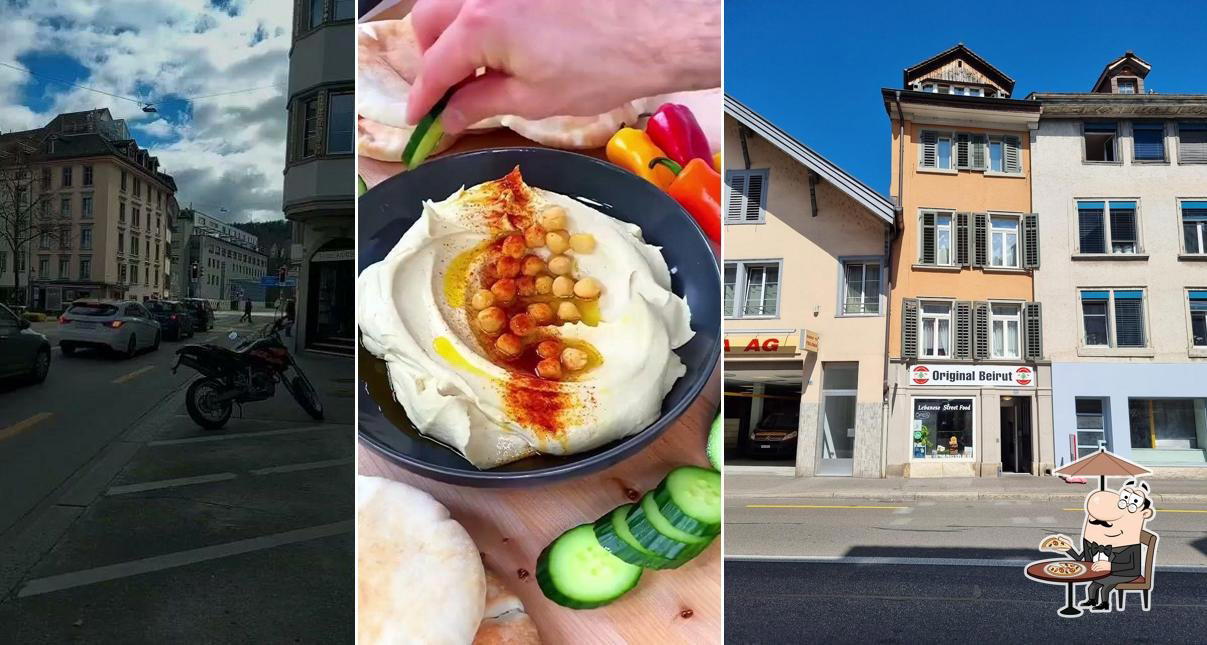
Lebanese Cooking in a Swiss Rhine City
Schaffhausen sits at a bend in the Rhine where German-speaking Switzerland meets the southern edge of Baden-Württemberg, and its restaurant culture reflects that geography: rooted in Central European classics, with a small but durable layer of international kitchens that have earned their place through repetition and regularity. The city is not large enough to support trend-chasing, so the places that persist here tend to do so because they serve something the neighbourhood actually wants. Original Beirut on Bachstrasse 22 belongs to that tier. Lebanese cuisine in a Swiss mid-sized city is not a novelty in 2024, but the degree to which any given kitchen takes its sourcing seriously is what separates a restaurant from a convenience.
What Lebanese Sourcing Actually Means
The ingredient logic of a serious Lebanese kitchen is worth understanding before you sit down. The cuisine draws on a pantry that is genuinely difficult to replicate with local Swiss substitutes: dried limes, sumac ground from Sicilian or Levantine staghorn, pomegranate molasses from a specific reduction tradition, bulgur at precise grain sizes for different preparations, and olive oil from varieties like Souri or Rumi that carry flavour profiles distant from Tuscan or Spanish counterparts. A kitchen that sources correctly for this cuisine is not just ticking provenance boxes; it is working against a technical baseline that the cuisine demands. Swap in generic supermarket equivalents and the food shifts from Lebanese to vaguely Middle Eastern, losing the specific acidities and textural contrasts that define dishes like kibbeh, fattoush, or a properly constructed hummus.
In Switzerland, procurement for this kind of pantry typically runs through specialist importers in Zurich or Geneva, or through direct relationships with diaspora-linked wholesale suppliers. Either path requires intent. For comparison, the high-end Swiss kitchens that have built serious reputations, such as Schloss Schauenstein in Fürstenau or Cheval Blanc by Peter Knogl in Basel, build their sourcing around hyper-regional Swiss produce. A Lebanese kitchen operates from the opposite premise: authenticity comes not from local provenance but from fidelity to a geographically specific ingredient tradition. Both approaches require discipline; they just point in different directions.
Schaffhausen's Eating Scene: Where Original Beirut Fits
Schaffhausen's dining options span a relatively tight range. At one end, traditional Swiss and regional German cooking holds its position in institutions like Wirtschaft zum Frieden. At the more contemporary end, places like Villa Sommerlust have pushed toward innovative formats in the €€€ tier. The mid-range international segment is where most of the city's variety sits, including the Spanish-inflected Al-Andalus, Vietnamese-leaning BÁNH ME, and Mexican-focused Chekes Mexican Food. Original Beirut occupies a comparable position in this international tier, bringing a cuisine tradition that has stronger roots in Zurich and Basel than in smaller Rhine cities.
That context matters for calibrating expectations. This is not a destination restaurant in the sense that Memories in Bad Ragaz or focus ATELIER in Vitznau function as destinations. What Original Beirut offers is something different: consistent access to a cuisine tradition in a city where that tradition is otherwise absent. That is a specific and practical value, and for residents of Schaffhausen it is a more relevant one than Michelin proximity.
The broader Swiss dining tier, from Hotel de Ville Crissier in Crissier to IGNIV Zürich by Andreas Caminada, operates in a different register entirely. For readers whose reference points for Swiss dining are the country's awarded kitchens, such as Einstein Gourmet in Sankt Gallen, 7132 Silver in Vals, Colonnade in Lucerne, or Da Vittorio in St. Moritz, Original Beirut is not a peer comparison. It sits in a different competitive set, defined by cuisine category and city context rather than tasting-menu ambition.
The Case for Lebanese Cuisine in This Context
Lebanese cuisine carries one of the more coherent sourcing philosophies in the Eastern Mediterranean tradition. The mezze structure, which forms the backbone of most Lebanese meals, is architecturally dependent on the quality and specificity of its components. A table of cold mezze communicates the kitchen's pantry standards before any hot dish arrives: the grain and seasoning of the hummus, the herb distribution in tabbouleh, the oil temperature and spice balance in a bowl of foul. These are not dishes that benefit from approximation. In cities like Beirut itself, or in the Lebanese diaspora kitchens of Sao Paulo, Paris, or Dearborn, the reference points are abundant. In Schaffhausen, the kitchen at Original Beirut is working without that competitive pressure, which can cut either way: reduced scrutiny can lower standards, or it can create the space for a kitchen to develop its own consistency on its own terms.
For anyone travelling through the region, Schaffhausen itself rewards a few hours on the right day. The Rhine Falls at Neuhausen, a few kilometres from the city centre, draw more visitors than the old town does, but the Altstadt around Vordergasse and Fronwagplatz is genuinely well-preserved, with painted facades and a walkable density that makes eating there feel like a reasonable extension of the afternoon rather than a destination decision. The Beckenburg das Restaurant holds a position in the more formal local dining tier, but for a meal in the international mid-range, the Bachstrasse address is easy to reach on foot from the old town core.
Planning a Visit
Bachstrasse 22 sits within the inner city grid, accessible from the main rail station on foot in under ten minutes. As with many independent restaurants in Swiss mid-sized cities, phone and online booking data for Original Beirut is not currently aggregated through major reservation platforms, so confirming hours and availability directly is advisable before making the trip from outside Schaffhausen. The city connects by train to Zurich Hauptbahnhof in approximately 40 minutes, making it a realistic half-day extension from the canton capital. For a fuller picture of what the city's eating scene offers across categories, the EP Club Schaffhausen restaurants guide maps the range from Swiss classics to international mid-tier and beyond.
For readers who cross-reference Lebanese cuisine against the wider international register, two restaurants that operate at the technical ceiling of their respective cuisines and serve as useful reference points for how seriously food traditions can be executed are Le Bernardin in New York City and Atomix in New York City. Neither is Lebanese, but both demonstrate what ingredient-led commitment looks like when it reaches its furthest expression. The distance between those kitchens and a neighbourhood Lebanese restaurant in Schaffhausen is real, but the underlying sourcing question is the same: does the kitchen treat its ingredient tradition as a constraint worth respecting, or as a rough approximation? That is the right question to carry to Bachstrasse 22.
How Original Beirut Schaffhausen compares with similar nearby venues.
| Venue | Cuisine | Price |
|---|---|---|
| D'Chuchi | Modern Cuisine | €€ |
Continue exploring
More in Schaffhausen
Restaurants in Schaffhausen
Browse all →
Bars in Schaffhausen
Browse all →
Hotels in Schaffhausen
Browse all →

At a Glance
- Cozy
- Casual
- Casual Hangout
- Group Dining
- Standalone
- Local Sourcing
Current opening hours
- Monday
- Closed
- Tuesday
- 11 AM–11 PM
- Wednesday
- 11 AM–11 PM
- Thursday
- 11 AM–11 PM
- Friday
- 11 AM–11 PM
- Saturday
- 11 AM–11 PM
- Sunday
- 11 AM–11 PM
Hours can change for holidays and private events. Last verified .
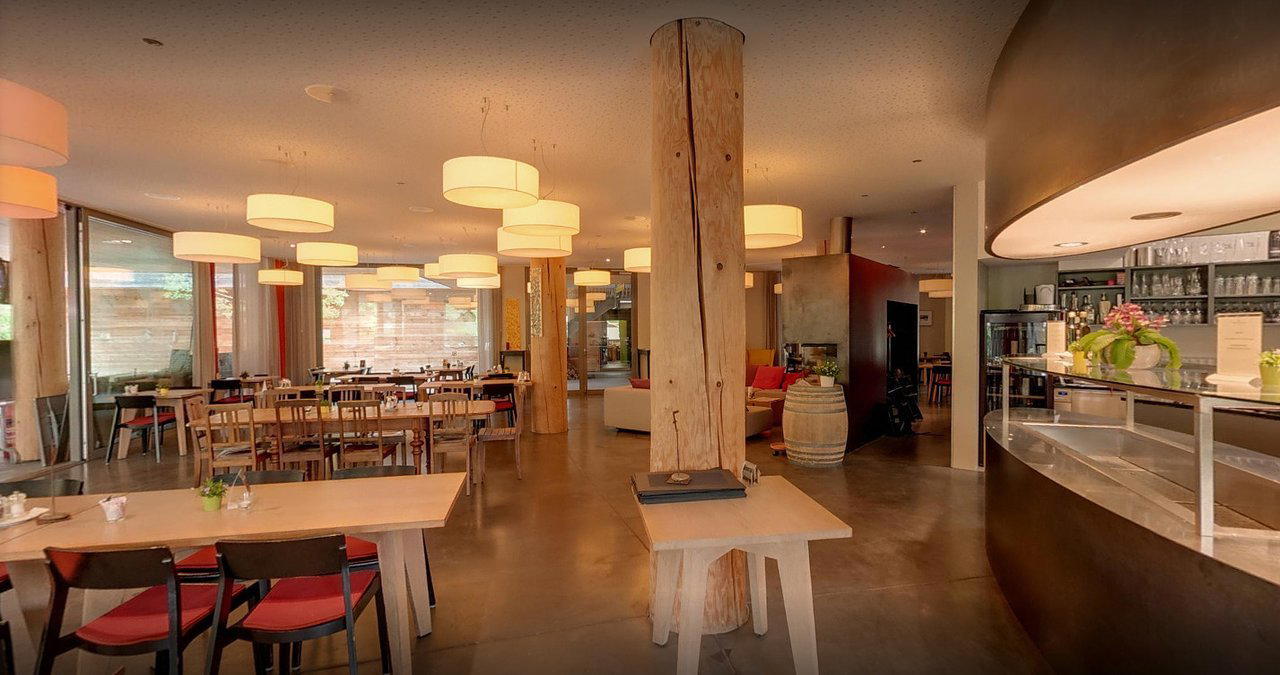
Cozy and welcoming atmosphere that transports diners to the lively streets of Beirut with a casual, unpretentious setting.
Know Before You Go
- Getting there
- Bachstrasse 22, 8200 Schaffhausen, Switzerland