Tabelog 100 #74
Our verdict
Omino Tsubaki places Tokyo yakitori in its small-counter, cellar-conscious register: seven counter seats, a sommelier-listed drinks program, and recognition from Tabelog’s Yakitori EAST 100 in 2024 and 2025. In Kyobashi, where polished dining sits between Ginza formality and office-district discretion, it reads as a precise choice for grilled chicken with serious sake, shochu, and wine support.

Pearl is the En Primeur Club membership app, where members save venues, book tables and use the concierge.
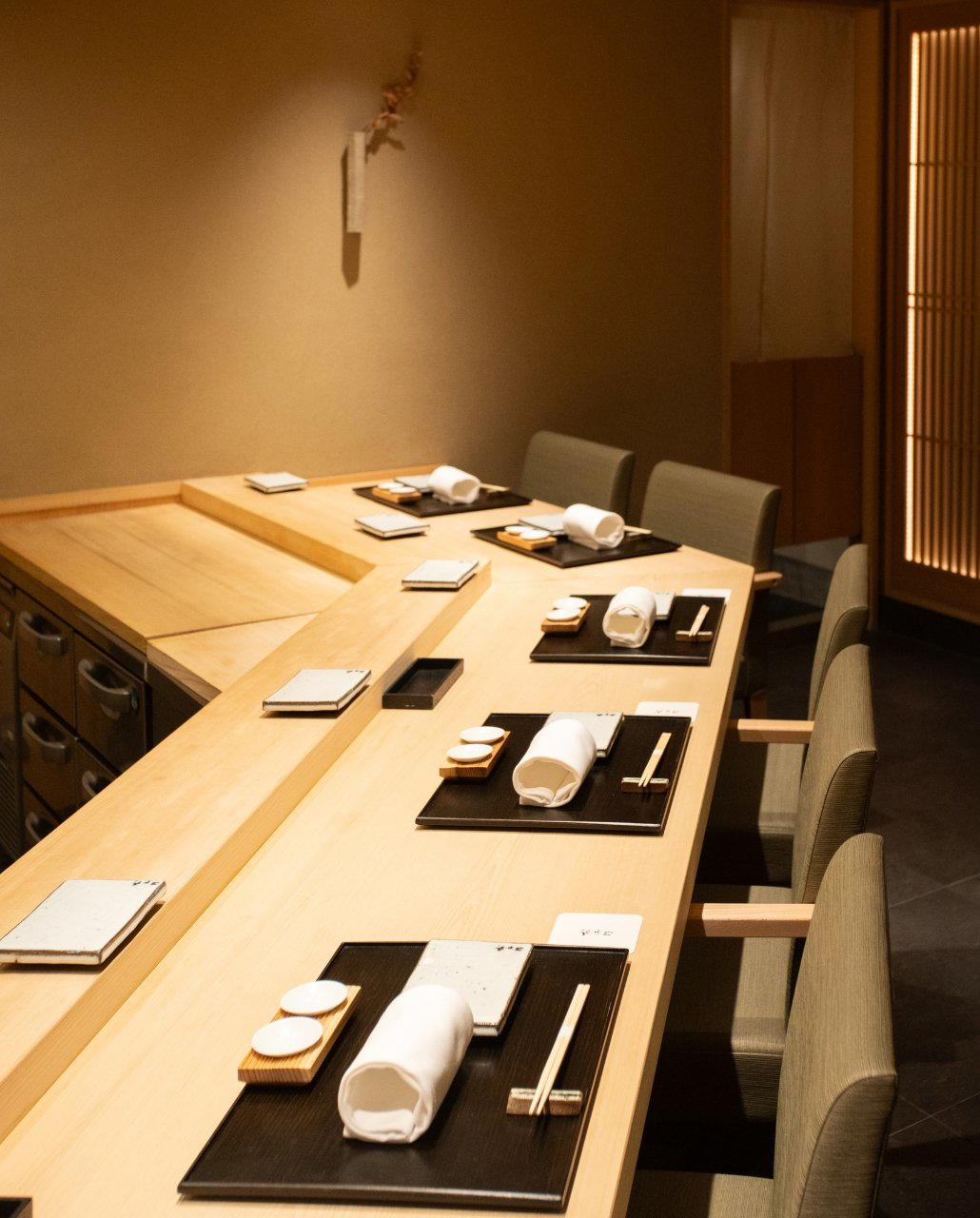
Tokyo has a particular kind of quiet: glass-fronted offices, low signage, and dining rooms that ask guests to pay attention before the first skewer reaches the table. In that setting, yakitori moves away from casual smokehouse shorthand and into the language of sequence, pacing, and focus. Omino Tsubaki belongs to this narrower Tokyo category, where the grill is only one part of the equation. The other is the sense of controlled progression: a meal built around grilled chicken skewers rather than quick turnover.
Tokyo’s serious yakitori scene has become increasingly granular. Some restaurants lean into old-school neighbourhood energy; others behave more like focused, appointment-worthy meals, with limited distractions, tighter etiquette, and a more deliberate rhythm around chicken, heat, and seasoning. The latter group is the useful frame for Omino Tsubaki. Tabelog selected it for its 2025 yakitori recognition, and its Tabelog score of 3.99 places it in a competitive bracket where small differences in grill work, pacing, and overall execution matter.
A yakitori counter shaped by the meal’s progression
The restaurant’s focused character changes the way the meal functions. The format is closer to a concentrated yakitori experience than a broad à la carte restaurant. That matters in yakitori because the cuisine depends on succession: lean and fatty cuts, smoke and salt, tare and restraint, each making more sense when the next skewer has been considered. In Tokyo yakitori, that detail separates a skewer stop from a restaurant where sequence is part of the meal’s architecture.
Pairing yakitori with drinks is no longer a novelty in Tokyo, but it remains a test of judgment. The cuisine can punish heavy-handed accompaniment: char, fat, offal, skin, and tare all pull in different directions. A serious yakitori meal has to decide whether to sharpen the grill with acidity, echo smoke with deeper notes, or let umami and texture lead the meal. Omino Tsubaki’s appeal sits in that broader conversation, which is precisely why it belongs in the city’s more contemporary yakitori discussion.
The comparison is useful. Tempura rooms such as Fukamachi operate around oil, batter, and immediacy; restaurants such as SAKAKI work from a different grammar of sauce and course composition; Japanese Cuisine Yamazaki occupies another register of Japanese dining. Yakitori at this level is more exposed than all three in one respect: the restaurant has few places to hide. Heat management, sequence, and pacing carry the evening. That is the critical frame for judging Omino Tsubaki, not simply whether the room feels intimate.
Tokyo gives the format a polished, focused edge
Location matters in Tokyo dining. The city rewards compact restaurants, controlled service, and diners who arrive with intent. For yakitori, that means the meal can read less like an after-work drinking session and more like a disciplined restaurant format, especially when the experience is built around grilled chicken skewers rather than treating them as casual bar food.
The etiquette around a focused yakitori meal reinforces that tone. In a quiet restaurant, one distracted guest can change the feel of the entire meal. For travellers accustomed to larger Tokyo dining rooms, this is the practical difference between a restaurant that happens to serve skewers and a focused format where the room’s attention is part of the service design.
There is also a price signal worth reading carefully. Tabelog lists Omino Tsubaki in the JPY 20,000–JPY 29,999 range for both lunch and dinner. That places it firmly in premium yakitori territory, a useful reminder that serious grilled-chicken restaurants can sit in the same planning bracket as other high-intent Tokyo meals.
Where it fits in a Tokyo itinerary
Omino Tsubaki suits diners who want yakitori treated with the seriousness usually reserved for sushi, tempura, or kaiseki restaurants. It is not the right choice for a sprawling group dinner or a loose drinking crawl. The focused format and premium budget point toward a concentrated meal, especially for guests who care about how grilled chicken unfolds over a full sequence.
For a broader Tokyo plan, pair the reservation with a look at Our full Tokyo restaurants guide, then map the rest of the trip through Our full Tokyo hotels guide, Our full Tokyo bars guide, Our full Tokyo wineries guide, and Our full Tokyo experiences guide. Citywide contrasts can sharpen the decision: other Tokyo yakitori restaurants offer their own reference points, while 3 Chome no Curry Ya San and other Tokyo dining rooms show how broad the city’s dining register becomes once the yakitori format is set aside.
Travellers extending the food itinerary beyond Tokyo can usefully compare the capital’s focused dining discipline with regional and international dining more generally. Against that wider map, Omino Tsubaki’s appeal is specific: a Tokyo yakitori restaurant where the grill and the rhythm of the meal are meant to be judged together.
Frequently asked questions
What are Omino Tsubaki's hours?
Hours for Omino Tsubaki should be confirmed directly with the restaurant before visiting.
What does dinner at Omino Tsubaki typically cost?
Pricing at Omino Tsubaki is listed as JPY 20,000 - JPY 29,999 JPY 20,000 - JPY 29,999.
What's Omino Tsubaki's location?
Tokyo.
What's Omino Tsubaki best at?
Its case is yakitori in Tokyo, with 2025 Tabelog recognition and a listed Tabelog score of 3.99. The format suits diners who want a focused meal rather than a large-room restaurant.
Is Omino Tsubaki good for vegetarians?
Omino Tsubaki is listed as a yakitori restaurant in Tokyo, so vegetarians should confirm available options directly with the restaurant before booking.
Can I bring kids to Omino Tsubaki?
Guests planning to bring children should confirm the restaurant’s current policy directly with Omino Tsubaki before booking.
The Quick Read
Comparable venues by category and price.
| Venue | Cuisine | Price | Awards | Notes |
|---|---|---|---|---|
| Omino TsubakiThis venue (the venue you are viewing) | Yakitori Omakase | $100–150 | Tabelog 100 #74 | Not listed |
| Fukamachi | Edo-mae Tempura Omakase | $100–150 | 1 Michelin Star · Tabelog Bronze #77 | Tempura |
| SAKAKI | Classical French with Japanese Sensibility | $150–200 | Michelin Plate · Tabelog 100 #11 | French |
| Japanese Cuisine Yamazaki | Seasonal Japanese Kaiseki | $300–500 | Tabelog 100 #39 | JPY 30,000 - JPY 39,999 JPY 4,000 - JPY 4,999 |
| ToshiYoroizuka TOKYO | Modern French-Japanese patisserie & counter dessert bar | $20–30 | Tabelog 100 #33 | JPY 2,000 - JPY 2,999 JPY 2,000 - JPY 2,999 |
| 3 Chome no Curry Ya San | Japanese Curry House | $20–30 | Tabelog 100 #12 | JPY 2,000 - JPY 2,999 JPY 1,000 - JPY 1,999 |
Recognition history
Dated appearances from independent guides and award organizations, with the underlying list record or original source where available.
Opinionated About Dining Top Restaurants in Japan Recommended
Opinionated About Dining
Tabelog 100 #74 · No. 74
Tabelog · Tabelog 100 - Yakitori - EAST - 2025