Omakase by Osen
Our verdict
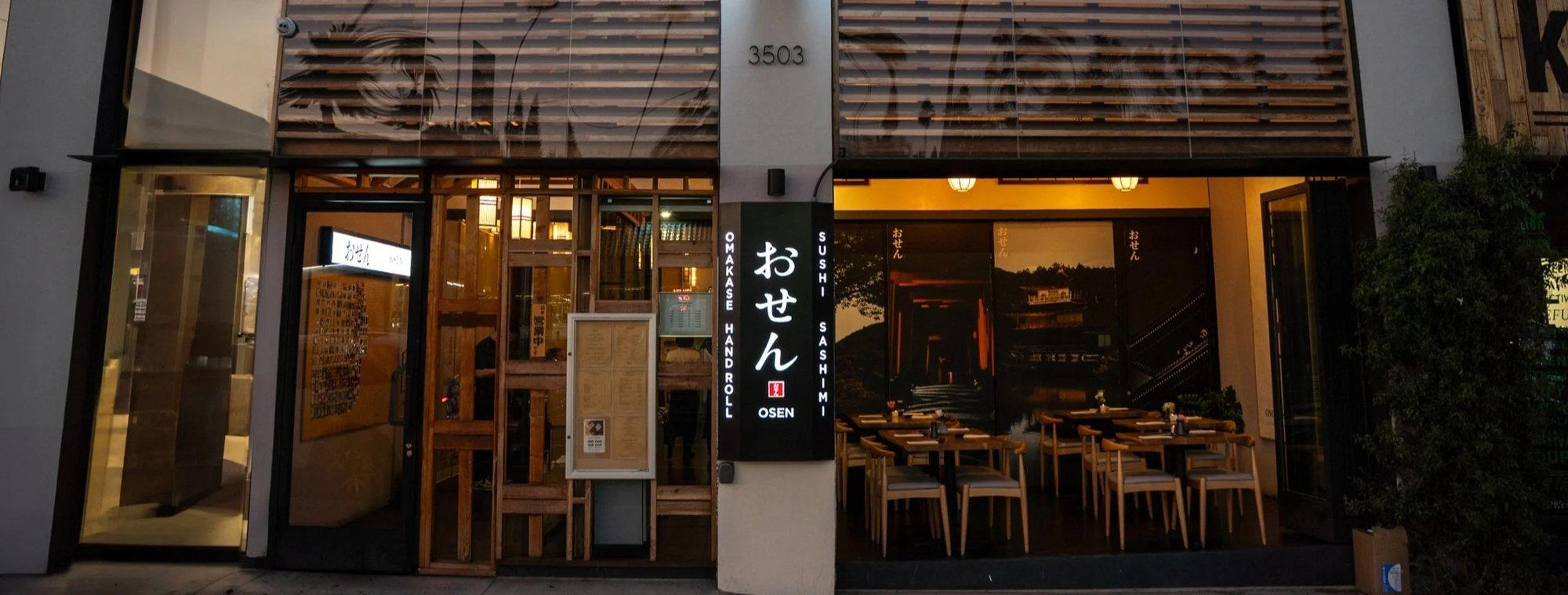
On Sunset Boulevard in Silver Lake, Omakase by Osen occupies a format that Los Angeles has increasingly embraced: the intimate, chef-driven counter where the menu sequence does all the talking. Positioned alongside Hayato and Kato in the city's serious Japanese and Asia-influenced dining tier, it operates where kitchen discipline and booking scarcity define the experience more than room size or celebrity footfall.
- Address
- 3503 Sunset Blvd, Los Angeles, CA 90026
- Phone
- (323) 426-9455
- Website
- omakasebyosen.com
- Directions
- Get directions
The menu
What to order
- Seasoned assorted sushi
- Handrolls
What a Counter on Sunset Boulevard Tells You About L.A. Dining Right Now
Silver Lake's stretch of Sunset Boulevard has never been a fine-dining corridor in the conventional sense. It is a neighbourhood of record shops, taquerias, and coffee bars where credibility runs sideways rather than upward. That context matters for reading Omakase by Osen correctly. A counter-format Japanese restaurant at this address is not following a Midtown Manhattan playbook or positioning itself against Beverly Hills prix-fixe rooms. It is operating in the newer tradition of Los Angeles intimacy dining, where the format and the discipline of the menu carry more weight than the postcode.
The omakase structure itself is the argument. Unlike à la carte restaurants, where the guest assembles the meal, or tasting menus with printed courses, an omakase counter hands full editorial control to the kitchen. The sequence of what arrives, in what order, at what pace, is the product. That structure demands a level of intention that a conventional menu does not, because there is nowhere to hide a weak course inside a long list of options. Every seat at the counter receives the same progression, which means the menu architecture is visible to every diner simultaneously.
The Omakase Format in Los Angeles: Where Osen Sits
Los Angeles now sustains a meaningful tier of serious omakase and counter-format Japanese dining. Hayato in the Row DTLA brought kaiseki discipline and Michelin recognition to the city's Japanese counter conversation. Kato in Culver City operates at the intersection of Taiwanese influence and modernist technique, demonstrating that the counter format is not exclusively about Edomae tradition. Both carry the $$$$ price designation that signals the tier in which serious counter dining in Los Angeles now operates.
Omakase by Osen at 3503 Sunset Blvd occupies the same broad category while anchoring itself in a neighbourhood that carries a different cultural weight than Downtown or the Westside. Silver Lake's density of independent creative businesses means that the audience walking through the door brings different expectations than the expense-account crowd of Century City or the tourism-adjacent footfall of West Hollywood. That audience tends to be more fluent in the format, which allows the kitchen to work with a baseline of literacy about what an omakase sequence is supposed to accomplish.
The comparison set beyond Los Angeles is also instructive. The counter-driven, sequence-first format that Omakase by Osen represents has a serious national peer group: Atomix in New York City uses card-based notation to make menu architecture legible to the diner; Lazy Bear in San Francisco turned communal counter seating into a full social format. The question these restaurants collectively answer is what happens when the kitchen, not the printed menu, becomes the primary communication tool.
Reading the Menu Architecture
The omakase format carries specific structural implications that any serious counter needs to address. Progression matters more than individual courses. The opening sequences of an omakase set the palate register and signal the kitchen's priorities: restraint or intensity, classical Japanese reference or contemporary fusion, local product or imported tradition. The middle courses carry the weight of the argument. The closing sequences resolve it. A kitchen that fails to think in this arc, treating each course as a standalone dish rather than a sentence in a longer paragraph, produces a technically proficient but intellectually flat meal.
At the top end of the format nationally, this architecture becomes the point of critical distinction. Somni, which rebuilt itself in Los Angeles after its original run, treats progression as a narrative with a specific conceptual argument. Providence on Melrose, with two Michelin stars and a seafood-focused tasting format, shows how a sustained sequence can hold a singular ingredient philosophy across twenty or more courses without losing tension. These are the benchmarks against which any serious Los Angeles counter is eventually read.
Silver Lake as a Dining Context
The neighbourhood context is not incidental. Silver Lake has a different dining ecology than the Westside or Downtown. The concentration of independent operators, the relative absence of large hospitality groups, and the demographics of the immediate population mean that restaurants here tend to build audiences through word of mouth and reservation demand rather than marketing. That dynamic suits the omakase model well: the format depends on a committed diner who has actively chosen to cede menu control, and Silver Lake's restaurant audience skews toward exactly that kind of deliberate engagement.
Broader Los Angeles counter dining has benefited from the city's position as a port of first entry for Japanese culinary influence on the mainland United States. The depth of Japanese-American community presence, the proximity to Japanese import networks, and the established vocabulary of Japanese dining formats across multiple generations of Angeleno diners all provide a more sophisticated reception than the format might receive in other American cities. That baseline raises the bar for what a serious omakase counter needs to deliver. See our full Los Angeles restaurants guide for the wider picture of where counter and tasting-format dining sits across the city.
How Osen Fits the National Counter Conversation
The restaurant's address at the $$$$ price tier, consistent with peers like Hayato and Kato, positions it in the bracket where Los Angeles diners are making considered choices against a set of serious alternatives. Within California, Addison in San Diego offers a useful comparison point for how a tasting format can root itself in regional identity without sacrificing technical ambition.
Internationally, the counter format at this price tier maps against venues like 8 1/2 Otto e Mezzo Bombana in Hong Kong, where a European culinary tradition operates inside an Asian dining culture with its own sophisticated expectations. The translation challenge runs in the other direction at Omakase by Osen: a Japanese format operating inside an American city that has developed its own fluency with that tradition over decades.
Planning Your Visit
The following table positions Omakase by Osen alongside its closest Los Angeles peers on the practical considerations that matter most for planning a serious counter dinner.
| Venue | Neighbourhood | Format | Price Tier | Cuisine Focus |
|---|---|---|---|---|
| Omakase by Osen | Silver Lake | Omakase counter | $$$$ | Japanese |
| Hayato | Downtown (Row DTLA) | Kaiseki counter | $$$$ | Japanese |
| Kato | Culver City | Tasting counter | $$$$ | New Taiwanese / Asian |
| Somni | West Hollywood | Tasting counter | $$$$ | Progressive / Molecular |
| Providence | Hollywood | Tasting menu | $$$$ | Contemporary Seafood |
Address: 3503 Sunset Blvd, Los Angeles, CA 90026. Given the format and the neighbourhood profile, advance booking is advisable. Counter-format restaurants at this price tier in Los Angeles routinely fill two to four weeks ahead, and the intimate seat count characteristic of the omakase model means availability does not recover quickly once a service is sold out.
Frequently asked questions
Where is Omakase by Osen located?
Omakase by Osen is located at 3503 Sunset Blvd, Los Angeles, CA 90026, Los Angeles.
How does Omakase by Osen compare to other high-end omakase counters in Los Angeles?
Osen sits at the $$$$ price tier, placing it in the same bracket as Hayato in the Row DTLA and Kato — the group of Los Angeles counters where the meal cost and format signal a serious culinary commitment rather than a casual night out. The geographical distinction is meaningful: Silver Lake on Sunset Boulevard is not the Westside or Downtown, and Osen's address makes it the reference point for high-investment counter dining on that corridor.
What should I eat at Omakase by Osen?
The format is chef-driven from the start: you eat what the kitchen sends. That is the structural premise of omakase, and Osen sits at 3503 Sunset Blvd in Los Angeles at the $$$$ tier, where the expectation is a full sequential progression rather than an à la carte selection. Arriving with dietary restrictions you haven't communicated in advance is the one variable worth managing.
Should I book Omakase by Osen in advance?
Counter-format omakase restaurants in Los Angeles at the $$$$ price tier consistently operate with limited seats and advance reservation windows. Osen's Silver Lake address places it among independently operated counters where walk-in availability is structurally unlikely. Booking ahead is the practical baseline for this format, not a precaution.
What's the defining dish or idea at Omakase by Osen?
The defining idea is the counter format itself: a fixed progression where the kitchen controls sequence, pacing, and selection. In the Los Angeles omakase conversation, Osen on Sunset Boulevard represents the extension of that discipline into Silver Lake, a neighbourhood whose dining ecology has historically been independent and chef-driven rather than destination-formal. The counter is the concept.
Can Omakase by Osen handle vegetarian requests?
Omakase menus are composed in advance and are typically protein-forward by structure, which makes significant dietary departures operationally complex at the $$$$ tier. Whether Osen accommodates vegetarian requests depends on advance communication with the restaurant directly. Assuming flexibility without prior confirmation is the wrong approach for any counter at this format and price level.
The Essentials
A quick peer reference to anchor this venue in its category.
| Venue | Cuisine | Price | Awards | Notes |
|---|---|---|---|---|
| Omakase by OsenThis venue — the venue you are viewing | Authentic Japanese Omakase | Not listed | Not listed | Not listed |
| Kato | Modern Taiwanese Fine Dining | $300–500 | 2 Michelin Stars · World's 50 Best #49 | New Taiwanese, Asian |
| Hayato | Traditional Japanese Kaiseki | $300–500 | 2 Michelin Stars · La Liste Top Restaurants | Japanese |
| Vespertine | Avant-Garde Tasting Menu | $200–300 | 2 Michelin Stars · La Liste Top Restaurants | Progressive, Contemporary |
| Camphor | Modern French with Southeast Asian influences | $150–200 | Michelin Plate · World Best Burgers World's 101 Best Burgers #15 | French-Asian, French |
| Gwen | Contemporary American Steakhouse | $50–100 | Michelin Plate · Wine Spectator Best of Award of Excellence | New American, Steakhouse |