Olio e Burro sits on Rue des Rémouleurs in Clisson, a Loire-Atlantique town whose Italianate architecture and proximity to Muscadet vineyards give it a character distinct from any other French market town. The name alone, oil and butter, signals a kitchen that works between two culinary traditions. For a town of this size, that tension is the point.
Pearl is the En Primeur Club membership app — saves, bookings, and concierge access live there. Same editors, same standards.
- Address
- 24 Rue des Rémouleurs, 44190 Clisson, France
- Phone
- +33240542385
- Website
- olioeburro.fr
- Directions
- Get directions
 Saves & bookings on Pearl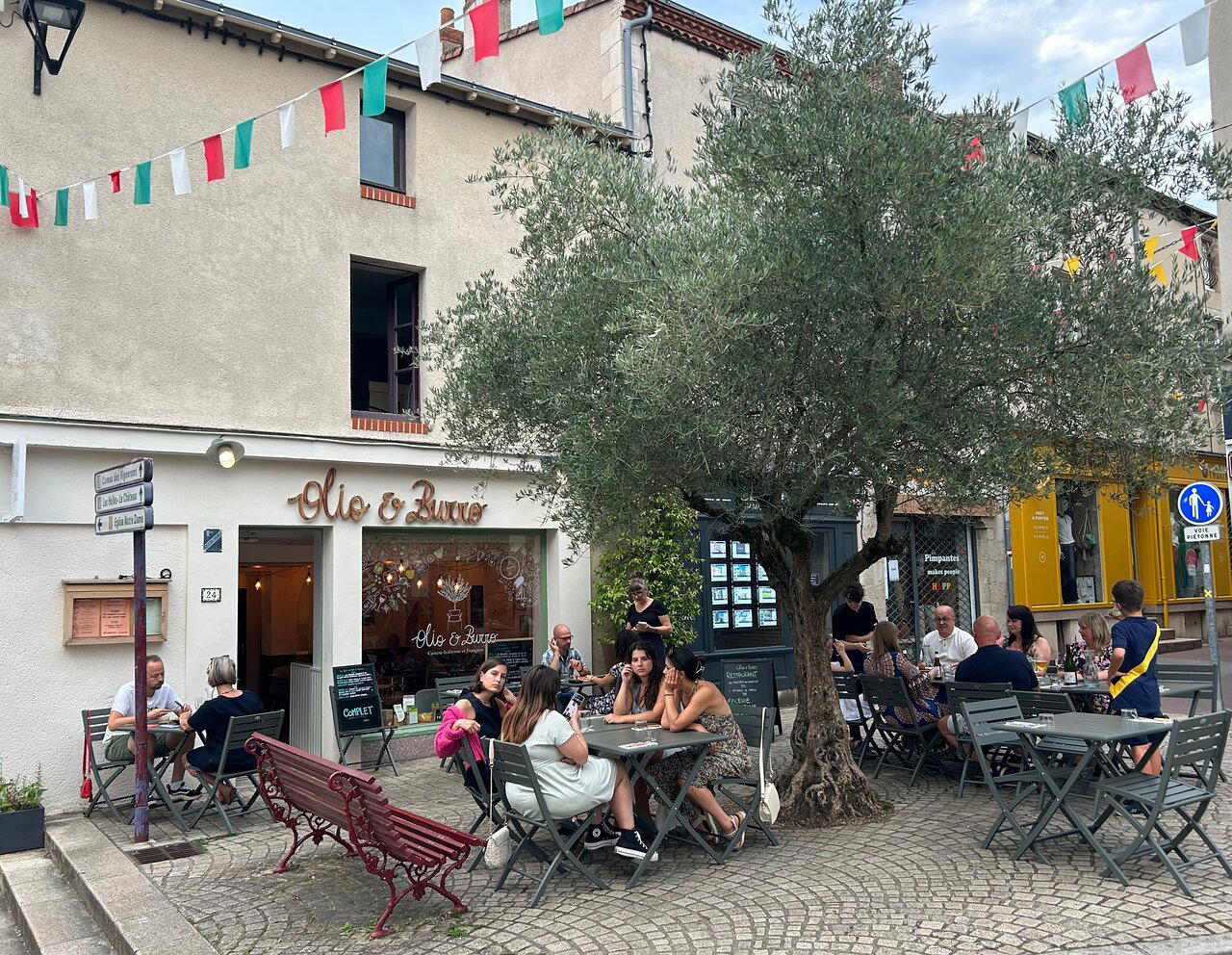
Clisson and the Ingredients That Define It
Clisson occupies an unusual position in western France. The town sits at the confluence of the Sèvre Nantaise and the Moine rivers, roughly 25 kilometres south-east of Nantes, and its neo-Italianate streetscape, the legacy of early 19th-century rebuilding by the Cacault brothers and sculptor Frédéric Lemot, makes it look unlike any other Loire-Atlantique commune. That visual distinctiveness is not incidental to understanding what a restaurant called Olio e Burro is doing here. The name translates simply as oil and butter, and in a region where the dairy tradition runs deep but the Italian aesthetic is baked into the stonework, the pairing reads as both a culinary statement and a piece of local geography.
The broader Loire-Atlantique food chain benefits from an unusually dense concentration of primary producers. The Muscadet appellation surrounds the town, meaning that vine-growing and the agricultural habits that accompany it shape what local growers prioritise. To the west, Atlantic fishing grounds supply Nantes and the towns that feed off it. Inland, the bocage countryside supports cattle and dairy in ways that have sustained butter-led cooking across the region for centuries. Any kitchen in Clisson that works with these raw materials is working within a tradition that predates the current farm-to-table terminology by several generations.
Olio e Burro is located at 24 Rue des Rémouleurs, in the older residential fabric of the town. The street itself is away from the main tourist circulation that moves between the château and the riverside, which means the walk to the restaurant passes through the quieter, more lived-in parts of Clisson rather than its postcard face. That physical context matters: a restaurant positioned here is serving a neighbourhood, not a viewpoint.
Oil and Butter: What the Name Signals About the Kitchen
In the geography of French regional cooking, ingredient sourcing tends to follow two logics. The first is proximity, using what grows, swims, or grazes within a catchable radius. The second is tradition, reaching back to the techniques and flavour combinations that a particular landscape has historically produced. The name Olio e Burro signals both at once. Oil is the Mediterranean gesture, consistent with Clisson's Italianate identity and with the olive-growing regions that sit, culturally if not geographically, behind the town's architectural character. Butter is the local material reality, the fat of the Loire and the Vendée bocage, the foundation of the cooking that Nantes has practised for centuries.
This is not a binary or a conflict. France's most interesting regional kitchens have always borrowed across internal and external borders. Mirazur in Menton works a similar seam between Italian and French Riviera traditions, though at a scale and with a recognition level that places it in an entirely different competitive bracket. Bras in Laguiole made the Aubrac plateau's plant life into a cuisine that no other French region could replicate. The point in both cases is that geography and its specific materials become the argument. Olio e Burro's name makes the same argument at a smaller, more local register.
For visitors making the trip from Nantes, the 25-kilometre drive takes under 30 minutes on the D149 and D763. Clisson has a train station on the Nantes-Cholet line, making the town accessible without a car, though the frequency of services warrants checking before planning a dinner visit. The town's compact scale means the station is within walking distance of the main dining options.
Clisson's Dining Context
Clisson has a small but considered restaurant offer relative to its population. The presence of the Hellfest festival grounds nearby generates summer traffic that the town's hospitality infrastructure has adapted to absorb, but outside the festival season, Clisson functions as a quiet, historically conscious market town. That shapes dining expectations: the better restaurants here operate for residents, returning visitors, and the Nantes day-trip circuit rather than for high-volume tourist throughput.
MAD and Villa Saint-Antoine (Modern Cuisine) sit within the same local offer, giving visitors at least two other addresses to consider when building a Clisson visit around food. For a broader picture of what the town's restaurants collectively offer, our full Clisson restaurants guide maps the options across price points and styles.
The Loire-Atlantique region does not attract the same density of critical attention as the grandes tables of the Loire Valley proper, which means the restaurants operating here tend to develop without the pressure of Michelin expectation that reshapes kitchens in cities. That distance from the award circuit has historically produced French regional cooking of a more direct, produce-led character, the kind of cooking that Auberge du Vieux Puits in Fontjoncouse exemplifies in the Aude, or that Georges Blanc in Vonnas has sustained in the Ain across generations. The ambition is different, but the underlying logic, cook what the land provides with the technique the region has accumulated, is consistent.
For those building a broader French restaurant itinerary beyond Clisson, the Atlantic coast offers Christopher Coutanceau in La Rochelle as a benchmark for what seafood-led, regionally grounded cooking looks like when it reaches three-star execution. Further afield, addresses like Troisgros - Le Bois sans Feuilles in Ouches, Auberge de l'Ill in Illhaeusern, Flocons de Sel in Megève, Alléno Paris au Pavillon Ledoyen in Paris, AM par Alexandre Mazzia in Marseille, Assiette Champenoise in Reims, Au Crocodile in Strasbourg, Paul Bocuse - L'Auberge du Pont de Collonges in Collonges-au-Mont-d'Or, and for transatlantic comparison, Le Bernardin in New York City and Atomix in New York City, collectively illustrate the full spectrum of what France's dining tradition, and the international kitchens it has influenced, looks like at the leading end.
Planning a Visit
Olio e Burro's address at 24 Rue des Rémouleurs places it in central Clisson, reachable from Nantes by road or rail. The Muscadet vineyards that ring the town mean that wine choices during a meal here carry immediate local relevance: a Sèvre et Maine sur lie from a nearby domaine is the obvious pairing logic for a kitchen working with Atlantic and dairy-country produce. Current pricing, hours, and booking availability are best confirmed directly, as the restaurant's contact details are not published in EP Club's current data. The Clisson visit is most naturally combined with time in the town itself, given that the château, the riverside walks, and the Italianate quarter are all within a short walk of the restaurant's street.
- Gluten-Free Focaccia
- Arancino with Taleggio Heart
- Pâté en Croûte
- Lasagne
- Spiced Pork Belly with Mustard Sauce
- Frangipane Galette
How Olio e Burro Clisson compares with similar nearby venues.
| Venue | Cuisine | Price |
|---|---|---|
| Villa Saint-Antoine | Modern Cuisine | €€ |
Continue exploring
More in Clisson
Restaurants in Clisson
Browse all →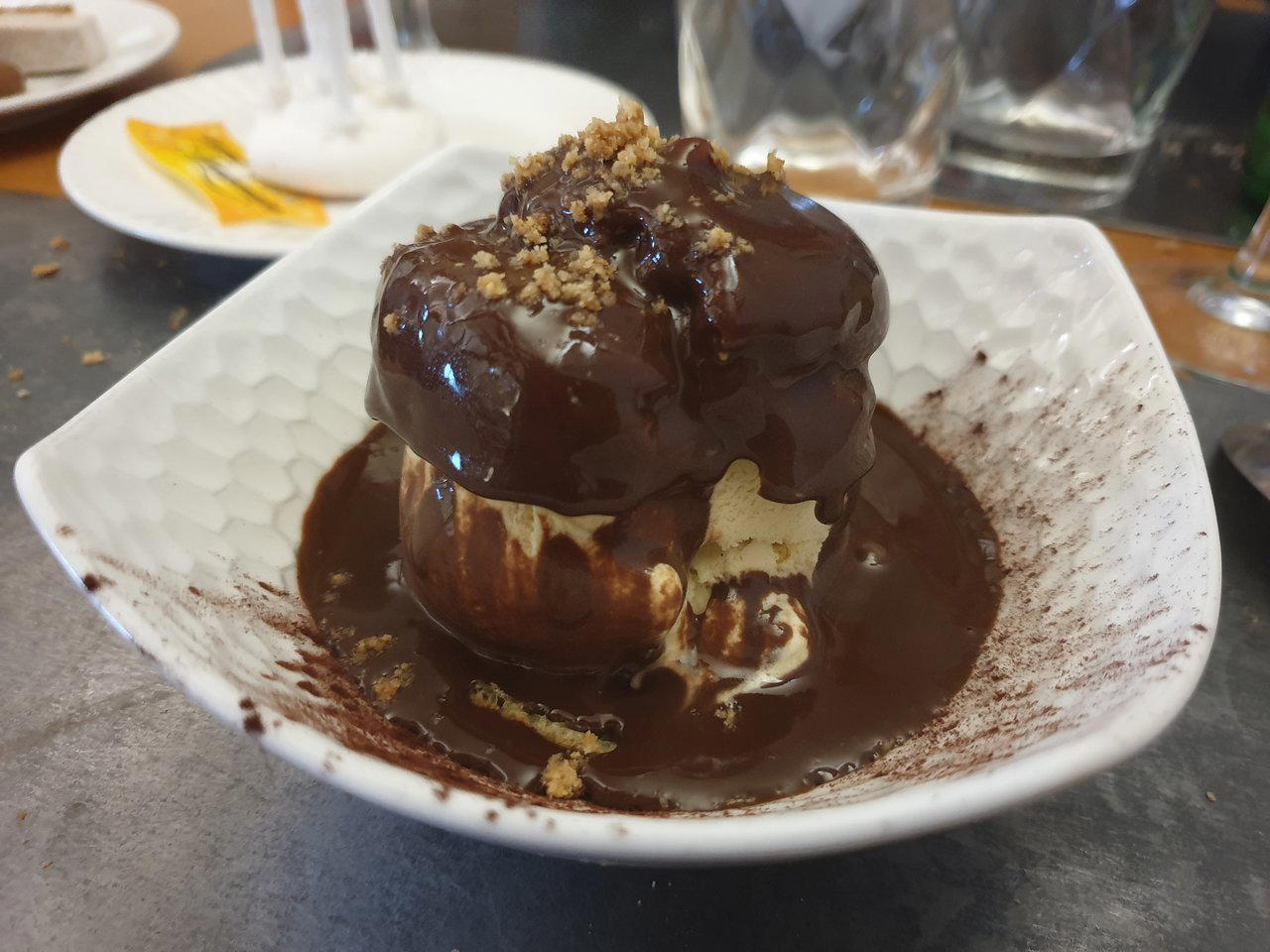
Bars in Clisson
Browse all →
Hotels in Clisson
Browse all →

At a Glance
- Cozy
- Intimate
- Rustic
- Casual Hangout
- Date Night
- Terrace
- Standalone
- Local Sourcing
Current opening hours
- Monday
- Closed
- Tuesday
- Closed
- Wednesday
- Closed
- Thursday
- 12–1:30 PM, 7:30–8:30 PM
- Friday
- 12–1:30 PM, 7:30–8:30 PM
- Saturday
- 12–1:30 PM, 7:30–8:30 PM
- Sunday
- 12–1:30 PM
Hours can change for holidays and private events. Last verified .
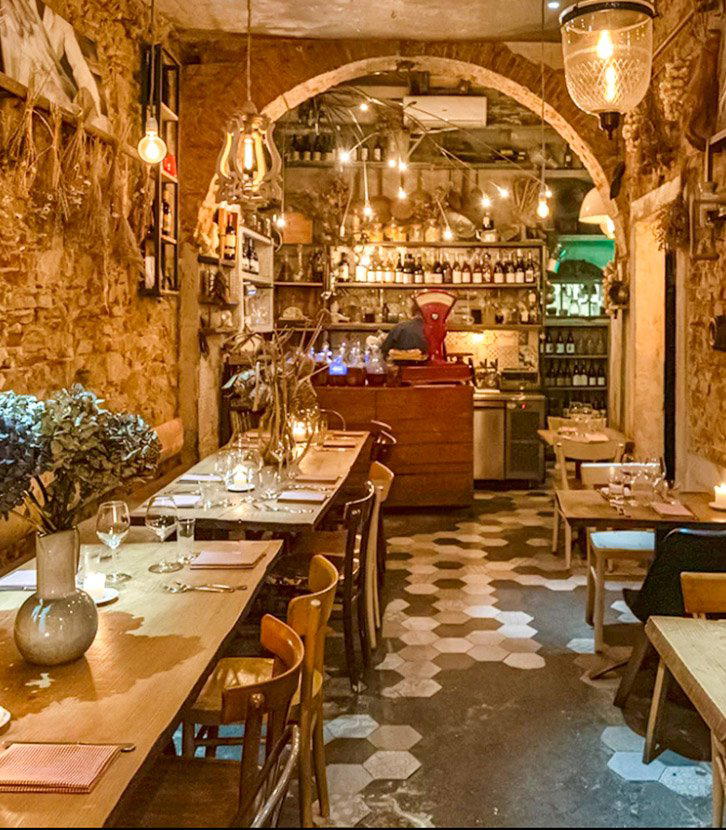
Cozy and bright with a pleasant terrace shaded by an olive tree, creating a relaxing and soft atmosphere.
Know Before You Go
- Getting there
- 24 Rue des Rémouleurs, 44190 Clisson, France