Odille


Odille distills the spirit of modern French cuisine into an intimate coastal sanctuary, where fire, seasonality, and craftsmanship converge. The dining room glows with understated warmth—linen-dressed tables, sculptural ceramics, the soft hush of conversation—while a meticulous team ushers guests through a refined progression of wood-kissed courses. Expect pristine seafood, garden-bright vegetables, and heritage meats transformed by live fire and exacting technique, paired with a sommelier’s nuanced selections from Old World icons and rare, small-lot producers. Odille is not simply a meal; it is a thoughtful, lingering encounter with flavor, texture, and time, designed for those who savor subtlety and seek quiet, cultivated luxury.
 Discover on Pearl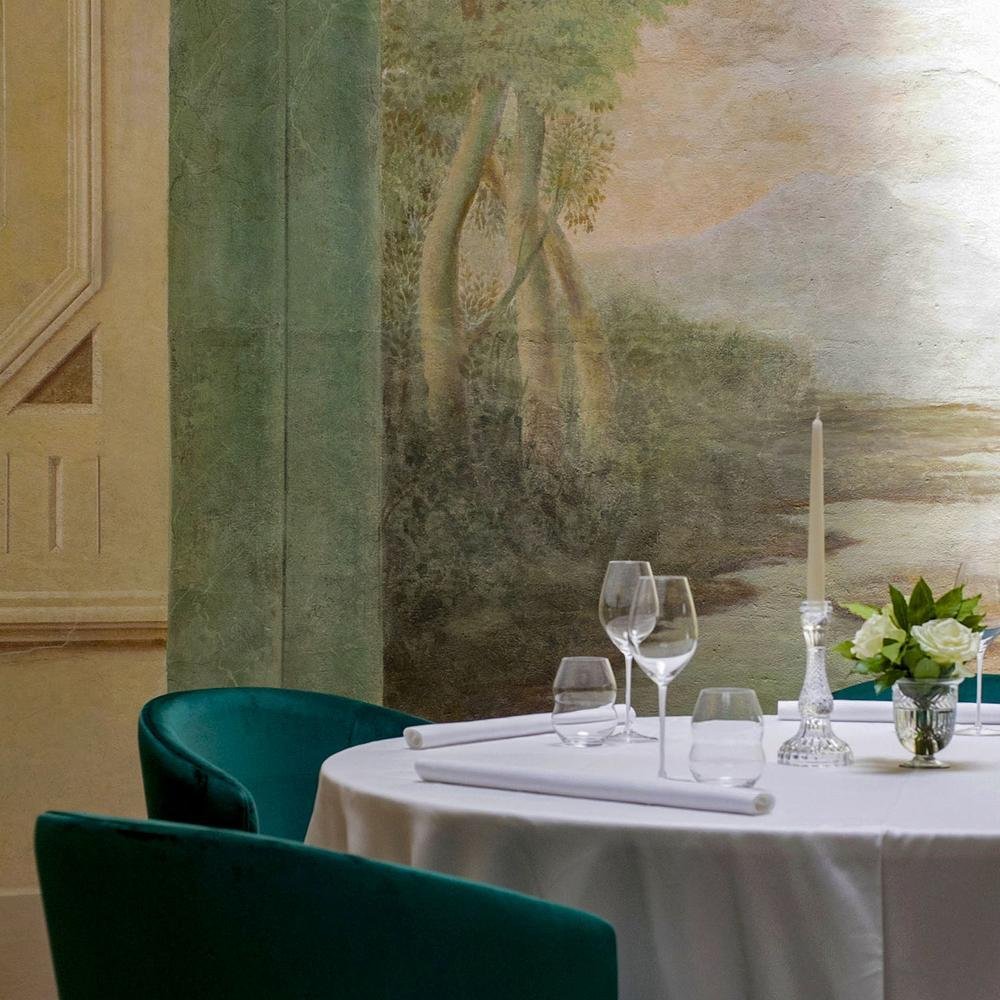
Where Brabant Generosity Meets Seasonal Precision
The market square of Sint-Oedenrode is not a place most dining guides pause over. This small Noord-Brabant town sits between Eindhoven and Den Bosch, quiet enough that the clatter of a kitchen can feel like an event. At Markt 14, Odille occupies that square with a black-framed open kitchen as its centrepiece — a deliberate statement about transparency and theatre. Artworks by Daisy Boman hang throughout the dining room, and the overall register is one of serenity: low noise, considered lighting, and a pace that resists the hurried rhythms of city dining.
Michelin awarded Odille one star in 2024, placing it in a cohort of Dutch single-star addresses that includes destinations well outside the Randstad. Houses like De Lindehof in Nuenen and De Groene Lantaarn in Staphorst have demonstrated that Michelin's Dutch circuit is as interested in provincial precision as it is in Amsterdam or Rotterdam anchors. Odille belongs to that tendency: serious cooking in a town you might otherwise drive through.
The Cultural Roots of Brabantian Table Cooking
Noord-Brabant has a culinary identity that differs from the coastal Netherlands in texture and orientation. The province is historically agricultural, with a tradition of generous, produce-driven hospitality — what locals call Brabantse gastvrijheid , that tends toward abundance and warmth rather than restraint and minimalism. That cultural baseline shapes how kitchens in the region approach a menu. Where Amsterdam's high-end dining has shifted toward Nordic-inflected austerity, Brabant kitchens often retain richness in their sauces and a preference for whole-animal cookery that the north shed somewhat earlier.
Odille sits squarely in that tradition while grafting international technique onto it. The kitchen's approach to poultry , presenting the Bresse pigeon tableside before roasting it on the carcass , references a French classical method that carries its own cultural weight. Bresse birds are among the most protected appellations in European poultry, and cooking them on the carcass is a technique that preserves internal fat distribution and moisture in ways that fabricated portions cannot replicate. The finished plate, with spicy broccoletto cream, bay leaf oil, and a pigeon jus infused with summer savoury, reads as a conversation between Brabant ingredient culture and French classical form. This kind of regional-meets-classical dialogue is one of the defining moves of serious Dutch provincial cooking, and Odille executes it with evident conviction.
Michelin's notes on the kitchen point directly at the sauce work as a distinguishing quality. Rich sauces built on long reduction, natural stock, and aromatic infusion are technically demanding and time-intensive; their presence at this level signals a kitchen willing to spend time on foundational craft rather than shortcuts. Across the Dutch fine dining tier , from Inter Scaldes in Kruiningen to Aan de Poel in Amstelveen , sauce work has been a consistent marker of ambition, and Odille earns its place in that comparison.
Vegetables, Sustainability, and an Open Question
One of the more interesting tensions in Odille's positioning is between its stated commitment to local ingredients and seasonality and the current weight of its menu. Michelin's assessment noted that while sustainability and seasonal sourcing are genuinely present, vegetables appear primarily as garnish and sauce rather than as primary subjects. The same notes issued a gentle challenge to the kitchen: to bring the same intensity to plant-based plates as it clearly brings to poultry.
This is not a minor point. Across Dutch fine dining, the conversation around plant-forward menus has shifted considerably over the past five years. Houses in the Netherlands have responded in different ways: some, like De Librije in Zwolle, built distinct vegetable-forward tracks within their tasting structures; others have retained meat-centric formats while upgrading vegetable treatment within those formats. Odille is currently in the latter group, and the Michelin commentary suggests there is room to push further. Whether the kitchen takes that route is an evolution worth watching, particularly given the provenance culture of the region, where market gardens and small-scale growers are accessible in a way that urban kitchens often envy.
The sustainability framing is already present in the sourcing philosophy: local ingredients, seasonal menus, and a clear awareness of provenance are built into how the kitchen communicates its work. What remains to be developed, by Michelin's account, is the full translation of that commitment into what lands on the plate as a primary element rather than a supporting one.
Odille in the Sint-Oedenrode Dining Context
Sint-Oedenrode's dining options cluster at different price points, and Odille at €€€€ represents the ceiling of the local market. Restaurant Bomas at €€€ and De Beleving at €€ offer modern French formats at lower price thresholds, and Petite provides another €€ modern French option in the same market. For visitors structuring a table around the Michelin star, Odille has no local peer at its level.
The broader Dutch provincial fine dining circuit provides the relevant comparison set. De Bokkedoorns in Overveen and Fred in Rotterdam occupy similar positions in their respective markets: starred addresses outside the obvious tourist circuit, with a local clientele that treats them as destinations rather than conveniences. Odille functions the same way for Noord-Brabant. It draws from a wider radius than the town itself would suggest, and its 4.8 rating across 107 Google reviews indicates that the audience it attracts is largely satisfied with what it finds.
For visitors arriving from further afield, Sint-Oedenrode is accessible from Eindhoven, which has direct rail connections from Amsterdam, Brussels, and Düsseldorf. The drive from Eindhoven centre takes under 20 minutes. The town is not a destination that rewards an overnight stay on its own terms, but as part of a Noord-Brabant circuit that might include De Lindehof in Nuenen or a broader Eindhoven visit, it builds coherently. Accommodation options for the area are covered in our full Sint-Oedenrode hotels guide.
Format, Hours, and Planning
Odille's schedule reflects a kitchen built for serious evening service with a limited daytime window. The restaurant is closed Monday and Tuesday. Wednesday and Thursday run evening service from 6:30 PM to 11:00 PM only. Friday, Saturday, and Sunday operate with both a lunch sitting from 12:30 PM to 5:00 PM and an evening service that runs until midnight on Friday and Saturday, and closes at the standard Sunday evening window. The extended Friday and Saturday late close is unusual for a starred address in a small town and suggests the kitchen is comfortable serving a table that wants to extend the evening unhurriedly.
The dinner format at €€€€ pricing puts Odille in the same tier as Parkheuvel in Rotterdam and comparable Dutch starred houses. Booking ahead is advisable; Michelin recognition in 2024 will have expanded the reservation demand beyond the local base. The lunch service on Friday through Sunday offers a way to experience the kitchen at its full level with slightly more flexibility than the evening slots, which tend to fill earlier for starred addresses at this price point.
The full picture of dining, drinking, and things to do in the area is covered across our guides: restaurants, bars, wineries, and experiences in Sint-Oedenrode.
What People Recommend at Odille
Dish that draws the most consistent attention in Michelin's documentation and in guest accounts is the Bresse pigeon, presented whole at the table before roasting and returned as precisely cooked medium-rare fillets with broccoletto cream, bay leaf oil, and a summer savoury-infused jus. It is cited as the clearest expression of the kitchen's strengths: classical technique, quality sourcing, and confident sauce work applied to a single primary ingredient. The wine pairing, built from a carefully curated selection, is noted as a genuine complement to the menu rather than a secondary consideration. Michelin's own language describes the final effect as a harmonious dining experience, with the wines contributing meaningfully to the overall coherence of the meal. Guests and critics who know comparable kitchens , houses like Stand in Budapest or the broader Dutch provincial starred tier , tend to find that Odille's strongest plates justify the journey from outside the immediate area.
Budget and Context
A compact peer snapshot based on similar venues we track.
| Venue | Price | Awards | Notes |
|---|---|---|---|
| Odille | €€€€ | Michelin 1 Star | This venue |
| Restaurant Bomas | €€€ | €€€ · Modern French, €€€ | |
| De Beleving | €€ | €€ · Modern French, €€ | |
| Petite | €€ · Modern French |
Need a table?
Our members enjoy priority alerts and concierge-led booking support for the world's most difficult tables.
Get Exclusive Access