Obaltan K-BBQ
Fort Lee's Abbott Boulevard corridor has long served as a first stop for Korean cuisine east of the Hudson, and Obaltan K-BBQ sits within that tradition. The restaurant addresses the Korean-American community's appetite for table-side grilling in a setting that reads as communal rather than performative. For visitors crossing from Manhattan, it functions as an accessible entry point into the borough's Korean dining scene.
Pearl is the En Primeur Club membership app — saves, bookings, and concierge access live there. Same editors, same standards.
- Address
- 799 Abbott Blvd, Fort Lee, NJ 07024
- Phone
- +12019175221
- Website
- jennyihson.wixsite.com
- Directions
- Get directions
 Saves & bookings on Pearl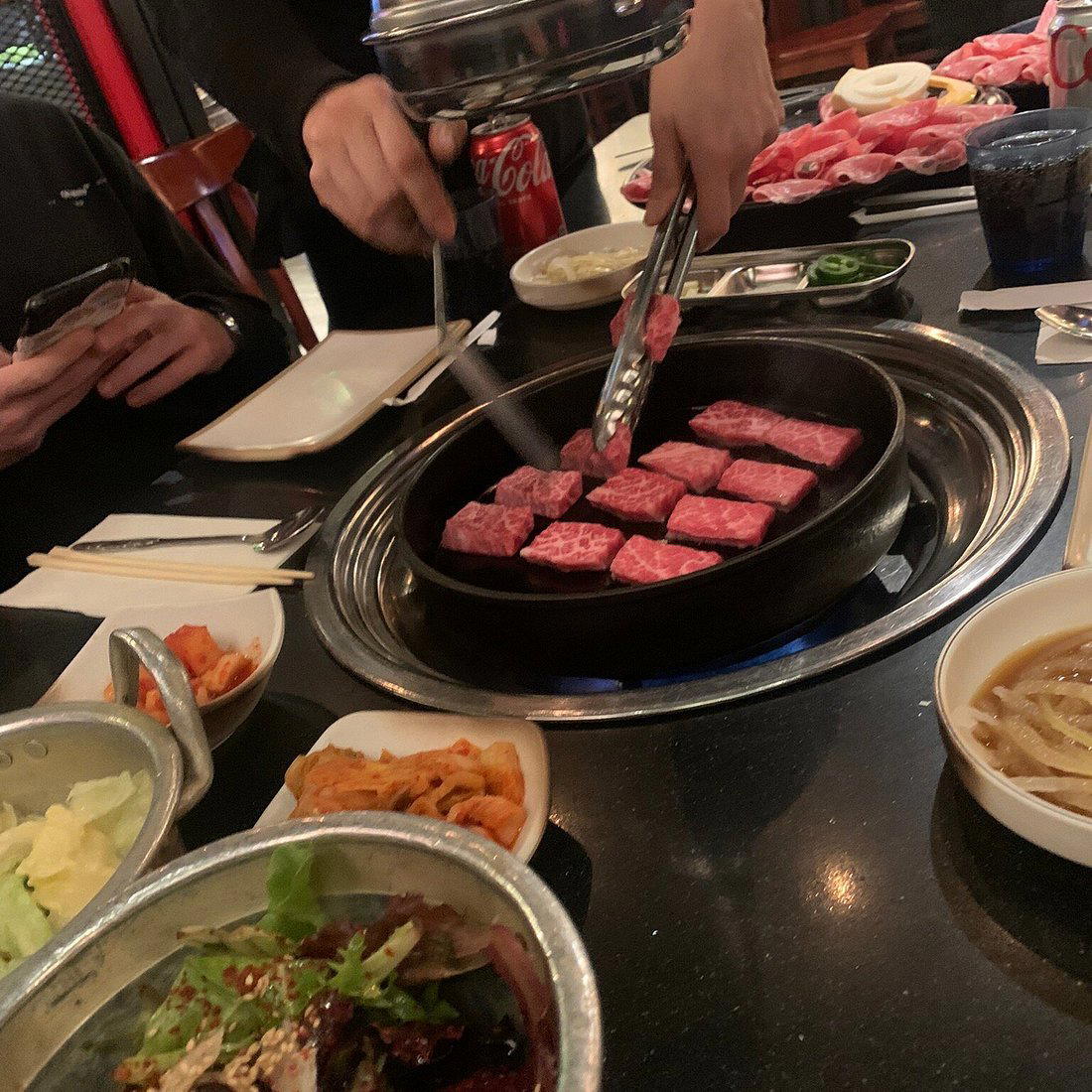
Abbott Boulevard and the Korean Dining Corridor
Fort Lee's stretch of Abbott Boulevard operates as one of the more concentrated Korean dining districts in the northeastern United States, a function of the borough's Korean-American population density and its proximity to the George Washington Bridge. The corridor draws diners from Manhattan's Upper West Side, Flushing, and as far as Bergen County's interior, making it a genuine regional destination rather than a neighborhood convenience. Within that context, Korean barbecue functions as the format most visitors arrive expecting: tabletop charcoal or gas grills, cuts of meat arriving raw and cooked by the diner, and a procession of banchan that signals the kitchen's investment in the surrounding details. Obaltan K-BBQ operates at 799 Abbott Blvd, placing it squarely within this corridor's gravitational pull.
The Fort Lee Korean dining scene differs from Manhattan's Koreatown on 32nd Street in one structural way: where Koreatown competes on volume and late-night accessibility, Fort Lee's restaurants tend to draw a more residential, family-oriented clientele. The pacing is slower, the dining room noise less concentrated, and the expectation of communal, extended meals is more embedded in how restaurants here are designed and staffed. That distinction matters when choosing between the two zones, they serve similar food but occupy different social registers. For further context on what Fort Lee's dining options look like across categories, our full Fort Lee restaurants guide maps the corridor in more detail. Nearby, Soft Tofu 소공동 represents the tofu-based Korean comfort food end of the spectrum, while Hiram's anchors a completely different tradition as one of New Jersey's oldest hot dog and fried chicken institutions.
The Sourcing Logic Behind Korean Barbecue
Korean barbecue's quality ceiling is almost entirely determined by the cut and grade of meat arriving at the table, which makes sourcing the central editorial question for any K-BBQ restaurant operating at a serious level. The format offers nowhere to hide: a thin slice of samgyeopsal or a cut of chadolbaegi is cooked in plain sight by the person eating it, with no sauce reduction or braising liquid to correct for provenance. The grill is a form of transparency.
At the upper tier of the Korean barbecue market in the United States, the conversation centers on wagyu imports and domestic prime-graded beef, with premium operations distinguishing themselves through access to specific cuts, galbi with longer bone, dry-aged brisket, or premium pork belly sourced from heritage breeds. That sourcing distinction is what separates a $30-per-person K-BBQ meal from one that runs significantly higher, and it's the question worth asking of any restaurant in this category before committing to a booking. Obaltan K-BBQ is priced at about $40 per person, placing it in the corridor's mid-tier and keeping it competitive on value relative to Manhattan equivalents.
The ingredient sourcing argument for Korean barbecue extends beyond the meat itself. Banchan, the array of small dishes served alongside the grill, functions as the kitchen's editorial voice. Kimchi fermented in-house rather than purchased commercially, japchae made from scratch, and pajeon that arrives with a discernible egg-to-scallion ratio rather than a poured batter are the signals that separate restaurants taking the full format seriously from those treating the sides as an afterthought. These details are worth attending to on arrival.
Where This Format Sits in the Broader American Dining Conversation
Korean cuisine's position in American fine dining has shifted measurably in the past decade. Atomix in New York City holds two Michelin stars and operates in a tasting menu format that places modern Korean cooking alongside the reference points of Le Bernardin in New York City and Alinea in Chicago in terms of reservation difficulty and price point. That tier of Korean dining is a different product entirely from what Abbott Boulevard offers, but both formats draw from the same foundational larder: doenjang, gochugaru, sesame oil, and fermented vegetables that have been produced by the same methods for centuries.
The table-grilling format, by contrast, is more democratic and more physically involving than any tasting menu. It places the cooking act at the center of the social experience rather than backstage. This is not a lesser format than what Lazy Bear in San Francisco or The French Laundry in Napa offer, it is a different category of dining entirely, one where the measure of success is the quality of the raw ingredient, the calibration of the grill heat, and whether the ventilation system handles smoke without making the meal physically uncomfortable. Farm-to-table operations like Blue Hill at Stone Barns in Tarrytown and Single Thread Farm in Healdsburg have made ingredient provenance a central narrative, Korean barbecue achieves similar transparency through format rather than storytelling.
Planning a Visit: Practical Notes
Fort Lee sits directly east of the George Washington Bridge's lower level, making it accessible from Midtown Manhattan in roughly 20 to 30 minutes by car under normal traffic conditions, though the GWB approach can extend that significantly during peak hours. The borough lacks a direct subway connection, so most visitors arrive by car or by the NJ Transit bus lines that cross the bridge. Street parking on Abbott Boulevard is available but competitive on weekend evenings, when the Korean dining corridor reaches its highest occupancy. Obaltan K-BBQ is recommended for reservations. Hours are Mon to Fri 3 PM to 2:30 AM, Sat 1 to 3 PM and 4 PM to 2:30 AM, and Sun 1 to 3 PM and 4 to 11:30 PM. The price per person is about $40, and grill table availability matters for larger groups.
Korean barbecue in general is a format that rewards groups of three or more: the spread of cuts, the banchan array, and the cooking rhythm all work better when distributed across multiple people. Solo diners and couples are accommodated, but the format's social mechanics are calibrated for the table.
Side-by-Side Snapshot
Comparable venues nearby, for context on price, style, and recognition.
| Venue | Cuisine | Price | Notes |
|---|---|---|---|
| Obaltan K-BBQThis venue — the venue you are viewing | Korean BBQ & Seafood | $$ | Not listed |
| Soft Tofu 소공동 | Korean Soft Tofu Soup House | $$ | Fort Lee |
| Hiram's | Classic New Jersey Hot Dogs | $ | Fort Lee |
| La Fiamma | Classic Italian | $$ | Harrison |
| Drew's Bayshore Bistro | Cajun-American Bistro | $$ | Keyport |
| dullboy | Modern American Gastropub | $$ | Waterfront |
Continue exploring
More in Fort Lee
Restaurants in Fort Lee
Browse all →
Bars in Fort Lee
Browse all →


Hotels in Fort Lee
Browse all →




At a Glance
- Lively
- Energetic
- Group Dining
- Casual Hangout
- Late Night
- Open Kitchen
Current opening hours
- Monday
- 3 PM–2:30 AM
- Tuesday
- 3 PM–2:30 AM
- Wednesday
- 3 PM–2:30 AM
- Thursday
- 3 PM–2:30 AM
- Friday
- 3 PM–2:30 AM
- Saturday
- 1–3 PM, 4 PM–2:30 AM
- Sunday
- 1–3 PM, 4–11:30 PM
Hours can change for holidays and private events. Last verified .
Lively and inviting atmosphere with authentic Korean BBQ grilling experience.