

Michelin Plate · Guía Repsol 2 Soles
Our verdict
Among Ferrol's port-adjacent dining options, O Camiño do Inglés sits at the modern end of the Galician table, holding a Michelin Plate recognition in both 2024 and 2025. The à la carte draws from regional roots while incorporating technique and ingredients from Peru, Japan, and Italy. Three set menus and a half-plates format give the kitchen range and give diners flexibility.

Pearl is the En Primeur Club membership app — saves, bookings, and concierge access live there. Same editors, same standards.
- Address
- Rúa Espartero, 77, 15401 Ferrol, A Coruña, Spain
- Phone
- +34 981 35 20 90
- Hours
- Mon ClosedTue–Wed 1:45–3:30 PMThu–Sat 1:45–3:30 PM, 8:45–10:30 PMSun 1:45–3:30 PM
- Website
- ocaminodoingles.com
- Directions
- Get directions
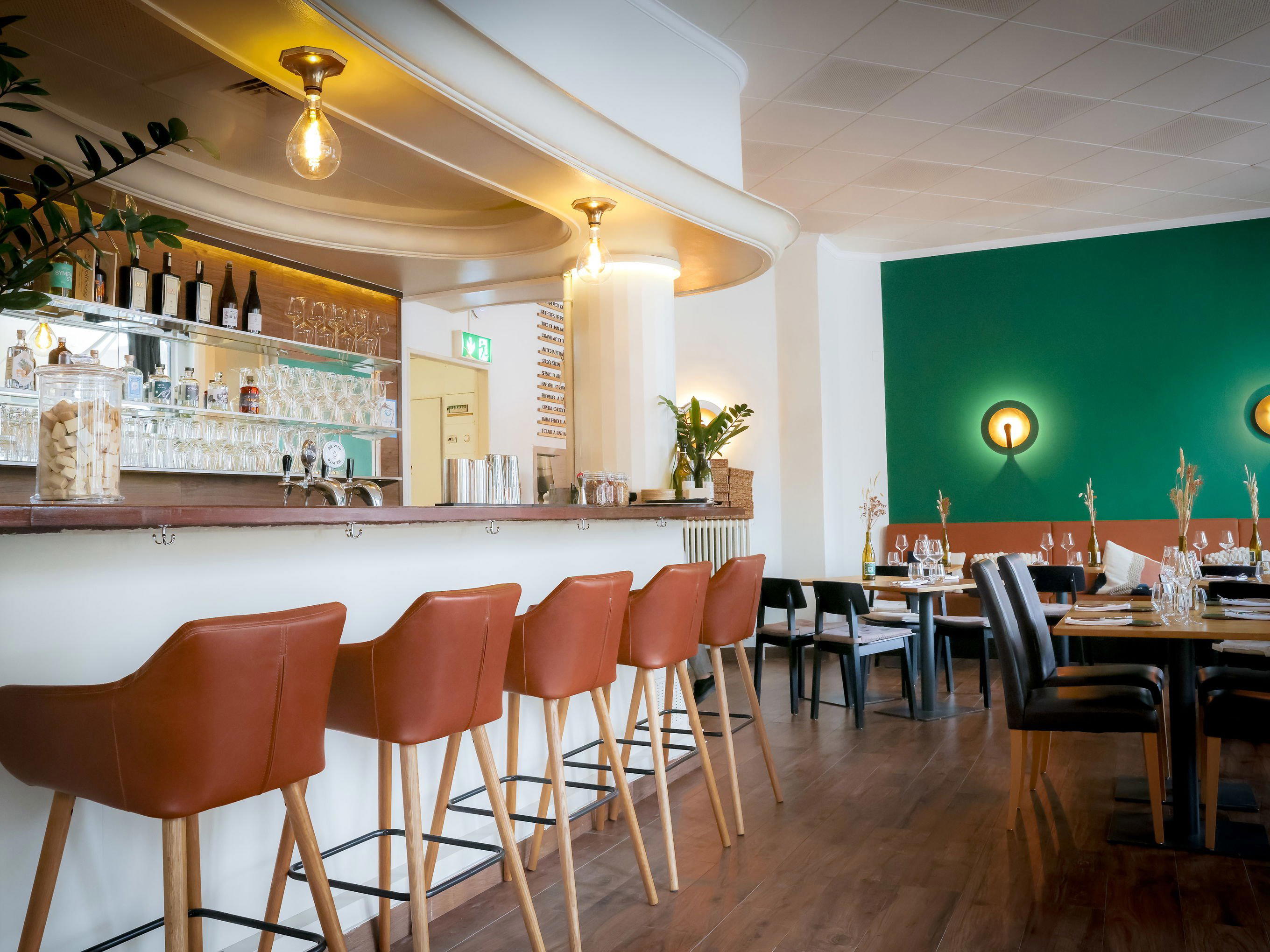
Port City, Open Kitchen: Ferrol's Modern Galician Counter
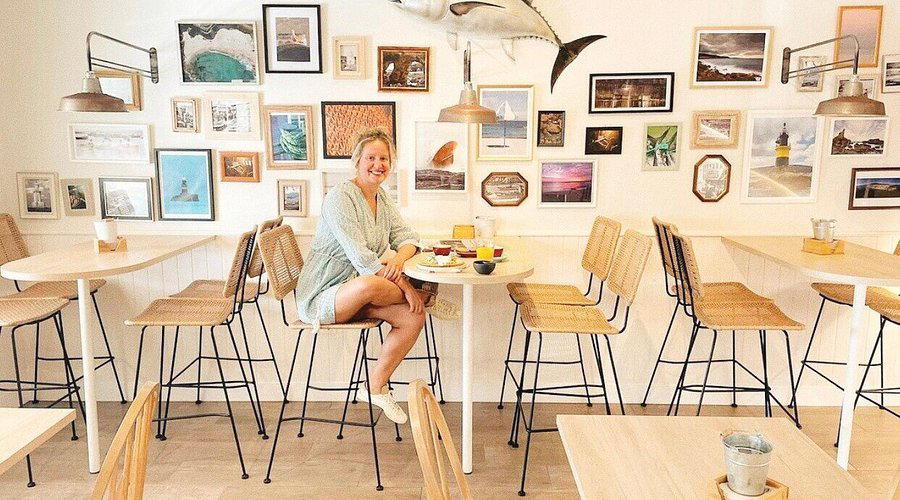
Ferrol is not a city that courts outside attention. The naval port on Galicia's northern ría has a working character that resists the tourist polish applied to Santiago de Compostela or A Coruña. Its dining scene reflects that disposition: a concentration of traditional seafood houses and neighbourhood taverns, with a narrow tier of more ambitious restaurants operating without the critical noise those venues might attract elsewhere in Spain. Rúa Espartero, close to the waterfront, sits inside that character rather than apart from it. The street has the functional quality of a port neighbourhood, and the open kitchen visible from the dining room at O Camiño do Inglés signals a kitchen that is comfortable being watched.
That transparency is part of what separates the more considered Ferrol restaurants from their traditional counterparts. At A Gabeira, the proposition is traditional cuisine at the same price tier; at BaceLo, contemporary cooking operates at a lower price point; Modesto concentrates on seafood at a more accessible level. O Camiño do Inglés occupies the space where Galician product and external technique meet at the €€€ tier with Michelin recognition to back the positioning. For the broader Ferrol dining scene, see our full Ferrol restaurants guide.
The Name and What It Signals
The restaurant takes its name from the nickname attached to its owner, Daniel López, known locally as El Inglés. In Galicia, nicknames carry the weight of local identity, and building a restaurant's name around one is a statement about belonging to a place. It is a pattern that sits in contrast to the anonymous or aspirational naming common in urban fine-dining, and it sets expectations accurately: this is a room with local roots and a particular personality, not a satellite of a larger culinary brand.
That local grounding matters as context for what the kitchen does. Galician cuisine has a strong product identity, built on the shellfish and fish from the Atlantic coast, the empanadas and lacón of the interior, and a wine culture anchored by Albariño and Ribeiro. Working from that base while folding in references from Japan, Peru, and Italy is a common posture among Spain's Michelin-listed modern restaurants, but the execution varies considerably. At the level of a Michelin Plate, the recognition signals competent, consistent cooking with clear intent, distinct from the speculative ambition of a star-chasing kitchen.
Spain's Modern Cuisine Tier: Where Ferrol Sits
Spain's top-end restaurant scene is concentrated in the Basque Country, Catalonia, and select southern nodes. Houses like Arzak in San Sebastián, El Celler de Can Roca in Girona, Disfrutar in Barcelona, and Martin Berasategui in Lasarte-Oria operate in a different tier entirely, as do DiverXO in Madrid, Azurmendi in Larrabetzu, Quique Dacosta in Dénia, and Aponiente in El Puerto de Santa María. Galicia itself has produced high-level talent and holds a credible position within Spain's culinary geography, though its recognised kitchens are fewer and less internationally profiled than those of the north or northeast.
Within that structure, a Michelin Plate in a port city like Ferrol represents something specific: cooking that has cleared the bar of consistency and technique at a regional level, drawing recognition without the infrastructure of a destination dining city. For a visitor whose primary reference is an international fine-dining circuit, the comparison to a venue like Frantzén in Stockholm or FZN by Björn Frantzén in Dubai would be category distance rather than quality equivalence, but the Plate signals a kitchen operating at the ceiling of its local tier and doing so with some ambition.
Format: Three Menus, Half-Plates, and the À La Carte
The menu architecture at O Camiño do Inglés is more considered than a single fixed tasting format would allow. The contemporary à la carte, rooted in Galician product but incorporating technique and ingredients from Peru, Japan, and Italy, runs alongside three set menus: Magdalena, Medio Camino, and Do Patrón. That range covers different levels of commitment and spend, which is practical in a city where the dining population is largely local rather than destination-driven.
The half-plates option, announced at the table rather than printed on the menu, extends the range further. In the context of Galician dining culture, where the tradition of sharing and grazing across multiple small portions runs deep, this format has cultural logic as well as commercial sense. It allows a table to move across more of the kitchen's range without committing to the full progression of a tasting menu, which suits both the restaurant's audience and the character of the room.
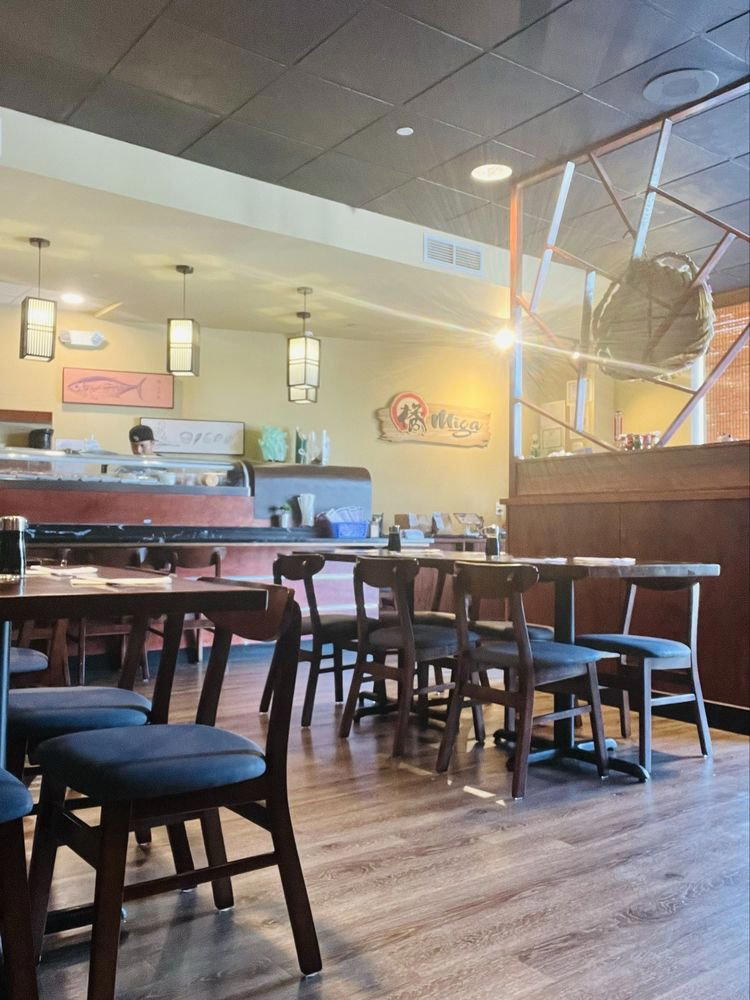
Open kitchen reinforces the format: this is not a kitchen that conceals its process or cultivates mystery as a hospitality tool. The visibility functions as a signal of confidence in the cooking, which is consistent with a Michelin-recognised kitchen at this level.
The sample is small enough that the score functions as a directional signal rather than a statistically significant measure, but it is consistent with a room that serves a tight, returning local audience rather than a high-volume tourist traffic. Restaurants in cities like Ferrol, where dining is not driven by traveller footfall, tend to build reputations through the local network first. A high score on a small review base suggests a kitchen that satisfies its regulars at the level they expect.
Planning a Visit
O Camiño do Inglés sits on Rúa Espartero, 77, in Ferrol's port-adjacent quarter. The €€€ price positioning places it at the upper end of Ferrol's dining range, in the company of A Gabeira rather than the mid-range tier represented by BaceLo or Modesto. Hours and booking details are not published centrally, so confirming availability directly with the restaurant before visiting is the practical approach, particularly for the set menus. Ferrol is accessible by road and rail from A Coruña, approximately one hour north by car. For accommodation, see our full Ferrol hotels guide, and for the broader scene, our guides to Ferrol bars, Ferrol wineries, and Ferrol experiences cover the rest of the city's offer.
Frequently asked questions
What do regulars order at O Camiño do Inglés?
The half-plates format, announced verbally at the table rather than printed on a fixed menu, is the mechanism through which regulars most often sample the kitchen's range. The à la carte draws from Galician product with technique borrowed from Japan, Peru, and Italy, while the three set menus, Magdalena, Medio Camino, and Do Patrón, offer a more structured progression. For a first visit, the set menus provide the clearest picture of how the kitchen moves between its Galician base and its international references. The Michelin Plate recognition in both 2024 and 2025 points to the dishes at the core of that offer as consistently reliable rather than experimental.
Just the Basics
| Venue | Cuisine | Price | Awards | Notes |
|---|---|---|---|---|
| O Camiño do InglésThis venue — the venue you are viewing | Modern Galician Fusion | $50–100 | Michelin Plate · Guía Repsol 2 Soles | Not listed |
| A Gabeira | Traditional Galician Seafood | $50–100 | Michelin Plate · Guía Repsol 1 Sol | Traditional Cuisine |
| BaceLo | Modern Spanish Mediterranean | $30–50 | Michelin Plate · Macarfi 7.5 Food Rating | Contemporary |
| Modesto | Seasonal Italian in the forests of Karuizawa | $50–100 | Tabelog 100 #52 | Seafood |
Recognition history
Dated appearances from independent guides and award organizations, with the underlying list record or original source where available.
Michelin Plate
Michelin
Guía Repsol 2 Soles
Guía Repsol
Full recognition history (4 entries)
Michelin Plate
Michelin
Michelin Plate
Michelin
O Camiño do Inglés
The wine
- Wine program
- Curated wine list
- Extensive wine list
Details
- Elegant
- Intimate
- Modern
- Sophisticated
- Date Night
- Special Occasion
- Business Dinner
- Open Kitchen
- Extensive Wine List
- Local Sourcing
- Street Scene
- Tasting Menu
- A La Carte
- Small Plates
- Vegetarian Friendly
- Vegan Options
Current opening hours
- Monday
- Closed
- Tuesday
- 1:45–3:30 PM
- Wednesday
- 1:45–3:30 PM
- Thursday
- 1:45–3:30 PM, 8:45–10:30 PM
- Friday
- 1:45–3:30 PM, 8:45–10:30 PM
- Saturday
- 1:45–3:30 PM, 8:45–10:30 PM
- Sunday
- 1:45–3:30 PM
Hours can change for holidays and private events. Last verified .
Contemporary dining room with quiet confidence, open kitchen theatre, and coastal elegance.