.png)
A Michelin Bib Gourmand recipient in both 2024 and 2025, Nida sits roughly a kilometre outside Lucca's city walls and serves traditional Japanese cuisine rooted in the southern Japanese upbringing of chef Masaki Kuroda. The menu runs from sashimi and nigiri to gyoza and tonkotsu-style ramen, with a lunchtime teishoku set that represents some of the most considered Japanese cooking in Tuscany at a mid-range price point.
 Discover on Pearl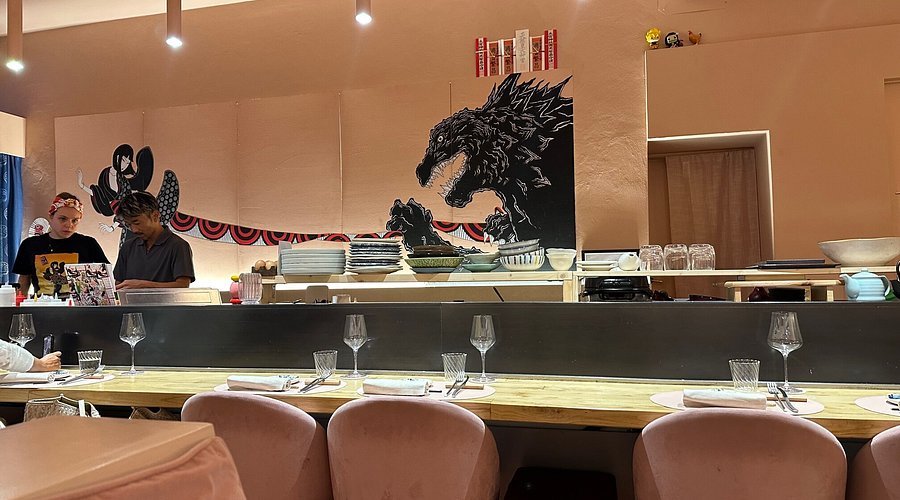
Japanese precision outside the walls
Approach Nida from the city centre and you pass the point where Lucca's medieval walls end and the quieter residential fabric of the surrounding streets begins. The restaurant sits about a kilometre beyond those walls, removed from the dense tourist circuit that keeps the historic core busy from spring through autumn. That physical distance is not incidental: it shapes who eats here and how they eat. The room is not dressed for spectacle. The cooking does the work.
This matters as editorial context because Lucca already has a well-defined Italian dining identity. Buca di Sant'Antonio has been holding that Tuscan tradition for generations; Giglio works classic cuisine at the €€€ tier; and All'Olivo occupies a similar mid-range bracket with regional ingredients as its anchor. Nida operates on entirely different terms. It is, to the leading of available knowledge, the only Japanese kitchen in the city with Michelin recognition, which positions it as the default reference point for Japanese food in a province better known for farro and lard-enriched flatbreads than dashi.
The shortlist, unlocked.
Hard-to-book tables, cellar releases, and concierge-planned trips.
Get Exclusive Access →What the kitchen serves — and the tradition behind it
The menu at Nida draws from the specific geography of chef Masaki Kuroda's origins in southern Japan. That regional specificity matters more than it might first appear. Japanese cuisine is not monolithic: the ramen culture of Kyushu — where Fukuoka's tonkotsu broth has a near-devotional following , sits in a different register from the cleaner, lighter broths of Tokyo or Hokkaido. The pork-based ramen at Nida reflects that southern Japanese tradition, a rich, collagen-heavy stock built over long reduction, and it arrives as the kind of dish that requires no qualification or adjustment for a European context. It works on its own terms.
Alongside ramen, the menu covers sashimi, nigiri, and gyoza. In the framework of a traditional Japanese teishoku , the structured set meal format that has organised Japanese lunch culture for centuries , these elements find their most coherent expression. The lunchtime teishoku set at Nida asks the diner to choose a main course; the rest of the plate is assembled by the kitchen. That format transfers control to the chef, which is exactly what it is designed to do. In Japan, the teishoku is an exercise in institutional trust: you eat what the cook decides is balanced and seasonal that day. Applying that logic in a small room outside a Tuscan city wall is a quietly serious act.
The editorial angle here is not theatrics in the teppanyaki sense of the word , Nida is not a performance kitchen with showmanship at its centre , but there is something counter-adjacent in how Kuroda's cooking operates. The decisions happen close to the diner. The gyoza, in particular, is described as a house speciality, and gyoza preparation, when done well, carries its own logic of timing and heat that any good cook treats with the same attention a sushi chef gives to rice temperature. The counter between kitchen and guest, whether literal or implied, is where the cooking becomes readable.
The Michelin Bib Gourmand signal , and what it means in this city
Nida holds the Michelin Bib Gourmand for both 2024 and 2025. The Bib Gourmand designation is Michelin's quality-at-value signal: it identifies restaurants where the inspectors found cooking of genuine interest at a price point below the starred tier. At the €€ price range, Nida aligns exactly with the Bib's intent. Among Lucca's Michelin-recognised addresses, this is the only one working in a non-Italian register, which gives the award an additional dimension. It is not just a statement about value; it is a statement about standards applied consistently across a cuisine tradition that Michelin inspectors are well-equipped to assess.
For context, Italy's Michelin-starred landscape includes ambitious addresses such as Osteria Francescana in Modena, Enoteca Pinchiorri in Florence, and Enrico Bartolini in Milan, as well as focused regional kitchens like Dal Pescatore in Runate, Quattro Passi in Marina del Cantone, and Atelier Moessmer Norbert Niederkofler in Brunico. Nida does not compete in that tier, nor does it try to. The Bib Gourmand is its appropriate register, and two consecutive years of recognition confirm that the kitchen is consistent rather than lucky.
Chef Kuroda also operates Serendipico in Capannori, a neighbouring municipality. Running two separate addresses in a relatively small market suggests a level of organisational confidence beyond the single-site operator, and it gives Nida an institutional depth that solo ventures in smaller cities often lack.
Planning your visit
Nida sits at Via Nicola Barbantini 338, approximately a kilometre from Lucca's city walls. For visitors based inside the historic centre, that distance is comfortably walkable in fifteen minutes, or a short taxi or bus ride. The restaurant holds a Google rating of 4.9 across 244 reviews, a figure that signals sustained satisfaction rather than a single wave of enthusiasm. The Bib Gourmand positioning at the €€ price tier makes it one of the more accessible Michelin-recognised addresses in the area; by comparison, L'Imbuto operates at the €€€€ end of the spectrum with a creative format aimed at a different occasion entirely.
Lunch is the session to prioritise if the teishoku format is your reason for visiting: the set menu structure operates at midday, and it is the clearest expression of the kitchen's approach. Phone and website details are not currently listed in our database, so booking through Google or a local hotel concierge is the most reliable route. Advance reservations are advisable, particularly on weekends and during the high summer months when Lucca draws significant visitor numbers from across Europe.
If you are building a broader Lucca itinerary, our full Lucca restaurants guide covers the range from Il Mecenate at the budget Tuscan end through to the starred tier. For planning beyond dining, the Lucca hotels guide, bars guide, wineries guide, and experiences guide cover the city's wider offer in the same editorial register.
For travellers with a particular interest in Japanese cooking, the reference points for this style of traditional, regionally rooted cuisine are better understood against Tokyo addresses like Myojaku and Azabu Kadowaki, where Japanese tradition operates at the starred level in its home city. Nida does not claim that tier, but it takes the same tradition seriously, and in a Tuscan city of 90,000 people that has no particular obligation to support Japanese cuisine at any level, that seriousness counts for something.
The shortlist, unlocked.
Hard-to-book tables, cellar releases, and concierge-planned trips.
Get Exclusive Access →Frequently Asked Questions
Comparable Options
A quick look at comparable venues, using the data we have on file.
Need a table?
Our members enjoy priority alerts and concierge-led booking support for the world's most difficult tables.
Get Exclusive AccessThe shortlist, unlocked.
Hard-to-book tables, cellar releases, and concierge-planned trips.
Get Exclusive Access →