

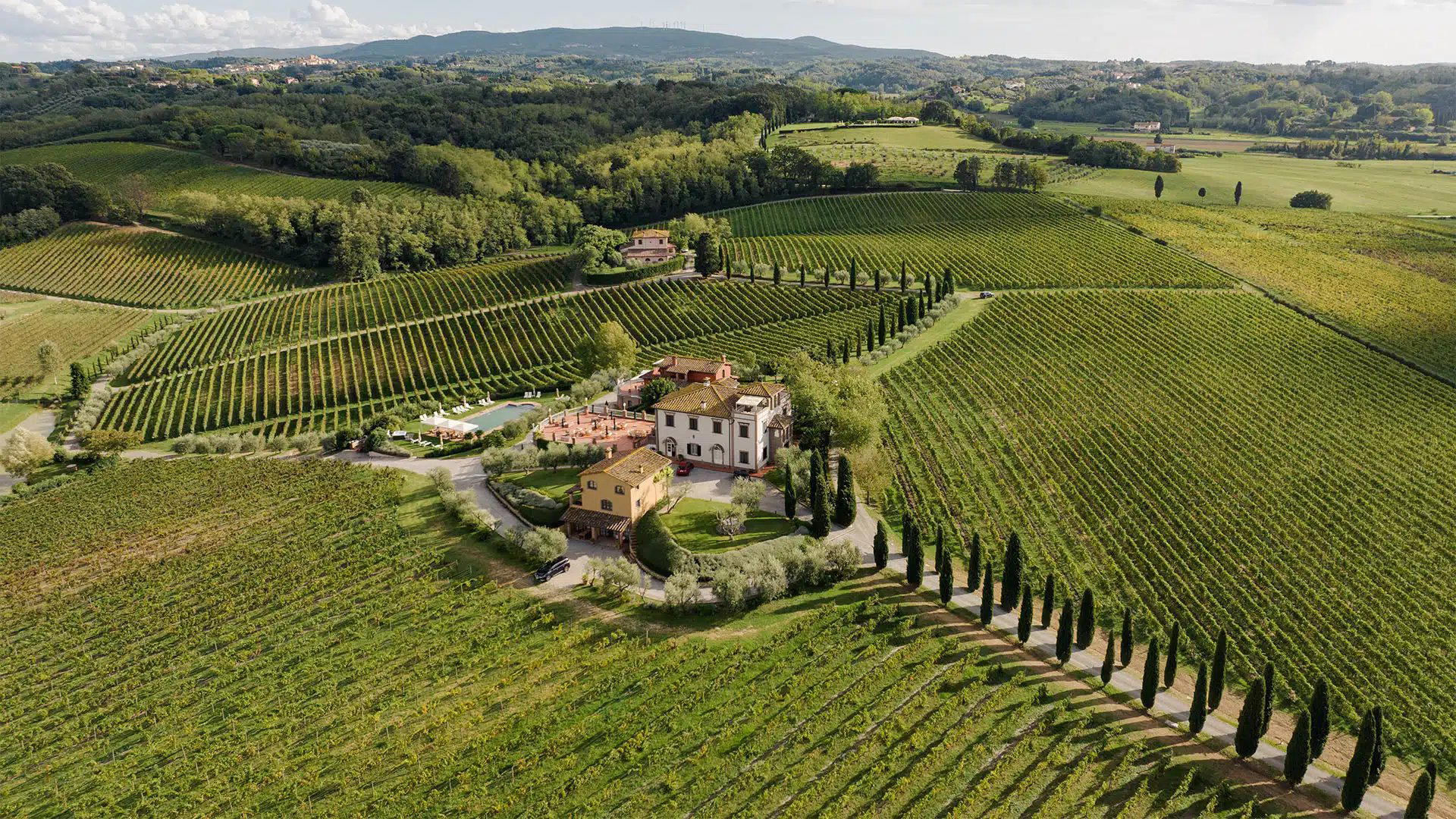
Set in a hillside farmhouse just outside Lucca's medieval walls, L'Imbuto is Cristiano Tomei's creative Italian restaurant where the number of courses is chosen blind and the kitchen's generosity tends to make that number irrelevant. The format is built around bitter notes, Parmigiano Reggiano, and a cooking sensibility that resists easy categorisation. Recognised by Michelin and ranked among Europe's top restaurants by Opinionated About Dining in 2025, it occupies a distinct tier in Lucca's dining scene.
Pearl is the En Primeur Club membership app — saves, bookings, and concierge access live there. Same editors, same standards.
- Address
- Via della Pieve Santo Stefano, 967/c, 55100 Lucca LU, Italy
- Phone
- +39 331 930 8931
- Website
- limbuto.it
- Directions
- Get directions
 Saves & bookings on Pearl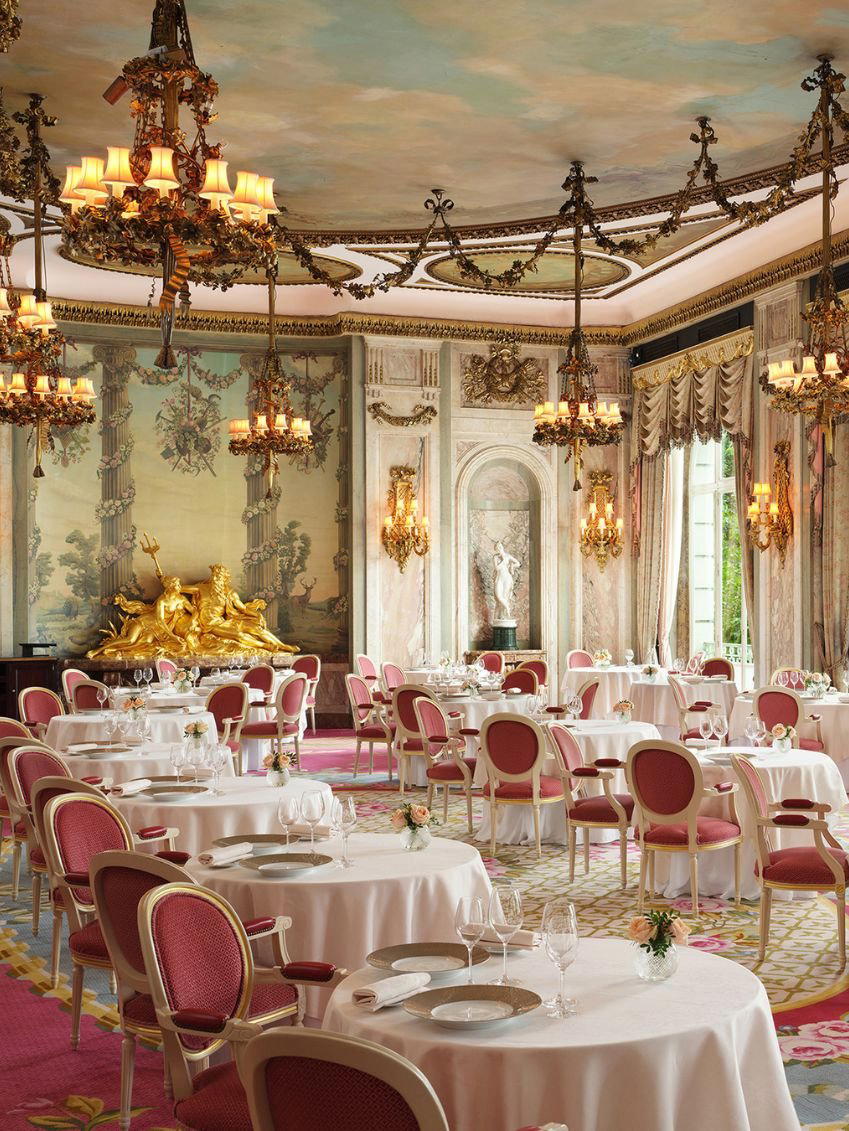
Outside the Walls, Outside the Convention
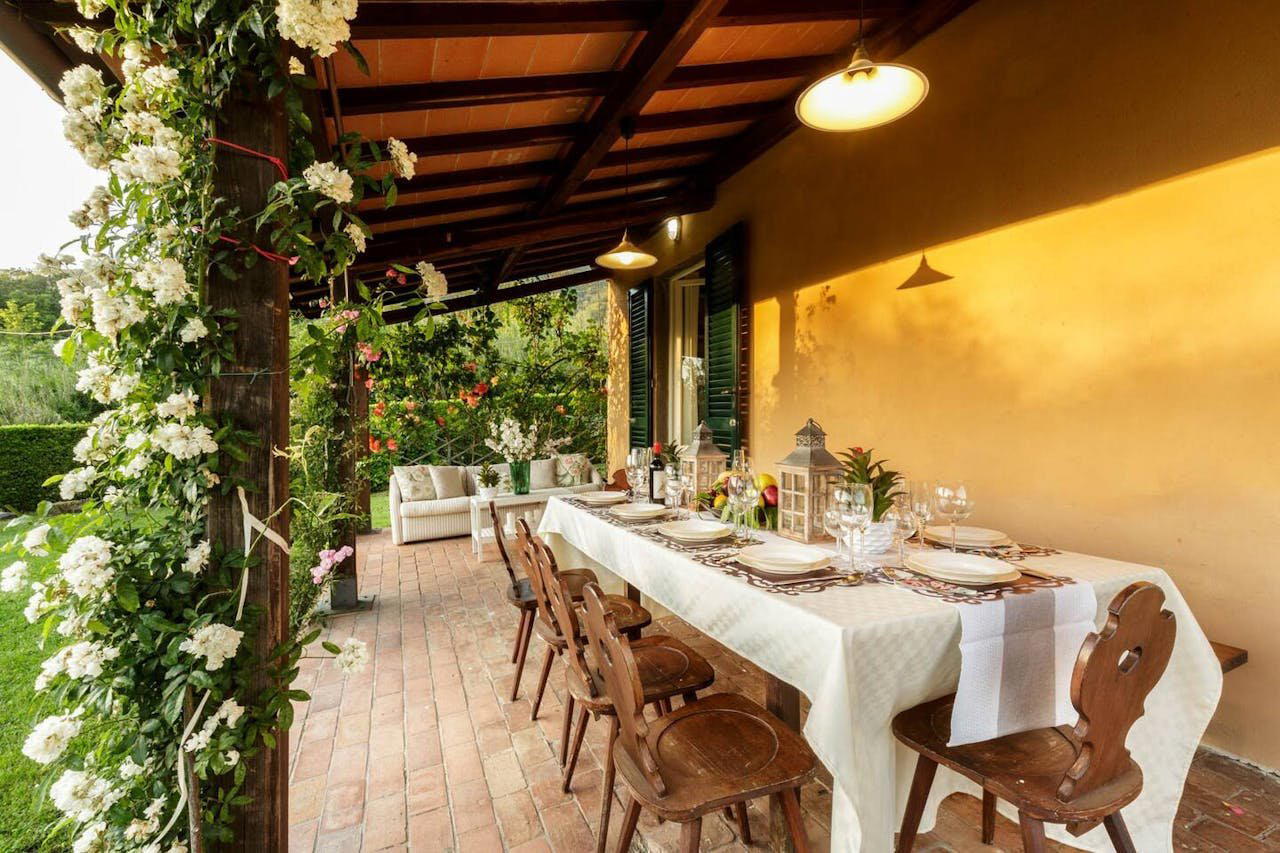
Arriving at L'Imbuto means leaving Lucca's famous ring of Renaissance walls behind and heading into the hillside countryside that frames the city to the south. The farmhouse setting, with extensive outdoor service in summer, establishes a tone before a single plate arrives: this is not a restaurant that performs its ambitions through urban formality or interior grandeur. The location itself communicates something about how creative Italian cooking is evolving outside the major cities, where chefs operating away from Florence or Milan can hold a more singular line.
That separation from Italy's high-volume fine dining corridors matters when placing L'Imbuto in context. Cities like Florence and Modena carry the gravitational pull of institutions such as Enoteca Pinchiorri in Florence and Osteria Francescana in Modena. Lucca's scene, by contrast, is quieter and more layered, mixing traditional Tuscan trattorias with a smaller number of creative outliers. L'Imbuto sits firmly in the latter category, and the hillside farmhouse address reinforces rather than undermines that positioning.
A Format Built on Deliberate Uncertainty
The structure at the restaurant is designed around a specific form of productive disorientation: diners choose the number of courses blind, without a menu in front of them. In practice, the kitchen's generosity consistently erodes whatever number was originally selected. The format is not a gimmick but a considered approach to how attention and trust operate during a long meal. When a diner commits to a count without knowing what fills it, they hand interpretive authority to the kitchen, which creates a different quality of engagement than menu selection typically allows.
This format places the restaurant in a small group of creative Italian restaurants where the architecture of the meal is itself part of the proposition. Comparable ambition around format and sequencing appears at places like Le Calandre in Rubano and Atelier Moessmer Norbert Niederkofler in Brunico, though the specific editorial logic at the restaurant, rooted in bitter flavour profiles and the recurring presence of Parmigiano Reggiano, belongs to a distinct culinary vocabulary. The kitchen's warm service ethos extends to staff providing explanations as the meal unfolds, which partially compensates for the deliberate information gap in the format.
Bitter Notes and the Parmigiano Thread
Creative Italian cooking at the premium tier often organises itself around a signature ingredient or flavour philosophy that recurs across the menu and gives the kitchen a recognisable voice. At the restaurant, that organising principle is the interplay between bitter notes and Parmigiano Reggiano, two elements that appear together frequently and in combinations that push against the expected sweetness or roundness of Italian tradition. Bitter flavours have a long, underappreciated place in Italian cuisine, from the use of radicchio in the Veneto to amaro-inflected preparations across the north, but they are rarely placed at the centre of a creative menu in the way they are here.
The restaurant's most signature preparation is the Bistecca Primitiva, a dish that carries the weight of recurring mention across the kitchen's output and functions as a reference point for understanding Tomei's approach. Its persistence on the menu, in a format that otherwise resists predictability, signals that it represents something essential about the kitchen's thinking rather than a crowd-pleasing fixture. For reference, the broader creative Italian tier, from Enrico Bartolini in Milan to Dal Pescatore in Runate, each carries similar anchoring dishes that survive menu rotation because they express something irreducible about the kitchen's sensibility.
Where L'Imbuto Sits in Lucca's Dining Tier
Lucca's restaurant offer is more varied than a city of its size might suggest. The traditional Tuscan end is well served, with places like Buca di Sant'Antonio and All'Olivo handling regional cooking with established authority. The mid-range is anchored by Giglio at the €€€ tier, and leaner options extend down to Il Mecenate. For something outside the Italian idiom entirely, Nida offers Japanese at a €€ price point. The restaurant occupies stronger examples from the city's price tier at €€€€ and is the clearest candidate for creative fine dining in the city and its immediate surrounds.
The 2025 Michelin Plate recognition and a ranking of #572 among Opinionated About Dining's leading restaurants in Europe provide external calibration.6 across 657 reviews adds a volume dimension.
For comparison within the creative European category, the Paris end of the spectrum, represented by places like Alléno Paris au Pavillon Ledoyen and Arpège, operates at a different scale and price ceiling. The restaurant's value proposition is partly geographic: a €€€€ meal in a Tuscan hillside farmhouse prices against a different set of expectations than an equivalent spend in central Paris.
Planning a Visit
The restaurant sits at Via della Pieve Santo Stefano, 967/c, outside the city proper, which means arriving by car is the practical default for most visitors. The hillside farmhouse setting comes fully into its own during summer, when outdoor tables extend the service into the surrounding landscape. For those staying in Lucca itself and looking to plan around the broader city, Given the blind-course format and the kitchen's tendency toward generosity in sequencing, arriving with time and appetite rather than a fixed schedule is the right approach.
Recognition Snapshot
Comparable venues nearby, for context on price, style, and recognition.
| Venue | Cuisine | Price | Awards | Notes |
|---|---|---|---|---|
| L'ImbutoThis venue — the venue you are viewing | Avant-Garde Tuscan Fine Dining | $$$$ | Michelin Plate | Not listed |
| Buca di Sant'Antonio | Traditional Tuscan Trattoria | $$$ | Michelin Plate | center |
| All'Olivo | Traditional Tuscan Italian | $$$ | Michelin Plate | historic centre |
| Tomkat | Modern Italian Wine Bar | $$$$ | Not listed | historic centre |
| Peperosa | Modern Italian Fine Dining | $$$ | Michelin Plate | Piazza dell'Anfiteatro |
| Giglio | Modern Tuscan Fine Dining | $$$ | Michelin Plate | historic centre |
Recognition history
Dated appearances from independent guides and award organizations, with the underlying list record or original source where available.
Michelin Plate
Michelin
Opinionated About Dining Top Restaurants in Europe Recommended
Opinionated About Dining
Michelin Plate
Michelin
Opinionated About Dining Top Restaurants in Europe Ranked #572
Opinionated About Dining
Michelin Plate
Michelin
Continue exploring
More in Lucca
Restaurants in Lucca
Browse all →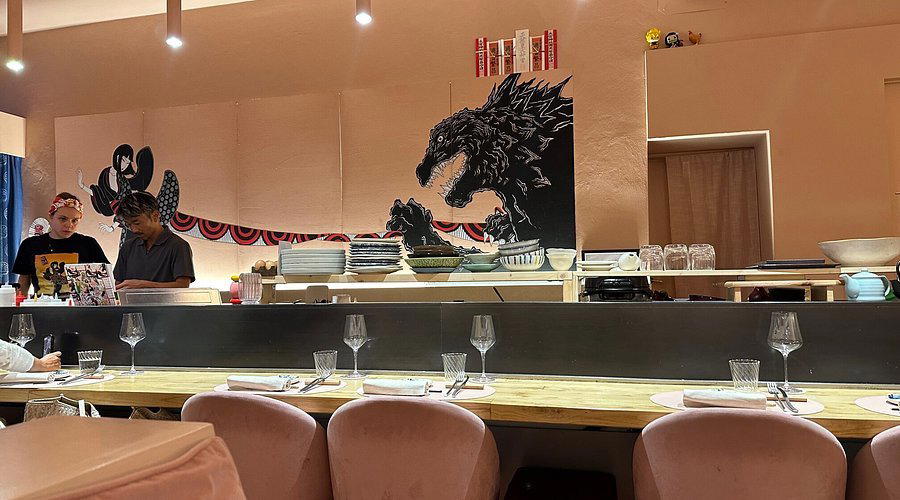
Bars in Lucca
Browse all →
Hotels in Lucca
Browse all →

At a Glance
- Elegant
- Intimate
- Sophisticated
- Date Night
- Special Occasion
- Garden
- Historic Building
- Extensive Wine List
- Garden
Current opening hours
- Monday
- Closed
- Tuesday
- Closed
- Wednesday
- 12:30–2 PM, 7:30–9 PM
- Thursday
- 12:30–2 PM, 7:30–9 PM
- Friday
- 12:30–2 PM, 7:30–9 PM
- Saturday
- 12:30–2 PM, 7:30–9 PM
- Sunday
- 12:30–2 PM, 7:30–9 PM
Hours can change for holidays and private events. Last verified .
Chic, quiet, and intimate environment blending historic charm with modern elegance, often overlooking Palazzo Pfanner gardens.