New Gold Medal Restaurant
On 8th Street in Oakland's Chinatown-adjacent corridor, New Gold Medal Restaurant occupies a stretch of the city where Chinese American dining has deep roots and little pretense. The menu follows the logic of a working neighborhood restaurant, where dishes are chosen for regulars rather than occasion diners. It sits within a dense cluster of independent spots that reward those willing to move past the more obvious addresses.
Pearl is the En Primeur Club membership app — saves, bookings, and concierge access live there. Same editors, same standards.
- Address
- 389 8th St, Oakland, CA 94607
- Phone
- (510) 465-1940
- Website
- newgoldmedal.shop
- Directions
- Get directions
 Saves & bookings on Pearl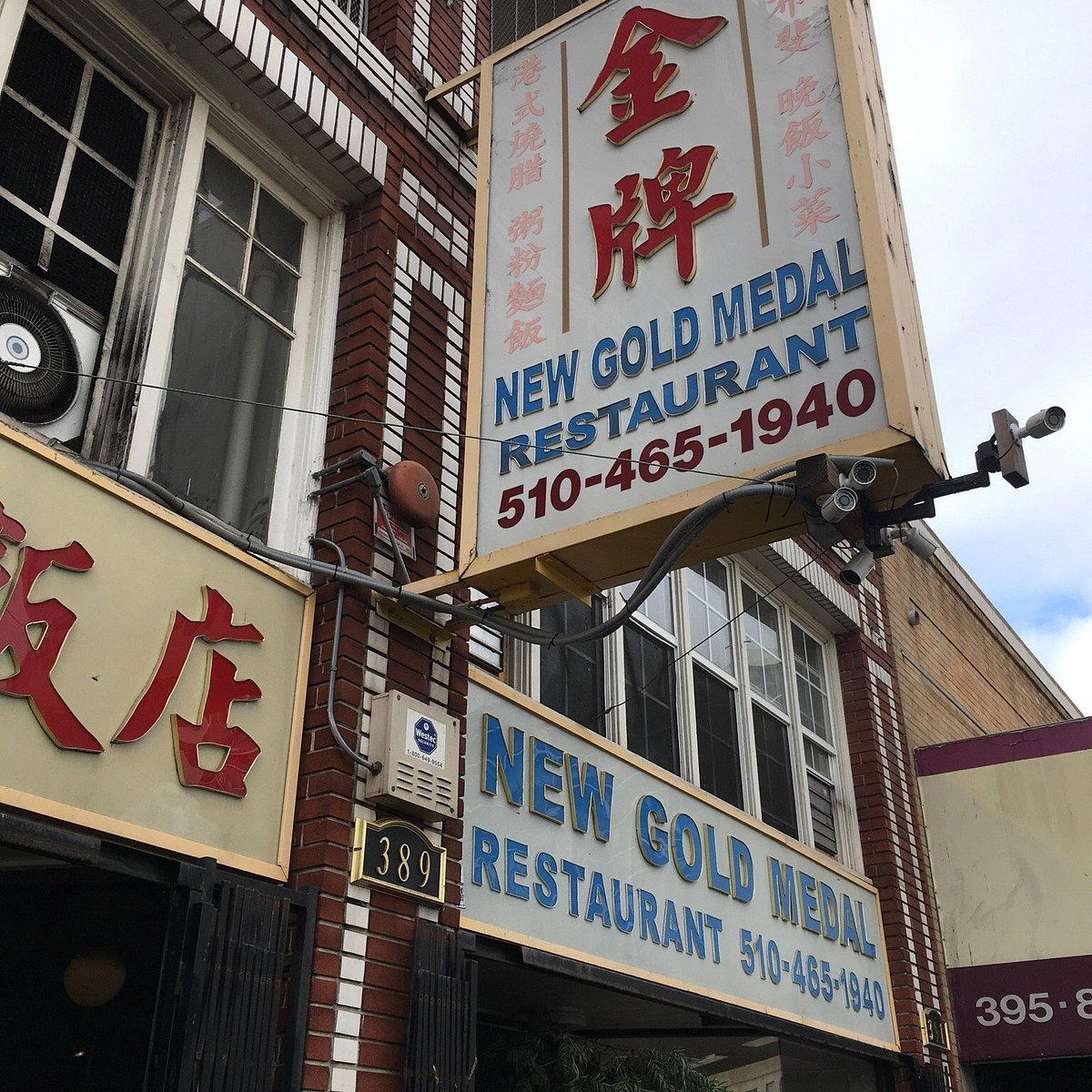
8th Street and the Architecture of a Neighborhood Menu
New Gold Medal Restaurant is a Cantonese Chinese restaurant in Oakland, with a casual dress code, walk-in-friendly service, and a low price tier. The block of 8th Street running through Oakland's Chinatown-adjacent district has a particular quality that most restaurant corridors in the Bay Area lack: it hasn't been curated. The storefronts here weren't assembled by a hospitality group with a thesis about neighborhood character. They accumulated, dim sum halls, tea cafes, produce stands, and counter-service spots that have served the same communities for decades. New Gold Medal Restaurant sits inside that logic, at 389 8th St, occupying space in a corridor where the audience is largely local and the menu reflects that fact directly.
In American cities, the restaurants that survive longest in dense immigrant neighborhoods tend to share a structural feature: their menus are organized around what the kitchen can do consistently rather than around a seasonal or concept-driven framework. The menu at a place like this functions as a working document, dishes added when demand warrants, retained when regulars depend on them, rarely retired for novelty's sake. That architecture tells you more about a restaurant's relationship to its community than any tasting format could. It's the opposite approach from the elaborate progression you'd find at Alinea in Chicago or the farm-to-table precision of Blue Hill at Stone Barns in Tarrytown, and that contrast is not a flaw, it's a different set of priorities entirely.
What the Menu Structure Reveals
Chinese American restaurants operating in neighborhoods like Oakland's Chinatown corridor typically maintain menus that span two overlapping registers: the dishes pitched toward non-Chinese diners familiar with an older American-Chinese vocabulary, and the dishes that exist because the kitchen's regular customers expect them. Reading both layers tells you where a restaurant actually positions itself. The breadth of a menu in this category is rarely a sign of unfocus, it's more often a sign of a kitchen managing multiple loyalties simultaneously, the way a good neighborhood spot in any city tends to do.
Oakland's Chinatown has historically housed some of the Bay Area's most consistent Chinese cooking outside San Francisco's more tourist-facing district, and the 8th Street corridor in particular rewards attention. The cluster of independent restaurants along this stretch, including 8th St Cafe 文記茶餐廳 and Alem's Coffee nearby, reflects the kind of density where different culinary traditions operate within a few storefronts of each other without anyone making a scene about it. That coexistence is one of the things that makes this part of Oakland worth paying attention to, even when individual venues carry limited public profiles.
Oakland's Dining Tier and Where This Fits
Oakland's restaurant scene has developed its own competitive logic, largely independent of San Francisco despite the geographic proximity. The city supports a range of price points and formats, from the Dominican cooking at alaMar Dominican Kitchen to the more refined seafood program at 3 Bottled Fish. Mexican formats like Agave Uptown anchor the Uptown corridor. What that spread signals is that Oakland diners now expect genuine variety across cuisine types and formats, not just a secondary market for ideas incubated across the bay.
New Gold Medal Restaurant operates in the accessible tier of this market, the kind of spot where the cost of a full meal sits well below the prix-fixe brackets that define celebrated Bay Area rooms like Lazy Bear in San Francisco or the wine-country formality of Single Thread Farm in Healdsburg. The comparison is to clarify that the value proposition here is entirely different. You're not paying for a composed experience; you're paying for a kitchen that knows its repertoire and executes it for a community that returns regularly. That kind of consistency, over time, is its own credential.
It's also worth placing this in the wider national context. The Chinese American restaurant format, particularly in West Coast cities with established Chinatown corridors, has produced some of the country's most durable dining institutions. The cuisines served in these rooms don't carry the accolade infrastructure that surrounds Michelin-tracked restaurants like Le Bernardin in New York City or Providence in Los Angeles, but the staying power of a well-run neighborhood Chinese restaurant often outlasts the restaurant-of-the-moment cycle entirely.
Planning a Visit
The 8th Street address places the restaurant within walking distance of BART's Lake Merritt and 12th Street stations, making it direct to reach from most parts of Oakland or from San Francisco without driving. The surrounding block is active during lunch and dinner hours, and parking in Chinatown can be constrained during peak times, the BART option is reliable. Arriving during off-peak hours (mid-afternoon, or early dinner) is a reasonable precaution for a first visit. This is a cash-friendly neighborhood in the traditional sense, so carrying cash as a backup is always sensible in this corridor.
Nearby and Worth Pairing
The density of independent spots on and around 8th Street makes it practical to turn a single meal into a longer afternoon. 8th St Cafe 文記茶餐廳 handles the Hong Kong-style tea cafe format that pairs naturally with the area's Chinese restaurant cluster. For something further afield within Oakland, Agave Uptown represents the Uptown corridor's more nightlife-adjacent energy, while 3 Bottled Fish offers a more produce- and seafood-focused approach for a second meal. The contrast between Chinatown's working-restaurant density and the more curated Uptown blocks is part of what makes Oakland's dining geography genuinely worth reading, the city holds both registers without one flattening the other.
Category Peers
Comparable venues nearby, for context on price, style, and recognition.
| Venue | Cuisine | Price | Notes |
|---|---|---|---|
| New Gold Medal RestaurantThis venue — the venue you are viewing | Cantonese Chinese | $ | Not listed |
| Sun Sing Pastry | Chinese Dim Sum Bakery | $ | Chinatown |
| Tao Yuen Pastry | Cantonese Dim Sum & Pastry | $ | Chinatown |
| An’s Canteen | Authentic Tianjin-style Jianbing | $ | Chinatown |
| Shanghai Restaurant | Shanghai Chinese | $$ | Chinatown |
| Chef Yu - Yuyu Za Zang | Korean-Chinese | $$ | Temescal |
Continue exploring
More in Oakland
Restaurants in Oakland
Browse all →

Bars in Oakland
Browse all →
Hotels in Oakland
Browse all →







At a Glance
- Classic
- Cozy
- Casual Hangout
- Late Night
- Family
- Open Kitchen
Current opening hours
- Monday
- 9 AM–3 AM
- Tuesday
- 9 AM–12 AM
- Wednesday
- 9 AM–3 AM
- Thursday
- 9 AM–3 AM
- Friday
- 9 AM–3 AM
- Saturday
- 9 AM–3 AM
- Sunday
- 9 AM–3 AM
Hours can change for holidays and private events. Last verified .
Unpretentious, no-frills dining room with visible kitchen and hanging BBQ meats, casual and bustling atmosphere.