
Star Wine List
Our verdict
On Rörstrandsgatan in Stockholm's Vasastan district, Nektar mat & vin operates in the quieter register of the city's wine-forward dining scene: a neighbourhood restaurant where the cellar carries as much editorial weight as the kitchen. It sits outside the Michelin-chasing tier occupied by Frantzén or AIRA, and is better understood alongside the generation of Scandinavian wine restaurants that treat the list as a primary argument.

Pearl is the En Primeur Club membership app — saves, bookings, and concierge access live there. Same editors, same standards.
- Address
- Rörstrandsgatan 12, 113 40 Stockholm, Sweden
- Phone
- +4687711470
- Hours
- Mon ClosedTue–Thu 5–10 PMFri 4–11 PMSat 1–11 PMSun Closed
- Website
- nektarstockholm.com
- Directions
- Get directions
- Booking
- Book on the venue's website
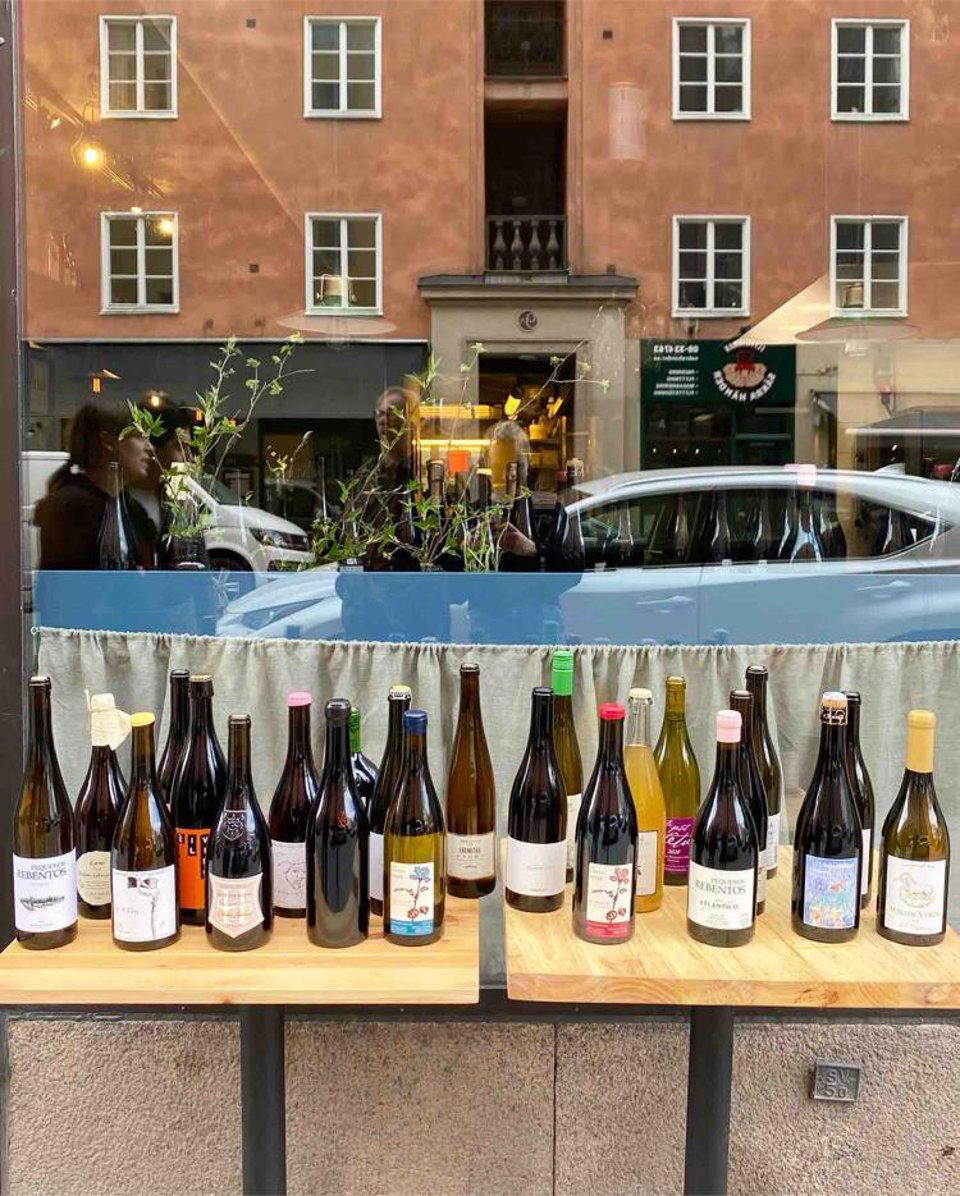
Vasastan's Wine-Driven Dining Register
Stockholm's restaurant scene has sorted itself into fairly legible tiers over the past decade. At the leading, tasting-menu destinations like Frantzén and AIRA compete on ingredient sourcing, technique, and international recognition. Below that sits a mid-tier of accomplished à la carte rooms, and alongside both runs a separate current: wine restaurants, where the cellar is the conceptual engine and the kitchen is its equal partner rather than its supporting act. Nektar mat & vin, at Rörstrandsgatan 12 in Vasastan, operates in that third category.
Vasastan is one of Stockholm's quieter residential districts, north of the centre and west of Östermalm's more conspicuous wealth. Its restaurant culture skews local rather than destination-driven, which suits a wine-focused format that rewards repeat visits and rewards guests who already know what they want. The name itself signals the framing: "mat & vin" is Swedish for food and wine, and the pairing of those two nouns on equal footing is a position statement more than a description.
The Wine List as Primary Argument
Across Scandinavia, the wine restaurant format has produced some of the region's most interesting rooms. Enoteket in Norrköping built its reputation on a list that outpaces its city's size. 28+ in Gothenburg has operated as a reference point for the format in Sweden's second city for years. What distinguishes these places from conventional restaurants with good wine programmes is the direction of editorial authority: the list shapes the menu, rather than the other way around.
At venues that take this approach seriously, the sommelier function carries weight equal to the head chef. Curation philosophy tends toward either depth in a specific region or breadth across natural and low-intervention producers, and both approaches require a level of cellar investment that separates the committed from the casual. Stockholm has enough of these venues to constitute a scene, and Nektar sits within it at the neighbourhood end of the spectrum rather than the destination end.
For comparison, Operakällaren and Aloë each carry serious wine credentials, but their frames are different: Operakällaren's list is part of a grand dining institution, while Aloë sits in the creative fine dining bracket. Nektar's mat & vin format is more explicit about the dual mandate from the outset.
Food and Wine in Equal Measure
The broader Scandinavian tradition that informs venues like Nektar is one that has moved away from rigid French hierarchy toward a more informal exchange between kitchen and cellar. New Nordic cooking's emphasis on fermentation, acidity, and preserved ingredients created natural alignment with wine styles that share those characteristics: high-acid whites, skin-contact wines, and lighter reds that work with cured fish and foraged vegetables rather than against them.
This alignment has been particularly productive in Sweden, where Adam/Albin has explored New Nordic formats with Michelin recognition, and where regional destinations like Vollmers in Malmö and ÄNG in Tvååker have demonstrated that serious food and wine pairing is not exclusively a capital-city pursuit. Nektar's Vasastan address places it in a neighbourhood context where the guest is more likely a Stockholmer than a tourist, which tends to produce a different kind of service dynamic: less performance, more conversation.
Planning a Visit
Rörstrandsgatan 12 is accessible from Odenplan, one of Stockholm's main metro interchange stations, making the address convenient for most parts of the city. For visitors staying in central Stockholm, the journey is fifteen minutes or fewer by transit. Wine-focused neighbourhood restaurants in Stockholm at this positioning typically run dinner service Wednesday through Saturday, with Friday and Saturday evenings filling earliest. Walk-in availability varies by season; the summer months, when Stockholm's dining scene is at its most active, will be tighter than autumn or winter.
Venues operating in this format across Sweden tend to price at a mid-to-upper neighbourhood level: above a casual bistro, below a full tasting-menu room. For calibration, consider that comparable wine restaurants in Stockholm charge between 900 and 1,800 SEK per head for a full evening with paired wines, though Nektar's specific pricing should be confirmed directly.
Stockholm in the Wider Swedish Wine Restaurant Context
Sweden's wine restaurant scene is geographically distributed in a way that reflects the country's broader restaurant culture. Outside Stockholm, Signum in Mölnlycke, VYN in Simrishamn, and Knystaforsen in Rydöbruk each demonstrate that serious wine programming has dispersed well beyond the capital. Within Stockholm, the format has enough critical mass that a visitor with a week in the city could eat and drink at wine-forward rooms every night without repetition.
What Nektar represents, within that context, is the neighbourhood iteration of the format: a room that serves its immediate community first and draws destination guests second. That is not a limitation; it is a specific kind of quality signal. Restaurants that sustain themselves on repeat local custom face a different standard than those that rely on tourist cycles or one-time splurge occasions. The regulars know the list, know the menu's direction, and return because the standards hold. That pressure, low-profile but consistent, tends to produce reliable cooking and a wine programme with genuine point of view.
For readers building a Stockholm itinerary across different registers, our full Stockholm restaurants guide maps the city's dining scene from the tasting-menu tier through to neighbourhood rooms like this one. For those whose interests extend internationally, the wine-forward dining ethos that Nektar represents has parallels in rooms like Le Bernardin in New York City, where kitchen and cellar operate in sustained dialogue, and in the more technique-led Atomix in New York City, where pairing is built into the format's architecture. The Scandinavian version of this conversation remains quieter, more residential in its register, and often more interesting for it.
For other Swedish venues worth considering alongside a Stockholm trip: PM & Vänner in Växjö, Adrian Restaurang in Borås, and Brasserie Park in Jönköping each represent distinct regional takes on the Swedish dining conversation.
Frequently asked questions
Where do I go for Nektar mat & vin?
Nektar mat & vin is located at Rörstrandsgatan 12, 113 40 Stockholm, Sweden, Stockholm.
Is Nektar mat & vin a good option for a wine-focused dinner in Vasastan?
Rörstrandsgatan 12 puts Nektar within a short walk of Odenplan, one of Stockholm's central metro interchanges, which makes it accessible from most parts of the city without requiring a taxi. The mat & vin name positions it specifically as a wine-led room in a neighbourhood that has developed a consistent restaurant identity over the past decade. For Stockholm visitors whose priority is the wine list rather than a conventional tasting menu, Vasastan's format suits that intention better than the city's high-formality restaurant tier.
What should I eat at Nektar mat & vin?
At Rörstrandsgatan 12, the mat & vin framing signals that the kitchen is designed to complement the wine list rather than operate independently of it, so asking the floor for food-and-wine pairings is the practical starting point. Follow whatever the kitchen is emphasising that week.
Can I walk in to Nektar mat & vin?
Walk-in availability is variable. Vasastan wine restaurants at this positioning tend to fill Thursday through Saturday without much slack, particularly in the autumn and winter months when Stockholm's dining rooms run at capacity. Contacting the venue directly via current listings before arriving without a reservation is the lower-risk approach.
What's the standout thing about Nektar mat & vin?
The mat & vin construction in the name is the most direct statement of intent: this is a room where the wine list holds equal conceptual weight to the kitchen.
Can Nektar mat & vin adjust for dietary needs?
The reliable route is to reach out through current search listings or restaurant booking platforms before your visit to confirm what the kitchen can accommodate. Vasastan's neighbourhood wine restaurants generally work at a scale where direct communication with the kitchen is straightforward.
Is Nektar mat & vin overpriced or worth every penny?
At wine-forward venues in Stockholm, the value calculus depends heavily on how the list is priced relative to retail and whether the food is constructed to stand alone or primarily to support the wine programme. Checking current booking platforms for menu pricing before visiting will give you the clearest read on where Nektar sits in Stockholm's range.
A Quick Peer Check
Comparable venues nearby, for context on price, style, and recognition.
| Venue | Cuisine | Price | Awards | Notes |
|---|---|---|---|---|
| Nektar mat & vinThis venue — the venue you are viewing | Seasonal Nordic Small Plates with Southern European Influences | $50–100 | Star Wine List | Not listed |
| Brasserie Elverket | Swedish Brasserie | Not listed | Star Wine List | Östermalm |
| At Six | Modern Nordic Brasserie | $50–100 | Not listed | Norrmalm |
| Slipen | Modern Swedish Bistro | $50–100 | Not listed | Djurgården |
| Hillenberg | Modern Scandinavian Brasserie | $50–100 | Michelin Plate · Star Wine List | Östermalm |
| Spanjorskan | Spanish Tapas | Not listed | Star Wine List | Östermalm |
Recognition history
Dated appearances from independent guides and award organizations, with the underlying list record or original source where available.
Star Wine List
Star Wine List
Continue exploring
More in Stockholm
Restaurants in Stockholm
Browse all →
Bars in Stockholm
Browse all →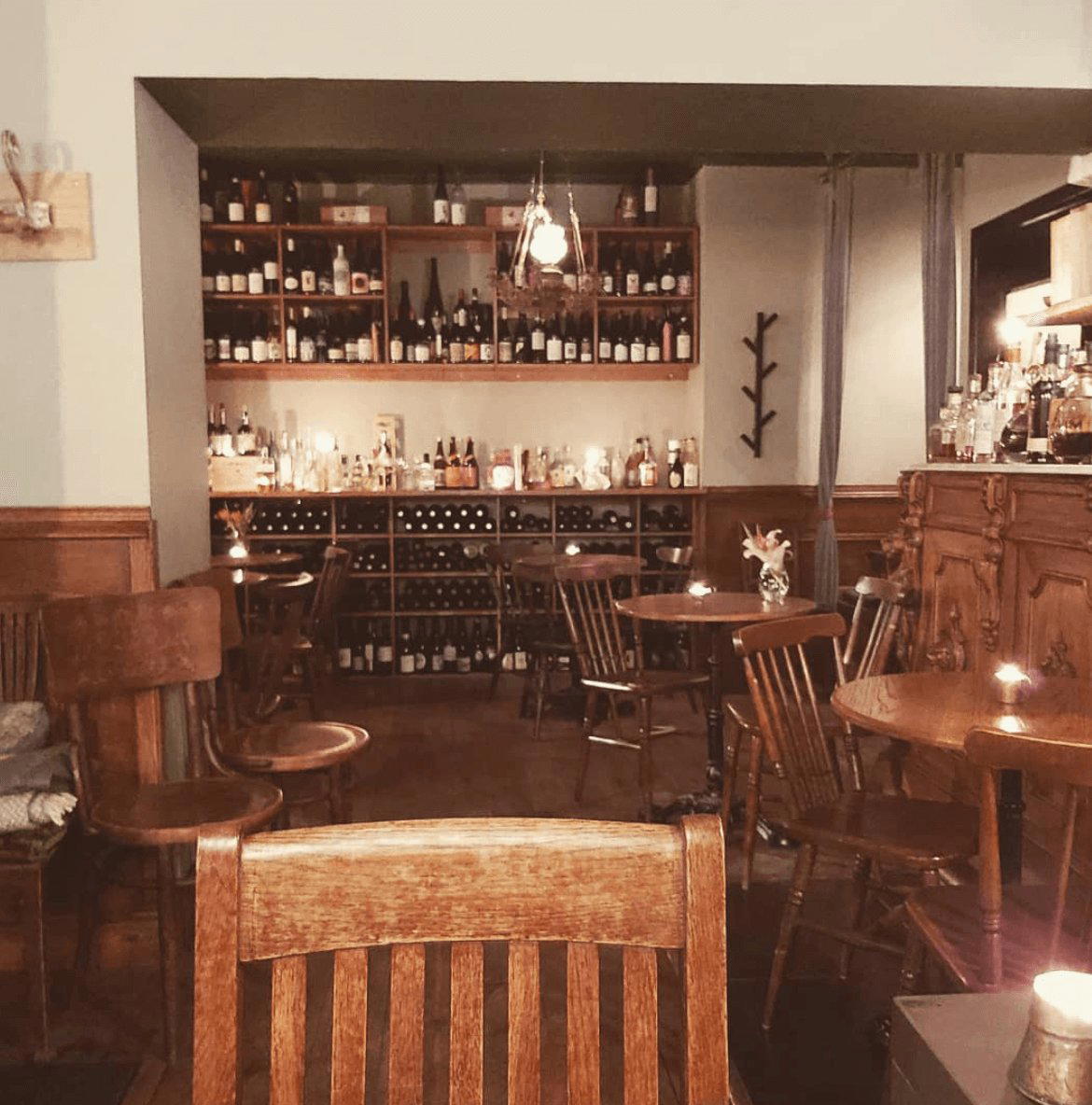
Details
- Cozy
- Intimate
- Trendy
- Date Night
- Casual Hangout
- Open Kitchen
- Natural Wine
- Local Sourcing
- Small Plates
- Natural Wine
Current opening hours
- Monday
- Closed
- Tuesday
- 5–10 PM
- Wednesday
- 5–10 PM
- Thursday
- 5–10 PM
- Friday
- 4–11 PM
- Saturday
- 1–11 PM
- Sunday
- Closed
Hours can change for holidays and private events. Last verified .
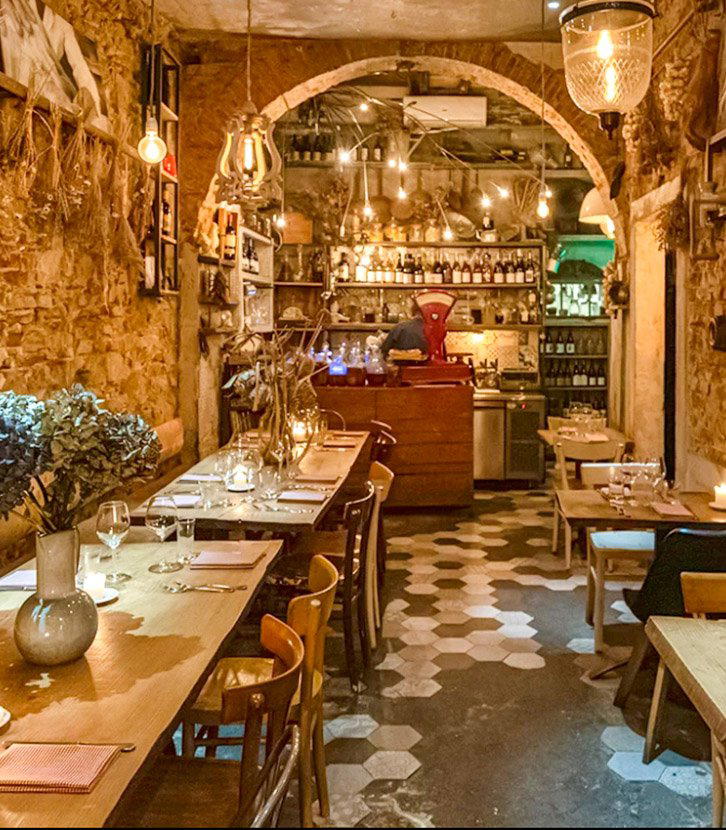
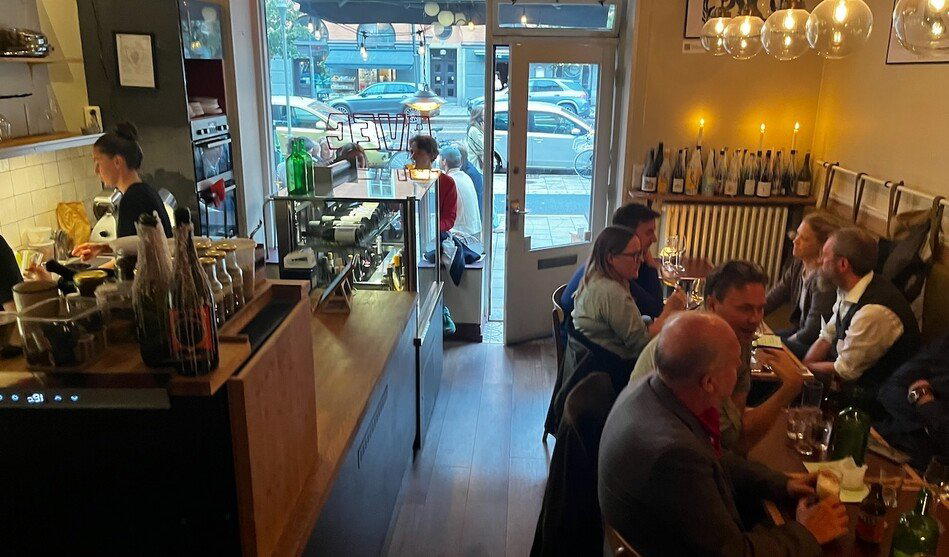
Super cozy atmosphere with friendly, knowledgeable staff, feeling like dining with friends who love food and wine.