


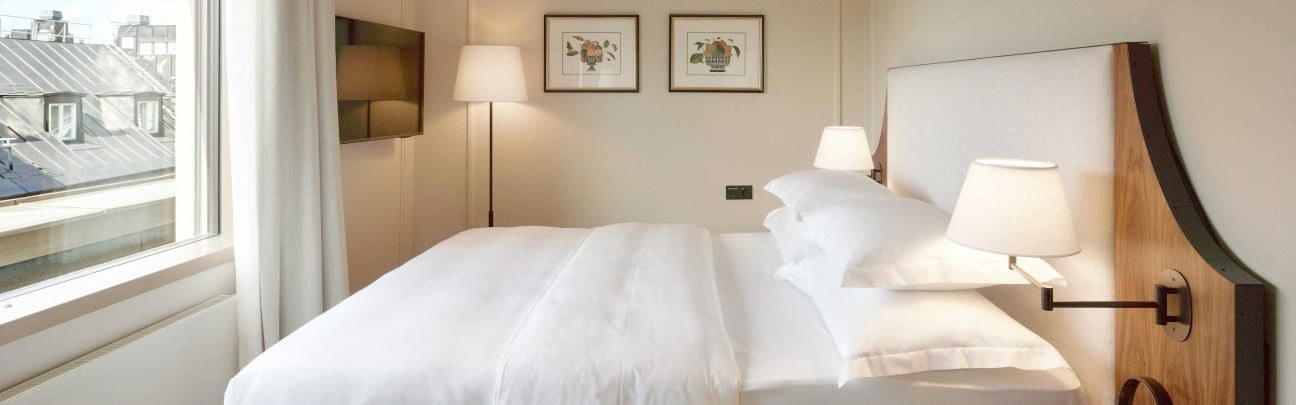
Miss Clara by Nobis occupies a converted school building on Sveavägen, one of Stockholm's most-trafficked central arteries, where Art Nouveau detailing has been reinterpreted through a contemporary hotel lens. Compared to the grander formality of the Grand Hôtel Stockholm or the raw-concrete aesthetic of At Six, Miss Clara positions itself in a middle register: architectural heritage, modern restraint, central access.
Pearl is the En Primeur Club membership app — saves, bookings, and concierge access live there. Same editors, same standards.
- Address
- Sveavägen 48, Stockholm 111 34, Sweden
- Phone
- +468 440 6700
- Website
- marriott.com
- Directions
- Get directions
 Saves & bookings on Pearl
Sveavägen's Art Nouveau Conversion, Placed in Context
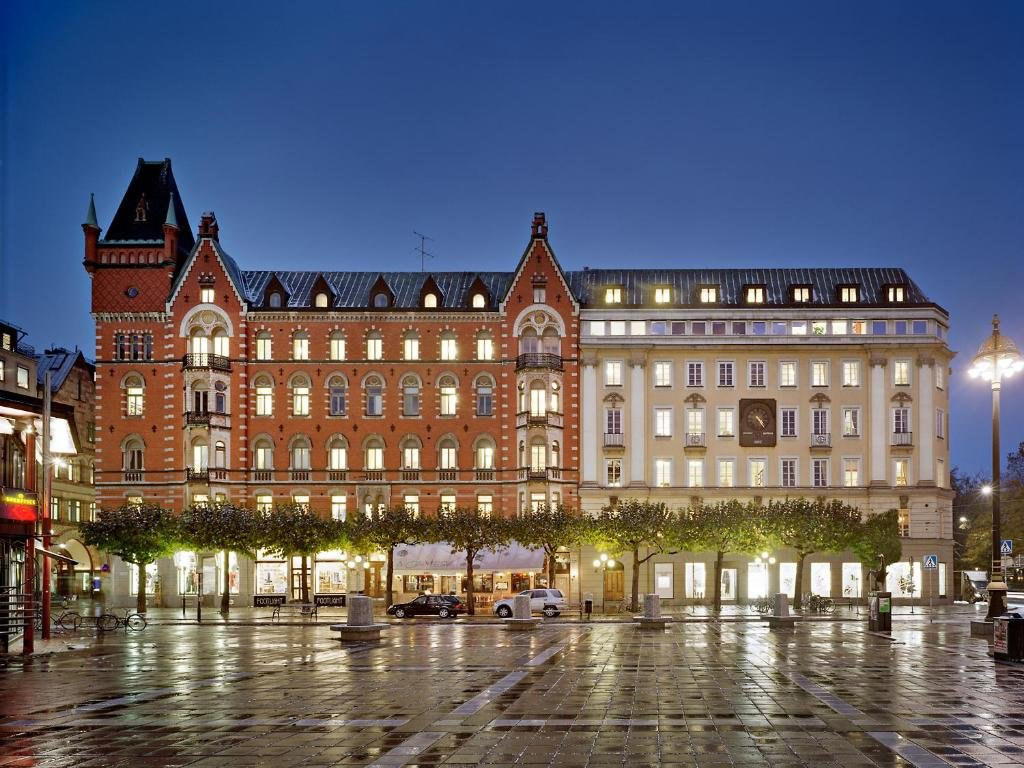
Miss Clara by Nobis is a 4-star hotel in Stockholm with 92 rooms and a smart-casual atmosphere. Stockholm's hotel scene has, over the past decade, split clearly between two poles: large legacy properties anchored by waterfront addresses and international brand affiliations, and a newer cohort of design-forward independents occupying converted buildings in the city's denser central neighbourhoods. Miss Clara by Nobis belongs firmly to the second category. The property sits on Sveavägen, the long commercial boulevard that cuts through Norrmalm from Sergels Torg toward Odenplan, and its building, a former school with Art Nouveau bones, is the kind of architectural inheritance that Stockholm's more interesting hotels tend to require as an entry point. Miss Clara operates in a different register: the warmth of period detailing without the nostalgic weight of a full heritage-restoration approach.
Blique by Nobis operates at the rougher, more industrial end of the group's range, over in Hagastaden. Miss Clara represents the more refined end of that same portfolio, same city, different register, different neighbourhood logic.
The Building as Argument
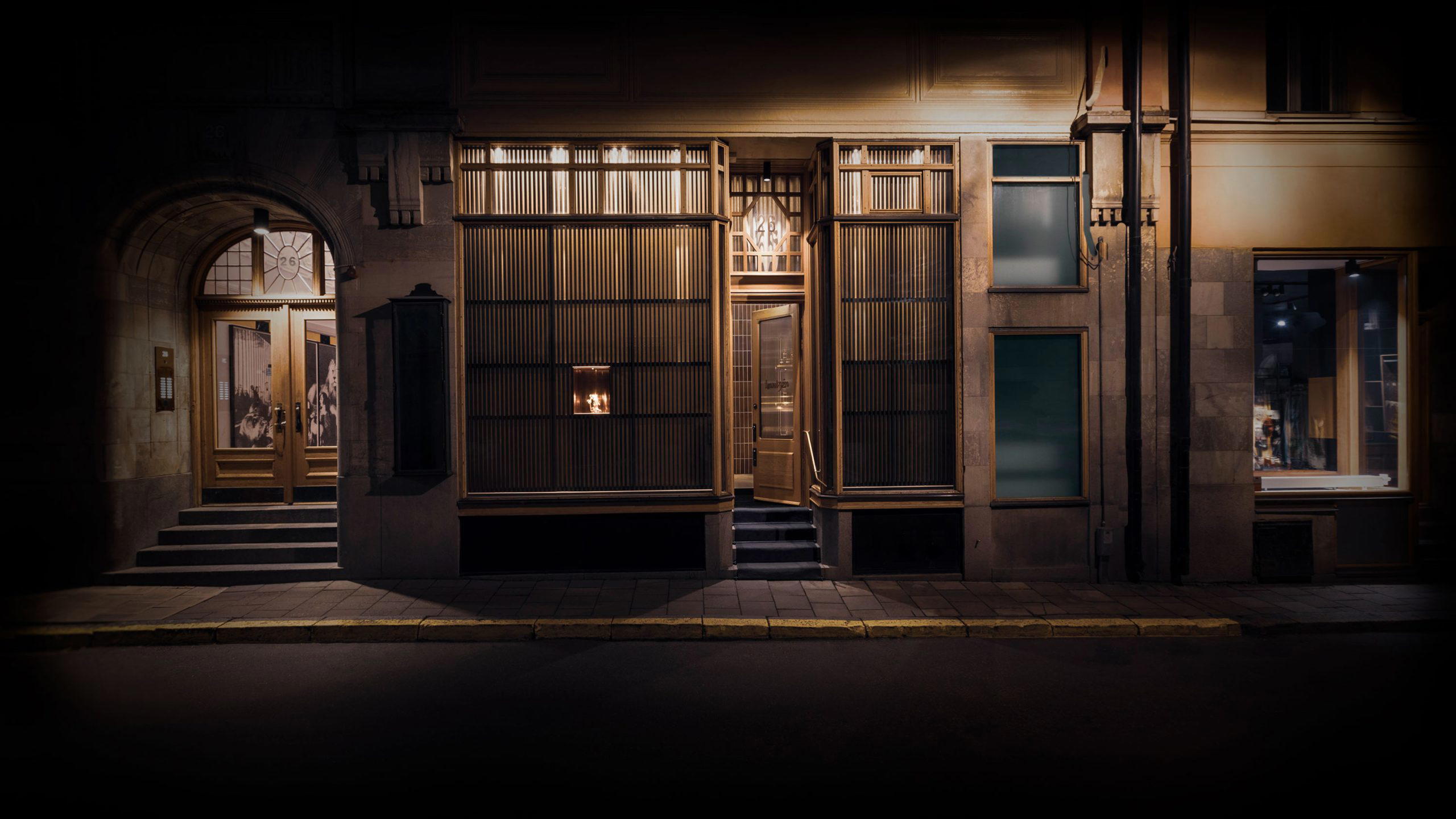
Art Nouveau in Stockholm is not the same animal as its Brussels or Paris counterparts. The Swedish interpretation tends toward restraint, cleaner lines, less organic excess, more structural discipline. The building that houses Miss Clara reflects that tradition rather than the more ornate Central European versions of the style. What the conversion has produced, by all visible evidence, is a property where the architectural argument is present without overwhelming the stay. That balance is harder to achieve than it looks: too much reverence for the original and the hotel feels like a museum annexe; too much contemporary overlay and the heritage becomes irrelevant decoration.
Backstage Hotel Stockholm and Freys Hotel occupy different positions in the value and style hierarchy, while the Grand Hôtel Stockholm remains the reference point for waterfront formal luxury. Miss Clara's position, central, architecturally specific, mid-to-upper range, places it in a competitive set where the booking decision tends to come down to neighbourhood preference and design sensibility rather than price alone.
Location Logic and What Sveavägen Actually Means
Sveavägen is not a quiet address. It is one of the city's main north-south arteries, well-served by public transport, lined with shops, restaurants, and the kind of foot traffic that makes a hotel easy to access from Arlanda Airport via the Arlanda Express (which terminates at Stockholm Central, a short walk or taxi ride away). For first-time visitors to Stockholm, the central positioning removes the need to plan transport around the hotel; for repeat visitors, it depends entirely on whether Norrmalm aligns with your preferred base of operations. Those who gravitate toward Östermalm's quieter streets and more residential character may find the address busier than ideal. Those who want proximity to the commercial core, Drottninggatan, and easy transit connections will find it convenient without qualification.
Sweden's wider hospitality geography, for those planning a broader Scandinavian itinerary, extends well beyond Stockholm. Arctic Bath in Harads operates in an entirely different register, floating on a river in Swedish Lapland, season-dependent, and logistically demanding by design. Görvälns Slott in Järfälla sits just outside the city with a castle-property character, and Fjällbacka operates on the west coast in a format that serves summer coastal travel. Miss Clara's appeal is specific to what Stockholm itself offers; it does not attempt to be a destination in itself the way the more remote Swedish properties do.
Booking Miss Clara: What to Know Before You Go
Stockholm's restaurant culture has developed a Nordic tasting-menu tradition that now extends well beyond the high-profile names, with a growing number of mid-tier counters and neighbourhood restaurants operating in a register that does not require advance planning at the level of the city's most booked tables.
The small-group, design-led model they operate has counterparts across Europe: Cheval Blanc Paris operates at the ultra-luxury end of the converted-building format in Paris, while Castello di Reschio in Lisciano Niccone takes the heritage-conversion premise into Umbrian rural territory. Miss Clara occupies a more urban, more accessible version of the same conceptual space. It is not making the same argument as those properties, but the underlying logic, a building with history, reinterpreted with contemporary sensibility, runs through all of them.
For those who routinely compare Stockholm options against international reference points when booking, properties like Aman New York, Badrutt's Palace Hotel in St. Moritz, or Hôtel de Paris Monte-Carlo define a different bracket altogether, one where heritage architecture meets formal grand-hotel programming. Miss Clara's proposition is more compact, more specific to its city, and more legible as a base for a Stockholm stay than as a destination-hotel experience. That distinction is worth making clearly before booking, because the two types of hotel serve different travel intentions even when they share surface-level characteristics like period architecture and considered interiors.
Both operate in smaller cities where the design-hotel model functions differently than it does in a capital with Stockholm's depth of competition.
The Essentials
Comparable venues nearby, for context on price, style, and recognition.
| Venue | Price | Notes |
|---|---|---|
| Miss Clara by NobisThis venue — the venue you are viewing | $$$$ | Not listed |
| Hotel Kungsträdgården | $$$ | Norrmalm, Historic boutique hotel in restored 18th-century Gustavian building |
| Freys Hotel | $$$ | Norrmalm, Charming family-run hotel with rich history and modern comforts. |
| Stockholm Waterfront Congress Centre | $$$ | Riddarholmen, Contemporary Scandinavian design with emphasis on sustainability and environmental responsibility; climate-smart office and hospitality complex. |
| Story Hotel Stockholm Stureplan - JDV by Hyatt | $$$ | Östermalm, Boutique hotel in historic 19th-century building with contemporary design. |
| Hôtel Reisen, part of The Unbound Collection by Hyatt | $$$$ | Skeppsholmen, Historic luxury waterfront hotel in Old Town |
Recognition history
Dated appearances from independent guides and award organizations, with the underlying list record or original source where available.
Design Hotels Member
Design Hotels
Mr & Mrs Smith Smith Seal of Approval
Mr & Mrs Smith
White Guide Sweden Hotels - Very Fine Level
White Guide
Michelin Selected
Michelin
At a Glance
- Elegant
- Modern
- Sophisticated
- Intimate
- Romantic Getaway
- Business Trip
- Weekend Escape
- Historic Building
- Design Destination
- Wi Fi
- Fitness Center
- Spa
- Room Service
- Concierge
- Business Center
- Street Scene
- Wi Fi
- Fitness Center
- Spa
- Room Service
- Concierge
- Business Center
Warm, personal atmosphere with beautiful interiors, quiet and relaxing, praised for chic Swedish hospitality.