Navadhanya
Our verdict
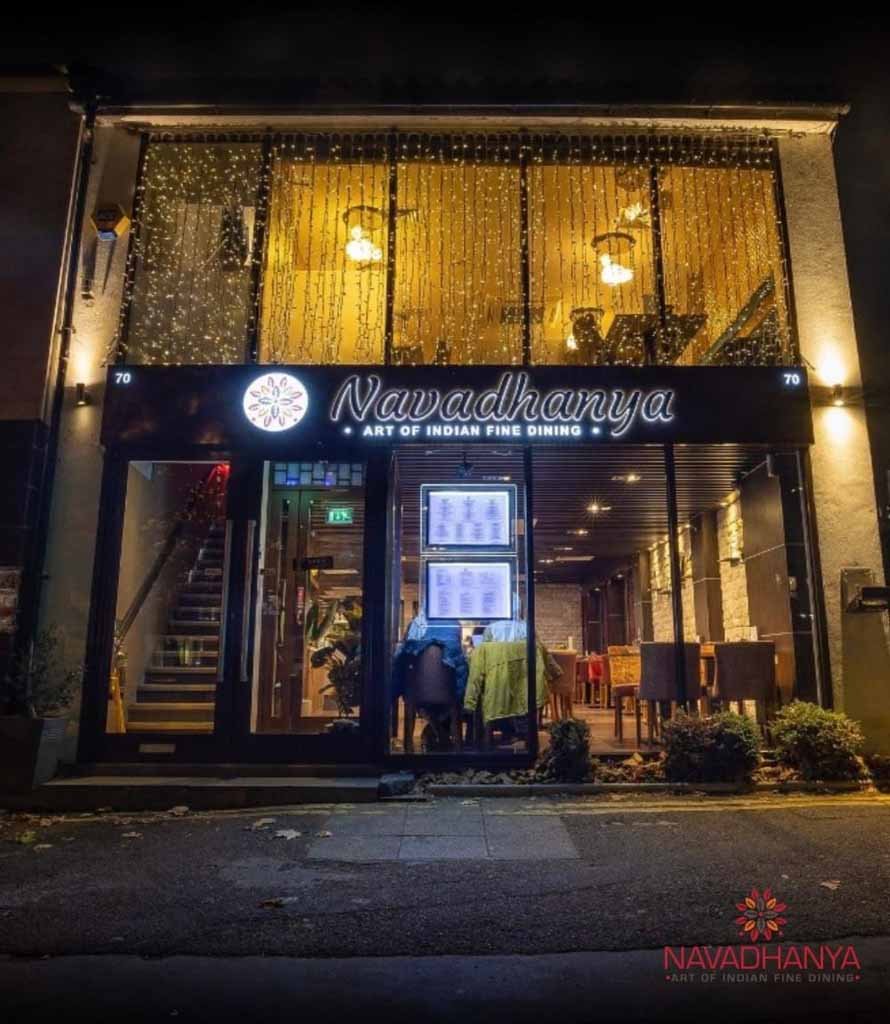
On Newmarket Road, Navadhanya occupies a quieter stretch of Cambridge's dining scene where Indian cooking rooted in ethical sourcing sits apart from the city's formal fine-dining corridor. The kitchen draws on the breadth of the subcontinent's regional traditions rather than defaulting to the Anglo-Indian canon that still dominates much of the UK market. For a city better known for its tasting-menu rooms, it represents a different kind of seriousness.

Pearl is the En Primeur Club membership app — saves, bookings, and concierge access live there. Same editors, same standards.
- Address
- 70 Newmarket Rd, Cambridge CB5 8DZ, United Kingdom
- Phone
- +441223300583
- Hours
- Mon–Sat 5–11 PMSun Closed
- Website
- navadhanya.co.uk
- Directions
- Get directions
- Booking
- Book on OpenTable
The menu
What to order
- Malabar Prawn Curry
- Kali Mirchi ka Lobster
- Tellicherry Duck
- Railway Lamb
- Malai Chicken
- Matter Scallops
Newmarket Road runs east from the city centre, past the junction where Cambridge's tourist geometry — the Backs, the colleges, the punting-tour crowds — gives way to a more lived-in stretch of independent businesses. It is on this road, away from the formal dining corridor anchored by places like Midsummer House and Restaurant Twenty-Two, that Navadhanya occupies its address at number 70. The physical approach signals something deliberate: this is not a restaurant positioning itself through proximity to prestige postcode or riverside theatre. The surrounding neighbourhood is functional rather than decorative, and a kitchen choosing to operate here is already making an argument about what matters.
Indian Regional Cooking in a City That Defaults to British Formality
Cambridge's upper dining tier has long been shaped by the conventions of British fine dining: tasting menus, wine pairings, white tablecloths, and kitchens working a broadly European repertoire. That framework has produced serious restaurants, but it has also meant that Indian cooking, one of the most regionally complex and technically demanding culinary traditions in the world, has rarely been given the same platform in this city that it commands in, say, Birmingham or London. The name Navadhanya itself carries an instructive signal: in Sanskrit, it refers to nine grains or seeds, a concept tied to agricultural diversity and the idea that the land's natural output, honoured in its multiplicity, forms the basis of nourishment. For a restaurant in a university city with an acute awareness of systems and ideas, that etymological grounding is unlikely to be accidental.
Across the UK, Indian restaurants have split into roughly three tiers over the past decade. At one end, the high-volume curry-house model persists, producing consistent Anglo-Indian standards for a broad audience. At the other, a smaller cohort of kitchens has moved toward regional specificity, responsible sourcing, and menus that treat the subcontinent's diversity as the subject rather than a backdrop. Venues like Opheem in Birmingham sit in this second group, where Michelin recognition has tracked the shift. Navadhanya's framing through the nine-grain concept places it in a comparable conversation, even if its immediate competitive context is Cambridge rather than a major metropolitan market.
The Sustainability Frame: Sourcing as Editorial Statement
The grain-and-seed etymology is not merely philosophical decoration. It points toward a kitchen interested in what ingredients are, where they come from, and how they relate to the traditions from which the cooking draws. In Indian culinary history, the relationship between seasonal produce, local agriculture, and regional flavour is not a modern wellness overlay, it is structural. The dals, the chutneys, the spiced legume preparations that form the backbone of so much subcontinental cooking are, at their origin, systems for using what the land produces with minimal waste and maximum nutritional efficiency. A kitchen that takes this seriously is less likely to be ordering out-of-season produce to hit a flavour profile, and more likely to be asking what the season actually offers and how regional tradition handles it.
This approach places Navadhanya in a broader pattern visible across the UK's more considered independent restaurants. The same instinct that drives the kitchen programmes at L'Enclume in Cartmel or Moor Hall in Aughton, land-led menus, producer relationships, a scepticism of ingredients that travel too far to arrive in too ordinary a state, is available to Indian kitchens as much as to European-inflected ones. The difference is that in Indian cooking, the philosophy has precedent stretching back centuries, making it less a contemporary marketing position and more a return to the original logic of the cuisine.
Where It Sits in Cambridge's Eating Map
Cambridge's independent dining scene beyond the tasting-menu tier is spread across several distinct zones and traditions. 1369 Coffee House anchors a more casual, community-driven end of the market. 730 Tavern, Kitchen and Patio occupies the neighbourhood pub-restaurant register. Afghan Flavour represents another strand of South and Central Asian cooking in the city, operating from a different regional tradition but in the same broad conversation about cuisines that the mainstream Cambridge dining market has historically underweighted.
On Newmarket Road, Navadhanya operates outside the tourist and college-adjacent circuit, which shapes both its audience and its obligations. A restaurant in this position is not chasing the passing visitor looking for a reliable name. It is building a local following, which in a city of this scale and educational composition tends to be an audience with specific expectations about intellectual coherence in a menu, about whether what is on the plate has a point of view that extends beyond familiarity. That is a more demanding brief than simply delivering technically competent food.
For comparison, the restaurants that have most successfully threaded this needle in regional UK markets tend to share a few characteristics: they commit to a culinary tradition rather than hedging toward a pan-Asian or globally inflected middle ground, they source with enough specificity that the provenance becomes legible in the cooking, and they create a physical environment where the atmosphere earns its keep without theatrical excess. How fully Navadhanya realises each of these is leading assessed in person, but the conceptual framing suggests the ambition is there.
Planning a Visit
Navadhanya is located at 70 Newmarket Road, Cambridge CB5 8DZ, roughly a ten-minute walk from Cambridge city centre and accessible by bus from the main streets. For the most current opening hours, booking availability, and any changes to the menu format, checking directly with the restaurant before visiting is advisable, independent restaurants at this level often adjust hours seasonally. Those exploring the city's wider dining offer can use our full Cambridge restaurants guide as a starting point. For context on how the UK's more formally recognised kitchens operate, from Waterside Inn in Bray to Le Manoir aux Quat'Saisons in Oxford to Gidleigh Park in Chagford, the EP Club restaurant index covers the full range, including Hand and Flowers in Marlow, hide and fox in Saltwood, Restaurant Andrew Fairlie in Auchterarder, and beyond the UK, CORE by Clare Smyth in London, Le Bernardin in New York City, and Atomix in New York City.
Frequently asked questions
What's the address for Navadhanya?
Navadhanya is located at 70 Newmarket Rd, Cambridge CB5 8DZ, United Kingdom, Cambridge.
Is Navadhanya Cambridge suitable for vegetarians or those following plant-based diets?
A kitchen structured around the navadhanya concept, nine grains and seeds from Indian agrarian tradition, naturally places vegetables, pulses, and cereals at the centre of its cooking rather than the periphery. Indian regional cuisine more broadly has one of the deepest vegetarian repertoires of any culinary tradition, and a sourcing-led approach in Cambridge reinforces that orientation. Guests with plant-based requirements are likely to find more considered options here than at mainstream Indian restaurants in the city.
What's the best thing to order at Navadhanya?
The kitchen's focus on grain-and-seed sourcing suggests the dishes built around those foundations are where the cooking is most intentional. Regional Indian menus of this type tend to reward ordering across multiple smaller plates rather than anchoring to a single main. Given the sourcing philosophy evident in the name itself, vegetable and legume preparations are worth prioritising over default protein choices.
How hard is it to get a table at Navadhanya?
Navadhanya sits at 70 Newmarket Road, roughly ten minutes from Cambridge city centre, which keeps it accessible without the footfall pressure of central tourist-zone venues. Cambridge's independent dining scene at this tier is not saturated with Indian regional options, so demand is real but walk-in availability varies by day and season. Booking ahead for weekend evenings is the sensible approach.
What's the defining dish or idea at Navadhanya?
The name itself is the clearest statement of intent: Navadhanya translates to nine grains or seeds, a concept rooted in South Asian agricultural and culinary tradition. That framing positions the kitchen around ingredient provenance and diversity rather than the curry-house formula that still dominates Cambridge's Indian dining options. The defining idea is a return to source materials over sauce-led convention.
The Essentials
Comparable venues nearby, for context on price, style, and recognition.
| Venue | Cuisine | Price | Awards | Notes |
|---|---|---|---|---|
| NavadhanyaThis venue — the venue you are viewing | Contemporary Indian Fine Dining | $50–100 | Not listed | Not listed |
| The Oak Bistro | Modern British Bistro | Not listed | Not listed | Lensfield Road, Modern British Bistro |
| Golpo Bengal Cafe & Restaurant | Modern Bengali | Not listed | Not listed | Hills Road, Modern Bengali |
| Parker's Tavern | Modern British Brasserie | $50–100 | Not listed | Cambridge City Centre, Modern British Brasserie |
| Bread & Meat | Modern British Roast Meat Sandwiches & Poutine | $10–20 | Not listed | City Centre, Modern British Roast Meat Sandwiches & Poutine |
| Mercado Central | Modern Spanish Tapas | $50–100 | Michelin Plate | city centre, Modern Spanish Tapas |
Continue exploring
More in Cambridge
Restaurants in Cambridge
Browse all →
Bars in Cambridge
Browse all →
Details
- Elegant
- Sophisticated
- Modern
- Intimate
- Date Night
- Special Occasion
- Celebration
- Business Dinner
- Group Dining
- Private Dining
- Open Kitchen
- Sommelier Led
- Tasting Menu
- A La Carte
- Wine
- Vegetarian Friendly
- Vegan Options
- Gluten Free Options
- Halal
Current opening hours
- Monday
- 5–11 PM
- Tuesday
- 5–11 PM
- Wednesday
- 5–11 PM
- Thursday
- 5–11 PM
- Friday
- 5–11 PM
- Saturday
- 5–11 PM
- Sunday
- Closed
Hours can change for holidays and private events. Last verified .
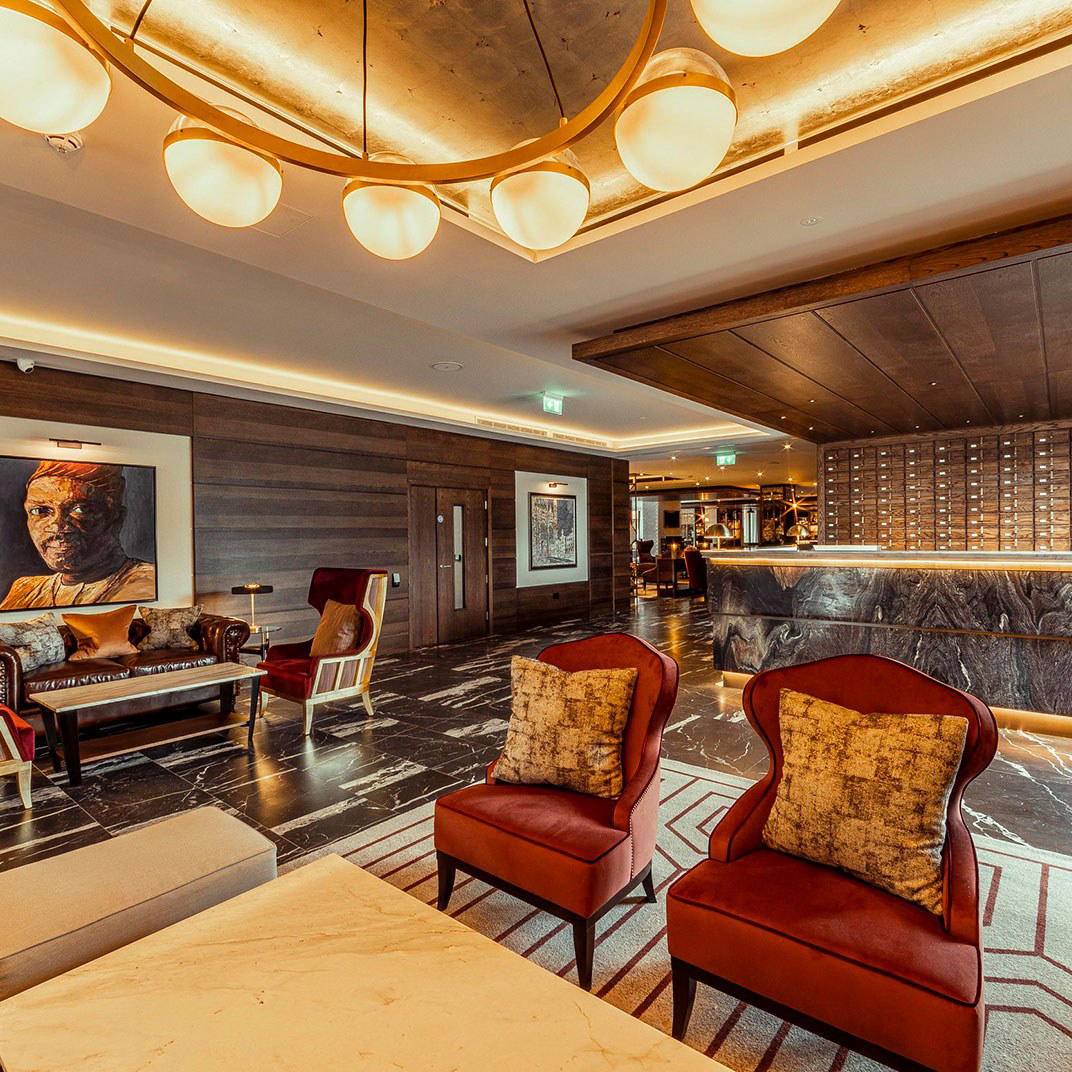
Modern and elegantly styled interior with culturally satisfying décor; polished, refined atmosphere with attentive service that creates a special dining experience.