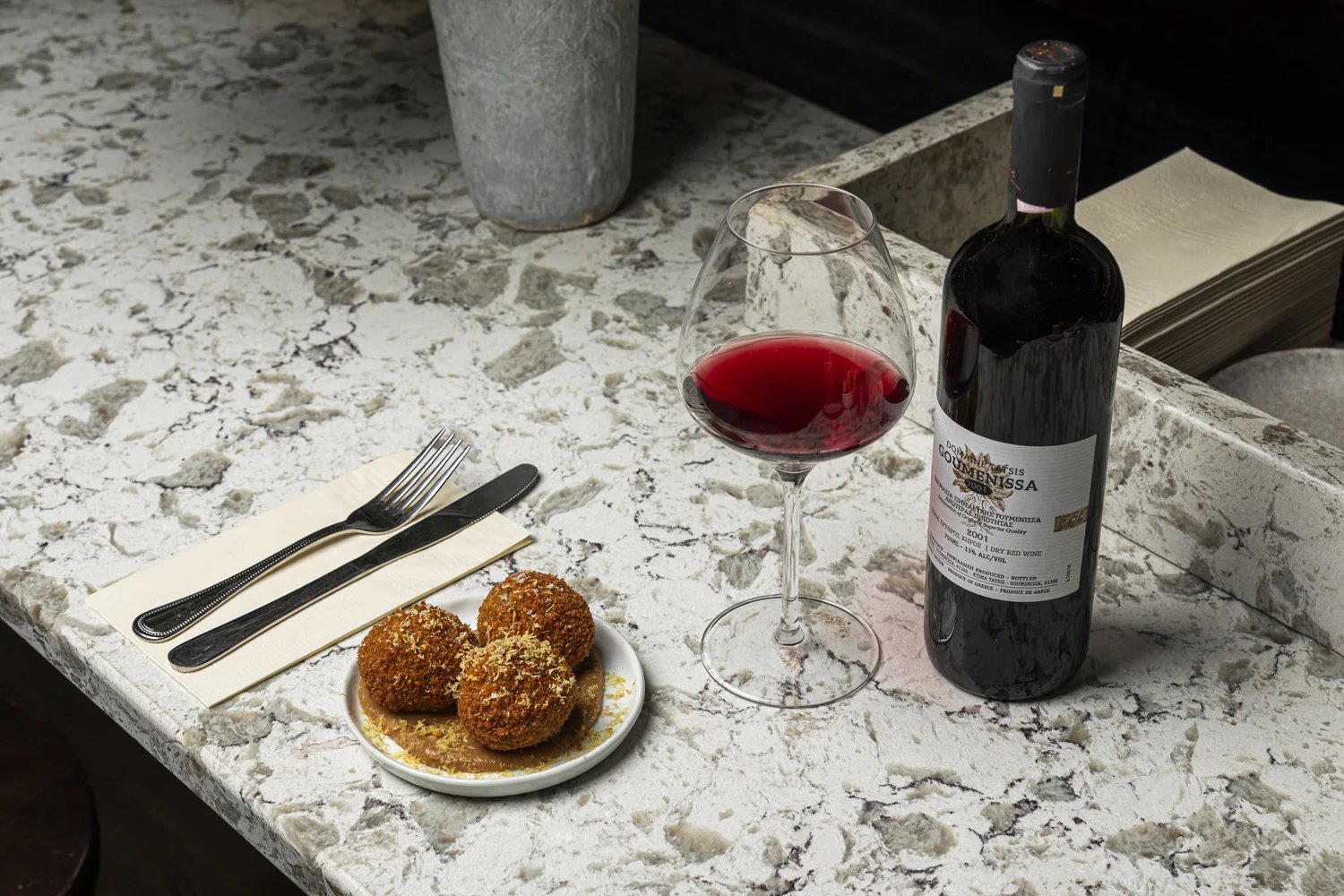
Esquire Best New Restaurants #22
Our verdict
Naks arrived on East Village's First Avenue in 2024 and landed at #22 on Esquire's Best New Restaurants list within its first year, a signal that Filipino cooking in New York is finally getting the critical attention it has long warranted. The kitchen works from Filipino culinary traditions without apology or oversimplification, placing it in a small but growing tier of American restaurants treating the cuisine as a serious fine-dining reference point.

Pearl is the En Primeur Club membership app, where members save venues, book tables and use the concierge.
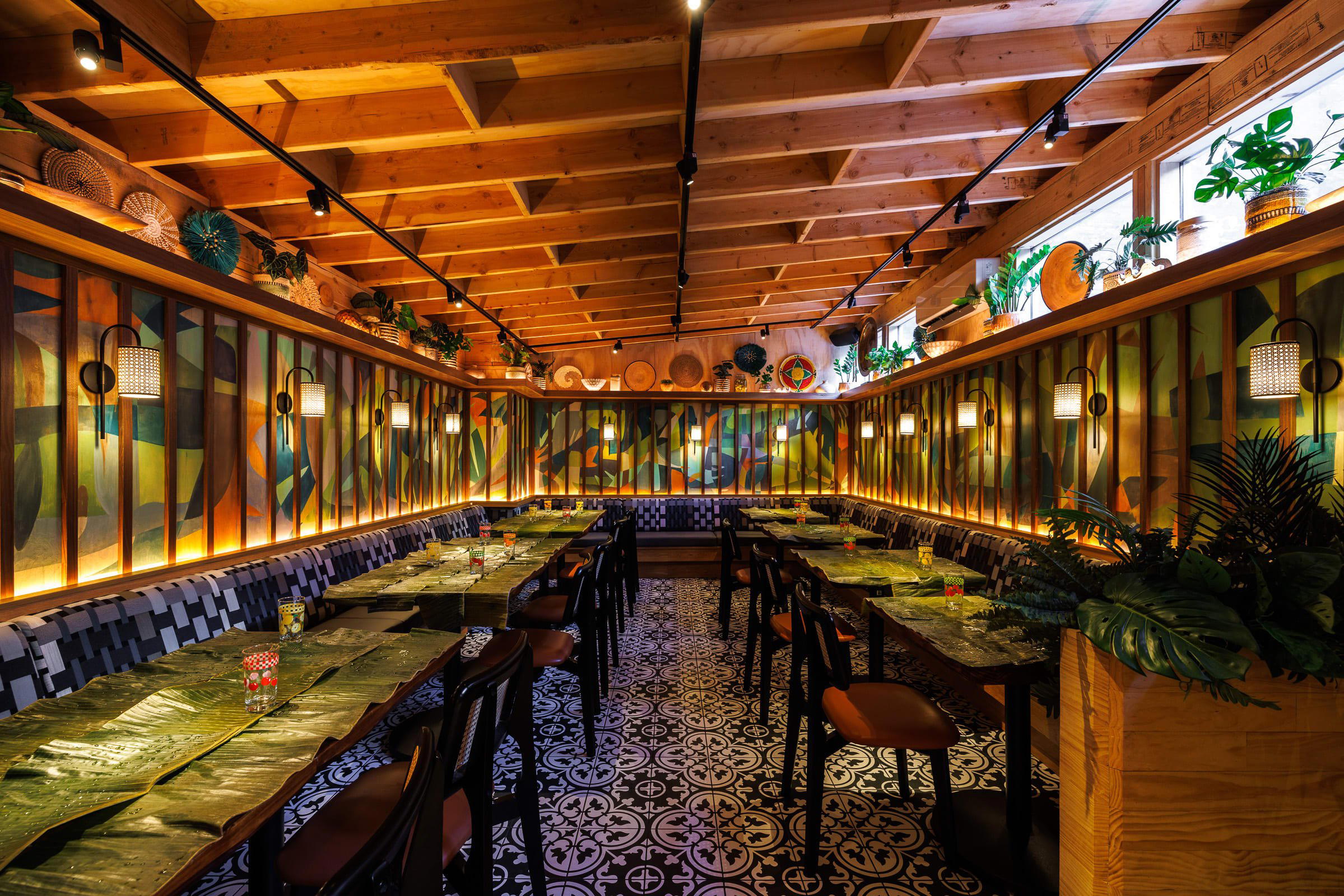
The menu
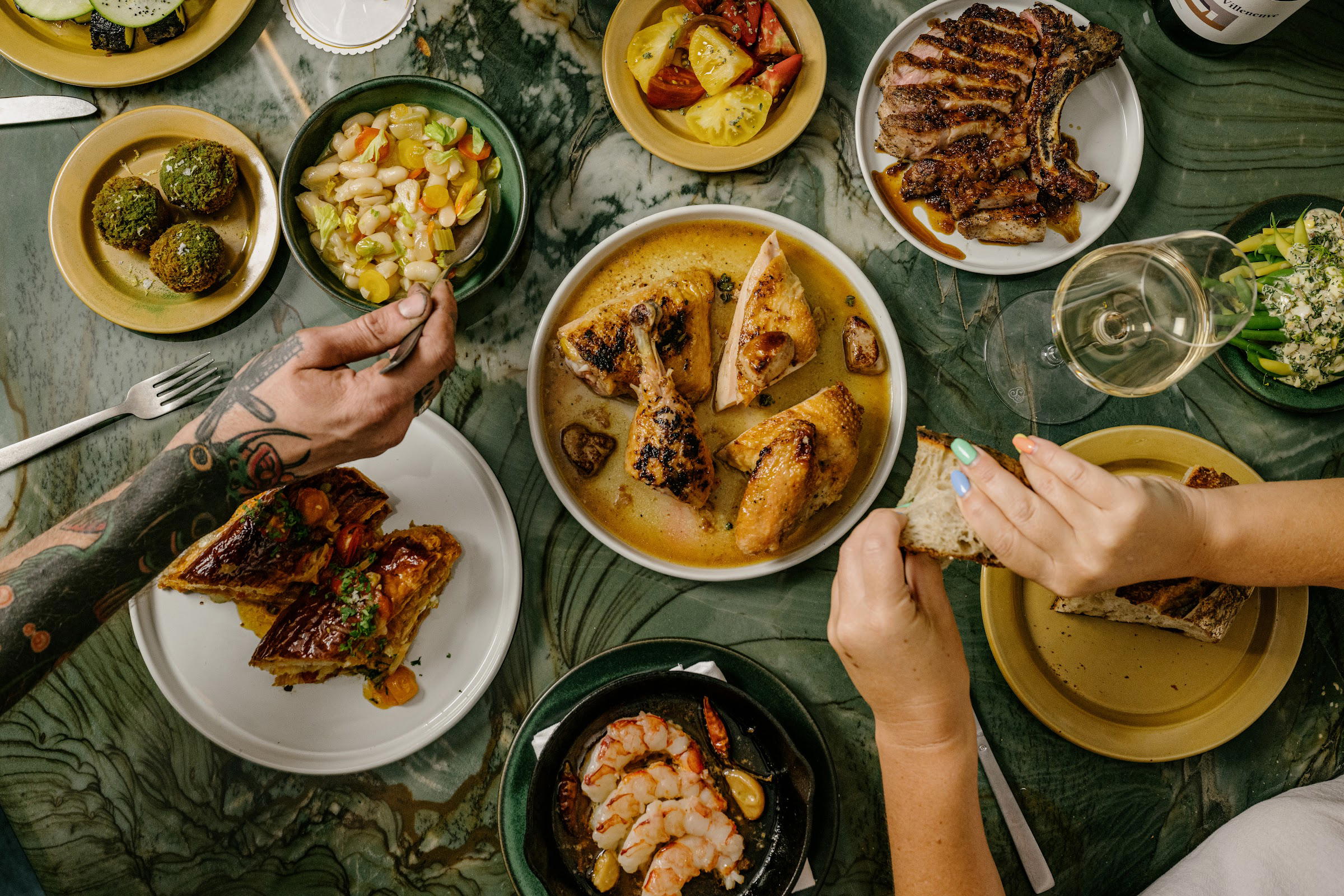
What to order
- Kanto Fried Chicken
- Pancit Kabute
- Lechon
- Soup #5
- Pork BBQ
- Ginataang Alimango
Filipino Cooking Finds Its Critical Moment in New York
For most of the past two decades, Filipino cuisine occupied an awkward position in the American dining conversation: widely eaten within the community, occasionally celebrated in casual formats, but rarely framed as a serious fine-dining reference. That has shifted. Across the country, a small cohort of restaurants has begun placing Filipino technique and flavor logic at the center of considered, chef-driven menus, and New York is now part that movement. Naks, which opened at 201 First Avenue in the East Village, arrived at exactly the right moment in that arc.
Esquire named Naks one of its Leading New Restaurants in 2024, placing it at #22 on a list that draws from the full national field. That kind of early-career recognition matters in a city where new openings are measured against rooms like Atomix, which made the case for Korean fine dining through years of sustained critical attention, or the institutional weight of Eleven Madison Park. The fact that a Filipino restaurant broke into that conversation in its first year says something about the moment as much as it does about the restaurant itself.
East Village as a Stage for Serious Cooking
First Avenue between 12th and 13th Streets sits at the northern edge of a neighborhood that has historically absorbed serious independent cooking more readily than it has absorbed formal dining rooms. The East Village has long tolerated ambition when it arrives without ceremony, which makes it a reasonable home for a restaurant working in a cuisine that carries cultural weight without institutional validation. That absence of gatekeeping has made the neighborhood, over time, a place where formats and cuisines that might struggle elsewhere in Manhattan find room to build an audience.
Filipino food fits that context. It is a cuisine built on layered acidity, fermented depth, and pork-forward richness that rewards close attention without requiring the diner to approach it as exotic or unfamiliar. The vinegar traditions, the slow-braised formats, the interplay between fat and sour, these are techniques that share structural logic with culinary traditions that Western dining rooms have long treated as sophisticated. Restaurants like Naks are making that argument directly through the plate.
The Broader Filipino Restaurant Tier
New York has a small but growing set of Filipino restaurants operating above the casual register, and Naks occupies the more considered end of that group. The comparison to watch nationally is Kasama in Chicago, which has built a Michelin-starred case for Filipino fine dining in the Midwest, and internationally, Hapag in Makati has established what a high-concept Filipino tasting menu can look like in its country of origin.
Elsewhere in New York, the rooms that draw the most critical attention in the fine dining tier, Le Bernardin, Masa, Per Se, operate within culinary traditions that have decades of institutional support behind them. The fact that Naks is being placed in the same critical conversation, even as a newer and less formally structured entrant, reflects a genuine broadening of what New York's dining public is willing to treat as a reference point.
What the Esquire Recognition Signals
National best-new-restaurant lists function as taste signals more than exhaustive rankings. Esquire's 2024 list, in placing Naks at #22, was making an argument that Filipino cooking at this level deserves the same critical infrastructure that other cuisines receive: serious review attention, repeat visits, and a reader base that books rather than walks by. That kind of editorial attention tends to accelerate a restaurant's development. The rooms that appear on those lists early often use the attention to sharpen their identity over the following year or two.
The trajectory is worth watching alongside other nationally recognized new openings from the 2024 cycle. Restaurants like Lazy Bear in San Francisco or Alinea in Chicago built sustained reputations over years after early critical recognition. Whether Naks follows a similar arc depends on factors that early reviews cannot predict, but the starting point is credible.
Chef Cristina Bowerman at the Helm
Chef Cristina Bowerman leads the kitchen at Naks. Bowerman brings a profile that is unusual in the Filipino restaurant context: she has built a reputation in Rome's fine dining scene, where she has held Michelin recognition for her work at Glass Hostaria. Her presence at a Filipino restaurant in New York is less a contradiction than a reflection of how the more interesting new openings tend to be structured now, where chefs move across culinary traditions based on research, collaboration, or genuine affinity rather than biography. The specifics of how that background inflects the menu at Naks are not something to speculate on, but the credential establishes that this is not a casual project.
In the broader American fine dining conversation, the chefs drawing the most attention are increasingly those who bring technical rigor to cuisines outside the European canon. The French Laundry in Napa, Providence in Los Angeles, and Emeril's in New Orleans all built sustained reputations around specific culinary identities. Naks is in an earlier stage of that process, but the Esquire recognition is a credible opening signal.
Filipino Culinary Roots Worth Understanding
Filipino cuisine draws from an unusually wide base of influences: indigenous Austronesian cooking traditions, Spanish colonial technique, Chinese trade relationships, and American occupation-era ingredients have all left structural marks on the food. The result is a cuisine that does not resolve into a single flavor profile but instead operates through negotiation between those layers. The signature souring agents, tamarind in sinigang, cane vinegar in adobo, fermented shrimp paste in various regional preparations, create an acidity that is more complex than it first appears and that rewards the kind of close attention fine dining rooms are designed to provide.
That complexity is part of why the cuisine is well-suited to serious restaurant treatment. There is enough technical depth in the fermentation traditions alone to sustain a focused kitchen program, and the contrast between the cuisine's everyday familiarity within the Filipino community and its relative novelty to broader dining audiences creates the kind of discovery energy that new openings benefit from.
Planning a Visit
Naks is at 201 First Avenue, New York, NY 10003, in the East Village. Given the Esquire recognition, booking ahead is advisable. For context on where this fits within New York's broader dining map, see our full New York City restaurants guide. For hotels near the East Village, our New York City hotels guide covers the full range of options. Bars, wineries, and experiences guides round out the full city picture.
Quick reference: Esquire Leading New Restaurants #22, 2024. Booking recommended.
What to Order at Naks
at Naks?
The more useful directive: focus on preparations that foreground the cuisine's acidity and fermented depth. Filipino cooking's most technically interesting work tends to happen in the braised and soured formats, the adobo and sinigang traditions, rather than in grilled or fried preparations. Those dishes show the most range and reward the closest attention.
Frequently asked questions
What's the address for Naks?
Naks is located at 201 1st Ave, New York, NY 10003, New York City.
Does Naks have a Michelin star or similar recognition?
Naks has received recognition including: Esquire Best New Restaurants #22 (2024).
What's the best thing to order at Naks?
Naks doesn't publish a fixed menu publicly, and the kitchen's approach to Filipino cooking draws from a wide base of culinary traditions, so the strongest choices tend to shift. Esquire named Naks #22 on its 2024 Best New Restaurants list, which suggests the savory, technique-forward plates are landing. Ask the server what's current when you arrive at 201 First Avenue, that kind of guidance reflects how the kitchen is cooking that week.
What style of cooking does Naks do?
Who runs the kitchen at Naks?
The chef associated with Naks is Cristina Bowerman.
A Quick Peer Check
Comparable venues nearby, for context on price, style, and recognition.
| Venue | Cuisine | Price | Awards | Notes |
|---|---|---|---|---|
| NaksThis venue (the venue you are viewing) | Modern Filipino | $50–100 | Esquire Best New Restaurants #22 | Not listed |
| Le French Diner | Classic French Bistro | $100–150 | Not listed | Lower East Side |
| Mark's Off Madison | Rustic Italian | $50–100 | Esquire Best New Restaurants #38 | Midtown South-Flatiron-Union Square |
| La Terre | Elevated Traditional Italian | $50–100 | World's Best Wine Lists Awards WBWL 3-Star | East Midtown-Turtle Bay |
| Dept of Culture | Modern North-Central Nigerian Tasting Menu | $50–100 | James Beard Award Semi Finalist | Bedford-Stuyvesant (West) |
Recognition history
Dated appearances from independent guides and award organizations, with the underlying list record or original source where available.
Opinionated About Dining Casual in North America Recommended
Opinionated About Dining
Esquire Best New Restaurants #22
Esquire