

1 Michelin Star
Our verdict
Opened in the 7th arrondissement after Chef Shinsuke Nakatani's decade alongside Hélène Darroze, this 16-seat restaurant earned a Michelin star in 2024 and an Opinionated About Dining top-300 Europe ranking in 2025. A set menu of four courses at lunch and six in the evening changes every two months, calibrated to season. For a milestone meal in Paris, few rooms offer this level of quiet precision at this scale.

Pearl is the En Primeur Club membership app, where members save venues, book tables and use the concierge.
The menu
What to order
- Terre et mer
- Wagyu beef
- Foie gras
The Occasion Case for a 16-Seat Paris Counter
Paris holds dozens of rooms that work for a celebratory dinner, but most operate at a scale that dilutes the sense of occasion. The city's upper tier, Alléno, Le Cinq, Plénitude, deploys spectacle and ceremony to carry the weight of the event. A smaller cohort runs in the opposite direction: limited seats, a single set menu, and a format where the food itself must justify the moment. Nakatani, at 27 Rue Pierre Leroux in the 7th arrondissement, belongs to that second group. Sixteen covers, one menu, no choices to make beyond whether to come for lunch or dinner, the entire architecture of the room points toward the meal rather than the theatre around it.
That kind of restraint is a deliberate position in a city where occasion dining often defaults to grandeur. The 7th is not a neighbourhood of flashy openings; it carries the weight of classical Paris, with ministries, embassies, and the long shadow of the Invalides nearby. A quiet room on a residential street in this arrondissement reads as a considered choice, not a compromise on address.
A Menu Built Around the Calendar
The contemporary French set menu format, at its most disciplined, uses the constraint of a single offering as a quality signal rather than a limitation. When a kitchen runs one menu, every element of that menu has passed a higher editorial threshold, nothing survives on the card simply because a certain percentage of guests order it. At Nakatani, the menu refreshes every two months, meaning a table booked for an anniversary in April will encounter a different set of courses than the same table in October. The seasonal rotation is not cosmetic; the Michelin citation specifically notes cooking in tune with the seasons, with flavours and textures combined into a consistent whole.
At lunch, the format runs to four courses; in the evening, six. The longer dinner format suits the occasion better: six courses across a 16-seat room, served by what Michelin describes as a low-profile but professional team, produces a pace that allows the evening to breathe. There is no rush to turn tables when the room seats sixteen people twice in an evening at most. That structural fact shapes the experience as much as anything on the plate.
Kei operates at a similar price point in the 1st arrondissement, blending French technique with Japanese precision. Both sit within the broader category of Japanese-trained chefs working through French culinary grammar, a category that has produced some of the most precise cooking in the city over the past fifteen years.
Franco-Japanese Precision as a Distinct Category
The presence of Japanese chefs at the top of French fine dining is well-established at this point, but the specific lineage matters. Shinsuke Nakatani spent a decade working with Hélène Darroze, whose own cooking draws on Gascon tradition and product-led sourcing. That decade shapes the flavour vocabulary at Nakatani: the seasoning, the structural logic of each course, the way the kitchen approaches French ingredients. The Michelin guide's reference to an acute flair for seasoning reflects a specific sensibility, one that sits at the intersection of French classical training and a Japanese instinct for precision and restraint.
This combination has a track record in Paris. Kei earned its stars working from a similar premise. Elsewhere in Europe, the Franco-Japanese mode has produced distinctive results in cities from London to Copenhagen. In Paris specifically, where the weight of classical French tradition is heaviest, the approach tends toward refinement rather than fusion, the Japanese influence operates at the level of technique and discipline, not ingredient substitution.
For a broader view of where contemporary French cooking sits in France right now, restaurants like Flocons de Sel in Megève, Mirazur in Menton, and Troisgros in Ouches each represent distinct regional and philosophical positions. The classical anchor points, Paul Bocuse in Collonges-au-Mont-d'Or, Bras in Laguiole, Auberge de l'Ill in Illhaeusern, map the tradition that Paris kitchens like Nakatani are refining rather than rejecting. The same contemporary French mode also appears across borders at Ma Langue Sourit in Luxembourg and L'Arnsbourg in Baerenthal, both worth tracking if the Paris trip expands into a regional itinerary.
Awards Trajectory and Where the Restaurant Sits Now
Nakatani's recognition arc is useful for calibrating expectations. Opinionated About Dining flagged it as Highly Recommended among new European restaurants in 2023, an early signal of a kitchen performing above its age. The Michelin star followed in 2024, confirmed by an OAD ranking of #279 in Europe that same year. By 2025, OAD had moved it to #323 in Europe, a modest shift within a competitive and densely packed field rather than a step back.
The OAD list draws on a large pool of experienced diners rating restaurants on their own meals, which gives it a different texture than inspector-led guides. For occasion dining, the awards trajectory matters: a room that has moved through new-opening recognition, a Michelin star, and sustained OAD placement within two years of opening has passed several independent quality filters.
For comparison within the Paris €€€€ contemporary French tier, Frenchie and ERH occupy adjacent market positions, as does Pilgrim. Lucas Carton represents the longer-established end of the Paris fine dining spectrum. Nakatani's differentiation is primarily structural: the seat count, the single-menu format, and the bimonthly rotation create a more controlled environment than most peers at this price level.
Planning the Visit
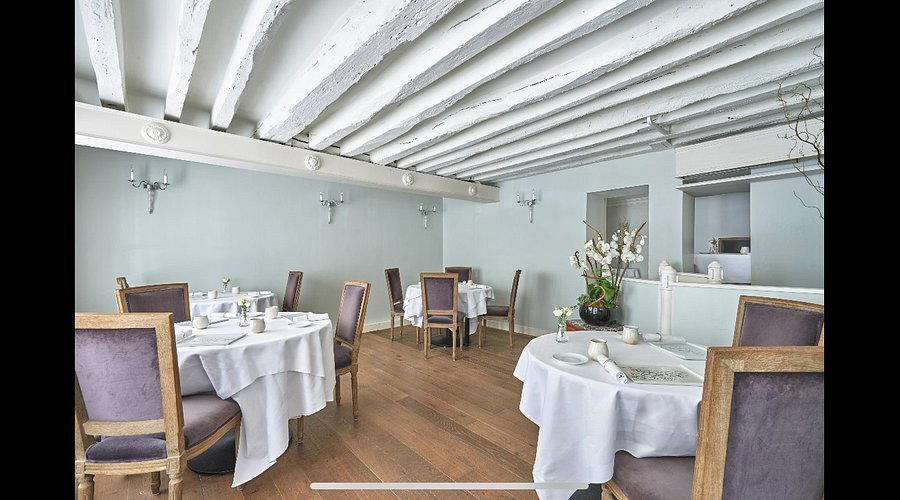
The room is closed Mondays and Sundays, operating Tuesday through Saturday for both lunch (12:30 to 2:00 PM) and dinner (7:30 to 9:00 PM). Given sixteen seats and a format that draws occasion diners, advance booking is necessary; Michelin specifically advises booking ahead, and the seat count alone explains why availability is tight on weekend evenings. The address, 27 Rue Pierre Leroux, in the 7th, is a short walk from the Vaneau or Duroc metro stations, placing it in a residential stretch of the arrondissement rather than on a tourist circuit. The room is described as decorated in soothing colours and natural materials, which aligns with the overall tone: this is a space designed to focus attention on the table rather than the surroundings.
For visitors building a broader Paris itinerary, our full Paris restaurants guide covers the range from neighbourhood bistros to multi-star tables. Our Paris hotels guide addresses where to stay in proximity to the 7th. The bars guide, wineries guide, and experiences guide round out the wider picture for a complete trip.
Frequently asked questions
What should I budget for a meal at Nakatani?
Pricing at Nakatani is listed as €€€€.
Where exactly is Nakatani?
Nakatani is located at 27 Rue Pierre Leroux, 75007 Paris, France, Paris.
Cuisine and Credentials
A quick peer reference to anchor this venue in its category.
| Venue | Cuisine | Price | Awards | Notes |
|---|---|---|---|---|
| NakataniThis venue (the venue you are viewing) | Modern French with Japanese Influence | $150–200 | 1 Michelin Star | Not listed |
| Alléno Paris au Pavillon Ledoyen | Modern French Fine Dining | $150–200 | 3 Michelin Stars · World's 50 Best #79 | Creative |
| Kei | Modern French with Japanese Influences | $300–500 | 3 Michelin Stars · World's 50 Best #93 | Contemporary French, Modern Cuisine |
| L'Ambroisie | Classic French Haute Cuisine | $300–500 | 2 Michelin Stars · World's 50 Best #23 | French, Classic Cuisine |
| Le Cinq - Four Seasons Hôtel George V | Modern French Fine Dining | $300–500 | 3 Michelin Stars · World's 50 Best #24 | French, Modern Cuisine |
| Plénitude | Modern French Sauce-Led Fine Dining | $300–500 | 3 Michelin Stars · World's 50 Best #14 | Contemporary French |
Recognition history
Dated appearances from independent guides and award organizations, with the underlying list record or original source where available.
Michelin 1 Star
Michelin
Opinionated About Dining Top Restaurants in Europe Recommended
Opinionated About Dining
Full recognition history (7 entries)
Michelin 1 Star
Michelin
Opinionated About Dining Top Restaurants in Europe Ranked #323
Opinionated About Dining
Michelin 1 Star
Michelin
Opinionated About Dining Top Restaurants in Europe Ranked #279
Opinionated About Dining
Opinionated About Dining Top New Restaurants in Europe Highly Recommended
Opinionated About Dining
Continue exploring
More in Paris
Restaurants in Paris
All restaurants in Paris →
Bars in Paris
All bars in Paris →
Details
- Intimate
- Elegant
- Modern
- Romantic
- Cozy
- Date Night
- Special Occasion
- Business Dinner
- Chefs Counter
- Open Kitchen
- Extensive Wine List
- Prix Fixe
- Tasting Menu
- Counter Dining
- Wine
- Allergy Accommodating
Current opening hours
- Monday
- Closed
- Tuesday
- 12:30–2 PM, 7:30–9 PM
- Wednesday
- 12:30–2 PM, 7:30–9 PM
- Thursday
- 12:30–2 PM, 7:30–9 PM
- Friday
- 12:30–2 PM, 7:30–9 PM
- Saturday
- 12:30–2 PM, 7:30–9 PM
- Sunday
- Closed
Hours can change for holidays and private events. Hours as of .
Minimalist and zen atmosphere in a renovated ancient building with white-painted timber, modern interior, soothing colors, natural materials, and soft lighting creating a calm, elegant, and restful environment.