


1 Michelin Star · We're Smart World Top 100 #39
Our verdict
A Michelin-starred kaiseki counter in Ginza's 5-chome block, Mutsukari draws on Chef Yoshihisa Akiyama's shojin-ryori background to place vegetables at the centre of a wide-ranging Japanese menu. Ranked among Opinionated About Dining's top Japanese restaurants in both 2024 and 2025, it operates evenings only, six nights a week, from an open kitchen that makes the cooking itself part of the experience.

Pearl is the En Primeur Club membership app, where members save venues, book tables and use the concierge.
The menu
What to order
- Vegetable terrine jelly
- Matsutake mushroom with hamo
- Uni with ikura
- Shaved ice with seasonal toppings
Ginza's Neighbourhood Register
Ginza 5-chome sits at the intersection of the district's commercial confidence and its quieter, more residential interior. The broad avenues fronted by flagship retail give way, a block or two in, to a denser grid of low-rise buildings where restaurants occupy upper floors and basement spaces with little ceremony. This is where the serious dining in Ginza has always happened: not in hotel lobbies or department-store podiums, but in rooms that regulars find by referral and return to by habit. Mutsukari, at 5 Chome-5-19 in the Ginza Pony Group Building, sits precisely in that register, a dinner-only address that belongs to the working rhythm of the streets around it rather than the trophy-hunting circuit a few blocks west.
The kaiseki format in this part of Ginza has a defined competitive shape. RyuGin, operating at the ¥¥¥¥ tier, and Ginza Kojyu represent the upper bracket of the form in this district, where booking windows extend months ahead and price points reflect that positioning. Mutsukari sits one tier below at ¥¥¥, which places it alongside Ginza Shinohara and Kanda in a cohort where Michelin recognition and strong critical scores coexist with a slightly more accessible entry point. That gap matters: it is where Ginza's neighbourhood regulars actually eat, rather than where international visitors perform their dining obligations.
What the Open Kitchen Changes
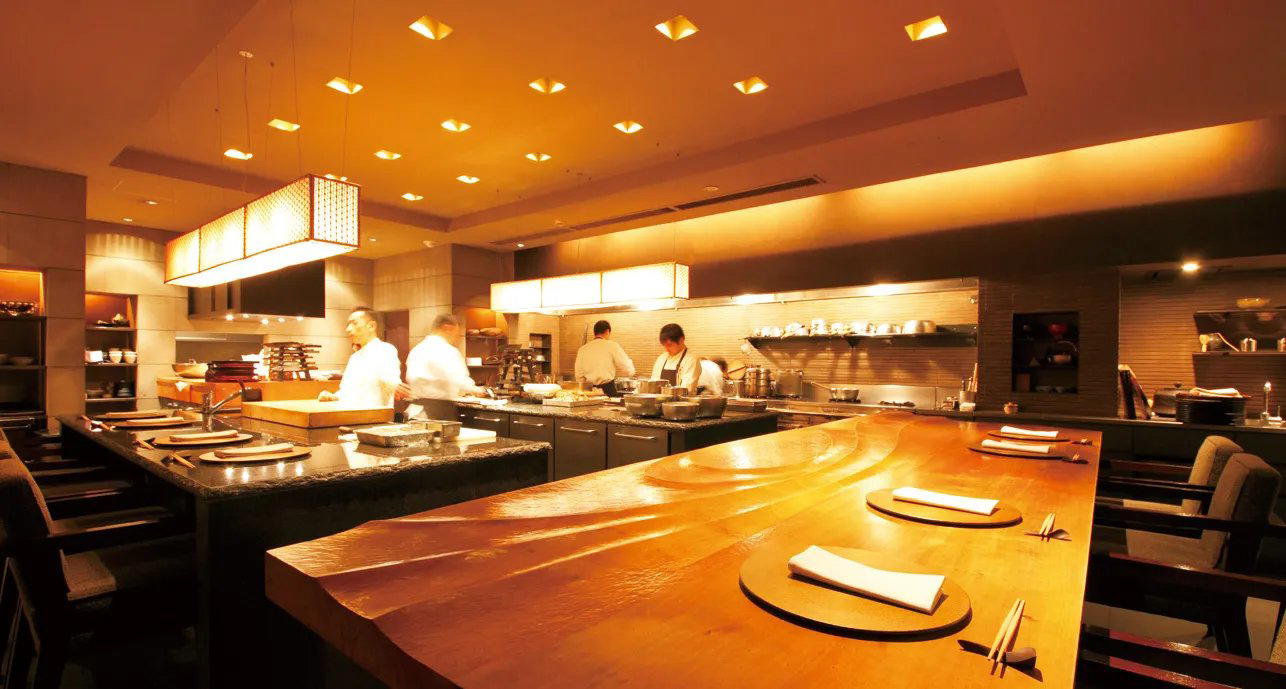
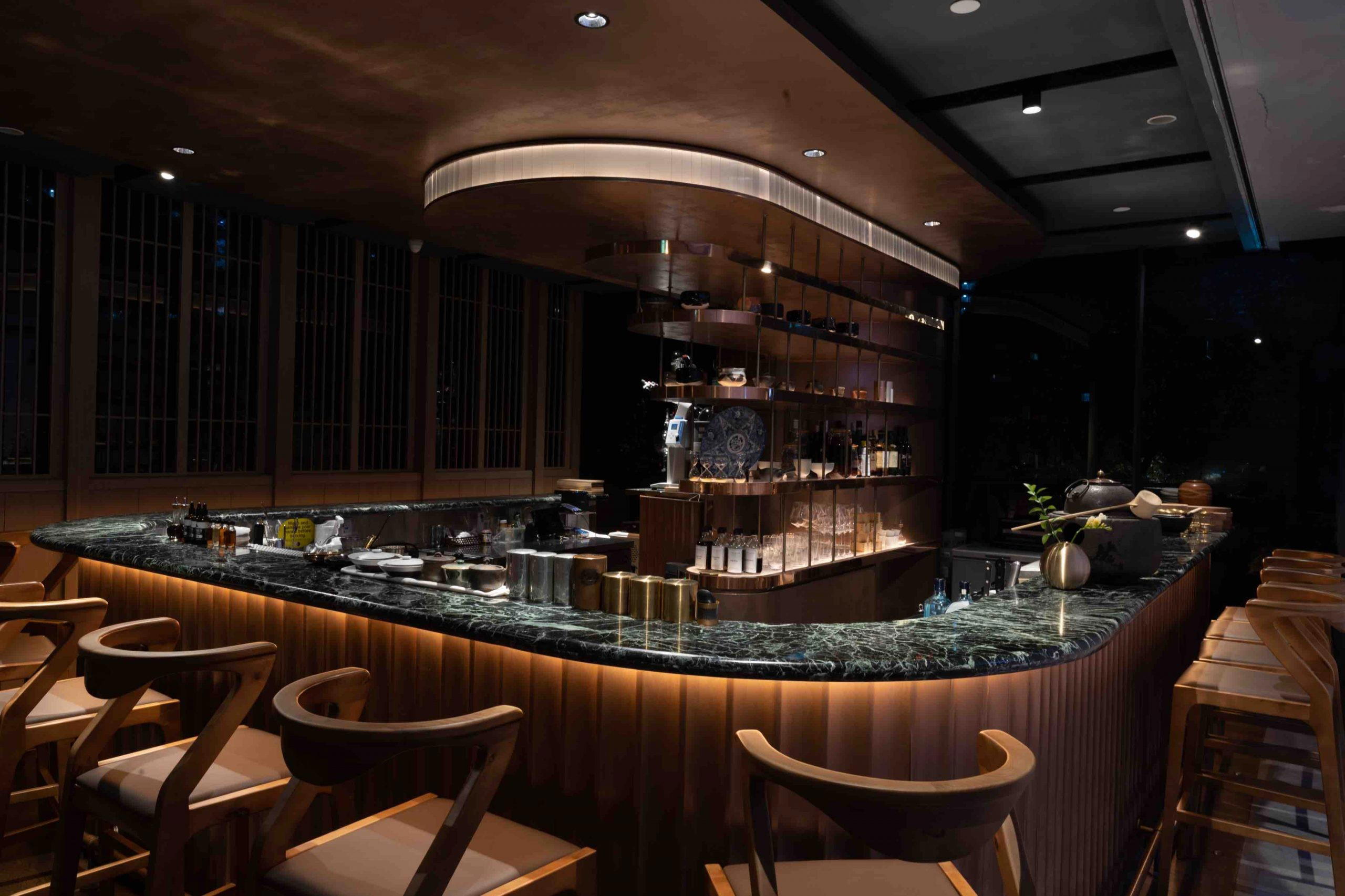
The open kitchen is not a design gesture at Mutsukari, it is the operational centre of the room. The cooking team works in coordinated formation, a structure that the restaurant's own documentation describes with the image of a lead goose guiding its flock, the brigade marked by red armbands against white kitchen uniforms. In a kaiseki context, this kind of visible discipline is a statement of intent. The guest is not watching theatre; they are watching a working kitchen resolve the problems of a complex, multi-stage Japanese menu in real time.
This transparency matters because the menu itself moves across a wide range of techniques and temperatures. Kaiseki in its traditional Kyoto form follows a rigid sequence, from the hassun course through to shokuji, and the best-known houses in Kyoto, including Hyotei and Kikunoi Honten, are custodians of that inherited architecture. What Tokyo kaiseki does differently, and what Mutsukari reflects, is a willingness to use the underlying logic of the form while treating its sequence as a framework rather than a rulebook. The result is a menu that moves from ohitashi (boiled vegetable preparations) and nikogori (jellied broth, built from meat or fish) to deep-fried and grilled courses, with sashimi dressed in vinegar and nori jelly rather than served in the conventional format. These are not arbitrary departures; they are the kind of casual variations the restaurant itself frames as idiosyncrasies, and they give the menu a character that rewards familiarity over a single visit.
The Shojin-Ryori Thread
Across Tokyo's kaiseki and high-end Japanese dining rooms, vegetable work is increasingly the differentiating criterion. In the decade since plant-forward cooking moved from dietary accommodation to editorial focus, the most discussed kaiseki menus in Japan have been those where the vegetable course is the most technically demanding section of the meal, not the protein. Chef Yoshihisa Akiyama's background in shojin-ryori, the vegetarian discipline developed in Buddhist monastic tradition, gives Mutsukari a specific and documentable position in that shift. Shojin-ryori is not about subtraction; it is about the application of full technique to ingredients that many kitchens treat as secondary. That orientation shows in the menu's construction, where preparations like a soup built around giant radish, or a bowl combining turnip, tofu, persimmon, apple, and rice cake, carry the same structural weight as the protein courses around them.
The aspic of seasonal vegetables, listed among the kitchen's documented repertoire, is worth noting as a technical marker. Nikogori, the jellied broth preparation, is a classic winter dish in Japanese cooking, but applying the same cold-set technique to purely vegetable components requires a different understanding of how to extract and carry flavour through gelatin. The baked tomato tofu with Chinese cabbage operates similarly: a preparation that uses the tomato's acidity and moisture content as structural elements rather than flavour accents. These are not novelty dishes. They are the kind of solutions a kitchen develops when vegetables are genuinely the primary material, not a supporting cast.
Across Japan's kaiseki geography, this kind of vegetable emphasis connects Mutsukari to a broader tradition. HAJIME in Osaka and Gion Sasaki in Kyoto both operate in the space where Japanese fine dining meets a serious engagement with plant material, though through different frameworks. Kohaku in Tokyo occupies a related tier. Mutsukari's specific contribution is the shojin-ryori lineage applied inside a kaiseki format, which produces something distinct from any of those comparators.
Critical Standing and What It Implies
The trust signals around Mutsukari are consistent and have strengthened over time. A Michelin one star as of 2024 confirms a baseline of technique and consistency. The Opinionated About Dining ranking, which surveys a wide panel of experienced diners and food professionals across Japan, placed Mutsukari at #367 in 2023 (Highly Recommended), #361 in 2024, and #367 in 2025, a stable position within the top tier of Japanese restaurants nationally, which in a country with the depth of dining that Japan has, is a substantive credential.
Within Ginza specifically, one Michelin star at ¥¥¥ pricing places Mutsukari in the tier where the restaurant's appeal is built on repeat visits rather than occasion dining. The comparison with Ginza Kojyu, which carries three Michelin stars and prices accordingly, is instructive: Mutsukari is not competing for the same guest on the same evening. It is competing for the guest who returns to Ginza four or five times a year and wants a room that knows them, not a room that assesses them.
Dining in Tokyo's Wider Context
Tokyo's dining geography at the kaiseki level spreads across several districts, and the choice of neighbourhood shapes the experience as much as the menu. Ginza's specific character, with its density of long-established restaurants and its working-district regulars alongside the international visitor traffic, produces a particular kind of kaiseki room: technically serious, less visually theatrical than some Roppongi counterparts, and built around a guest who measures quality by consistency rather than surprise. For visitors building a broader Tokyo itinerary, our full Tokyo restaurants guide maps this geography in detail. Supplementary planning for hotels, bars, and experiences in the city is covered in our full Tokyo hotels guide, our full Tokyo bars guide, our full Tokyo wineries guide, and our full Tokyo experiences guide.
Beyond Tokyo, Japan's kaiseki circuit extends to contexts that contrast instructively with the Ginza model. Gion Sasaki in Kyoto and Hyotei operate within Kyoto's deep institutional tradition for the form. Goh in Fukuoka, akordu in Nara, 1000 in Yokohama, and 6 in Okinawa each represent how Japanese fine dining adapts to its regional context, which makes a Ginza kaiseki visit read differently when placed against them.
Know Before You Go
| Detail | Information |
|---|---|
| Address | 5 Chome-5-19, Ginza, Chuo City, Tokyo 〒104-0061 (Ginza Pony Group Building) |
| Hours | Monday to Friday: 5:30–11 pm; Saturday: 5:00–11 pm; Sunday: Closed |
| Price range | ¥¥¥ |
| Cuisine | Kaiseki, Japanese |
| Awards | Michelin 1 Star (2024); OAD Leading Restaurants in Japan #361 (2024), #367 (2025) |
| Booking | Contact details not publicly listed, approach via concierge or local booking service |
Frequently asked questions
What should I budget for a meal at Mutsukari?
Pricing at Mutsukari is listed as ¥¥¥.
Is Mutsukari Michelin-listed?
Mutsukari has received recognition including: The chef leads his team of cooks like the lead goose guiding its flock in flight. Clad in red armbands and snow-white kitchen uniforms, the kitchen team embodies the spirit of Japan. The accent on vegetables echoes the chef’s experience in ….
What do regulars order at Mutsukari?
Mutsukari does not run a conventional à la carte menu. Chef Yoshihisa Akiyama works through a wide-ranging sequence served in tapas form, where vegetables carry the structural weight of the meal, a direct inheritance from shojin-ryori, the Buddhist vegetarian tradition. Documented preparations include ohitashi, nikogori, sashimi dressed with vinegar and nori jelly, and aspics of seasonal vegetables. The sequence varies by season, so repeat visits tend to produce a materially different progression of dishes.
What days is Mutsukari closed?
Hours at Mutsukari: Hours: Monday 5:30–11 pm Tuesday 5:30–11 pm Wednesday 5:30–11 pm Thursday 5:30–11 pm Friday 5:30–11 pm Saturday 5–11 pm Sunday Closed.
A quick peer reference to anchor this venue in its category.
| Venue | Cuisine | Price | Awards | Notes |
|---|---|---|---|---|
| MutsukariThis venue (the venue you are viewing) | Modern Japanese Kaiseki with Vegetable Focus | $200–300 | 1 Michelin Star · We're Smart World Top 100 #39 | Not listed |
| Harutaka | Edo-Style Omakase Sushi | $200–300 | 3 Michelin Stars · World's 50 Best #76 | Sushi |
| RyuGin | Modern Kaiseki | $500+ | 3 Michelin Stars · World's 50 Best #41 | Kaiseki, Japanese |
| L'Effervescence | Modern French with Japanese Influences | $200–300 | 3 Michelin Stars · World's 50 Best #69 | French |
| HOMMAGE | Modern French with Japanese Influences | $150–200 | 2 Michelin Stars · World's 50 Best #78 | Innovtive French, French |
| MAZ | Innovative Peruvian-Japanese Fusion | $150–200 | 2 Michelin Stars · World's 50 Best #28 | Innovative |
Recognition history
Dated appearances from independent guides and award organizations, with the underlying list record or original source where available.
Michelin 1 Star
Michelin
Opinionated About Dining Top Restaurants in Japan Recommended
Opinionated About Dining
We're Smart World Top 100 #39
We're Smart World
Full recognition history (8 entries)
Opinionated About Dining Top Restaurants in Japan Ranked #367
Opinionated About Dining
We're Smart World 5 Radishes
We're Smart World
Michelin 1 Star
Michelin
Opinionated About Dining Top Restaurants in Japan Ranked #361
Opinionated About Dining
Opinionated About Dining Top Restaurants in Japan Highly Recommended
Opinionated About Dining
Continue exploring
More in Tokyo
Restaurants in Tokyo
All restaurants in Tokyo →
Bars in Tokyo
All bars in Tokyo →


Details
- Elegant
- Sophisticated
- Intimate
- Modern
- Date Night
- Business Dinner
- Special Occasion
- Celebration
- Open Kitchen
- Chefs Counter
- Private Dining
- Sake Program
- Sommelier Led
- Farm To Table
- Local Sourcing
- Tasting Menu
- Omakase
- Counter Dining
- Set Menu
- Sake Pairing
- Wine Pairing
- Vegetarian Friendly
- Allergy Accommodating
Current opening hours
- Monday
- 5:30–11 PM
- Tuesday
- 5:30–11 PM
- Wednesday
- 5:30–11 PM
- Thursday
- 5:30–11 PM
- Friday
- 5:30–11 PM
- Saturday
- 5–11 PM
- Sunday
- Closed
Hours can change for holidays and private events. Last verified .
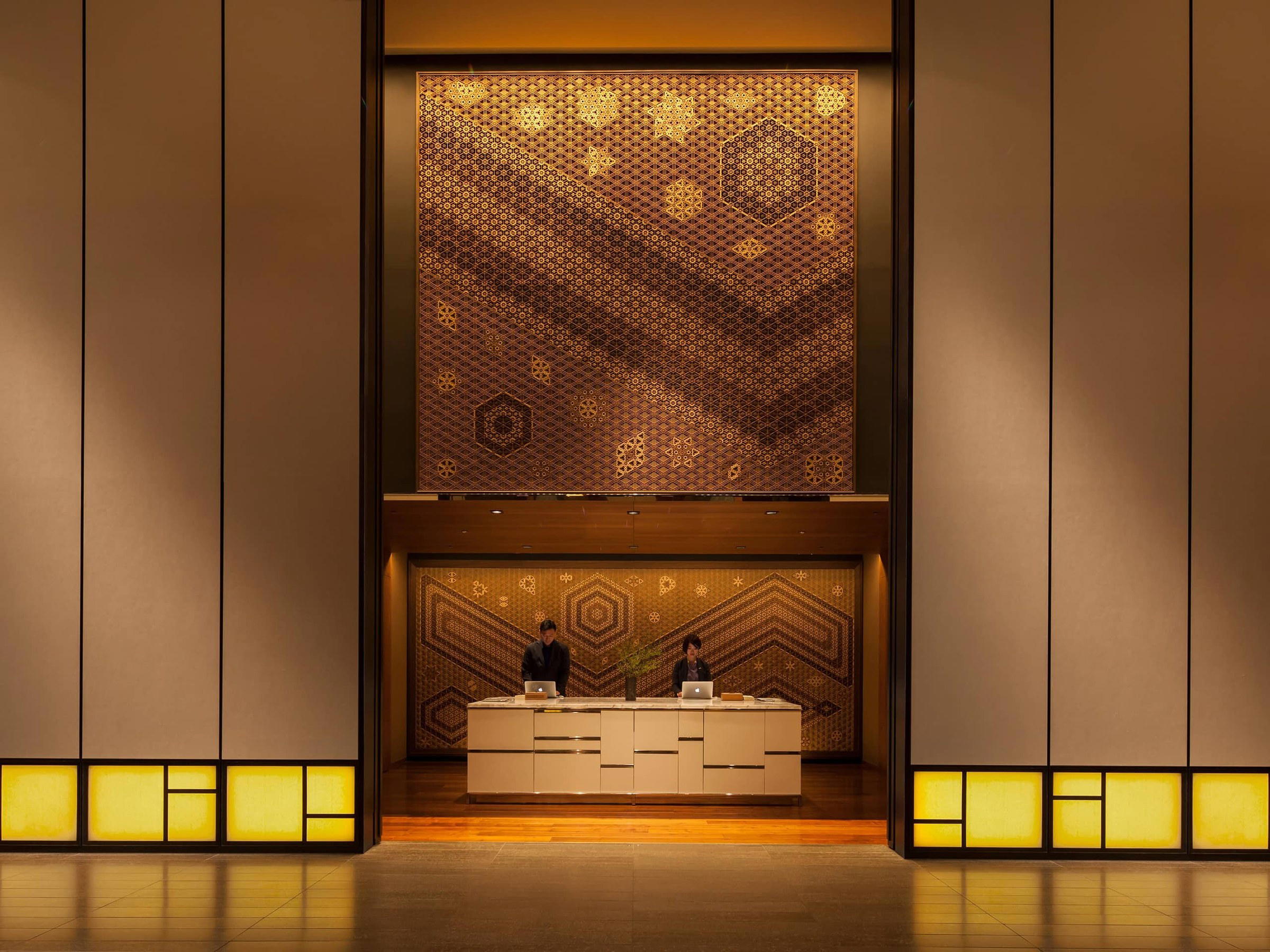
Modern, spacious interior with a fully open kitchen as the focal point; elegant black decor with refined, adult atmosphere; bright and contemporary with professional energy from visible chef work.