Our verdict
On the Quai des États-Unis, Movida occupies one of Nice's most addressed stretches of waterfront, where the Promenade des Anglais logic gives way to the older port-facing city. The address alone places it within a competitive dining corridor that runs from the old town fish counters to the modern French tables pulling regional and national recognition. Visitors looking to read Nice's dining scene from a single vantage point could do worse than to start here.

Pearl is the En Primeur Club membership app, where members save venues, book tables and use the concierge.
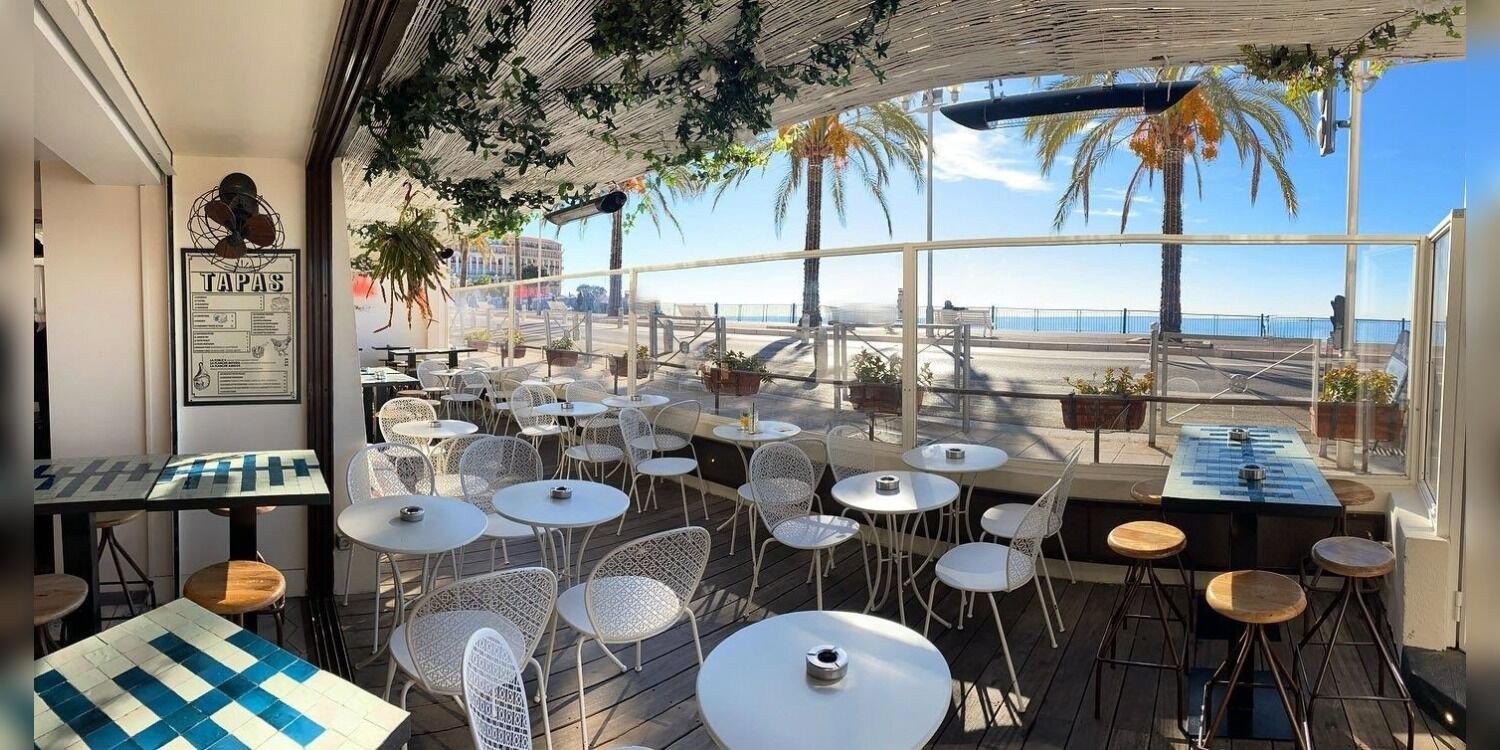
The Quai des États-Unis and What It Asks of a Restaurant
There is a particular pressure that comes with a waterfront address on the Quai des États-Unis. This stretch of Nice's seafront sits just east of where the Promenade des Anglais formalises itself, closer to the Vieux-Nice fish market logic and the older port-side eating culture than to the hotel dining of the western bay. Restaurants here are read against a long backdrop: the terraces that have served bouillabaisse and socca to generations of Niçois, the tables that capitalise on the view without justifying the cover charge, and the occasional serious room that earns its place through the plate rather than the panorama. Movida, at number 41, sits inside that competitive tension.
Nice's dining scene in 2024 has split more sharply than in previous years between the neighbourhood-rooted trattoria register, think L'Aromate working the modern cuisine lane with precision, and the creative tables that have accumulated national recognition, including Flaveur and Les Agitateurs. The waterfront address puts Movida in a different conversation: one where the setting does some of the work and the kitchen has to decide how much of the rest it wants to claim.
A Waterfront Room in the Mediterranean Season
The physical approach to Movida is determined by the quay itself. The Quai des États-Unis faces the sea directly, with the Baie des Anges in full view and the light behaving the way it does only in this part of the coast: white and flattening at midday, amber and almost architectural in the hour before service ends. The address becomes particularly relevant from late spring through early autumn, when the terrace season along this stretch is at its most competitive and the question of how a room manages the transition between daylight dining and evening service becomes a genuine editorial variable. The Mediterranean summer here is long, outdoor dining runs reliably from April through October, which shapes the rhythm of every serious table on this quay.
For visitors timing a trip around the dining calendar, the shoulder months of May and September offer the Riviera light without the July and August density of the tourist peak. Booking discipline matters on the Quai des États-Unis during summer; tables with sea-facing positions are in demand across the category range, and the gap between a reserved seat and a walk-in experience at any serious address is significant.
The Wine Question on the French Riviera
Nice sits at the meeting point of three wine-producing identities. Provence rosé, in its commercial and its serious artisanal forms, is the obvious gravitational pull, but the proximity to the Var and the Ventoux, combined with the Ligurian influence across the Italian border, means that a thoughtful list in this city has more regional material to draw from than most French coastal addresses. Further afield, the Rhône corridor is within logical reach, and any room with ambition on this quay has access to the full arc of southern French production.
The wine conversation in Nice's serious dining rooms has moved beyond the default rosé positioning of the previous decade. Tables like Le Chantecler and ONICE have demonstrated that Riviera dining can support a cellar programme that takes in national depth alongside regional identity. The question for any waterfront address is whether the list serves the view, a glass of pale Bandol rosé in afternoon light is a legitimate editorial choice, or serves the kitchen, building vertically through producers and vintages in a way that adds a second layer of argument to the meal. The leading rooms do both, using the season to justify the lighter register while keeping a more serious selection available for the table that wants to go deeper.
For context on what serious French cellar curation looks like at the national level, the reference points are tables like Alléno Paris au Pavillon Ledoyen, Troisgros, and Auberge de l'Ill, rooms where the cellar is a parallel editorial statement to the menu. Regionally, Mirazur in Menton, just along the coast, has set a standard for integrating local and international wine thinking at the highest tier. The Riviera's proximity to Italy also opens a cross-border dimension that the most considered lists on this stretch have started to take seriously.
Nice's Dining Context and Where Movida Sits
Nice's restaurant scene is more stratified than its tourist reputation suggests. At the serious end, the city has produced nationally recognised tables working modern French and creative registers, with Flaveur and Les Agitateurs as the clearest examples of that ambition. The middle tier is genuinely competitive, with addresses across the old town and the port quarter offering Niçoise cooking, socca, pissaladière, stockfish, at a price point that reflects local rather than tourist demand. The waterfront, as a category, occupies a distinct zone: the address premium is real, and the rooms that justify it tend to do so either through cooking that would command attention in any location, or through a wine and service programme that adds a dimension the kitchen alone cannot provide.
The French Mediterranean tables that have built the strongest reputations at the regional level, including AM par Alexandre Mazzia in Marseille and the mountain register of Flocons de Sel in Megève, demonstrate that the south of France can sustain serious culinary ambition across multiple registers. Nice's own contribution to that conversation has grown steadily, and the Quai des États-Unis is one of the addresses where that growth is being tested most directly by the commercial pressures of a high-footfall seafront location.
For a fuller read on the city's dining options across categories and price points, the EP Club Nice restaurants guide maps the scene with neighbourhood-level detail. International reference points for the highest tier of French dining, including Bras in Laguiole, Paul Bocuse, and Assiette Champenoise in Reims, provide useful calibration for what the national conversation looks like above the regional tier. Outside France, rooms like Le Bernardin in New York and Atomix demonstrate the range of what serious tasting-menu dining has become internationally, and offer a frame for reading any ambitious room on its own terms.
Planning a Visit
The address, 41 Quai des États-Unis, is walkable from the old town and reachable from the main hotel corridors along the Promenade in under fifteen minutes on foot. The Quai des États-Unis runs parallel to the seafront and is accessible without a vehicle, which matters in a city where summer parking pressure is significant. For visitors arriving by rail, Nice-Ville station is roughly twenty minutes on foot, with tram connections reducing that to ten. Booking ahead is the practical posture for any serious waterfront table in Nice from May through September; walk-in availability on the quay during peak season is unreliable across the category. Confirmation of current hours and any seasonal format changes should be verified directly with the venue before travel, as operational details are subject to change and are not reproduced here from a verified source.
Frequently asked questions
Does Movida work for a family meal?
The quayside setting at 41 Quai des États-Unis gives families the open-air context that works well for varied groups, waterfront tables reduce the pressure of a formal dining room. That said, the address is on a pedestrian-facing seafront strip rather than a sheltered square, so younger children and the pace of service are worth factoring in. It is worth confirming group capacity and terrace availability directly before booking.
What is the atmosphere like at Movida?
Movida occupies one of Nice's more exposed waterfront positions on the Quai des États-Unis, with the Baie des Anges as a direct backdrop. The setting is Mediterranean in the specific sense: sea-facing, seasonally busy, and shaped by the rhythm of the quay rather than a tucked-away courtyard. Expect a room that leans into its address rather than insulating guests from it.
Is Movida a good option for dinner with a sea view in Nice?
At 41 Quai des États-Unis, Movida sits on the stretch of Nice's seafront that faces the Baie des Anges directly, east of the Promenade des Anglais junction. Among waterfront addresses in the city, this quay offers one of the more unobstructed sea outlooks in the central Nice area. The position makes it a natural candidate for an evening meal timed to the light over the bay, though terrace availability should be confirmed ahead of time.
What should I order at Movida?
What the Quai des États-Unis location does suggest is a kitchen operating within Nice's broader seafood and Niçois tradition, where socca, local fish, and Provençal produce tend to anchor serious menus. Checking the current menu directly before visiting will give the clearest picture.
Nearby-ish Comparables
Comparable venues nearby, for context on price, style, and recognition.
| Venue | Cuisine | Price | Notes |
|---|---|---|---|
| MovidaThis venue (the venue you are viewing) | Spanish Tapas and Cocktails | $20–30 | Not listed |
| Chez Acchiardo | Traditional Niçoise Bistro | $20–30 | Nice Historique |
| Le Bistrot des Serruriers | Niçois Bistro | $30–50 | Nice Historique |
| Bocca Mar | Mediterranean Beach Tapas | $20–30 | Cœur de Nice |
| La Ratapignata | Traditional Niçoise & French Bistro | $20–30 | Hauts de Nice |
| L'Autobus | Traditional Niçoise French | $30–50 | Hauts de Nice |