Moscou By Danny Horseele

1 Michelin Star
Our verdict
In Gentbrugge's Moscow district, Danny Horseele's gilt-edged dining room delivers classical French-Belgian cooking with selective modern inflections. Saddle of hare with cognac and foie gras sauces anchors the menu alongside koji-marinated scallops with daidai powder and dashi dressing. The atmosphere reads as warm and unstuffy despite the formal culinary register, placing it firmly in Belgium's serious regional dining conversation.

Pearl is the En Primeur Club membership app, where members save venues, book tables and use the concierge.
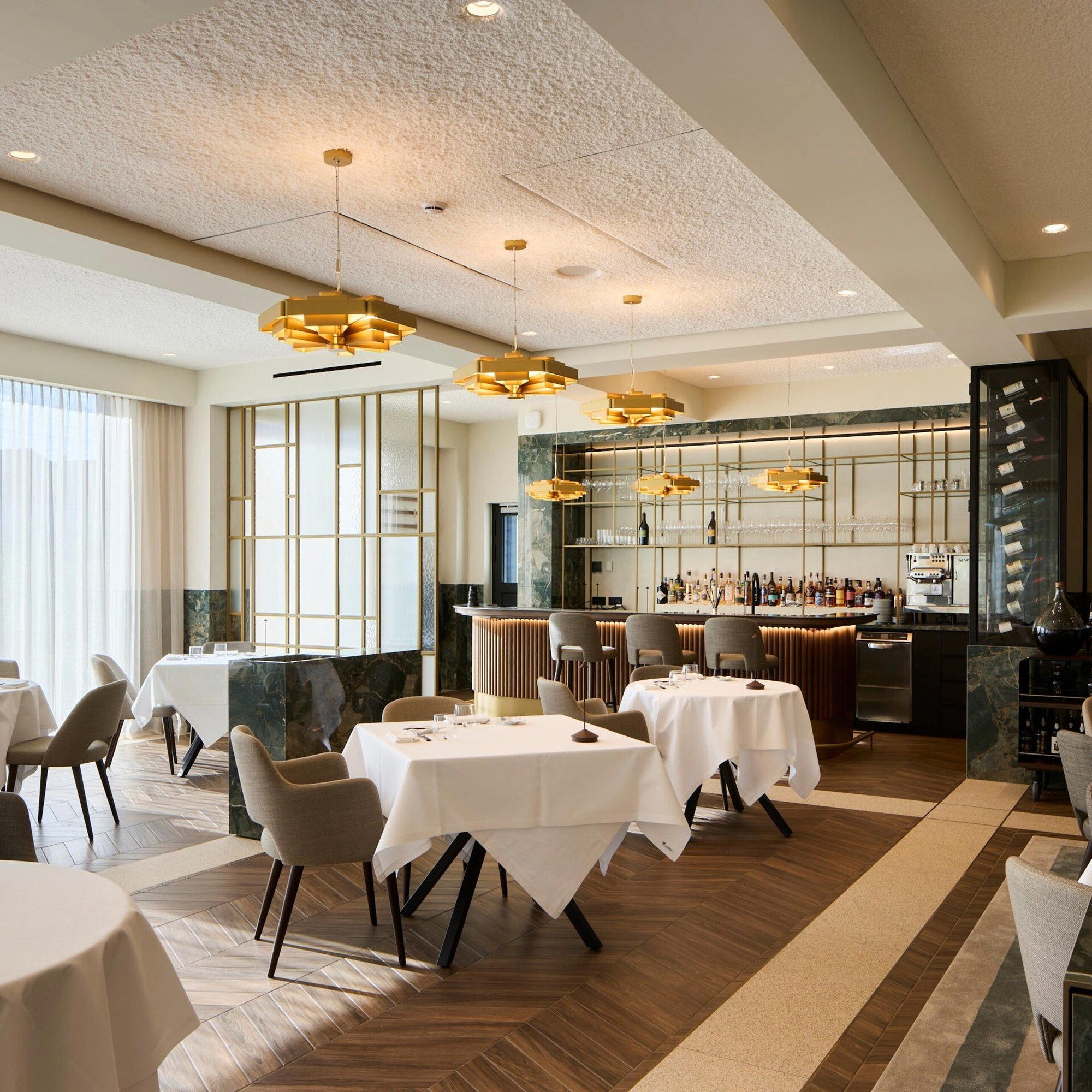
A Classical Kitchen in an Unlikely Postcode
Gentbrugge sits immediately east of Ghent, close enough to share its cultural gravity but removed enough to operate outside the city's more trafficked dining circuit. In Belgium, this kind of suburban or peri-urban placement is not unusual for serious cooking: the country's restaurant tradition has long spread across small municipalities rather than concentrating exclusively in major city centres. What Gentbrugge's Moscow district offers is precisely the kind of neighbourhood where a chef can build a following on reputation rather than footfall, which is how rooms like Moscou By Danny Horseele tend to work. For context on how dining options distribute across the area, see our full Gentbrugge restaurants guide.
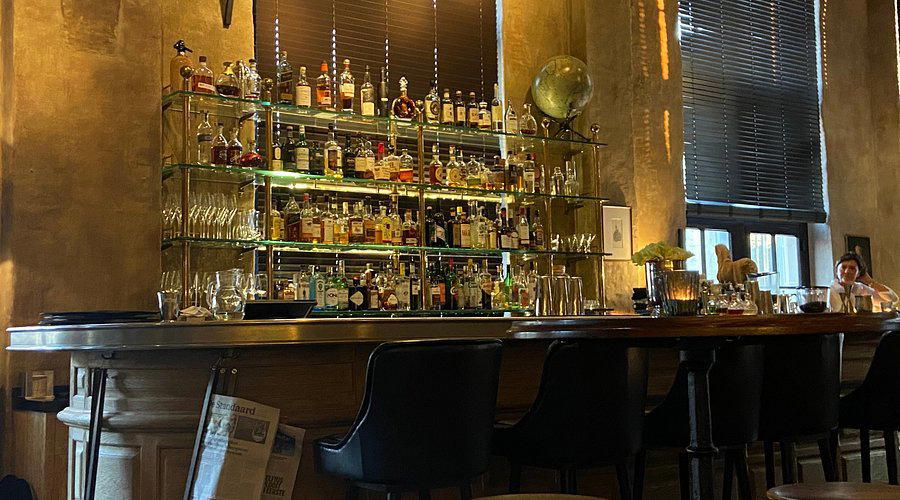
The dining room signals its register before the first course arrives. Gilt details and a warm, enveloping tone set expectations for a formal kitchen, while the absence of stiffness in the service keeps the room from tipping into the kind of reverent hush that can drain pleasure from a long meal. Belgium has a particular tradition of unstuffy luxury in this bracket, evident also at institutions such as Bozar Restaurant in Brussels, and Moscou reads as a regional expression of that same sensibility.
Where the Ingredients Do the Talking
Classical French-Belgian cooking at this level is, at its core, an ingredient-driven discipline. The sauces are not decoration; they are the argument. A pepper sauce, a cognac reduction, a foie gras-enriched jus flanking a saddle of hare: each of these elements depends on sourcing decisions made long before service begins. Hare demands provenance, the quality of the animal, its age, how it was handled, because the classical preparations that suit it leading have no room for correction at the stove. The choice to present hare at all, when so many comparable kitchens have retreated to safer proteins, signals a kitchen willing to commit to the demands of traditional game cookery.
Foie gras as a sauce component rather than a standalone course is itself a meaningful sourcing choice. It requires a quality of liver that can carry reduction without bitterness, and it places the kitchen in a culinary conversation with the grand French tradition of enriched sauces that stretches back through Escoffier to earlier bourgeois kitchens. That conversation is very much alive at comparable Belgian houses: Hof van Cleve in Kruishoutem and Boury in Roeselare both operate within a similar classical-rooted framework, even where their contemporary inflections differ.
The Modern Touches and What They Reveal
The scallop preparation at Moscou offers an instructive counterpoint to the game courses. Scallops marinated in koji, finished with daidai powder, the Japanese citrus used in ponzu and similar acidic preparations, with dashi and a buttery sambai dressing: this is not fusion in the older, disruptive sense, but a considered application of fermentation and umami science to a product the kitchen clearly understands on its own classical terms. Koji fermentation has moved through the fine-dining world over the past decade as chefs at houses from Zilte in Antwerp to comparable rooms in Scandinavia have absorbed its capacity to concentrate and alter flavour without heat. Here the choice of daidai, a bitter Japanese citrus, rather than a standard acid brightener suggests specificity of thought rather than trend-following.
The sambai dressing, buttery in character, acts as a bridge between the Japanese fermentation vocabulary and the richness that defines the kitchen's classical core. This kind of internal logic, where the modern element is chosen because it deepens rather than contradicts the base language of the kitchen, is what separates considered evolution from novelty. Kitchens in Belgium working at this level, including Castor in Beveren and De Jonkman in Sint-Kruis, face the same creative tension between classical inheritance and contemporary technique.
Format and Planning
Moscou operates both à la carte and set menu formats, which gives it broader appeal across different dining occasions than a pure tasting-menu format would allow. In the Belgian serious-dining tier, this flexibility is not universal: some houses at comparable price points have moved entirely to set menus, which optimises kitchen operations but narrows the audience. The dual-format approach at Moscou suits a clientele that may arrive for a focused two-course lunch as readily as a longer dinner, and it allows the kitchen's classical range to express itself across varying depths of meal.
Oefenpleinstraat 3 in Gentbrugge is the address; restaurant-goers arriving from Ghent or further afield should factor in travel from the city centre, which is a short drive or manageable by other transport depending on the evening. Given the kitchen's pedigree and the region's appetite for serious dining, booking in advance is the prudent approach rather than arriving speculatively. For those building a wider visit around the area, our Gentbrugge hotels guide covers accommodation options, and the bars guide covers where to continue an evening. Wine-focused visitors may also find the wineries guide and experiences guide useful for planning a fuller stay.
Where Moscou Sits in the Belgian Conversation
Belgium's serious regional dining scene is denser than its international profile suggests. Houses like Willem Hiele in Oudenburg, Bartholomeus in Heist, Cuchara in Lommel, d'Eugénie à Emilie in Baudour, and L'Eau Vive in Arbre form a distributed network of kitchens operating at high technical levels across the country's various regions. Internationally, the classical-with-modern-inflection model finds parallels at houses such as Le Bernardin in New York City and, in its southern American register, Emeril's in New Orleans, both kitchens where a deep classical foundation coexists with selective evolution over time.
Moscou's positioning within this field is as a classical Belgian kitchen where the sourcing rigour required for game cookery and the selective precision of its Japanese-influenced fermentation technique speak to a kitchen operating with considered intent. The Moscow district of Gentbrugge is not a destination in the tourist sense, but that is not the metric that matters here. What matters is that the cooking is built on ingredients that reward the kitchen's technical ambition, and that the room, warm, gilt-edged, unstuffy, provides the right conditions to appreciate the result without ceremony getting in the way.
Frequently asked questions
Would Moscou By Danny Horseele be comfortable with kids?
Moscou's atmosphere is described as unstuffy despite its gilt-edged setting, which softens the formality somewhat. That said, the restaurant's focus on classical French-Belgian technique and multi-course formats, game, foie gras sauces, koji-marinated scallops, points toward an adult dining occasion rather than a family outing. Families with older, food-curious teenagers would likely find it more fitting than those with young children.
What is the atmosphere like at Moscou By Danny Horseele?
The room occupies Gentbrugge's Moscow district and carries what reviewers describe as unstuffy luxury, gilt-edged in presentation but warm rather than stiff in register. It sits close enough to Ghent to draw a city crowd while operating at a remove from the more touristic dining corridors. The overall tone is that of a serious kitchen that doesn't require its guests to perform seriousness back at it.
What awards or recognition does Moscou By Danny Horseele have?
Moscou By Danny Horseele has received recognition including: Veteran chef Danny Horseele and his team have set up shop in the Moscow district. The unstuffy luxury of this gilt-edged eatery sets a warm inviting tone. Classical cooking has no secrets for this consummate chef, who is not averse to addin….
What's the signature dish at Moscou By Danny Horseele?
Two preparations define Horseele's range: the saddle of hare with pepper, cognac, and foie gras sauces, which functions as a demonstration of classical sauce work, and the koji-marinated scallops finished with daidai powder, dashi, and a buttery sambai dressing. The hare course shows where his foundations lie; the scallop dish shows how far he's willing to move from them.
Side-by-Side Snapshot
Comparable venues nearby, for context on price, style, and recognition.
| Venue | Cuisine | Price | Awards | Notes |
|---|---|---|---|---|
| Moscou By Danny HorseeleThis venue (the venue you are viewing) | Modern French Fine Dining | $150–200 | 1 Michelin Star | Not listed |
| Colonel Louise | Modern French Steakhouse | $50–100 | Michelin Plate | Saint-Gilles |
| Maison D | Modern French | $50–100 | Michelin Plate | central Ronse |
| Cul'eau | Modern French Brasserie | $100–150 | Michelin Plate | Aalst |
| Cousteau | Modern French-Belgian Fine Dining | $100–150 | Michelin Plate | Eernegem |
| Restaurant Melt | Modern French-Belgian Fine Dining | Not listed | Michelin Plate | Lochristi |
Recognition history
Dated appearances from independent guides and award organizations, with the underlying list record or original source where available.
Michelin 1 Star
Michelin
Continue exploring
More in Gentbrugge
Restaurants in Gentbrugge
All restaurants in Gentbrugge →
Bars in Gentbrugge
Browse all →
Moscou By Danny Horseele
The wine
- Wine program
- Deep wine list
- Extensive wine list
- Sommelier-led
Details
- Elegant
- Sophisticated
- Romantic
- Cozy
- Modern
- Date Night
- Special Occasion
- Business Dinner
- Open Kitchen
- Extensive Wine List
- Sommelier Led
- Tasting Menu
- A La Carte
Current opening hours
- Monday
- Closed
- Tuesday
- 12–2 PM, 7–10 PM
- Wednesday
- 12–2 PM, 7–10 PM
- Thursday
- 12–2 PM, 7–10 PM
- Friday
- 12–2 PM, 7–10 PM
- Saturday
- Closed
- Sunday
- Closed
Hours can change for holidays and private events. Hours as of .
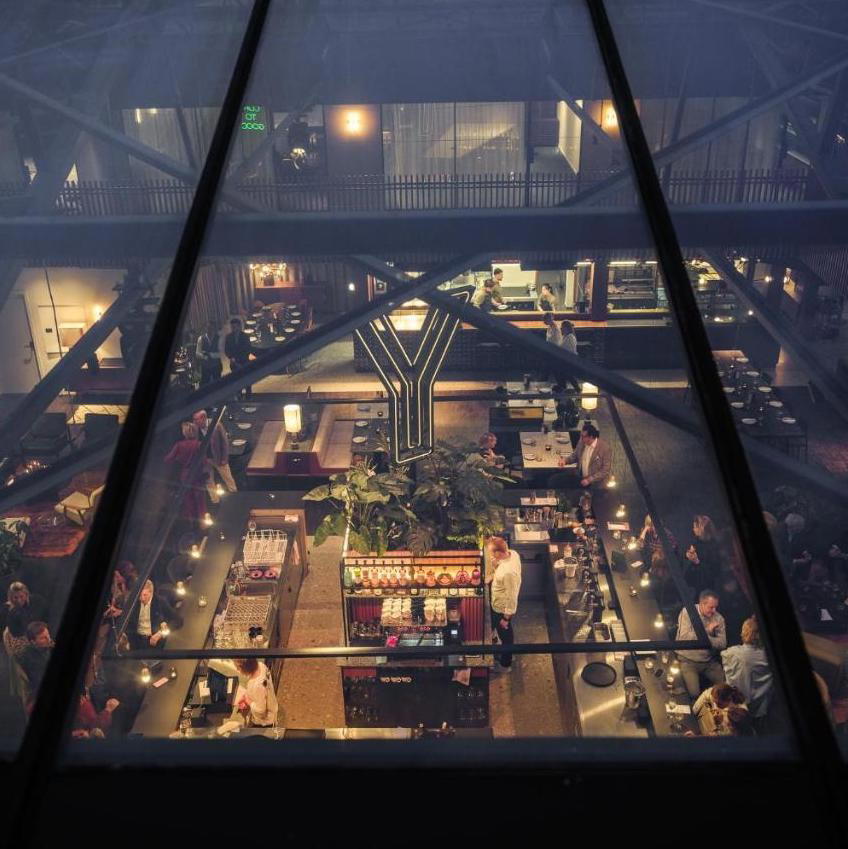
Warm, inviting, elegant without pretension, with soft light from large windows and open kitchen view.