Moritz


1 Michelin Star · Falstaff Restaurant - 95 Falstaff Points
Our verdict
Moritz sits in the Carinthian countryside outside Grafenstein, holding a Michelin star earned through disciplined sourcing from the surrounding meadows and fields. The surprise menu of five or seven courses draws on regional produce shaped into dishes that balance acidity, sweetness, herbal notes, and floral accents.

Pearl is the En Primeur Club membership app — saves, bookings, and concierge access live there. Same editors, same standards.
- Address
- Oberwuchel 5, 9131 Grafenstein, Austria
- Phone
- +43 664 4240316
- Hours
- Mon ClosedTue–Sat 5–9:30 PMSun Closed
- Website
- restaurantmoritz.at
- Directions
- Get directions
Where the Fields Set the Menu
There is a particular style of fine dining that has taken hold across rural Austria and its Alpine neighbours: kitchens anchored to a specific patch of land, sourcing from farms and foragers within a tight radius, and letting the season's output determine the menu rather than the other way around. Moritz, positioned in open countryside at Oberwuchel 5 on the edge of Grafenstein in Carinthia, operates squarely within that tradition. The surrounding meadows and fields are not backdrop; they are the supply chain. What arrives on the plate reflects what grows nearby, and that constraint, far from limiting the kitchen, produces the kind of specificity that menus built on imported luxury goods rarely achieve.
Carinthia is not the first Austrian region most international visitors associate with destination dining. The fine-dining conversation in Austria typically anchors to Vienna — Steirereck im Stadtpark in Vienna remains the reference point for creative Austrian cooking at the highest level — or to Salzburg, where Ikarus in Salzburg draws a touring international crowd. Further west, Tyrolean addresses like Gourmetrestaurant Tannenhof in Sankt Anton am Arlberg and Griggeler Stuba in Lech absorb premium dining spend from resort visitors. Carinthia operates at a different pitch: quieter, less curated as a hospitality destination, and, for that reason, home to restaurants that reward the traveller who makes the extra effort to find them.
The Room: Glass, Light, and the Garden Beyond
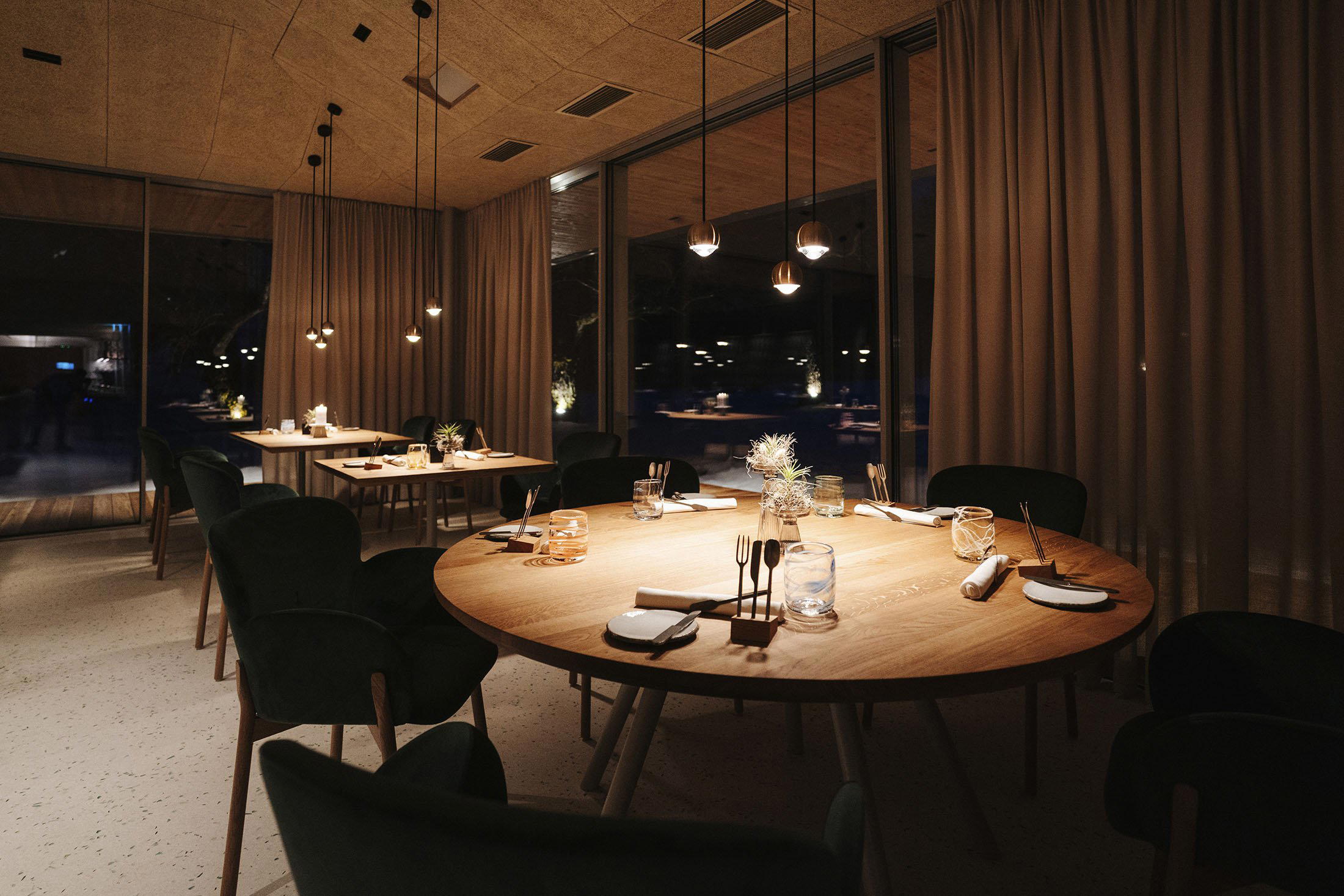
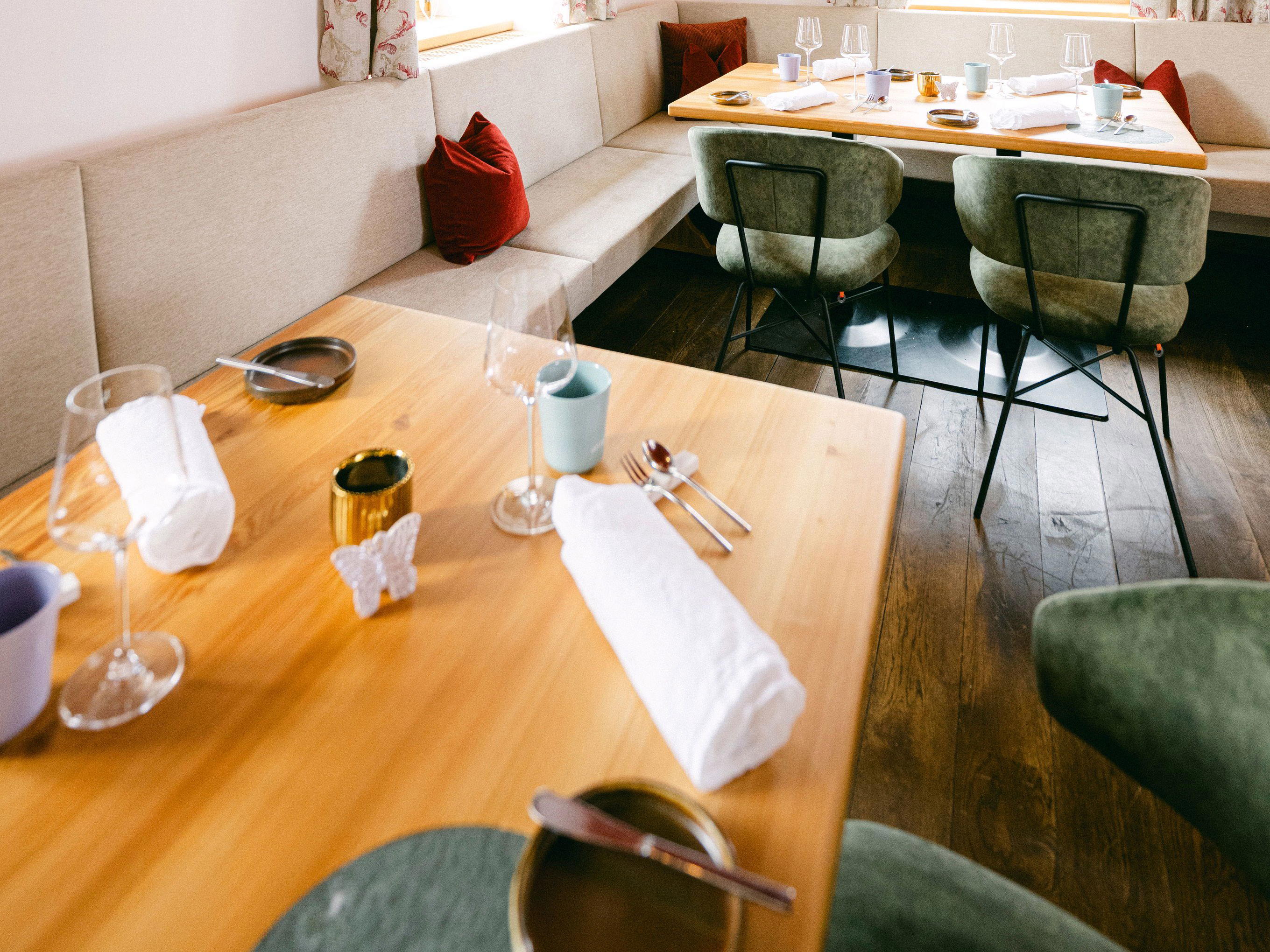
In summer, the glass walls open to the garden, and the distinction between inside and outside effectively dissolves. That terrace-like quality is not common among Michelin-starred addresses in Austria's rural south, where the operating season and the weather usually dictate more insular room design. The atmosphere that results is described consistently as intimate rather than formal, a function both of the physical space and the approach of hostess Anja-Margaretha Moritz, whose presence shapes the room's temperature. At €€€€ pricing, that warmth is not incidental; it is part of what distinguishes Moritz from the starchier end of Austrian fine dining, where hospitality can tip toward ceremony.
Regional Produce as the Organising Principle
The sourcing philosophy at Moritz is the editorial centre of the kitchen's output, and it connects to a broader movement visible across Austria's countryside restaurants. At Döllerer in Golling an der Salzach, the kitchen has spent years building a regional-alpine pantry that treats the Salzach valley as a culinary territory with its own grammar. Kräuterreich by Vitus Winkler in Sankt Veit im Pongau takes the herb garden as its primary organising concept. Moritz operates in the same register: the surrounding Carinthian farmland and meadows supply the kitchen, and the menu is shaped around what that landscape produces.
The results are dishes built around contrasts that feel genuinely derived from place. The Michelin documentation notes a creation combining beetroot, dill, and mustard seeds alongside fennel blossoms, marigold, and oxalis, a composition that reads as a meadow inventory as much as a recipe. The flavour logic involves acidity cutting against sweetness, herbal sharpness against floral softness. This is not the kind of dish that arrives at a kitchen by way of a luxury supplier's catalogue; it arrives by way of foraging and farming relationships built over time. That specificity is precisely what regionalism-first kitchens produce when the sourcing is genuine rather than decorative.
Under chef Roman Pichler, the preparation style is pared down rather than elaborate. The descriptions point toward restraint: precise cooking that allows the produce's own character to carry the dish rather than technique overwhelming ingredient. That approach sits in contrast to the more architecturally constructed plate-building visible at urban Austrian addresses, and it positions Moritz at the quieter, more ingredient-led end of the €€€€ tier. Comparable in that respect to Obauer in Werfen, which has spent decades at the intersection of regional Salzburg produce and fine-dining presentation, or Ois in Neufelden, operating in Upper Austria with a similar rural sourcing discipline.
The Menu Format: Surprise, with an Optional Preview
Moritz offers a surprise menu in five or seven courses. The format is common at this level of Austrian and central European fine dining, Schwarzer Adler in Hall in Tirol and Stüva in Ischgl both operate omakase-adjacent surprise structures that hand menu control to the kitchen. At Moritz, however, the option to preview the menu before committing is offered, which is a meaningful concession for guests with dietary restrictions or those who prefer to engage with the meal in advance rather than arrive blind. That flexibility slightly softens the take-it-or-leave-it rigidity that surprise formats can enforce.
Individual courses can also be ordered separately, which is unusual at this price point and suggests an awareness of the local market: Carinthia's dining culture is less accustomed to locked tasting menus than Vienna or Salzburg, and offering a route through the menu for guests who want two or three courses rather than the full sequence is a practical accommodation.
Planning the Visit
The address, Oberwuchel 5, 9131 Grafenstein, places Moritz in open countryside south of Klagenfurt, the regional capital of Carinthia. Klagenfurt itself is roughly 15 kilometres to the north. The drive from the city takes guests through agricultural land, and arriving by car is the practical default; public transport options to Grafenstein are limited. For context on the broader Grafenstein area, including accommodation and other dining, see our full Grafenstein restaurants guide, our full Grafenstein hotels guide, our full Grafenstein bars guide, our full Grafenstein wineries guide, and our full Grafenstein experiences guide.
At €€€€ pricing, Moritz sits in the same broad tier as Austria's major urban fine-dining addresses. A table at this level in a rural Carinthian setting carries different cost logistics than a city dinner: travel time is a real investment, and the meal is likely the centrepiece of the day rather than one stop among several. For travellers building an Austrian fine-dining itinerary that extends beyond Vienna and Salzburg, Moritz makes a coherent case for including Carinthia on that circuit.
For comparison with the broader spectrum of Austrian regional fine dining, Restaurant 141 by Joachim Jaud in Mieming operates at a similar remove from urban centres in Tyrol. Beyond Austria, the ingredient-sourcing-led tasting menu format has a strong international reference set: Frantzén in Stockholm represents the high end of that approach in Scandinavia, while FZN by Björn Frantzén in Dubai demonstrates how the format translates into a very different sourcing context.
Frequently asked questions
Can I bring kids to Moritz?
At €€€€ pricing, Moritz sits at the upper end of Carinthia's fine-dining market. The surprise tasting menu format — five or seven courses, with an option to preview the menu — rewards diners who are comfortable with a longer, paced meal. Families with younger children should factor in both the format and the intimate atmosphere before booking.
How would you describe the vibe at Moritz?
The room runs on daylight: a conservatory-style space with glass walls that open fully onto the garden in summer, collapsing the boundary between interior and terrace. Hostess Anja-Margaretha Moritz keeps the service personal rather than formal, which softens what would otherwise read as a conventional Michelin-starred setting. The surrounding Carinthian meadows do the rest.
Is Moritz Michelin-listed?
Moritz has received recognition including: A little off the beaten track but well worth the trip! Surrounded by meadows and fields, this restaurant surprises with its upscale and modern decor. The bright and airy dining space has the feel of a conservatory. In summer, the glass wall….
What's the best thing to order at Moritz?
The kitchen's intended format is the surprise menu — five or seven courses built around regional Carinthian produce. Michelin's 2024 assessment specifically flags a creation built on beetroot, dill, mustard seeds, fennel blossoms, marigold, and oxalis as representative of the kitchen's approach: contrasting acidity and sweetness resolved into something coherent. Individual courses can be ordered à la carte, but the full menu is where the sourcing philosophy lands properly.
At-a-Glance Comparison
| Venue | Cuisine | Awards |
|---|---|---|
| MoritzThis venue — the venue you are viewing | Modern Regional Austrian | 1 Michelin Star · Falstaff Restaurant - 95 Falstaff Points |
| Steirereck im Stadtpark | Creative | Michelin 3 Star |
| Döllerer | Contemporary Austrian, Innovative | Michelin 2 Star |
| Ikarus | Modern European, Creative | Michelin 2 Star |
| Mraz & Sohn | Modern Austrian, Creative | Michelin 2 Star |
| Obauer | Classic Cuisine | Michelin 2 Star |
Recognition history
Dated appearances from independent guides and award organizations, with the underlying list record or original source where available.
Michelin 1 Star
Michelin
Falstaff Restaurant - 95 Falstaff Points
Falstaff
Full recognition history (4 entries)
Michelin 1 Star
Michelin
Michelin 1 Star
Michelin
Continue exploring
More in Grafenstein
Restaurants in Grafenstein
Browse all →
Bars in Grafenstein
Browse all →
Hotels in Grafenstein
Browse all →

Moritz
The wine
- Wine program
- Curated wine list
- Extensive wine list
Details
- Elegant
- Cozy
- Modern
- Intimate
- Scenic
- Date Night
- Special Occasion
- Garden
- Extensive Wine List
- Local Sourcing
- Garden
- Tasting Menu
- Vegetarian Friendly
Current opening hours
- Monday
- Closed
- Tuesday
- 5–9:30 PM
- Wednesday
- 5–9:30 PM
- Thursday
- 5–9:30 PM
- Friday
- 5–9:30 PM
- Saturday
- 5–9:30 PM
- Sunday
- Closed
Hours can change for holidays and private events. Last verified .
Bright, airy conservatory-like dining space with modern upscale decor, light-filled with large glass walls opening to the garden in summer, creating an intimate and soothing atmosphere.