Molinari Delicatessen
On Columbus Avenue in North Beach, Molinari Delicatessen has been a reference point for Italian-American provisions since 1896, making it one of the oldest continuously operating delis in California. The sawdust-floor atmosphere, hanging salumi, and counter-style service place it in a distinct tier from San Francisco's fine-dining circuit, operating instead as a living document of the city's Italian immigrant food culture.
Pearl is the En Primeur Club membership app — saves, bookings, and concierge access live there. Same editors, same standards.
- Address
- 373 Columbus Ave, San Francisco, CA 94133
- Phone
- +1 415 421 2337
- Website
- themolinarideli.com
- Directions
- Get directions
 Saves & bookings on Pearl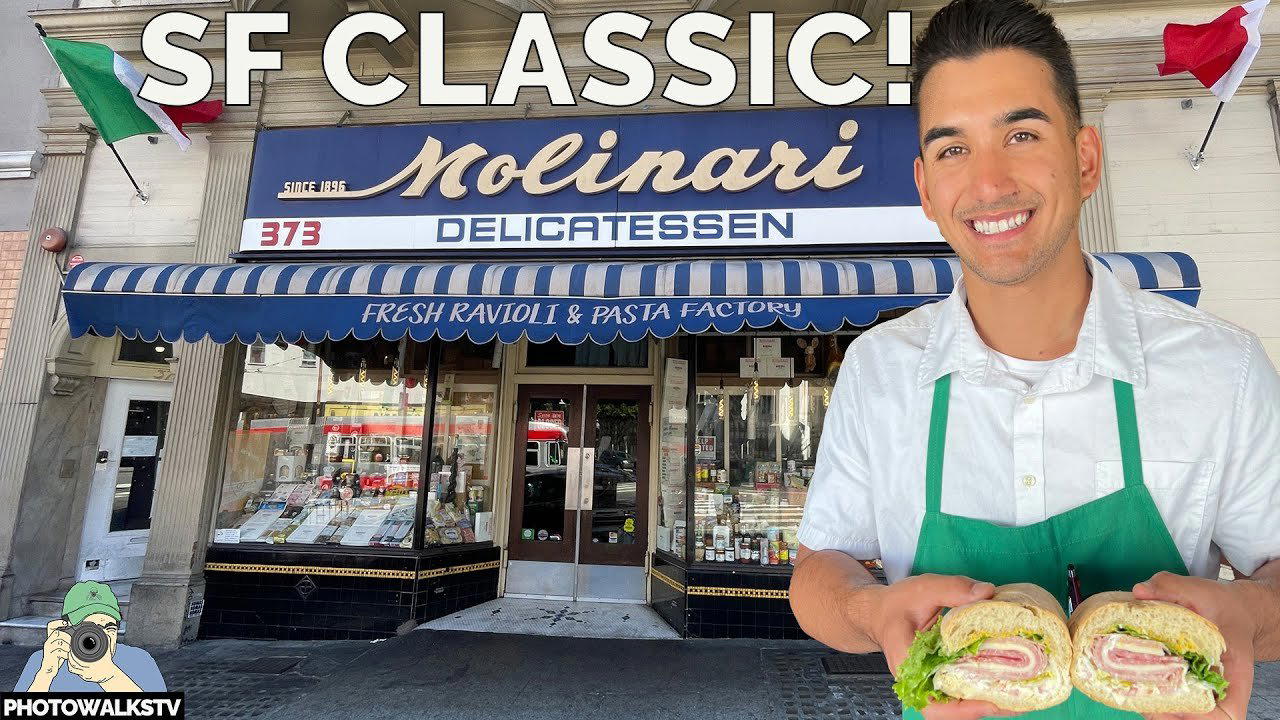
Columbus Avenue and the Weight of a Century
On Columbus Avenue, where North Beach transitions from espresso bars to bookshops to old-school Italian provisions, the aroma arrives before the signage does. Cured meats, aged cheese, olive oil, and the particular mustiness of a room that has been doing the same thing for well over a hundred years, these are the sensory coordinates of Molinari Delicatessen, which has occupied 373 Columbus since 1896. That date is not incidental. In a city that routinely reinvents itself, a deli operating from the same address across multiple generations of San Francisco life is a document of continuity that few dining rooms can match.
North Beach built its identity on the Italian-American immigrant communities that settled here from the late nineteenth century onward, and Molinari became one of that community's most durable institutions. The neighbourhood today holds a different demographic mix, and the tourists who file through Columbus Avenue now are as likely to be hunting Kerouac's ghost as prosciutto, but the deli persists as a functioning provisions counter rather than a heritage-themed replica of one. That distinction matters.
What an Italian-American Deli Actually Does
The Italian delicatessen as a format occupies a specific and underappreciated position in American food culture. It is not a restaurant, not a grocery, and not a café, though it borrows from all three. The model arrived with immigrants from Liguria, Calabria, and other Italian regions who needed somewhere to source the cured meats, cheeses, and preserved goods that did not exist in the American retail mainstream of the late 1800s. The deli became the community's larder, a place where provisions were made or sourced with a specificity that reflected regional Italian practice rather than generic Italian-American approximation.
Molinari's longevity reflects how well that format holds when executed with consistency. San Francisco's fine-dining circuit has produced celebrated names across multiple decades, venues like Quince, which built its reputation on Italian-rooted contemporary cooking, and Benu, which operates at the highest tier of tasting-menu culture, but the deli exists in a completely separate register. Where those rooms require reservations, dress codes, and multi-course commitment, the delicatessen asks only that you know what you want and order it at the counter.
This counter-service format is worth taking seriously as a cultural artifact. The transaction at a proper deli is direct and knowledge-dependent. You are expected to have some sense of what you are asking for, whether that is a particular cut of salumi, a specific cheese weight, or a sandwich built to a particular specification. The format rewards customers who engage with it rather than deferring to a menu structure that makes the decision for them.
North Beach in the Broader San Francisco Context
San Francisco's dining identity has shifted considerably over the past two decades toward hyper-technical progressive cooking, farm-sourcing transparency, and the tasting-menu format. Venues like Lazy Bear and Atelier Crenn represent the city's contemporary ambitions at the high end, while Saison has long signalled California's capacity to compete with the country's most serious fine-dining rooms, from Le Bernardin in New York to The French Laundry in Napa. That conversation, however important, is a narrow slice of what makes San Francisco's food culture worth paying attention to.
The older, less photogenic layer, the neighbourhood provisions counters, the Italian bakeries, the dim sum parlours in the Richmond, carries equal weight as evidence of a city that has absorbed immigrant food traditions and allowed them to persist across generations rather than absorbing them into trend cycles. Molinari is one durable example of that persistence in the Italian-American context, and North Beach is the right neighbourhood to contain it. The area functions as a kind of compression of twentieth-century San Francisco bohemia and Italian community life, and the deli sits at that intersection without needing to explain itself.
Molinari offers a necessary counterpoint. The leading food cities sustain both registers simultaneously, and San Francisco qualifies precisely because places like this one have not been displaced by the newer, more photographable version of Italian food that now dominates most urban restaurant markets.
The Provisions Counter as Travel Destination
Treating a delicatessen as a destination requires a shift in how you calibrate value. There are no tasting menus, no sommelier pairings, no multi-act service sequences. The deli gives you ingredients and prepared items at counter speed, and the quality depends on what is being sold. At Molinari, the house-made salumi operation is the anchor, the name itself has been associated with cured meats in the Bay Area for generations, and the in-house production is what separates this from a deli that simply stocks Italian-labelled products sourced from distributors.
That production lineage places Molinari in a peer conversation that crosses category lines. The same instinct toward provenance and craft that defines Providence in Los Angeles, Addison in San Diego, or Frasca Food and Wine in Boulder, all of them venues that take ingredient sourcing as a serious editorial position, is present here, just expressed through a counter rather than a dining room. The format is different; the underlying seriousness about what goes into the food is not.
Among the broader canon of Italian-rooted American dining, from Emeril's in New Orleans to contemporary Italian-American fine dining in major cities, the traditional deli format has become genuinely rare. Most cities that once had strong Italian-American deli cultures have seen those institutions close, convert, or dilute into something more casual and less specific. The fact that Molinari has not followed that trajectory makes it worth understanding as more than a lunch stop.
For a fuller picture of where Molinari sits within San Francisco's dining ecosystem, the EP Club San Francisco restaurants guide covers the city's full range, from counter-service institutions to tasting-menu rooms. Venues like Atomix in New York or The Inn at Little Washington operate in a completely different register, but the underlying question, what makes a food institution worth crossing the city for, applies across formats.
Know Before You Go
- Address: 373 Columbus Ave, San Francisco, CA 94133
- Neighbourhood: North Beach
- Format: Counter-service delicatessen and provisions
- Founded: 1896
- Reservations: Not applicable, counter service only
- Closest landmarks: Washington Square Park, City Lights Bookstore
- Getting there: Accessible via BART to Montgomery Street, then bus or a 15-minute walk north through the Financial District into North Beach
A Credentials Check
Comparable venues nearby, for context on price, style, and recognition.
| Venue | Cuisine | Price | Notes |
|---|---|---|---|
| Molinari DelicatessenThis venue — the venue you are viewing | Classic Italian Deli | $$ | Not listed |
| Agrodolce Provisions | Italian pasta lunch spot and provisions market | $$ | SoMa |
| Delarosa | Roman-Style Italian Pizzeria | $$ | Marina |
| Pasta Supply Co | Modern Italian Pasta Shop | $$ | Mission |
| Gialina | Italian Pizzeria | $$ | Glen Park |
| Mangia Tutti | Classic Italian Trattoria | $$ | Chinatown |
Continue exploring
More in San Francisco
Restaurants in San Francisco
Browse all →
Bars in San Francisco
Browse all →
Hotels in San Francisco
Browse all →
At a Glance
- Classic
- Cozy
- Well Known
- Casual Hangout
- Historic Building
Current opening hours
- Monday
- 9 AM–5:30 PM
- Tuesday
- 9 AM–5:30 PM
- Wednesday
- 9 AM–5:30 PM
- Thursday
- 9 AM–5:30 PM
- Friday
- 9 AM–5:30 PM
- Saturday
- 9 AM–5:30 PM
- Sunday
- 10:30 AM–4:30 PM
Hours can change for holidays and private events. Last verified .
Classic, bustling neighborhood deli atmosphere with a family-run charm, fresh Italian products lining the shelves, and a sense of timeless tradition.