Mangia Tutti
Mangia Tutti occupies a Clay Street address in San Francisco's Financial District, placing it at the intersection of the city's Italian dining tradition and its broader appetite for neighbourhood-rooted cooking. The name alone signals intent: this is a table for everyone, set within a city that has been arguing about the meaning of Italian-American food for well over a century.
Pearl is the En Primeur Club membership app — saves, bookings, and concierge access live there. Same editors, same standards.
- Address
- 635 Clay St, San Francisco, CA 94111
- Phone
- +14157882088
- Website
- mangia-tutti.com
- Directions
- Get directions
 Saves & bookings on Pearl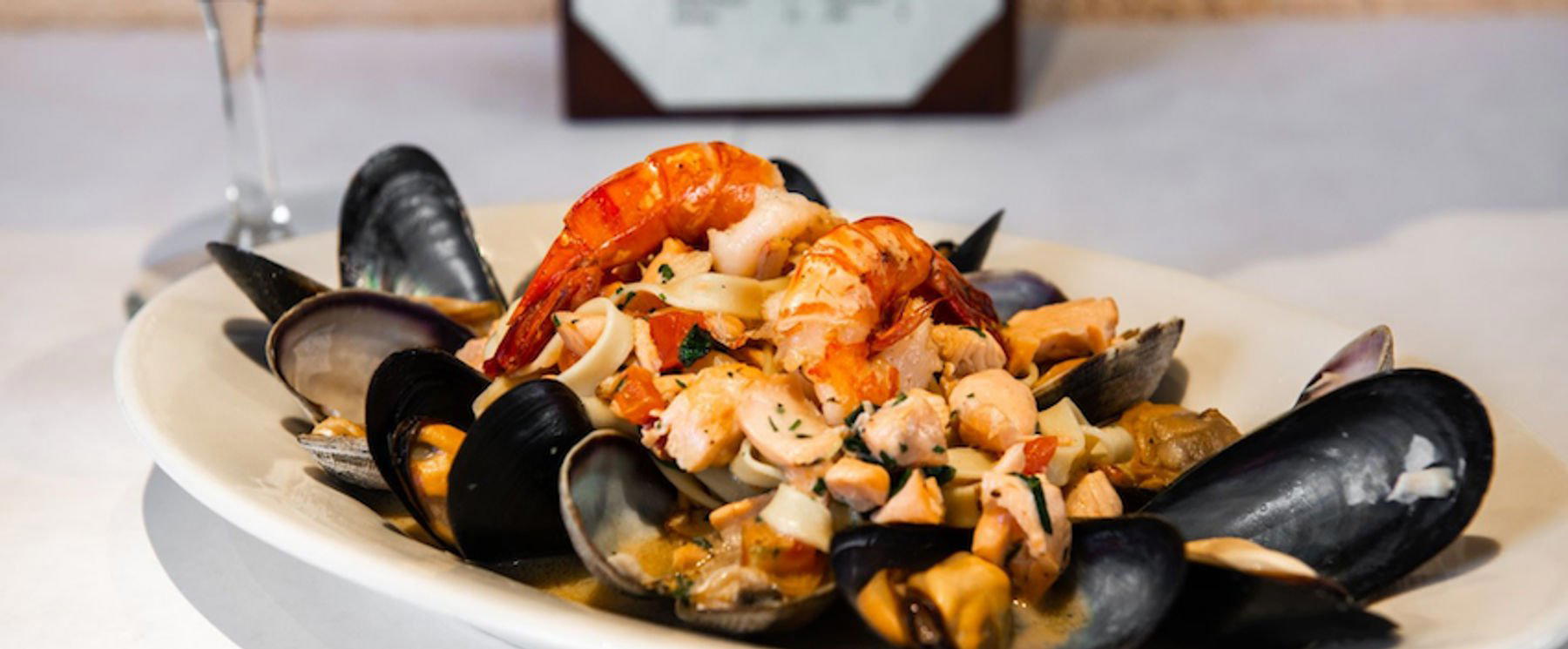
Clay Street and the Long Argument About Italian Food in San Francisco
San Francisco has been having a version of the same argument about Italian cooking since the North Beach trattorias of the early twentieth century: how much should a restaurant in California adapt the source material, and how much should it hold the line? The question has never been settled, which is part of why the city's Italian dining scene remains one of the more contested and interesting in the United States. On one end sit places that read as direct imports, leaning hard into regional Italian specificity. On the other are restaurants that treat Italy as a set of techniques and instincts rather than a fixed canon, bending toward local produce, Californian informality, and the multicultural palate the Bay Area has developed over decades. Mangia Tutti is a classic Italian trattoria at 635 Clay Street in San Francisco’s Financial District, with a recommended reservation policy and an approximate price of $25 per person. It enters that conversation from an address that sits just south of North Beach's historic Italian corridor, close enough to that tradition to draw on it, distinct enough in location to have some room of its own.
Clay Street at this point in the city runs through a neighbourhood that has shifted considerably over the past generation. What was once the outer edge of Chinatown and a working district for Financial District support businesses has become a more mixed-use block, with the lunch trade driven by office workers and the dinner trade more deliberate. For an Italian restaurant in this location, the competitive context is not the tourist-facing red-sauce institutions of Columbus Avenue a few blocks north, but rather the more considered mid-market and upmarket dining that characterises the surrounding streets. That positioning matters: it shapes who the room is for and what the cooking has to do.
The Name as Editorial Statement
"Mangia Tutti" translates roughly as "everyone eats" or "eat, everyone," and in the context of Italian dining in an American city, that framing carries weight. Italian-American food has historically been one of the more democratic expressions of European cooking in the United States, rooted in the immigrant experience of feeding large tables without the luxury of waste. The leading versions of that tradition are not precious about provenance or rigid about technique. They are generous, seasonal where possible, and oriented around the table as a social unit rather than the plate as an aesthetic object. The name alone sets a particular expectation about register and intent.
That intent places it in a different peer group than the high-format Italian contemporary venues operating elsewhere in the city and beyond. Quince, for instance, operates at the premium end of Italian-inflected contemporary dining in San Francisco, with a tasting-menu format and awards recognition that position it against the city's most formal tables. Mangia Tutti's Clay Street address and naming convention suggest a different set of priorities.
Italian Cooking in California: What the Regional Tradition Actually Means
Italian regional cooking is genuinely diverse, and the gap between, say, a Ligurian approach and a Sicilian one is wider than many menus in the United States acknowledge. California has a particular affinity with Ligurian cooking, partly because so many of San Francisco's early Italian immigrants came from that coastal region, and partly because the ingredient profile overlaps: olive oil, seafood, pine nuts, basil, a preference for vegetables that are treated as principals rather than sides. North Beach's historical identity as a Ligurian enclave left a trace in the city's default sense of what Italian food looks like, even as that definition has broadened considerably over decades of immigration from other Italian regions and of chefs training across the peninsula.
The better Italian restaurants in California today tend to draw on this layered inheritance without being doctrinaire about it. They might use a Bolognese technique on a pasta that deploys local ingredients, or apply a Neapolitan wood-fired logic to produce that has no Italian analogue. Saison and Lazy Bear represent the progressive American end of that continuum in San Francisco, where European technique meets hyper-local sourcing in a format that has largely moved past cuisine labels. Italian restaurants operating in the same city have to decide how explicitly they want to hold their category identity, and how much they want to absorb from that broader Californian conversation.
The Financial District Dining Context
Lunch-driven Financial District restaurants face a structural challenge that shapes their whole identity: the weekday peak is reliable, but evenings require a different kind of argument for why someone should travel there rather than to a neighbourhood restaurant with more foot traffic and street energy. The restaurants that solve this problem tend to do so either through a format that rewards the detour (a serious wine list, a kitchen doing something technically distinctive) or through a value proposition that makes them a habit rather than a destination. Italian cooking, with its emphasis on hospitality over spectacle, often fits the latter model more naturally than it fits the former. Across the United States, from Le Bernardin in New York to Bacchanalia in Atlanta, the restaurants that build sustained reputations in office-adjacent neighbourhoods tend to be those that make regulars rather than chasing one-time destination diners.
San Francisco's premium dining market, meanwhile, has concentrated much of its serious critical attention on a cluster of restaurants operating at the tasting-menu end of the spectrum. Benu, Atelier Crenn, and the broader peer group that includes The French Laundry in Napa and Single Thread Farm in Healdsburg occupy one end of the Bay Area's fine dining continuum. A restaurant like Mangia Tutti, if it is operating in a more accessible register, sits in a different and harder market position: competing not for starred accolades but for the loyalty of a repeat clientele that has many good options and limited patience for inconsistency.
What This Address Tells You
635 Clay Street is a specific kind of San Francisco location: not a neighbourhood destination address in the way that, say, a Mission or Hayes Valley restaurant would be, but not a tourist corridor either. It is the kind of address that tends to attract a clientele who know why they are going there, which is a reasonable foundation for a restaurant that wants to build on word-of-mouth rather than foot traffic. For visitors to San Francisco, it sits within walking distance of the Embarcadero waterfront and the Ferry Building, a useful anchor for anyone building a day around the northeastern waterfront.
Cuisine-First Comparison
Comparable venues nearby, for context on price, style, and recognition.
| Venue | Cuisine | Price | Notes |
|---|---|---|---|
| Mangia TuttiThis venue — the venue you are viewing | Classic Italian Trattoria | $$ | Not listed |
| Agrodolce Provisions | Italian pasta lunch spot and provisions market | $$ | SoMa |
| Caffé Sport | Authentic Sicilian Seafood | $$ | North Beach |
| Cesario's | Northern Italian Comfort Food | $$ | Nob Hill |
| Calzone's Pizza Cucina | Italian Pizza and Calzones | $$ | North Beach |
| Molinari Delicatessen | Classic Italian Deli | $$ | Chinatown |
Continue exploring
More in San Francisco
Restaurants in San Francisco
Browse all →

Bars in San Francisco
Browse all →
Hotels in San Francisco
Browse all →
At a Glance
- Cozy
- Classic
- Intimate
- Date Night
- Casual Hangout
- Solo
- Family
- Open Kitchen
- Standalone
- Local Sourcing
Casual, unpretentious dining room with warm lighting and a relaxed, intimate atmosphere; quiet and peaceful, especially on weeknights.