Our verdict
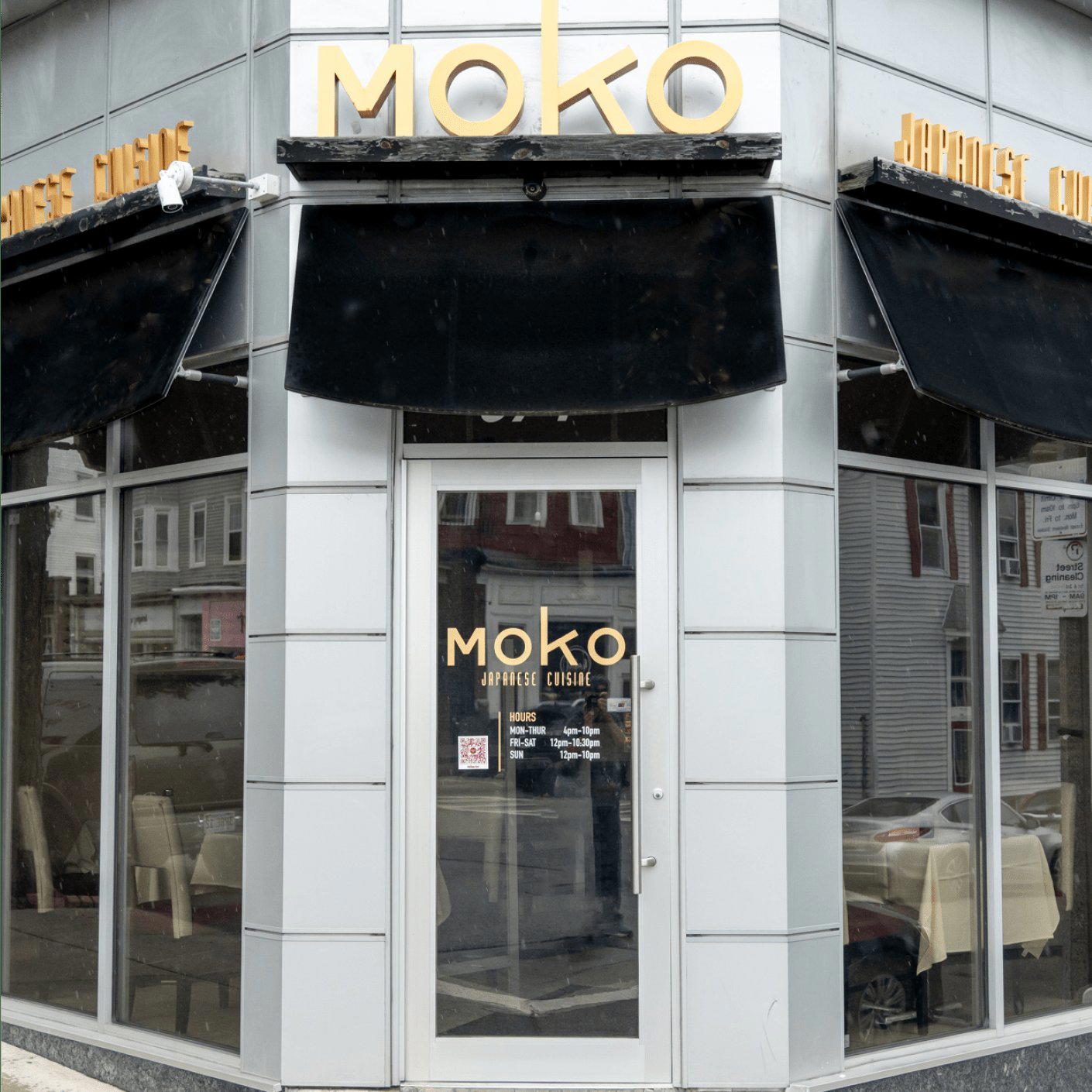
Moko sits on East Broadway in South Boston, a stretch that has seen the neighbourhood's dining character shift considerably over the past decade. Without published awards or a widely circulated chef profile, it occupies a quieter position in the local scene, making it worth reading against the broader South Boston dining context before booking.

Pearl is the En Primeur Club membership app — saves, bookings, and concierge access live there. Same editors, same standards.
- Address
- 674 E Broadway, Boston, MA 02127
- Phone
- (617) 752-4655
- Hours
- Mon–Thu 4–10 PMFri–Sat 12–10:30 PMSun 12–10 PM
- Website
- mokojapanesecuisine.com
- Directions
- Get directions
- Booking
- Book on OpenTable
East Broadway and the Pace of South Boston Dining
South Boston's restaurant corridor along East Broadway has changed shape in ways that are easy to miss if you only visit occasionally. The neighbourhood that once ran almost exclusively on casual Irish-American staples now holds a more layered set of options, from counter-service concepts to sit-down rooms that operate with something closer to a deliberate ritual. Moko, at 674 East Broadway, sits within that evolution without loudly announcing itself. There are no publicised awards in its record, no widely attributed chef name, and no press-release origin story. In a neighbourhood where venues like Moonshine 152 and Shy Bird - South Boston have built clear editorial identities, Moko represents a different register: local, present, and operating largely outside the review circuit.
That positioning is itself a data point. In American cities, the venues that sustain neighbourhood foot traffic without accumulating press recognition tend to serve a specific function. They are where residents eat on a Tuesday, not where out-of-town visitors make reservations six weeks ahead. Understanding where Moko sits in that spectrum matters before you decide whether it belongs on your itinerary.
The Ritual of the Neighbourhood Meal
There is a particular rhythm to dining in a neighbourhood restaurant that differs structurally from the paced tasting-menu format you would encounter at, say, Lazy Bear in San Francisco or Alinea in Chicago. At that tier, the meal is the event: courses arrive on a schedule, the kitchen controls pacing, and the diner's role is largely receptive. The dining ritual at a neighbourhood address runs in the other direction. The guest sets the tempo, orders according to appetite rather than a pre-set sequence, and the room accommodates a range of intentions, from a quick solo dinner to a longer table with friends.
South Boston supports both models. Fresh Boston and Hunter's sit at different points along that spectrum, each with a clearer public record of format and price. What the address and neighbourhood context suggest is a room oriented toward the local guest rather than the destination diner.
How South Boston Reads Against Broader American Fine Dining
To understand what South Boston's mid-tier and neighbourhood restaurants offer, it is useful to hold them against the best of the American dining market, not because the comparison is direct but because it clarifies what each format is and is not. Venues like Le Bernardin in New York City, The French Laundry in Napa, and Blue Hill at Stone Barns in Tarrytown operate in a register where the meal is a structured cultural event, priced and paced accordingly. At Single Thread Farm in Healdsburg or Providence in Los Angeles, the kitchen's philosophy drives every element of the guest experience from arrival to final course.
South Boston's dining room in the neighbourhood format works from different premises. Here, the room serves the community first. Venues like Layla's American Tavern have built recognisable identities within that framework. Moko, without the public credentials of a Addison in San Diego or the institutional weight of The Inn at Little Washington in Washington, occupies a position that is defined by its absence from the larger conversation as much as by anything confirmed about its format.
That is not a dismissal. Korean-influenced American dining, Japanese-Korean fusion, and pan-Asian neighbourhood concepts have all found durable audiences in Boston's denser residential zones. Cities with strong Asian-American communities have watched this format mature considerably over the past decade, producing rooms that operate with real culinary intelligence outside the Michelin circuit. Whether Moko belongs to that lineage requires on-the-ground verification that the current public record does not supply.
What the Address Signals
674 East Broadway is a South Boston address, which places it within a neighbourhood that has gentrified substantially since the early 2010s. The demographic shift brought higher average spend per cover, more competitive restaurant openings, and growing awareness from Boston-wide food media. Venues in this corridor now compete for a guest who has options: they can stay in South Boston, cross to the South End's denser restaurant concentration, or travel to Cambridge. That competitive context means neighbourhood restaurants along East Broadway are not trading on captive audiences alone. They need a reason to draw repeat visits.
For the travel-focused reader, the practical consideration is direct. Moko's phone and website are not in the public record as of this writing, which means walk-in visits or a direct search closer to your travel dates will be the most reliable approach. The absence of a confirmed booking method is itself a signal about format: restaurants with advance reservation systems tend to publicise them.
Readers building a South Boston itinerary should also consult our full South Boston restaurants guide, which maps the neighbourhood's dining options across format and price tier with more granularity than any single venue entry can provide.
The Wider American Dining Reference Frame
For readers whose South Boston visit sits inside a broader American dining trip, the reference points worth holding in mind are the venues that have defined serious American cooking in the current decade. Atomix in New York City represents the high end of Korean-influenced fine dining, operating with a tasting format and level of critical recognition that sets a standard for the category. 8 1/2 Otto e Mezzo Bombana in Hong Kong and Emeril's in New Orleans offer additional calibration points for understanding how regional and international culinary traditions translate into specific dining rituals and price expectations.
Moko does not carry that level of documented credential. What it carries is a South Boston address and an apparent orientation toward neighbourhood dining rather than destination dining. For the reader whose priority is local texture over critical validation, that may be precisely the draw.
Planning Your Visit
Walk-in availability on East Broadway tends to be more accessible on weekday evenings than on Friday or Saturday nights, when South Boston's restaurant traffic peaks across the board. If you are travelling specifically for this address, verify current operating status through Google Maps or a direct phone search before making it the anchor of your evening.
Frequently asked questions
Is Moko a family-friendly restaurant?
South Boston's East Broadway corridor, where Moko sits at number 674, has a strong tradition of neighbourhood rooms that accommodate families alongside regulars. Without confirmed hours or a published menu, calling ahead before a family visit is the practical step. The residential character of the surrounding block suggests a relaxed, community-oriented setting rather than a venue oriented toward late-night dining.
Is Moko formal or casual?
Moko carries no Michelin recognition or documented awards, which places it firmly in the neighbourhood casual tier rather than the city's formal dining circuit. The East Broadway address in South Boston reinforces that reading — this part of the city trends toward relaxed, drop-in rooms rather than reservation-led tasting formats. Jeans and a jacket would both be appropriate without either being required.
How does Moko fit into a broader South Boston dining itinerary?
Moko's position at 674 East Broadway places it within walking distance of the main East Broadway dining corridor, making it a practical addition to a multi-stop South Boston evening. South Boston's restaurant scene has shifted considerably since the early 2010s, with the neighbourhood now supporting both longstanding local rooms and newer arrivals oriented toward a younger demographic. Without confirmed cuisine type or pricing, Moko works best as a neighbourhood anchor rather than a destination booking on its own.
What's the signature dish at Moko?
For accurate menu information, contacting the venue directly at 674 East Broadway is the most reliable route.
Style and Standing
Comparable venues nearby, for context on price, style, and recognition.
| Venue | Cuisine | Price | Notes |
|---|---|---|---|
| MokoThis venue — the venue you are viewing | Japanese Sushi and Korean | $30–50 | Not listed |
| Fresh Boston | Modern American Deli Bar | $20–30 | South Boston |
| The Broadway | American Pizza Bar | $30–50 | South Boston |
| Hunter's | Southern Comfort Food | Not listed | South Boston |
| Shy Bird - South Boston | American Rotisserie Chicken | $20–30 | South Boston |
| Layla's American Tavern | Modern American Tavern | $20–30 | South Boston |
Continue exploring
More in South Boston
Restaurants in South Boston
Browse all →
Bars in South Boston
Browse all →
Hotels in South Boston
Browse all →
Wineries in South Boston
Browse all →

Details
- Cozy
- Casual Hangout
- Group Dining
- Local Sourcing
- A La Carte
- Small Plates
Current opening hours
- Monday
- 4–10 PM
- Tuesday
- 4–10 PM
- Wednesday
- 4–10 PM
- Thursday
- 4–10 PM
- Friday
- 12–10:30 PM
- Saturday
- 12–10:30 PM
- Sunday
- 12–10 PM
Hours can change for holidays and private events. Last verified .
Cozy restaurant atmosphere well-suited for sharing small plates.