
Osaka curry culture is built for speed, repetition, and personal calibration rather than ceremony. Moja Curry Shin osaka honten compresses that ritual into a seven-seat counter inside JR Shin-Osaka’s Aji no Koji, with Tabelog Curry WEST “Tabelog 100” selections in 2023 and 2024 placing it among the region’s more closely watched curry specialists.
Pearl is the En Primeur Club membership app — saves, bookings, and concierge access live there. Same editors, same standards.
- Address
- 大阪府大阪市淀川区西中島5-16-1 JR新大阪駅 1F 味の小路
- Phone
- +81668860188
- Website
- tabelog.com
 Saves & bookings on Pearl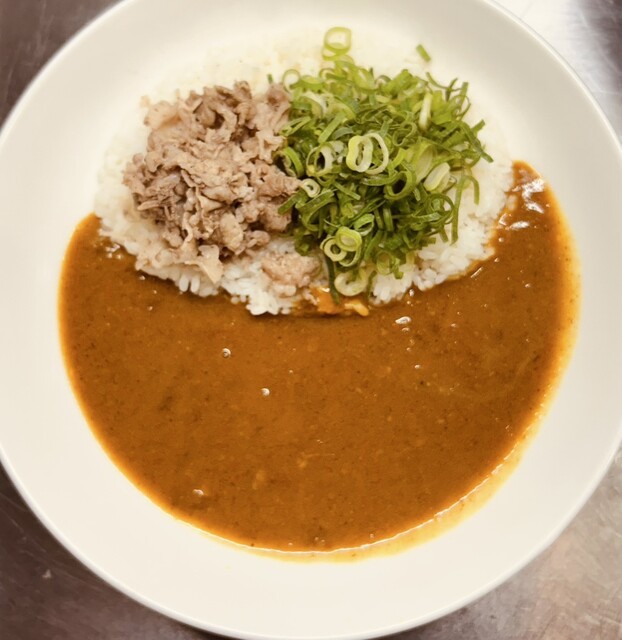
The approach is pure station Osaka: ticket gates, commuter flow, food alleys, and the quick calculation of whether there is time for curry before the next train. Inside Aji no Koji on JR Shin-Osaka’s first floor, the curry-counter ritual is stripped to essentials: sit, order, eat with pace, make room for the next person. This is not a long-table dining room or chef-led tasting format, but Japanese station-meal tradition, where concentration matters more than comfort and repeatability is part of the appeal.
That setting explains the restaurant’s usefulness. Shin-Osaka is not the city’s late-night pleasure quarter or old merchant heart; it is Osaka’s rail hinge, where Kansai arrivals, business travelers, and local commuters overlap. Curry works here because it asks for little ceremony: compact, warming, and easy to understand. The better counters distinguish themselves through balance, spice structure, and how well the plate holds attention after the first spoonfuls.
A seven-seat curry counter built around the station-meal ritual
Osaka’s casual dining grammar is unusually strong at counters: kushikatsu, ramen, udon, takoyaki, standing bars, and curry all rely on a compact relationship between cook, plate, and diner. A seven-seat counter intensifies that rhythm, encourages solo dining and small parties, and changes the etiquette. Lingering reads differently than in a hotel dining room; the point is to eat decisively, clear the seat, and let the queue move.
Moja Curry Shin osaka honten fits that grammar. Its category is curry, its space is counter seating, and private rooms are not part of the format. That matters because Japanese curry ranges from cafeteria plates to highly personal spice shops with destination followings. A small counter inside a major rail station sits between those worlds: accessible for a tight itinerary, specific enough to reward a deliberate stop.
The JPY 1,000 to JPY 1,999 bracket for both lunch and dinner places it in a useful Osaka tier: above the cheapest station standbys, far below reservation-led dining rooms. Nearby quick-meal peers Teuchi Men Yasuda, Tai Paitan Ramen ○de▽, and Jonetsu Udon Sanshu Shin'osaka ten sit under JPY 999, while de tout PAINDUCE Ekimarushie shinōsaka ten overlaps the lower casual range. Curry here competes less on length of experience than on whether the plate feels purposeful enough to choose over noodles or bakery fare in the same travel window.
Recognition matters because curry is a crowded field in western Japan
The relevant trust signal is not ceremony, celebrity, or a long biographical arc. It is selection. The restaurant was chosen for Tabelog Curry WEST “Tabelog 100” in both 2023 and 2024, with a Tabelog score of 3.69 attached to the listing. In a dense category, repeat recognition is a useful filter: it suggests a counter that regular diners and curry-focused users continue to notice, not merely a convenient station address.
That distinction matters in Osaka, where casual food fame can flatten into broad city clichés. Curry occupies a quieter lane than takoyaki or okonomiyaki, but has serious local depth: spice-curry shops, European-style roux counters, old-school kissaten plates, and rail-station specialists all carry different expectations. Read this address not as a grand dining occasion, but as a disciplined expression of a specific Osaka habit: a compact, repeatable meal with enough spice and customization to create loyalty.
The restaurant’s description points to a house curry built on spices, a slow-cooked roux, and customizable toppings. That language matters as genre. Japanese curry is judged by how the sauce carries sweetness, heat, and depth without collapsing into heaviness; toppings add personal rhythm. Some diners want comfort, others heat, others texture. A counter like this succeeds when the plate handles those variations without losing its base identity.
For a broader Osaka food itinerary, this is a useful counterpoint to planned meals. Compare it with bakery-driven station eating at 52CHO-ME BAKERY, casual snacking culture around 551 Horai (551蓬莱), or sit-down Italian at a canto (Italian). For a wider map, use Our full Osaka restaurants guide, then layer in Our full Osaka bars guide, Our full Osaka hotels guide, Our full Osaka experiences guide, and Our full Osaka wineries guide if the trip extends beyond the station-and-supper circuit.
How to use it in an Osaka itinerary
The strongest case for Moja Curry Shin osaka honten is timing. It suits a traveler arriving by rail who needs a proper meal without reservation logistics. Reservations are unavailable for dining in, while take-out reservations are available. The room is non-smoking, children are welcome, and payment is narrow in a way that matters in Japan: credit cards and electronic money are not accepted, while PayPay is accepted. Paid parking is nearby, but this is plainly a rail-station choice, not a car-first plan.
The JR Shin-Osaka Station address shapes expectations. This is not the place for a leisurely night before cocktails; it is where a credible curry meal fits into a transit day without surrendering to anonymous convenience food. The year-end closure from December 27 to January 4 matters for winter travel, especially because Shin-Osaka becomes a pressure point during holiday movement.
Its limitations are part of the recommendation. Seven seats means little privacy, no group sprawl, and a pace favoring diners who understand counter etiquette. That is why it works. In a city where casual meals often carry as much local meaning as formal ones, this counter offers a sharp lesson in Osaka efficiency: curry as a brief, focused ritual, recognized within western Japan’s curry field and practical between trains.
Readers comparing Japanese casual formats beyond Osaka can cross-reference [Curry Senmon Ten] Maruyama Kyoju. in Sapporo, [ki:] in Kyoto, -Grilled beef Sukiyaki- KAMAKURA TANUKIAN 鎌倉 たぬき庵 in Kamakura. 鮪と炭火焼き うお炭 秋葉原店 in Tokyo.know in Kumamoto, and (Shoku) Vietnam in Kawasaki. For non-Japan comparisons in compact, casual Japanese-adjacent formats, see Jōdo Saké Bar in Los Angeles and Onigiri Time in Pasadena. Within Osaka’s broader casual range.cafe and 99 Pizza Napoletana Gourmet show how different formats solve the same traveler problem: a meal with character, without turning the day around.
Just the Basics
Comparable venues in the metro at similar price points.
| Venue | Cuisine | Price | Notes |
|---|---|---|---|
| Moja Curry Shin osaka hontenThis venue — the venue you are viewing | Yodogawa, Japanese Curry | $ | Not listed |
| Spice Curry Babiru no To | Chūō, Spice curry & Indian-style curry | $ | Not listed |
| ANNAPURNA | Kita, Traditional Indian Curry House | $ | Not listed |
| Satch's Curry | Kita, Indian-style Curry Shop | $ | Not listed |
| Osaka Halal Restaurant | Not listed | $ | Nishiyodogawa, Traditional Pakistani Halal Restaurant |
| Umaiya Takoyaki | Tenma, Traditional Osaka Takoyaki | $ | Not listed |
Recognition history
Dated appearances from independent guides and award organizations, with the underlying list record or original source where available.
Tabelog 100 #21 · No. 21
Tabelog · Tabelog 100 - Curry - WEST - 2024
Continue exploring
More in Osaka
Restaurants in Osaka
Browse all →

Bars in Osaka
Browse all →
Hotels in Osaka
Browse all →

Wineries in Osaka
Browse all →
At a Glance
- Cozy
- Well Known
- Solo
- Family
- Casual Hangout
- Standalone
Compact counter-only setting with just seven seats, creating a casual, quick-turnover curry stop rather than a leisurely dining room.