
Tabelog 100 #4
Our verdict
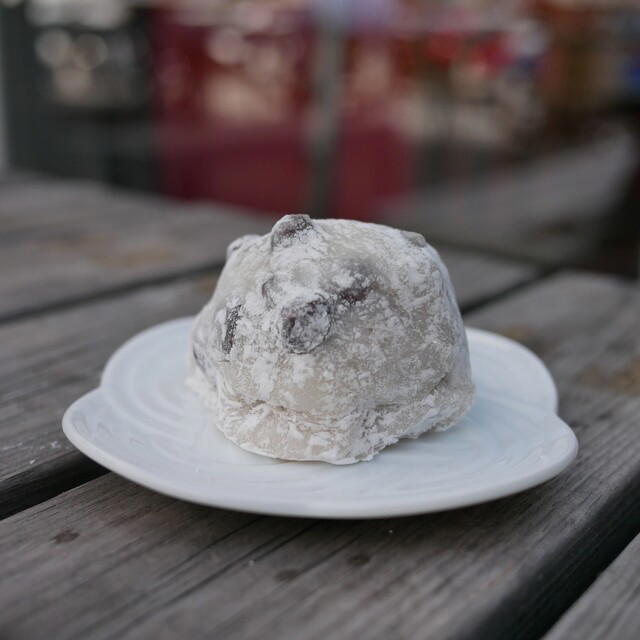
Miyoshiya places Kisarazu’s wagashi culture in a modest, practical register: Japanese traditional sweets, daifuku, and takeaway service rather than ceremony. Its 2023 selection for Tabelog 100 Japanese traditional sweets / Japanese sweets cafe EAST gives it a clear signal for travelers reading Chiba beyond seafood and station dining.

Pearl is the En Primeur Club membership app, where members save venues, book tables and use the concierge.
The menu
What to order
- Salted bean daifuku
- Uguisu mochi
- Inari sushi
- Red rice (sekihan)
A small sweets-shop format changes the rhythm of wagashi. The scale is domestic rather than theatrical, closer to a neighborhood errand than a formal dessert course. In Kisarazu, where visitors often frame eating around quick meals or transit, a sweets shop like Miyoshiya points to another Japanese habit: buying something precise, portable, and seasonal-adjacent without turning the stop into an event.
Wagashi in Kisarazu works as a local errand, not a tasting-menu detour
Japanese traditional sweets sit in a different economy from high-end dining. Price signals are lower, turnover is practical, and the craft is judged through repeatability: rice texture, bean paste balance, wrapping, and how well the item travels. Miyoshiya is categorized around Japanese traditional sweets, daifuku, and cafeteria service. That matters for travelers because the experience belongs to everyday Japan rather than the reservation-led dining tier.
The useful comparison is not with luxury dessert counters in Tokyo, but with regional specialists that make a short stop feel justified. Miyoshiya is recorded in the 2023 Tabelog Hyakumeiten source for Japanese traditional sweets, a recognition that places it inside a sweets category rather than a general restaurant ranking. The listed score of 3.60 also gives a grounded reading: this is a category-specific address with a clear local role, not a venue asking to dominate a whole itinerary.
Ingredient sourcing is the quiet center of wagashi even when farms and producers are not named. Daifuku depends on rice, beans, sugar, and handling rather than expensive garnishes. That makes regional sweet shops revealing: the craft is in the proportion and the day’s production discipline. A low price band in this category does not imply casual standards; it reflects how wagashi is bought in Japan, often as a small gift, a family snack, or a simple takeaway-style purchase.
The Kisarazu sweets stop for travelers who already understand the train-station meal
Kisarazu’s food map is easy to flatten into convenience: quick noodles, casual restaurants, and simple stops before or after crossing Tokyo Bay. The better reading is more layered. Japanese cities often preserve small specialist food shops because locals use them repeatedly, and visitors benefit when they stop treating every meal as a destination dinner. Miyoshiya fits that pattern: a compact sweets address with a practical format built around Japanese traditional sweets, daifuku, and cafeteria use.
Compared with other supplied regional options such as Mura no Pizza Ya Campagna, cuud Terminal 1, and Ramen Hamano Ya, Miyoshiya belongs to a different decision category. Its listed budget is Dinner: - JPY 999; Lunch: - JPY 999, but the appeal is not simply price. A bowl of ramen solves lunch; daifuku solves the gap between transit and dinner, or the need for a small edible souvenir that does not require a full dining slot.
That distinction matters for premium travelers. Not every good food stop needs a chef narrative, wine pairing, or counter seat. In Japan, the sweets errand can be as culturally legible as a formal meal, especially in smaller cities where specialist shops carry neighborhood memory. The editorial case for Miyoshiya rests on that modesty: it asks for attention to form, not spectacle.
How to fold it into a Kisarazu day
The cleanest use is as a short daytime stop rather than a meal anchor. It suits travelers building a Kisarazu plan around several categories: start with Our full Kisarazu restaurants guide, then check Our full Kisarazu hotels guide, Our full Kisarazu bars guide, Our full Kisarazu wineries guide, and Our full Kisarazu experiences guide for the wider city plan. The right expectation is simple: this is a sweets stop with everyday utility, not a long-format restaurant.
For readers mapping Japanese dining across styles, the contrast is useful. A formal regional meal, a counter-style address, and a destination dining room all occupy different time commitments and price expectations. Miyoshiya sits at the opposite end: narrow category, small spend, clear local function.
The same logic applies across casual Japan and Japanese-influenced food more broadly. Cafes, curry shops, hamburger counters, mountain huts, sake bars, and onigiri specialists each solve a different travel need. In Kisarazu, the decision is smaller and sharper: make room for wagashi if the day has space for a focused local purchase.
Frequently asked questions
Is Miyoshiya okay with children?
Miyoshiya is a straightforward sweets stop in Kisarazu, with Japanese traditional sweets, daifuku, and cafeteria categories listed. Its 2023 Tabelog Hyakumeiten record for Japanese traditional sweets also points to a shop with broad appeal. Check the venue's official channels for the latest details.
What's the vibe at Miyoshiya?
It reads as a practical Japanese sweets shop rather than a sit-down destination. Its setting in Kisarazu and its 2023 Tabelog Hyakumeiten recognition suggest a local, daytime stop built around wagashi rather than a formal dining room.
Is Miyoshiya expensive?
Pricing at Miyoshiya is listed as - JPY 999 - JPY 999 View spending breakdown.
What is Miyoshiya known for?
Miyoshiya is known for Japanese traditional sweets, daifuku, and cafeteria service in Kisarazu.
In Context: Similar Options
Comparable venues by cuisine and price in the same metro.
| Venue | Cuisine | Price | Awards | Notes |
|---|---|---|---|---|
| MiyoshiyaThis venue (the venue you are viewing) | Traditional Japanese wagashi & daifuku shop | $1–10 | Tabelog 100 #4 | Not listed |
| Rishiri Ramen Miraku (利尻らーめん 味楽) | Rishiri-Style Yaki Shoyu Ramen | $10–20 | Not listed | Kohoku-Ku |
| Chuka Soba Shigure Isezaki choujamachi honten | Ramen (Chuka soba) | $10–20 | Tabelog 100 #89 | Naka |
| Torimeshi Torito Toyosu shijou | Chicken-focused Japanese casual dining | $1–10 | Tabelog 100 #6 | Kōtō |
| Raamen Mu | Traditional Ramen & Tsukemen Counter | $10–20 | Tabelog 100 #7 | Kanagawa |
| Menba Hamatora | Ramen | $1–10 | Tabelog 100 #50 | Kanagawa |
Recognition history
Dated appearances from independent guides and award organizations, with the underlying list record or original source where available.
Tabelog 100 #4 · No. 4
Tabelog · Tabelog 100 - Japanese traditional sweets / Japanese sweets cafe - EAST - 2023
Continue exploring
More in Kisarazu
Restaurants in Kisarazu
All restaurants in Kisarazu →


Bars in Kisarazu
Browse all →





Details
- Classic
- Cozy
- Solo
- Family
- Casual Hangout
- After Work
- Standalone
- Historic Building
- A La Carte
- Counter Dining
Current opening hours
- Monday
- 8:40 AM–5 PM
- Tuesday
- 8:40 AM–5 PM
- Wednesday
- 8:40 AM–5 PM
- Thursday
- 8:40 AM–5 PM
- Friday
- 8:40 AM–5 PM
- Saturday
- 8:40 AM–5 PM
- Sunday
- Closed
Hours can change for holidays and private events. Hours as of .
A long-established, house-like Japanese confectionery with a nostalgic, old-style interior where guests quietly enjoy freshly made wagashi and tea; casual, unpretentious, and relaxed rather than cafe-trendy.