Mitla Cafe
Mitla Cafe occupies a specific and underappreciated place in the Los Angeles Mexican dining tradition — a San Bernardino-rooted institution whose influence on Southern California's relationship with the hard-shell taco extends far beyond its modest footprint. For visitors tracing the city's deeper culinary currents rather than its newest openings, this is a reference point worth understanding.
Pearl is the En Primeur Club membership app — saves, bookings, and concierge access live there. Same editors, same standards.
- Address
- Los Angeles, United States
- Directions
- Get directions
 Saves & bookings on Pearl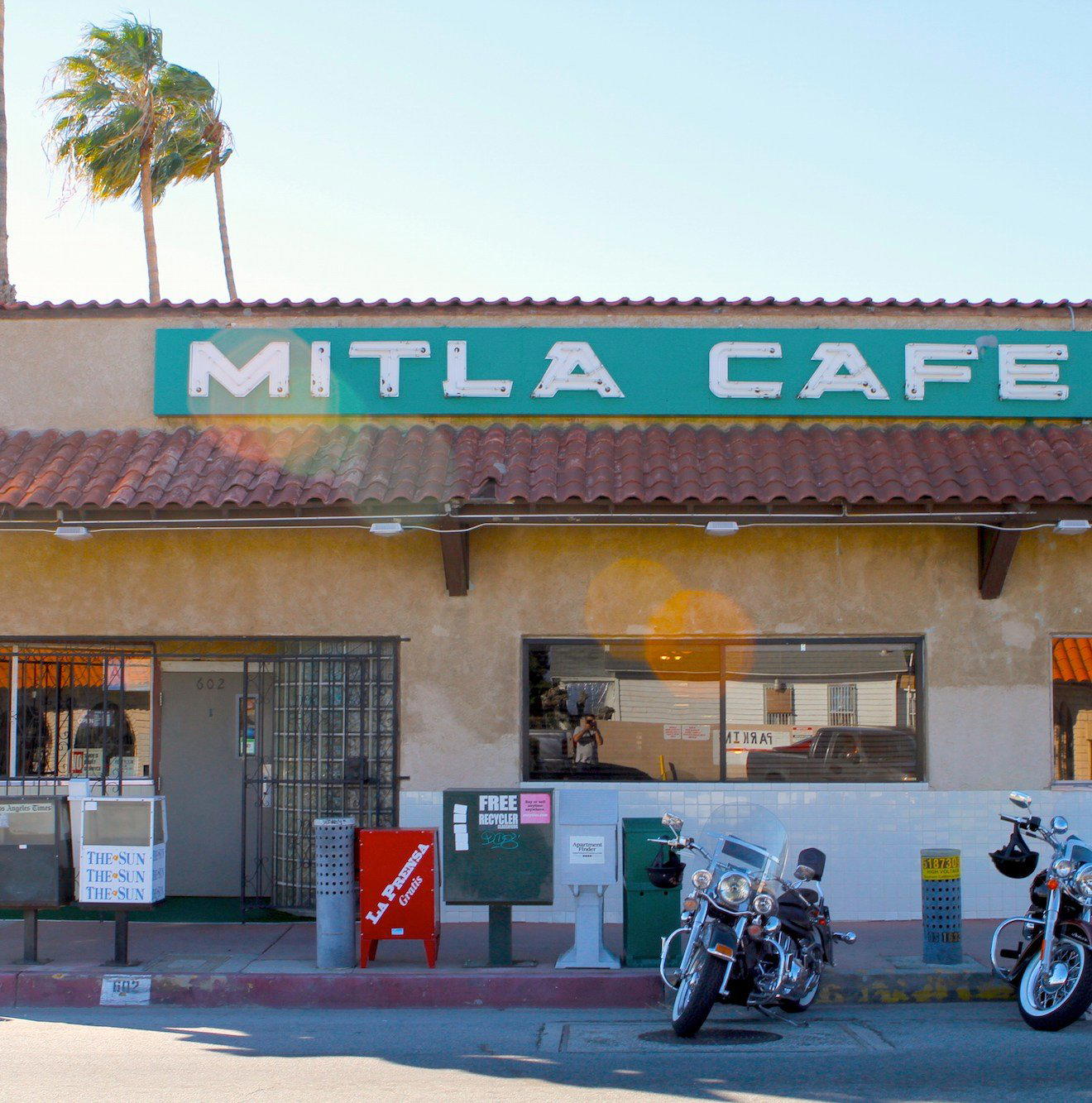
A Counter, a Griddle, and the Architecture of a Los Angeles Staple
There is a version of Los Angeles dining that does not appear on tasting menus or in hotel concierge binders, and Mitla Cafe represents it with unusual clarity. In a city where dining rooms are frequently designed to generate content, rooms like this one carry a different authority — the kind that comes from outlasting trends rather than setting them.
Los Angeles is often discussed through the lens of its newest arrivals: the omakase counters of Hayato, the ingredient-obsessed tasting menus of Kato, the technical ambition of Somni. Those restaurants matter, and they occupy the upper tier of a genuinely competitive dining city. But the older stratum of the city's food culture — the Mexican American restaurants that have operated continuously for generations, is where a significant part of Los Angeles's actual culinary identity was formed, and Mitla Cafe belongs to that stratum.
Where the Ingredients Speak to a Longer Tradition
The editorial case for examining Mitla Cafe through the lens of ingredient sourcing is not simply about provenance in the contemporary farm-to-table sense. It is about what a kitchen's commitment to particular raw materials, repeated over decades, tells you about a culinary tradition. Mexican American cooking in Southern California developed its own regional grammar, distinct from interior Mexican cuisine, distinct from Tex-Mex, shaped by the specific availability of ingredients in California's agricultural belt and the preferences of communities that had been cooking this way long before the state's restaurant industry discovered the category.
The hard-shell taco, which became a template replicated across American fast food, has a more specific and located origin story than its ubiquity suggests, and Mitla Cafe is part of that story. Glen Bell, who later founded Taco Bell, is documented in public record as a frequent customer at Mitla Cafe in San Bernardino during the early 1950s, studying the kitchen's approach before developing his own version for mass production. That detail matters not as trivia but as evidence of what this kitchen was doing with ingredients and technique at a time when Mexican American cooking was largely invisible to the mainstream food industry. The sourcing and preparation logic that operated here influenced a chain that now serves tens of millions of people daily, which is a different kind of credential than a Michelin star, and in some ways a more consequential one.
Corn, the chiles, the lard, the dried spices that anchor this style of cooking are not exotic or imported. They are agricultural staples of the California and Southwest corridor, and the discipline is in the proportion, the preparation sequence, and the consistency of execution over time. That consistency is itself a form of sourcing philosophy: a commitment to doing the same thing well rather than reinventing the menu seasonally. Compare that approach to the hyper-local sourcing programs at places like Blue Hill at Stone Barns or Single Thread Farm in Healdsburg, where the sourcing narrative is foregrounded and priced accordingly. Mitla Cafe operates on a different logic, the sourcing is embedded in the tradition, not announced as a selling point.
Where Mitla Cafe Sits in the Broader Los Angeles Picture
Los Angeles's premium dining tier is well-documented: Providence in Contemporary Seafood, Osteria Mozza in Italian, a cluster of ambitious tasting-menu formats that compete with the tier occupied nationally by Le Bernardin in New York City, Alinea in Chicago, or The French Laundry in Napa. Mitla Cafe does not compete with those restaurants, and the comparison would be a category error. It occupies a different register entirely: the kind of long-running, community-rooted institution that cities either preserve or lose, and rarely notice until they are gone.
In that sense, it shares more in common with the institutional character of places like Emeril's in New Orleans or Bacchanalia in Atlanta than with its Los Angeles contemporaries, not in cuisine or price, but in what it represents to the local dining record. These are restaurants that function as primary documents of a city's food culture, not footnotes to it. See our full Los Angeles restaurants guide for a broader account of where Mitla Cafe sits alongside the city's other significant dining tiers.
For visitors who have already covered the high-end circuit, who have sat at the counter at Hayato or worked through the wine list at Osteria Mozza, the case for Mitla Cafe is simple: it is the kind of restaurant that sharpens your understanding of everything else you have eaten in the city. The comparison set for venues like Atomix in New York City or Addison in San Diego is obvious and well-catalogued. The comparison set for Mitla Cafe requires more editorial work, and that work is worth doing.
Planning a Visit
What the historical and public record confirms is that this is a San Bernardino institution with documented significance to the development of Mexican American cuisine in Southern California, the logistics details should be treated as variable until confirmed.
| Venue | Cuisine | Price Tier | Format |
|---|---|---|---|
| Mitla Cafe | Mexican American | Not confirmed | Counter/casual dining |
| Kato | New Taiwanese, Asian | $$$$ | Tasting menu |
| Hayato | Japanese | $$$$ | Omakase counter |
| 8½ Otto e Mezzo Bombana | Italian | $$$$ | Full-service dining |
| Lazy Bear in San Francisco | New American | $$$$ | Ticketed tasting menu |
| The Inn at Little Washington | American | $$$$ | Full-service dining |
How It Stacks Up
| Venue | Cuisine | Price | Awards |
|---|---|---|---|
| Mitla CafeThis venue — the venue you are viewing | This venue | Not listed | Not listed |
| Kato | New Taiwanese, Asian | $$$$ | Michelin 1 Star |
| Hayato | Japanese | $$$$ | Michelin 2 Star |
| Vespertine | Progressive, Contemporary | $$$$ | Michelin 2 Star |
| Camphor | French-Asian, French | $$$$ | Michelin 1 Star |
| Gwen | New American, Steakhouse | $$$$ | Michelin 1 Star |
Continue exploring
More in Los Angeles
Restaurants in Los Angeles
Browse all →
Bars in Los Angeles
Browse all →
Hotels in Los Angeles
Browse all →
Wineries in Los Angeles
Browse all →
At a Glance
- Classic
- Well Known
- Rustic
- Casual Hangout
- Family
- Historic Building
Amiable, cavernous family cafe with a homey, traditional atmosphere.