
Michelin Plate
Our verdict
Min He Nan Huan Xi occupies the second floor of MIXC East Alley on North Shanxi Road in Jing'an, a neighbourhood defined by mixed-use retail and a growing selection of chef-led dining rooms. The F&B group behind it has built its identity around specialised sourcing and regional interpretation, and this location continues that thread inside a contemporary shopping precinct.

Pearl is the En Primeur Club membership app, where members save venues, book tables and use the concierge.
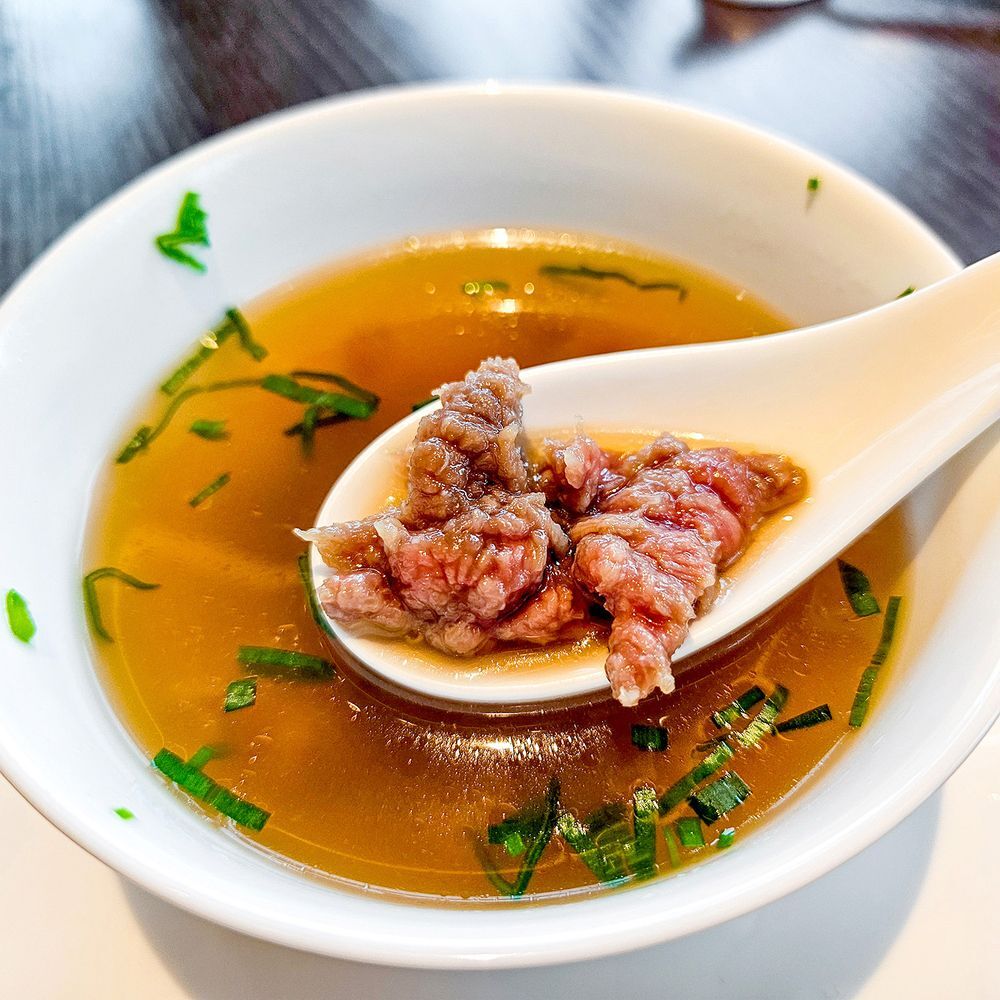
North Shanxi Road in Jing'an runs through one of Shanghai's fastest-evolving retail corridors, where mall dining no longer signals compromise. Min He Nan Huan Xi sits on the second floor of MIXC East Alley, a mixed-use precinct that houses both international fashion tenants and locally-run restaurant concepts. The F&B; group behind the venue has built its portfolio around ingredient provenance and technique-driven regional cooking, and this location extends that approach inside a format designed for the surrounding demographic, office workers, repeat locals, and mall visitors looking for more than standardised chain dining.
The venue's position in a retail environment shapes its competitive set. Unlike standalone heritage operations or chef-driven tasting counters scattered across the former French Concession, Min He Nan Huan Xi operates inside a traffic model where walk-in discovery and repeat convenience matter as much as accolades. That context places it alongside other mall-anchored concepts that have raised their culinary credibility through sourcing discipline and menu depth rather than atmospheric theatrics.
Ingredient Provenance and Menu Structure
The editorial angle here is sourcing. The group's broader identity centres on direct relationships with suppliers, fishing ports, vegetable cooperatives, and small-scale producers, and the kitchen translates those inputs into dishes that respect ingredient seasonality and regional cooking logic. The menu format is not publicly detailed, but the group's other locations lean on set-course structures and à la carte offerings that shift with harvest cycles and market availability. Expect proteins handled with restraint, vegetables treated as primary rather than filler, and preparations that prioritise clarity over fusion embellishment.
In the context of Shanghai's dining scene, this approach sits between two poles: high-profile destination restaurants with published tasting menus and Michelin endorsements, and neighbourhood joints that prioritise volume and price accessibility. Min He Nan Huan Xi occupies the middle tier, more polished than casual canteens, less rigid than omakase-style counters, and priced to allow repeat visits rather than once-a-year splurges. Comparable operations might include 102 House (Cantonese), which similarly balances sourcing credibility with a format accessible to regulars, or 100 Century Avenue Cantonese, where ingredient quality drives menu decisions inside a polished but not overwrought setting.
That structure can work in the venue's favour if the team maintains ingredient standards and seasonal rotation, but it also limits differentiation in a city where chef-driven narratives and award visibility drive booking intent.
The Dining Room and Service Format
Second-floor mall locations typically prioritise sightlines, noise management, and table turnover, and Min He Nan Huan Xi's design likely reflects those practical constraints. The space benefits from natural light and pedestrian flow, but the acoustic environment and table density remain variables for prospective diners. Service format at group-run venues in this tier tends toward efficient rather than theatrical, staff trained in dish explanations and pacing, but not the prolonged tableside interaction common at tasting-menu counters. That efficiency suits the surrounding neighbourhood, where lunch service and early-evening bookings make up a significant share of covers.
For visitors exploring Shanghai's restaurant scene, Min He Nan Huan Xi offers a snapshot of how premium ingredients and regional cooking discipline are adapting to retail real estate. It's not a heritage courtyard operation, and it doesn't compete with the city's Michelin-starred tasting rooms for international recognition. Instead, it represents a growing tier of venues that prioritise sourcing credibility and menu depth inside accessible formats, serving repeat locals and curious travellers willing to venture beyond the well-documented fine-dining circuit.
Jing'an's dining density means the venue sits within walking distance of 102 House Shanghai and other chef-led concepts that have raised the neighbourhood's culinary profile over the past decade. The broader retail precinct also houses cocktail bars and boutique hotels, making North Shanxi Road a viable base for visitors who want to stay outside the Bund corridor but maintain access to credible dining.
The F&B; group's award recognition, while not venue-specific, signals operational maturity and a track record that extends beyond this single location. That institutional credibility matters in a market where new openings proliferate and closure rates remain high. The group's ability to sustain multiple sites while maintaining ingredient standards suggests a supply-chain infrastructure and management depth that independent operators often struggle to replicate.
For diners weighing options in Jing'an, Min He Nan Huan Xi works as a midweek dinner or weekend lunch option where ingredient quality and regional cooking discipline take priority over décor spectacle or chef-driven narrative. It's a venue that rewards repeat visits and benefits from local knowledge, understanding seasonal menu shifts, knowing which proteins arrive fresh that week, and recognising when the kitchen is executing at its finest. That dynamic makes it more suited to residents than first-time visitors on tight itineraries, though travellers with extended Shanghai stays and an interest in sourcing-driven cooking will find it a useful counterpoint to the city's higher-profile tasting rooms and heritage operations.
Frequently asked questions
Can I bring kids to Min He Nan Huan Xi?
The restaurant sits inside MIXC East Alley on North Shanxi Road, a second-floor mall space that typically accommodates families. Hunan cooking runs spicy by default, so confirm heat tolerance and ask for modifications when ordering.
Is Min He Nan Huan Xi better for a quiet night or a lively one?
Second-floor mall venues in Jingan prioritise table turnover and noise management; expect ambient retail sound and visible foot traffic. The space leans functional rather than intimate, suited to informal meals or group dinners rather than anniversary dates.
What's Min He Nan Huan Xi known for in terms of accolades?
Min He Nan Huan Xi has received recognition including: The F&B; group has been active in....
Where is Min He Nan Huan Xi located?
Min He Nan Huan Xi is located at 2F, MIXC East Alley, 111 North Shanxi Road, Jingan, Shanghai, Shanghai Municipality, CHN, Shanghai.
Do I need a reservation for Min He Nan Huan Xi?
Walk-ins are generally feasible at mall-anchored restaurants, though weekend evenings in Jingan see higher traffic. Booking a table ahead eliminates wait time, especially if you plan to visit during peak hours or with a larger party.
What has Min He Nan Huan Xi built its reputation on?
The F&B; group behind the restaurant anchors its identity in direct relationships with fishing ports and vegetable cooperatives. That sourcing strategy shapes the menu, offering traceability in a category where supply-chain transparency remains uncommon.
Is Min He Nan Huan Xi allergy-friendly?
Hunan cuisine relies on chilli oil, fermented bean pastes, and peanut-based sauces; cross-contact risk is high in wok kitchens. Staff may accommodate ingredient swaps, but diners with severe shellfish, nut, or soy allergies should flag concerns before ordering and confirm preparation procedures directly.
At-a-Glance Comparison
Comparable venues by cuisine and price in the same metro.
| Venue | Cuisine | Price | Awards |
|---|---|---|---|
| Min He Nan Huan Xi | Fujian Cuisine | $50–100 | Michelin Plate |
| Il Ristorants | Contemporary Italian Fine Dining | $150–200 | Not listed |
| Il Ristorante - Niko Romito | Contemporary Italian Fine Dining | $150–200 | 1 Michelin Star · Wine Spectator Best of Award of Excellence |
| Bao Li Xuan | Haute Cantonese Fine Dining | $150–200 | 2 Michelin Stars · La Liste Top Restaurants |
| Rong Ji 95 | Modern Seafood Bistro | $50–100 | Star Wine List |
| Nanxiang | Traditional Shanghai Xiaolongbao | $10–20 | Not listed |
Recognition history
Dated appearances from independent guides and award organizations, with the underlying list record or original source where available.
Michelin Plate
Michelin
Continue exploring
More in Shanghai
Restaurants in Shanghai
All restaurants in Shanghai →
Bars in Shanghai
All bars in Shanghai →
Details
- Elegant
- Classic
- Sophisticated
- Business Dinner
- Celebration
- Special Occasion
- Group Dining
- Standalone
- A La Carte
- Tea
Classy décor with a refined, upscale dining atmosphere.