Mildreds

We're Smart World 2 Radishes
Our verdict
Open since 1988, Mildreds has grown from a single Soho spot into a four-site London institution for plant-based dining. The menu spans tandoori 'chicken' with black dahl and roti to Sri Lankan curry and vegetarian sausage with mash, drawing on global references without losing a sense of place. It occupies a distinct tier in London's vegetarian scene: accessible, consistent, and long-established enough to have shaped the category.

Pearl is the En Primeur Club membership app, where members save venues, book tables and use the concierge.
The menu
What to order
- Kimchi Gyoza Dumplings
- Kiri Hodi Pilau
- Artichoke Caesar Salad
- Sticky Toffee Pudding
- Pistachio Cheesecake
A Different Pace on Lexington Street
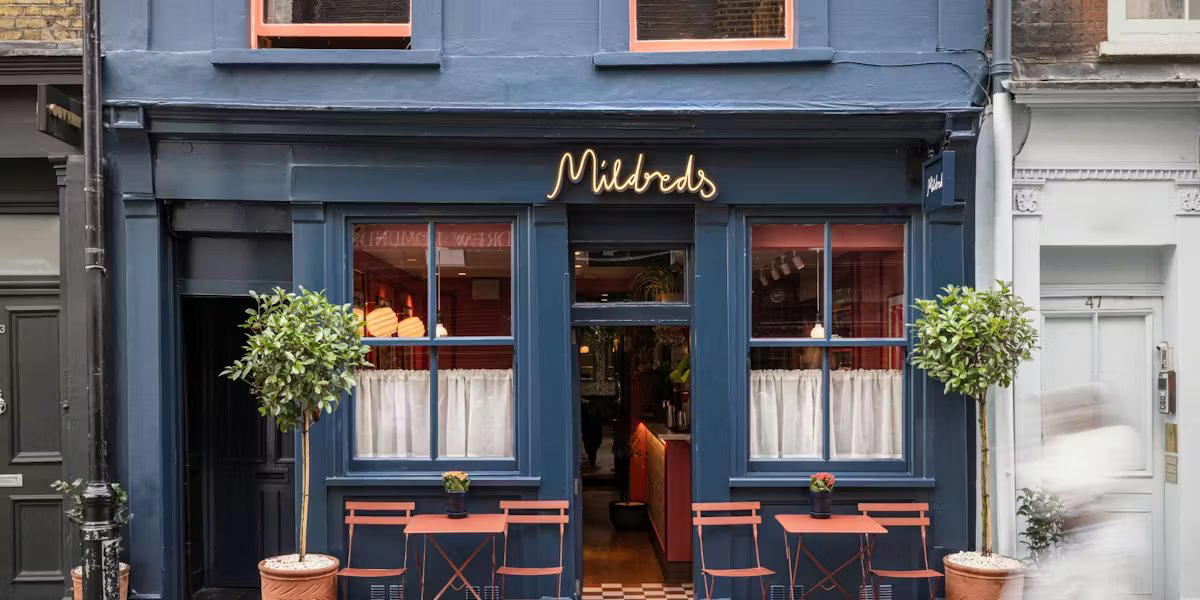
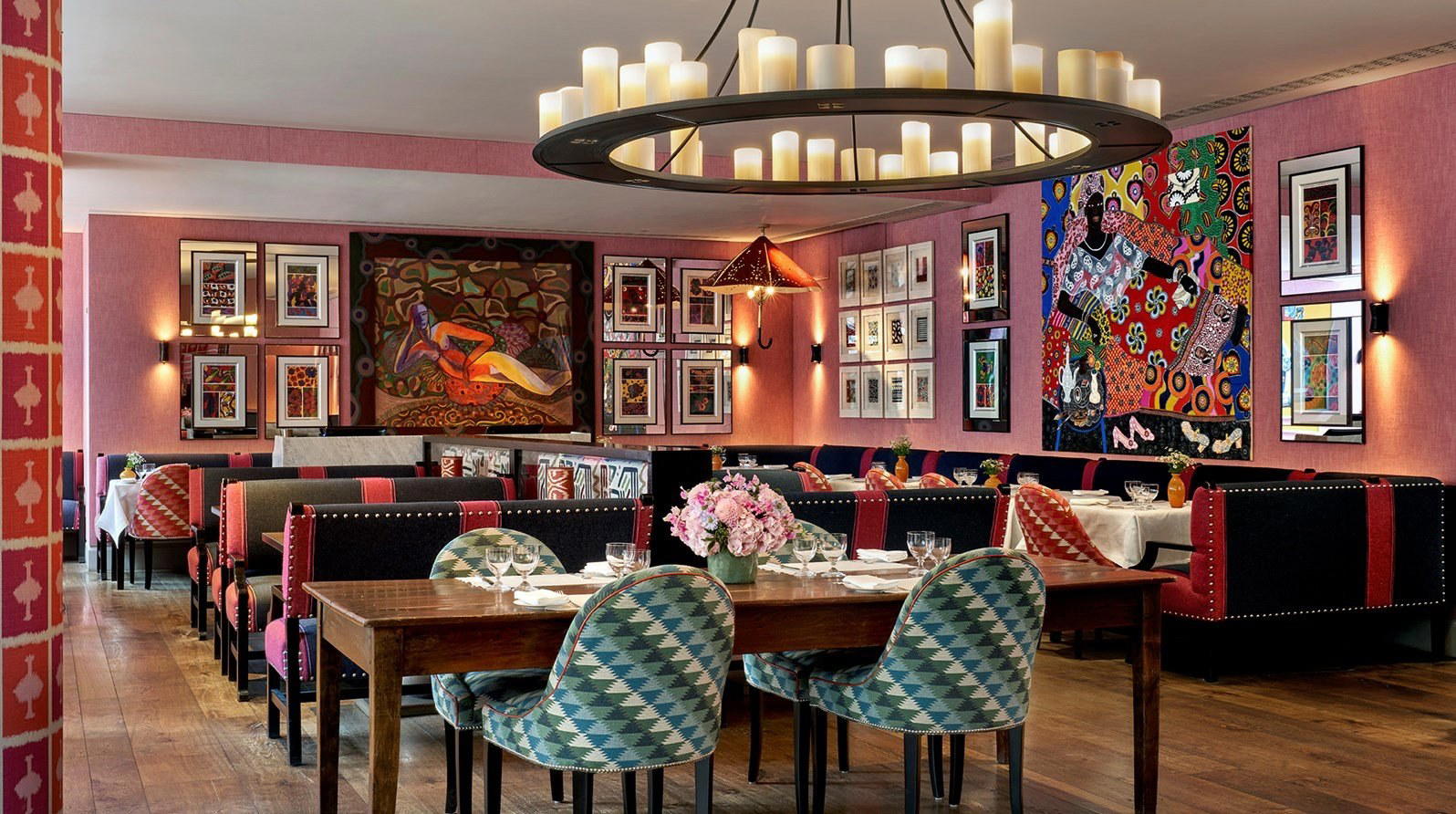
Lexington Street in Carnaby sits at the quieter edge of Soho's grid, away from the louder pedestrian corridors. The neighbourhood has long supported independent restaurants that trade on regulars rather than footfall, and Mildreds fits that pattern exactly. Walking in, the room signals informality over ceremony: tightly packed tables, a convivial noise level, and no obvious hierarchy between seats. This is not the kind of place where you are steered through a choreographed sequence of courses. The dining ritual here is self-directed, and that is the point.
London's vegetarian dining scene has changed substantially since Mildreds opened its original Soho location in 1988. In the late 1980s, vegetarian restaurants occupied a marginal space in the city's food culture, often associated with health food rather than cooking craft. Mildreds was among the early wave of London venues that treated plant-based food as a serious kitchen proposition rather than an afterthought. That positioning, held consistently across more than three decades, is now a credential in itself. Few restaurants in any category can claim an operating history of that length in a city where attrition is high and rents are structural pressures on every operator.
How the Meal Unfolds
The format at Mildreds is casual and order-led, which shapes the rhythm of a visit in specific ways. There is no tasting menu, no amuse-bouche sequence, and no sommelier intervention. You order what you want, at a pace you set. For a category of dining that has increasingly moved toward high-ticket chef's-menu formats elsewhere in London, this positions Mildreds as something distinct: a place where the meal is assembled by the diner rather than narrated by the kitchen.
The menu draws on a wide international reference pool without pretending to represent any single cuisine faithfully. Tandoori 'chicken' arrives with black dahl, roti, raita, and a carrot salad dressed with black cumin. A Sri Lankan curry comes with sweet potatoes, green beans, roasted cashew, and basmati rice. These are not fusion constructions in the self-conscious sense; they are dishes built around familiar spice logic applied to vegetable and plant-based proteins. The kitchen also maintains what might be called a comfort lane: a vegetarian burger, vegetarian sausage with mashed potatoes and peas. That coexistence of global reference and British comfort register is not accidental. It reflects a long-standing editorial decision to serve a broad constituency rather than signal ambition through menu narrowness.
Contrast this approach with the tightly edited, produce-led menus at places like CORE by Clare Smyth or the technically complex work at Ikoyi, where the meal is a structured argument from first course to last. Mildreds makes no such argument. The meal is what you choose, eaten at the speed you prefer. That is a deliberate format, not an absence of one.
Four Sites, One Consistent Identity
Mildreds now operates four London locations: the original Soho address, plus sites in Camden (9 Jamestown Road, NW1), King's Cross (200 Pentonville Road, N1), and Dalston (1 Dalston Square, E8). The geographic spread is notable. These are not clustered in a single affluent postcode; they cover north London, east London, and the centre, suggesting a deliberate strategy to serve different residential and transit-connected populations rather than maximise concentration in one high-spending neighbourhood.
Multi-site operations in London dining often dilute the original proposition. The challenge is maintaining kitchen consistency and atmosphere coherence when a brand extends beyond a single room. Mildreds has managed this over a long enough timeline to suggest that the formula is genuinely replicable, at least within the city. Each site shares the core menu DNA while adapting to its local context. The Dalston site in particular sits in an area with a dense and ingredient-literate dining population, where expectations for plant-based cooking have been shaped by years of independent competition.
This expansion model places Mildreds in a different category than the single-site London institutions reviewed in our full London restaurants guide. It operates more like a well-managed neighbourhood brand with a clear culinary identity than like a destination restaurant requiring advance planning and occasion framing. Mildreds operates in the registers of regularity and accessibility, which carry their own value in a city where premium dining fatigue is real.
The Broader Vegetarian Dining Context
London's plant-based and vegetarian dining has bifurcated over the past decade. At one end, high-end tasting menu venues now routinely offer full vegetarian or vegan progressions, often with as much kitchen investment as their omnivore counterparts. At the other end, fast-casual plant-based chains have expanded aggressively, competing on price and convenience. Mildreds occupies the middle ground: sit-down, table-service, internationally inflected, and priced accessibly without being positioned as fast food.
That middle tier is not as crowded as it might appear. The economics of casual vegetarian dining in London are not direct; ingredient costs for quality plant-based proteins and produce can approach meat costs, while the price ceiling is lower because of customer expectation. Restaurants that have held this position over time, as Mildreds has, demonstrate something about operational resilience that is worth noting separately from the food itself.
For travellers building a broader London itinerary, Mildreds sits alongside a different set of references than the destination tasting rooms reviewed elsewhere on EP Club. Those planning to visit the UK beyond London might look at L'Enclume in Cartmel or Moor Hall in Aughton for produce-driven tasting menus at the other end of the format spectrum. Closer to London, Waterside Inn in Bray and Hand and Flowers in Marlow represent the classic British occasion-dining format. Mildreds answers a different question entirely: where to eat well on a Tuesday night without advance planning, in a room that does not require a context-setting occasion.
For those exploring London's bar and hotel scene alongside the restaurant circuit, EP Club's full London bars guide and full London hotels guide cover the broader picture. The London experiences guide and wineries guide are also available for those building a more complete itinerary.
Know Before You Go
Flagship address: 45 Lexington St, Carnaby, London W1F 9AN
Other London sites: Camden (9 Jamestown Road, NW1 7BW) · King's Cross (200 Pentonville Road, N1 9JP) · Dalston (1 Dalston Square, E8 3GU)
In operation since: 1988
Format: Casual table service, order-led, no tasting menu
Menu orientation: Fully vegetarian; internationally inspired with British comfort dishes alongside global spice-led plates
Booking: Contact information available at individual sites; Camden (+44 (0)207 482 4200), King's Cross (+44 (0)207 278 9422), Dalston (+44 (0)20 8017 1815)
Nearest tube (Lexington St): Oxford Circus or Piccadilly Circus (both within walking distance)
Frequently asked questions
What should I expect atmosphere-wise at Mildreds?
Mildreds on Lexington Street runs as an informal, table-service restaurant with a convivial noise level and no dress formality. The Soho location has been drawing a mixed, neighbourhood-leaning crowd since 1988. Expect a busy room at peak hours rather than a quiet dinner setting.
Does Mildreds have a Michelin star or similar recognition?
Mildreds has received recognition including: Mildreds started in 1988 in Soho and grew into a mini-chain with now four particularly favourite restaurants in London. Dishes such as tandoori "chicken" with black dahl, roti, raita, carrot and salad of carrots and black cumin or a Sri Lan….
What's the must-try dish at Mildreds?
The tandoori 'chicken' with black dahl, roti, raita, and a carrot salad dressed with black cumin is the dish that best captures the kitchen's approach: global spice logic applied to plant-based proteins. It reads more like South Asian technique than concession food.
Where exactly is Mildreds?
Mildreds is located at 45 Lexington St, Carnaby, London W1F 9AN, United Kingdom, London.
How hard is it to get a table at Mildreds?
Access is easier than at most well-known London addresses, given four sites across Soho, Camden (9 Jamestown Road), King's Cross (200 Pentonville Road), and Dalston (1 Dalston Square). The Soho location draws the highest footfall, so off-peak timing helps. The other three sites offer more flexibility.
What's the defining dish or idea at Mildreds?
The menu runs on global spice references alongside British comfort staples, tandoori preparations and Sri Lankan curry sit alongside vegetarian sausage with mash and peas. The logic is breadth across culinary traditions, with plant-based proteins treated as the main ingredient rather than a substitution.
Is Mildreds good for vegetarians?
The entire menu has been vegetarian since the restaurant opened in 1988, there is no meat section or flex option, this is a dedicated vegetarian restaurant. That makes Mildreds one of the longer-running fully vegetarian operations in London, now across four locations.
Category Peers
Comparable venues nearby, for context on price, style, and recognition.
| Venue | Cuisine | Price | Awards | Notes |
|---|---|---|---|---|
| MildredsThis venue (the venue you are viewing) | 100% Vegan Global Fusion | $20–30 | We're Smart World 2 Radishes | Not listed |
| Tiny Leaf | Organic Zero-Waste Vegetarian | Not listed | Not listed | Newington |
| Singapore Garden | Singaporean & Malaysian Chinese | $20–30 | The Good Food Guide GFG Good | South Hampstead |
| Jamie Oliver Catherine St | Anglo-Mediterranean | $30–50 | The Good Food Guide GFG Good | Aldwych |
| Nonna Maria | Neighbourhood Italian Pizza & Pasta | $20–30 | Not listed | Honor Oak |
| Blanchette | Modern French Tapas | $50–100 | Not listed | Soho |
Recognition history
Dated appearances from independent guides and award organizations, with the underlying list record or original source where available.
We're Smart World 2 Radishes
We're Smart World
Continue exploring
More in London
Restaurants in London
All restaurants in London →
Bars in London
All bars in London →
Hotels in London
All hotels in London →

Details
- Lively
- Trendy
- Well Known
- Energetic
- Casual Hangout
- Group Dining
- Brunch
- Family
- Celebration
- Standalone
- Open Kitchen
- Craft Cocktails
- Beer Program
- Zero Proof
- Organic
- Local Sourcing
- A La Carte
- Small Plates
- Set Menu
- Craft Cocktails
- Specialty Lattes
- Non Alcoholic Sparkling Wine
- Vegan Options
- Vegetarian Friendly
- Gluten Free Options
- Organic Focus
Current opening hours
- Monday
- 9 AM–11 PM
- Tuesday
- 9 AM–11 PM
- Wednesday
- 9 AM–11 PM
- Thursday
- 9 AM–11 PM
- Friday
- 9 AM–11 PM
- Saturday
- 9 AM–11 PM
- Sunday
- 9 AM–10 PM
Hours can change for holidays and private events. Hours as of .
Lively, welcoming atmosphere with friendly staff and informal service; lively energy with a focus on comfort and accessibility.