Middendorf's
Our verdict
On US-51 in the swamp-edged community of Akers, Louisiana, Middendorf's has served thin-fried catfish to generations of families making the drive from New Orleans and Baton Rouge. The restaurant sits at the intersection of freshwater sourcing tradition and South Louisiana roadhouse culture — a place where the fish and the setting are inseparable from each other.

Pearl is the En Primeur Club membership app — saves, bookings, and concierge access live there. Same editors, same standards.
- Address
- 30160 US-51, Akers, LA 70421
- Phone
- (985) 386-6666
- Hours
- Mon–Tue ClosedWed–Sun 10:30 AM–9 PM
- Website
- middendorfsrestaurant.com
- Directions
- Get directions
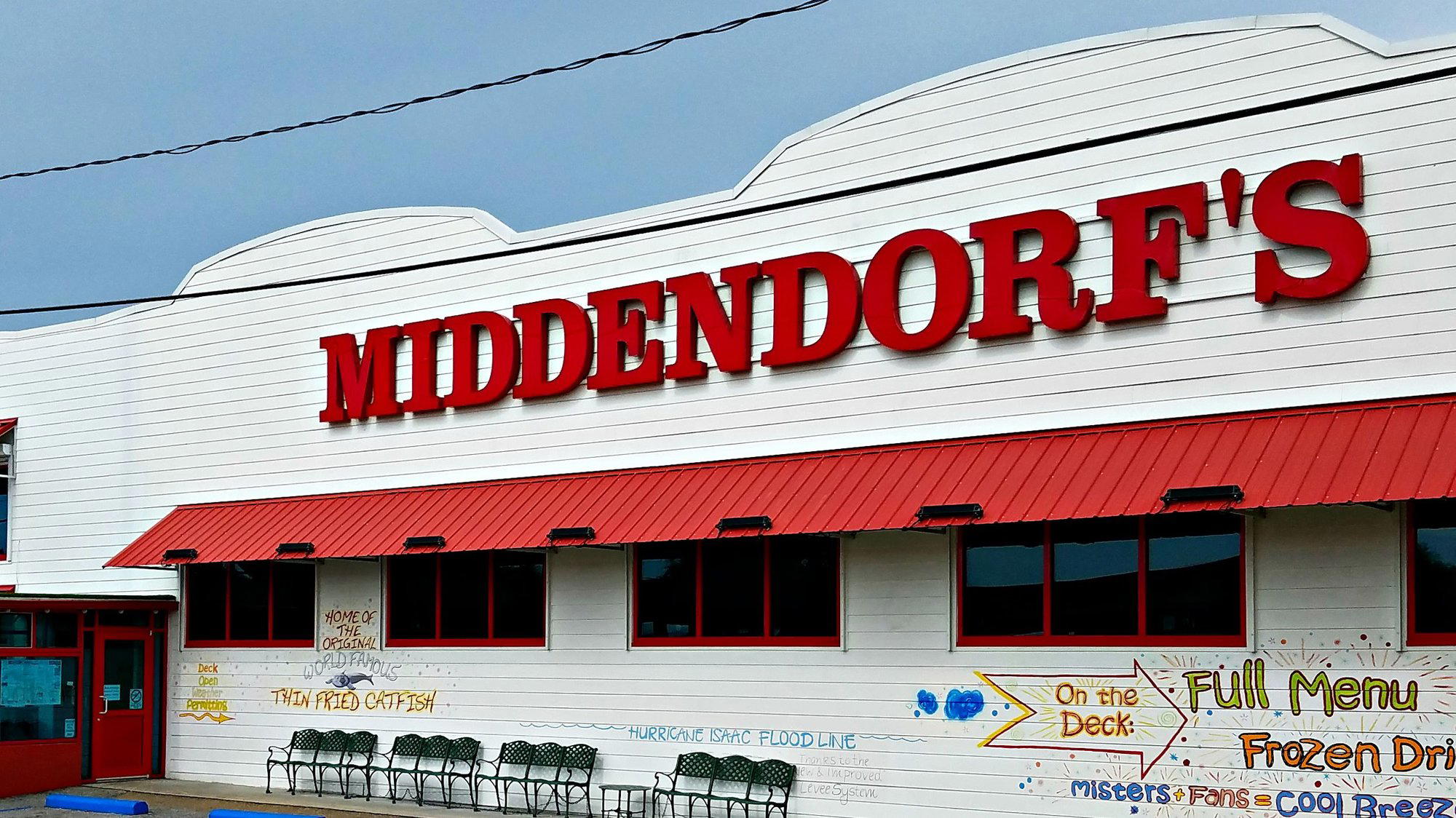
Where the Road Meets the Water
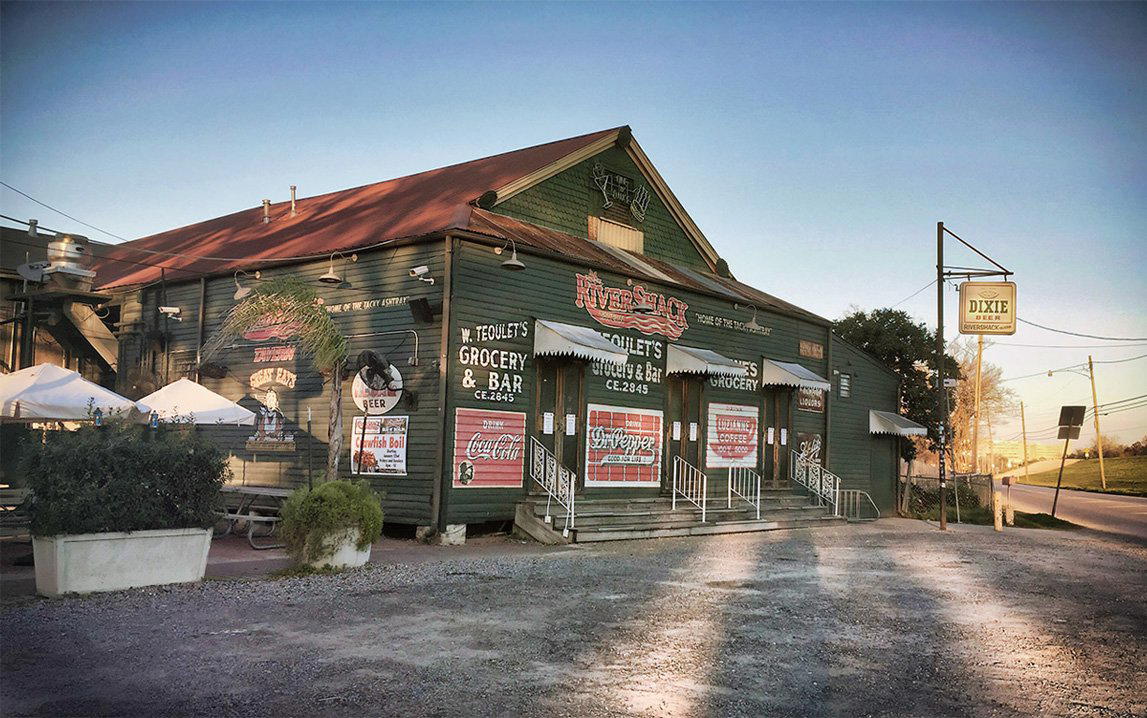
US-51 cuts through the Manchac wetlands like a seam between two versions of Louisiana — the urban south pulling toward New Orleans, the rural north angling toward Baton Rouge. Middendorf's sits at 30160 US-51 in Akers, a community so small it barely registers on most maps, yet the restaurant has drawn a steady current of traffic for decades. The approach tells you what kind of place this is before you reach the door: flat water on both sides of the highway, cypress trees standing in the shallows, the particular light that comes off a Louisiana lake in the afternoon. The building exists in relationship to its environment in a way that most restaurants in larger cities spend considerable money trying to simulate.
This is not a destination that asks you to dress a certain way or arrive with a reservation confirmed weeks in advance. It operates on the older logic of Southern roadhouse dining, where the draw is the food itself and the ease of the experience around it. For readers who spend time at places like The French Laundry in Napa or Alinea in Chicago, Middendorf's represents a completely different register — one where the absence of ceremony is the point, not a shortcoming.
Catfish, Sourcing, and the Manchac Tradition
The organizing principle at Middendorf's is thin-fried catfish, and understanding why that matters requires some context about where catfish sits in Louisiana's food culture. In much of the American South, catfish arrives at the table from large-scale aquaculture operations, farm-raised fish, consistent in size and flavor, processed efficiently and distributed widely. The Manchac wetlands corridor has historically supported a different relationship with the fish. The proximity to Lake Maurepas and the surrounding Atchafalaya basin system places this stretch of highway inside one of the most productive freshwater ecosystems in the country, a geography that shaped local cooking long before the restaurant existed.
The thin-fried preparation associated with Middendorf's is a technique argument as much as a culinary one. Cutting the fish thin before frying increases the surface-to-flesh ratio dramatically, producing a result that is more crunch than interior mass, a fundamentally different eating experience from the thick fillets that dominate catfish houses elsewhere. It is a style that reflects local preference developed over generations rather than a trend adopted from outside. Restaurants building sourcing narratives from scratch, places like Blue Hill at Stone Barns in Tarrytown or Single Thread Farm in Healdsburg, invest considerable effort in constructing the farm-to-table connection that Middendorf's has held by geography and habit across its entire history.
This is the ingredient-sourcing story that rarely gets told about Louisiana's roadhouse tier: the provenance is embedded in location rather than declared on a menu. The fish and the water it comes from are not separated by much distance, and the cooking tradition that surrounds them evolved specifically in response to what the local ecosystem produces. That kind of layered, place-specific logic is something the most ingredient-focused American restaurants, Providence in Los Angeles, Addison in San Diego, Le Bernardin in New York City, articulate explicitly. At Middendorf's, it simply exists as the condition of operating where it operates.
The Roadhouse as a Dining Category
American dining criticism has grown better at recognizing that quality does not move in one direction only. The decade that produced a surge of interest in hyper-local sourcing and tasting-menu formats also produced renewed attention to regional cooking institutions, places where the argument for quality rests on depth of tradition rather than on innovation. Middendorf's belongs to this second category, and the distinction matters when placing it in a broader context.
New Orleans, roughly an hour south, has its own dense concentration of seafood institutions shaped by the Gulf and by the culinary traditions that converged there over centuries. Emeril's in New Orleans sits at one end of that city's dining register; the roadhouse culture along the lakeside highways sits at another. The drive to Akers has long functioned as a ritual for people based in the city who want a certain kind of meal that requires leaving it. That dynamic, urban diners traveling toward a rural source, is a pattern visible in other American food regions: the drive from San Francisco toward Marin County oyster farms, the trip out of Chicago into farming communities. Lazy Bear in San Francisco and Bacchanalia in Atlanta represent the ingredient-focused fine dining end of that spectrum; Middendorf's occupies the direct roadhouse end.
For readers building a broader picture of American regional sourcing and dining culture, the contrast is useful. ITAMAE in Miami, Causa in Washington, D.C., Atomix in New York City, and Frasca Food and Wine in Boulder each represent dining experiences where the sourcing argument is made through deliberate formal choices. Middendorf's makes no such argument, it simply exists within its sourcing geography, which is its own kind of authority. See our full Akers restaurants guide for additional context on what the area offers beyond this single address.
Planning the Visit
Middendorf's at 30160 US-51 in Akers, Louisiana 70421, is most naturally approached as a journey from New Orleans or Baton Rouge rather than a standalone destination. The drive from New Orleans takes approximately one hour under normal conditions, following I-10 west before moving north on US-51 through the wetlands corridor. The setting rewards arriving with enough time to absorb the environment rather than treating the stop as purely transactional. Families with children travel to Middendorf's regularly; the format and atmosphere are casual enough that it functions as a natural multi-generational outing, particularly for families making the drive from the New Orleans metro. The experience sits at a comfortable remove from the structured, adult-focused tasting formats associated with places like The Inn at Little Washington or Brutø in Denver. As with any regional institution in a small community, confirming hours and current operations before making the drive is advisable.
Frequently asked questions
Is Middendorf's child-friendly?
Middendorf's operates as a roadhouse along US-51 in Akers, Louisiana, which by format tends toward casual, family-oriented dining rather than formal service. The thin-fried catfish that anchors the menu is a straightforward plate that travels well across age groups. Families making the drive from New Orleans or Baton Rouge typically treat the stop as part of a longer outing through the Manchac wetlands.
What is the atmosphere like at Middendorf's?
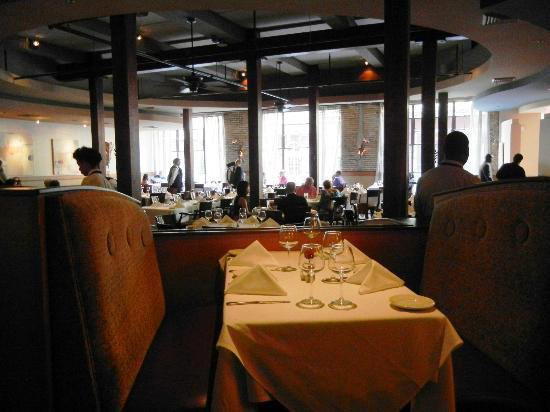
Middendorf's sits on US-51 where the road cuts through the Manchac wetlands, giving it the character of a working Louisiana roadhouse rather than a destination restaurant engineered for ambience. The setting is functional and unpretentious, with the wetlands framing the approach on both sides. Expect the kind of room where the food does the talking and the surroundings are the draw.
How far is Middendorf's from New Orleans, and is it worth the drive from the city?
Middendorf's at 30160 US-51, Akers, Louisiana 70421 sits roughly 50 miles north of New Orleans along a route that passes through the Manchac wetlands, making it a natural stop rather than a detour. The drive is part of the experience: US-51 through Manchac has its own character, and the restaurant has sustained a following from both New Orleans and Baton Rouge precisely because it offers something not replicated in either city. For anyone tracing the catfish roadhouse tradition in Louisiana, Middendorf's is one of the clearest reference points along that road.
What's the best thing to order at Middendorf's?
Thin-fried catfish is the organizing principle of the menu at Middendorf's, and it is the dish that has defined the restaurant's identity along the Manchac corridor for decades. The preparation reflects a specific Louisiana tradition in which catfish is fried thin enough to produce a consistently crisp result throughout. Ordering anything else at Middendorf's would mean bypassing the reason most people make the drive to Akers in the first place.
Where is Middendorf's located?
Middendorf's is located at 30160 US-51, Akers, LA 70421, Akers.
At-a-Glance Comparison
Comparable venues nearby, for context on price, style, and recognition.
| Venue | Cuisine | Price | Notes |
|---|---|---|---|
| Middendorf'sThis venue — the venue you are viewing | Louisiana Seafood | $20–30 | Not listed |
| Don's Seafood - Metairie | Cajun-Creole Seafood | $20–30 | Metairie |
| Deanie's Seafood | Louisiana Seafood | $30–50 | Bucktown |
| Delacroix | Modern Cajun Seafood Fish Camp | $30–50 | French Quarter |
| Kingfish | Modern Louisiana Seafood | $50–100 | French Quarter |
| Revel Cafe & Bar | American Gastro-Lounge | $20–30 | Mid-City |
Details
- Rustic
- Classic
- Cozy
- Family
- Casual Hangout
- Waterfront
- Historic Building
- Waterfront
- A La Carte
Current opening hours
- Monday
- Closed
- Tuesday
- Closed
- Wednesday
- 10:30 AM–9 PM
- Thursday
- 10:30 AM–9 PM
- Friday
- 10:30 AM–9 PM
- Saturday
- 10:30 AM–9 PM
- Sunday
- 10:30 AM–9 PM
Hours can change for holidays and private events. Last verified .
Casual lakeside seafood spot with rustic charm and family-friendly comfort.