
Menya Shiki belongs to Osaka’s serious everyday ramen circuit rather than its destination-dining script. Its Moriguchi location, Tabelog Ramen OSAKA 100 selection in 2025, and compact format place it in the same conversation as low-price noodle counters that reward planning more than ceremony.
Pearl is the En Primeur Club membership app — saves, bookings, and concierge access live there. Same editors, same standards.
- Address
- Japan, 〒570-0082 Osaka, Moriguchi, Toyohidecho, 2 Chome−1−3 エスポワール豊秀ワン
- Phone
- +81 6-7174-0625
- Website
- facebook.com
 Saves & bookings on Pearl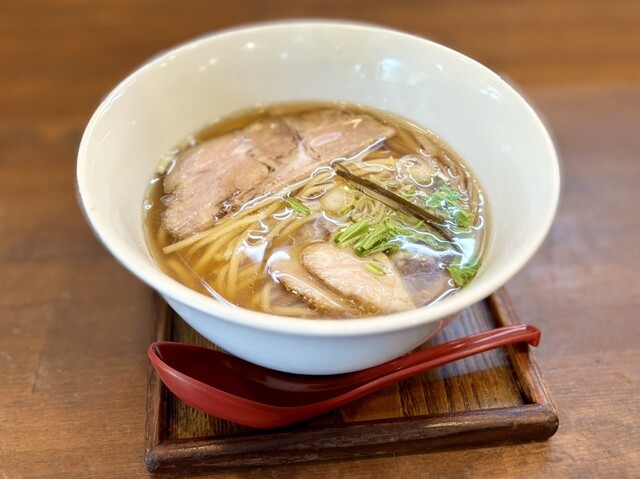
Approaching Moriguchi for ramen changes the tempo. Central Osaka’s food map often centres on Dotonbori, Umeda, Namba, and station-linked dining floors, but the city’s noodle culture also lives in commuter districts where a shop can build a following without theatrical design or a hotel-adjacent address. Menya Shiki sits in that quieter Osaka, where ramen is judged by repeatable craft, pacing, and whether the bowl justifies leaving the usual visitor circuit.
That location matters. Moriguchi is not the shorthand Osaka sold to first-time travellers, which is why a ramen counter here reads differently from a central-city queue. The experience belongs to Kansai’s habit of treating specialist noodle shops as serious meals at everyday scale: quick turnover, focused menus, and a room shaped around the bowl rather than the occasion. The draw is concentration, not luxury.
Moriguchi puts the bowl outside Osaka's obvious dining loop
Osaka’s ramen conversation is broader than tourist itineraries suggest. The city has a deep appetite for casual precision, from pork-bun counters to udon rooms and late-night noodle shops, and stronger addresses do not need tasting-menu grammar to signal intent. Menya Shiki’s inclusion in Tabelog Ramen OSAKA 100 for 2025 places it among shops that have earned attention inside Japan’s user-review dining culture, where consistency and local repeat custom outweigh international gloss.
The category mix also defines the shop’s position. Ramen, tsukemen, abura-soba, and maze-soba are listed together, placing the counter inside the modern noodle-house spectrum rather than a single-style ramen museum. In Osaka, diners move fluidly between soup ramen, dipping noodles, brothless bowls, and udon according to season, appetite, and queue tolerance. The better small shops understand that noodle texture, tare balance, and portion rhythm can define the meal as much as broth style.
Compared with Mensho Yashima, Onomichi Ramen Yamacho, and Mensho Jikon, the distinction is not hierarchy but how visitors should read the outing. Those names sit inside Osaka’s broader ramen field; Menya Shiki asks for a Moriguchi-specific detour. It is closer to everyday specialist culture than occasion dining. For travellers building a food day, that makes it a sharp counterpoint to central Osaka choices such as 551 Horai (551蓬莱), bakery stops like 52CHO-ME BAKERY, or coffee-led breaks at .cafe.
The format belongs to Osaka's compact specialist rooms
Small ramen rooms operate on a different social contract from full-service restaurants. The meal is compressed, the menu language direct, and the reading of a shop often comes from its boundaries: narrow category focus, limited seating, and a rhythm built for diners who know why they came. The restaurant’s 10-seat setup, split between counter seating and three two-person tables, keeps the room in that register. It suits solo dining, small pairs, and families comfortable with a compact noodle-shop format.
The Tabelog score of 3.69 is worth reading locally. On Japanese review platforms, ramen shops with sustained attention often accumulate granular ratings from repeat diners rather than destination-only praise. A score in this range, paired with Tabelog 100 selection, suggests a shop beyond neighbourhood anonymity without becoming a luxury object. That is where Osaka’s noodle culture is strongest: disciplined, affordable, and judged by regulars comparing bowls across train lines.
There is no chef mythology needed here. The useful lens is how the place fits a city that can make a serious meal out of a short stop. Ramen in Osaka competes with takoyaki, kushikatsu, udon, curry, bakeries, and Italian counters for casual dining attention, so a noodle shop outside the central grid must earn its audience through repetition. The Moriguchi address is not a disadvantage; it filters the room toward diners who meant to be there.
For a wider Osaka itinerary, this stop pairs well with a day built across categories rather than one long meal. EP Club’s full Osaka restaurants guide gives the broader city frame, while sleep and evening-drinks planning fits the Osaka hotels guide and Osaka bars guide. The city’s dining depth also sits alongside less obvious verticals, from the Osaka wineries guide to the Osaka experiences guide, which keep the ramen stop from becoming the whole plan.
How to read it against the wider casual-dining map
The value of the restaurant is clearest beside other low-ceremony specialists. Teuchi Udon Beniy and Odoru Udon Takii honten show how Osaka diners treat udon with the seriousness often reserved for ramen, while 99 Pizza Napoletana Gourmet points to the city’s willingness to absorb imported formats into tight, craft-led rooms. a canto (Italian) occupies a different register, but reflects the same broader truth: Osaka rewards specialists who know their lane.
That comparison helps travellers avoid the wrong expectation. This is not a place to stretch into a long lunch or treat as a substitute for kappo, sushi, or a full-course restaurant. It is a focused ramen stop with recognition from a ramen-specific list, useful for diners who want to see how Osaka eats outside the familiar central path. Let the bowl be concise, then continue the day elsewhere rather than forcing the meal to carry an entire itinerary.
For readers mapping Japan through food subcultures, the appeal sits alongside focused addresses beyond Osaka: -Grilled beef Sukiyaki- KAMAKURA TANUKIAN 鎌倉 たぬき庵 in Kamakura for beef sukiyaki, 鮪と炭火焼き うお炭 秋葉原店 in Tokyo for tuna and charcoal grilling.know in Kumamoto, (Shoku) Vietnam in Kawasaki, [Curry Senmon Ten] Maruyama Kyoju. in Sapporo, and [ki:] in Kyoto. The same logic travels overseas too, from Jōdo Saké Bar in Los Angeles to Onigiri Time in Pasadena: narrow formats can say more about eating culture than bigger, louder rooms.
The editorial case is simple. A Tabelog Ramen OSAKA 100 selection, a Moriguchi setting, and a compact noodle-shop structure make this a purposeful Osaka detour for diners who care about the city beyond its entertainment districts. The restaurant is not trying to turn ramen into ceremony. It belongs to the better Osaka tradition: small rooms, specific cravings, and a bowl that explains why the neighbourhood trip was made.
The Minimal Set
Comparable venues by category and price.
| Venue | Cuisine | Price | Notes |
|---|---|---|---|
| Menya ShikiThis venue — the venue you are viewing | Moriguchi, Japanese Ramen | $ | Not listed |
| Odoru Udon Takii honten | Moriguchi, Japanese Udon | $ | Not listed |
| CORE-CORE | Not listed | $ | Esaka, Ramen shop with black shoyu, miso, and white shoyu bowls |
| Nishinakajima Koryumasu | Yodogawa, Japanese Ramen & Tsukemen | $ | Not listed |
| Udon Jojo | Higashinari, Casual Udon Noodle Shop | $ | Not listed |
| Umeda Kamatake Udon | Kita, Osaka Sanuki Udon Shop | $ | Not listed |
Recognition history
Dated appearances from independent guides and award organizations, with the underlying list record or original source where available.
Tabelog 100 #78 · No. 78
Tabelog · Tabelog 100 - Ramen - OSAKA - 2025
Continue exploring
More in Osaka
Restaurants in Osaka
Browse all →




Bars in Osaka
Browse all →




Hotels in Osaka
Browse all →



Wineries in Osaka
Browse all →
At a Glance
- Cozy
- Classic
- Solo
- Casual Hangout
- Family
- Standalone
Current opening hours
- Monday
- Closed
- Tuesday
- Closed
- Wednesday
- 11:30 AM–3 PM, 6–9 PM
- Thursday
- 11:30 AM–3 PM, 6–9 PM
- Friday
- 11:30 AM–3 PM, 6–9 PM
- Saturday
- 11:30 AM–3 PM, 6–9 PM
- Sunday
- 11:30 AM–3 PM, 6–9 PM
Hours can change for holidays and private events. Last verified .
A small, relaxed, counter-oriented ramen shop with a simple, no-frills atmosphere.