
Tabelog 100 #33
Our verdict
Mendokoro Arisa is a small Nishikawaguchi ramen and tsukemen shop with repeated Tabelog Ramen EAST 100 selections from 2017 through 2025. Its appeal sits in the commuter-belt ramen tradition: serious noodles, modest pricing, no reservations, and a 10-seat room that keeps the focus on turnover, broth, and texture rather than ceremony.

Pearl is the En Primeur Club membership app — saves, bookings, and concierge access live there. Same editors, same standards.
- Address
- 1 Chome-8-5 Nishikawaguchi, Kawaguchi, Saitama 332-0021, Japan
- Phone
- +81 48-255-2251
- Hours
- Mon ClosedTue–Wed 11 AM–2:30 PM, 6–9 PMThu 11 AM–3 PMFri 11 AM–2:30 PM, 6–9 PMSat–Sun 11 AM–3 PM
- Website
- twitter.com
- Directions
- Get directions
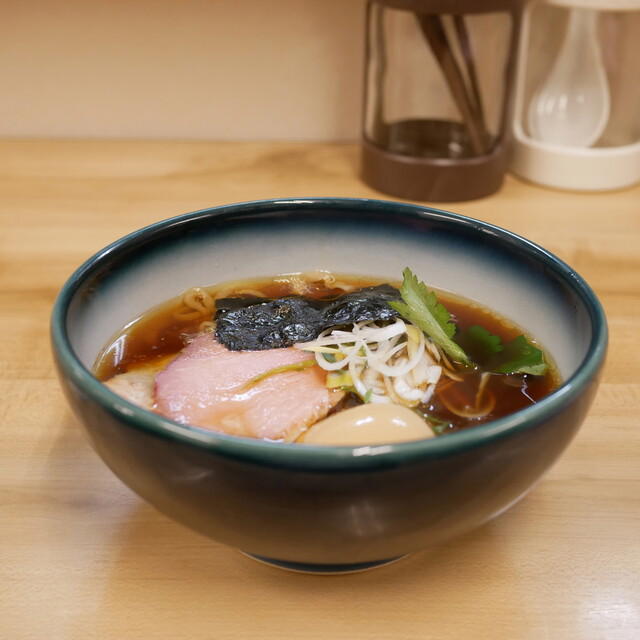
Step out around Kawaguchi and the ramen map changes character. Central Tokyo’s destination counters often come wrapped in scarcity, multilingual reservation chatter, and long-form chef mythology; Kawaguchi’s stronger noodle shops are more direct. The room is modest in spirit, the decision window is short, and the meal is built around the old ramen-shop bargain: a concentrated bowl at a price that leaves the city’s premium dining economy behind.
Mendokoro Arisa belongs to that commuter-line category, but its recognition gives it a sharper editorial point. The shop has Tabelog Hyakumeiten recognition for 2025, and that matters in a region where ramen credibility is usually earned through repeat local use before it becomes a destination signal. The listed score of 3.77 places it in a serious bracket for a casual ramen address, especially outside Tokyo’s better-known noodle corridors.
Ramen and tsukemen in the sub-¥1,000 tier
Japan’s ramen culture is unusually democratic for a cuisine with deep technical range. Broth management, noodle texture, tare balance, and portion timing can all carry the same discipline found in higher-priced formats, yet the tariff often remains closer to everyday lunch than special-occasion dining. That tension is the appeal here: Mendokoro Arisa is listed for ramen and tsukemen, with an average price band of JPY 999 or less, making it a low-cost comparison point against Kawaguchi’s broader casual dining field.
The ingredient-sourcing question in ramen is less about luxury produce than control. A focused ramen shop lives or fails on consistency: the broth must hold across service, noodles need to arrive with the right bite, and dipping noodles require enough concentration to survive cooling and repeated contact. In that sense, the format rewards kitchens that buy and prep narrowly rather than broadly. A short noodle-led operation can concentrate purchasing around soup base, noodles, seasoning, and toppings without the inventory sprawl of an izakaya or full à la carte restaurant.
That narrower model also explains why freshness and prep discipline matter so much in ramen. In Japanese ramen culture, a kitchen’s reputation is often tied to whether the bowl feels controlled from one visit to the next. It is a practical constraint, but also part of the category’s quality logic: the batch, timing, and final assembly matter.
Why Kawaguchi's ramen scene rewards focus
Kawaguchi sits close enough to Tokyo to absorb its dining habits, but far enough from the capital’s hotel-and-concierge circuit to keep many meals local in feeling. Ramen, curry, casual noodle shops, and neighborhood drinking rooms operate as part of daily movement rather than destination theatre. Within that context, a compact ramen shop reads differently from a polished city-center counter. The value is not privacy or performance; it is compression.
That compression has peers in the area. Eikichi sits in Kawaguchi’s accessible noodle-and-casual price conversation, while Noodle & Spice Curry Kyou no Ichiban occupies a similarly inexpensive lane. Menya Eita belongs in the same local comparison set, and Sakaba Watanabe belongs to a different evening economy altogether. Against those local options, Mendokoro Arisa is compelling because the cost remains low while the 2025 recognition record gives it a clear editorial signal.
The comparison also helps explain what this is not. It is not a long dinner arc or a pastry-shop rhythm. It belongs to the part of Kawaguchi dining where specialization is the argument. The choice is not between luxury and thrift; it is between formats, and ramen is one of Japan’s clearest examples of a modest format carrying serious technique.
A small-room meal with award weight, not ceremony
The practical rhythm follows the format. This is best understood as a focused ramen stop rather than a linger-over-courses restaurant. Expectations should be built around the bowl, the price band, and the casual category: Mendokoro Arisa is listed for ramen and tsukemen, with both lunch and dinner budgets shown at JPY 999 or less.
For travelers building a Kawaguchi day, the better reading is to treat this as a precise ramen stop rather than a full evening anchor. The Tabelog Hyakumeiten recognition for 2025 is the trust signal available here, reinforced by the listed 3.77 score. Plenty of noodle shops can generate local affection; fewer carry that combination of low pricing, clear category focus, and third-party recognition.
Readers mapping Kawaguchi beyond a single bowl can use our full Kawaguchi restaurants guide for the city’s dining spread, with adjacent planning across other Kawaguchi food, drink, hotel, and experience references. For broader Japan and Japanese-food context, the useful comparison is generic rather than name-driven: single-format casual dining can travel through ramen shops, curry counters, drinking rooms, and other everyday formats without needing the architecture of fine dining.
The editorial case is simple: go for the disciplined ramen-shop format, the 2025 Tabelog recognition, and the price-to-focus ratio. Kawaguchi does not need to imitate Tokyo to make a serious noodle argument; here, the argument is made through ramen and tsukemen, at everyday pricing, with enough recognition to justify the detour.
Frequently asked questions
Is Mendokoro Arisa a family-friendly restaurant?
Mendokoro Arisa is a casual ramen and tsukemen shop in Kawaguchi, with pricing listed at JPY 999 or less. The Tabelog Hyakumeiten recognition in 2025 also signals a serious ramen shop rather than a general family-oriented casual diner.
Is Mendokoro Arisa better for a quiet night or a lively one?
It suits a focused meal better. The setup is best approached as a ramen and tsukemen stop in Kawaguchi, where the pace is built around the bowl rather than a long social evening.
What's the price range at Mendokoro Arisa?
Pricing at Mendokoro Arisa is listed as - JPY 999 - JPY 999.
What is Mendokoro Arisa known for?
Mendokoro Arisa is known for ramen and tsukemen in Kawaguchi, with Tabelog Hyakumeiten recognition in 2025 and a listed score of 3.77.
Comparison Snapshot
Comparable venues by cuisine and price in the same metro.
| Venue | Cuisine | Price | Awards | Notes |
|---|---|---|---|---|
| Mendokoro ArisaThis venue — the venue you are viewing | Ramen | Not listed | Tabelog 100 #33 | Not listed |
| Menya Eita | Japanese Tsukemen / Ramen | $1–10 | Tabelog 100 #85 | Shiba |
| Eikichi | Spicy Tantanmen & Chinese Noodles | $10–20 | Tabelog 100 #60 | Nishi-Kawaguchi |
| Noodle & Spice Curry Kyou no Ichiban | Ramen and Japanese curry | Not listed | Tabelog 100 #22 | Kawaguchi |
| Chandoiseau | French Pâtisserie & Chocolaterie | Not listed | Tabelog 100 #8 | Kawaguchi |
| 樋山 | Japanese Beef Bowl | $1–10 | Not listed | Kawaguchi |
Recognition history
Dated appearances from independent guides and award organizations, with the underlying list record or original source where available.
Tabelog 100 #33 · No. 33
Tabelog · Tabelog 100 - Ramen - EAST - 2025
Continue exploring
More in Kawaguchi
Restaurants in Kawaguchi
Browse all →



Bars in Kawaguchi
Browse all →



Details
- Cozy
- Lively
- Solo
- Casual Hangout
- Family
- After Work
- Chefs Counter
- Standalone
- A La Carte
- Counter Dining
Current opening hours
- Monday
- Closed
- Tuesday
- 11 AM–2:30 PM, 6–9 PM
- Wednesday
- 11 AM–2:30 PM, 6–9 PM
- Thursday
- 11 AM–3 PM
- Friday
- 11 AM–2:30 PM, 6–9 PM
- Saturday
- 11 AM–3 PM
- Sunday
- 11 AM–3 PM
Hours can change for holidays and private events. Last verified .
Casual, compact ramen shop with counter and table seating, a bustling but relaxed atmosphere typical of popular local ramen-ya, welcoming to solo diners and families alike.