
Tabelog 100 #48
Our verdict
Menbo Showa Tei belongs to Aichi’s serious ramen circuit rather than Tokoname’s airport-adjacent convenience dining. Its draw is ingredient-led seafood ramen, built around natural dashi, with abura-soba, maze-soba, and dumplings keeping the format broader than a single-bowl stop. Tabelog 100 Ramen AICHI 2025 selection gives it a clear credential in a region where casual prices can still carry specialist ambition.

Pearl is the En Primeur Club membership app, where members save venues, book tables and use the concierge.
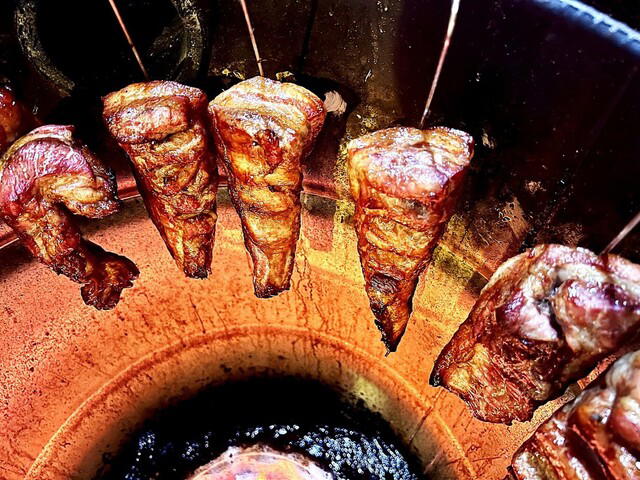
The menu
What to order
- Zuwai crab mabushi noodles
- Ago shoyu ramen
- Shio gyokai ramen
Approach Tokoname and the rhythm changes from transit-city speed to a quieter local pace: low buildings, local roads, and the kind of ramen shop where the bowl matters more than the façade. Menbo Showa Tei fits that setting. The appeal is not spectacle, but concentration: a ramen specialist whose recognised categories include ramen, abura-soba, maze-soba, and dumplings.
Aichi’s ramen culture rewards precision in focused rooms. Nagoya pulls much of the prefecture’s attention, but the stronger regional story is broader: small shops with narrow formats, accessible prices, and enough technical variation to make a simple bowl a serious detour. Tokoname adds its own context. The city is better known for movement through the region than for dense dining districts, which makes a recognised ramen stop here more interesting than another urban queue.
Ramen gives this Tokoname shop its point of view
The category signal is direct: Menbo Showa Tei is listed for ramen, abura-soba, maze-soba, and dumplings. That matters because ramen in Japan often splits into recognizable camps, from broth-led bowls to brothless styles where noodles, seasoning, and toppings carry the structure. A focused ramen approach asks for clarity. The bowl has to make its case without relying on luxury theatre.
Menbo Showa Tei’s category spread also says something about how regional ramen shops now compete. Ramen remains the headline, but abura-soba and maze-soba give diners brothless options, while dumplings keep the meal in familiar neighborhood territory. That combination is common in casual ramen culture, yet the recognition here places the shop in a more selective bracket: it has Tabelog Hyakumeiten recognition for 2025, with a listed Tabelog score of 3.58. In an accessible price category, list recognition is a more useful signal than luxury markers.
The pricing tier keeps the experience grounded in everyday ramen rather than destination tasting-menu economics. That is part of the charm of Japan’s ramen hierarchy: technical depth is not always tied to high spend. The sharper comparison in Tokoname is not with fine dining, but with casual specialists such as Hanzou Seimen, whose noodle focus points to the city’s affordable casual culture, and Okura Mochi Tokoname honten, which reflects Tokoname’s sweet-shop and snack tradition. ル クーリュズ sits in a different lane, useful for understanding how Tokoname’s specialist dining map can feel outside ramen and local staples.
A focused room, not a long lunch performance
The format should be read as casual and focused rather than ceremonial. This is not a lingering, multi-course room; it belongs to the Japanese ramen tradition where concentration and a relatively quick meal feel natural. The experience is best approached as a short, purposeful meal rather than a broad social lunch venue.
Location adds another layer. The shop is in Tokoname, which places it within a city where dining often rewards a little planning rather than spontaneous big-city grazing. For travelers passing through the area or building a local itinerary, this is better treated as a considered ramen stop than an effortless add-on between unrelated plans.
The surrounding itinerary matters because Tokoname is not a one-note food city. A ramen stop can sit beside a broader day of local eating in a way that would feel less natural in a larger urban center. Readers building a broader day should use Our full Tokoname restaurants guide for nearby dining, then match the meal with Our full Tokoname hotels guide, Our full Tokoname bars guide, Our full Tokoname wineries guide, and Our full Tokoname experiences guide rather than treating the bowl as the only reason to cross town.
Where it sits in Japan's casual-specialist dining map
Japan’s strongest casual restaurants often work by subtraction: fewer distractions, limited ceremony, clear category discipline. Menbo Showa Tei belongs to that logic. The 2025 Tabelog Hyakumeiten recognition gives it a prefectural credential, but the more useful reading is practical: this is a specialist ramen shop where category focus carries the editorial weight.
For travelers comparing casual Japanese formats across cities, the distinction is useful. Across Japan, tightly defined casual formats can range from noodle-focused shops to rice shops, curry specialists, grilled-food rooms, and other focused everyday categories. The lesson is the same: Japanese casual food gains authority when the format is specific, the pricing remains accessible, and the venue knows exactly what it is trying to do.
The editorial case for Menbo Showa Tei is strongest for diners who care about ramen focus and category clarity more than décor or ceremony. In Tokoname, that makes it a serious ramen stop with a clear casual-specialist identity, a JPY 1,000 - JPY 1,999 price band, and enough third-party recognition to separate it from a routine roadside bowl.
Frequently asked questions
Would Menbo Showa Tei be comfortable with kids?
Menbo Showa Tei is best approached as a short, focused ramen meal in Tokoname rather than a long family lunch.
How would you describe the vibe at Menbo Showa Tei?
It is a casual ramen specialist in Tokoname, with categories listed as ramen, abura-soba, maze-soba, and dumplings. The 2025 Tabelog Hyakumeiten recognition points to a place built around category discipline rather than theatrics.
How much does it cost to eat at Menbo Showa Tei?
Pricing at Menbo Showa Tei is listed as JPY 1,000 - JPY 1,999.
Where is Menbo Showa Tei located?
Tokoname.
Side-by-Side Snapshot
Comparable venues by cuisine and price in the same metro.
| Venue | Cuisine | Price | Awards | Notes |
|---|---|---|---|---|
| Menbo Showa TeiThis venue (the venue you are viewing) | Seafood-focused Japanese Ramen | $10–20 | Tabelog 100 #48 | Not listed |
| Okura Mochi Tokoname honten | Traditional Japanese wagashi & kakigori cafe | $10–20 | Tabelog 100 #82 | Not listed |
| ル クーリュズ | Chita Peninsula French | $100–150 | Tabelog 100 #6 | Tokoname |
| Hanzou Seimen | Modern Japanese ramen & tsukemen | $10–20 | Tabelog 100 #43 | Chubu Centrair International Airport |
| Rankan | Traditional Japanese Kissaten Coffee House | $10–20 | Not listed | Dazaifu |
| 麺屋 菜々兵衛 | Ramen | $10–20 | Tabelog 100 #82 | Shiroishi-ku |
Recognition history
Dated appearances from independent guides and award organizations, with the underlying list record or original source where available.
Tabelog 100 #48 · No. 48
Tabelog · Tabelog 100 - Ramen - AICHI - 2025
Continue exploring
More in Tokoname
Restaurants in Tokoname
All restaurants in Tokoname →



Details
- Cozy
- Classic
- Intimate
- Solo
- Casual Hangout
- Family
- After Work
- Standalone
- Local Sourcing
- Sustainable Seafood
- A La Carte
- Counter Dining
- Pescatarian Friendly
Current opening hours
- Monday
- Closed
- Tuesday
- Closed
- Wednesday
- 11:30 AM–2 PM
- Thursday
- 11:30 AM–2 PM
- Friday
- 11:30 AM–2 PM, 6–8:30 PM
- Saturday
- 10:30 AM–2 PM, 6–8:30 PM
- Sunday
- 10:30 AM–2 PM
Hours can change for holidays and private events. Hours as of .
Small, counter-focused ramen shop with an unpretentious, classic atmosphere, likely relaxed but busy at peak lunch hours, emphasizing the craftsmanship of the bowls over decor.