
Men Fujisaki belongs to Tokyo’s new ramen conversation: compact, counter-led, and serious enough to earn Tabelog Ramen TOKYO “Tabelog 100” selection in 2024 and 2025. In Kameido, it adds critical weight to an east-side dining district better known for everyday regulars than luxury dining rituals.
Pearl is the En Primeur Club membership app — saves, bookings, and concierge access live there. Same editors, same standards.
- Address
- 東京都江東区亀戸2-8-11 アドリーム亀戸 1F
- Website
- tabelog.com
 Saves & bookings on Pearl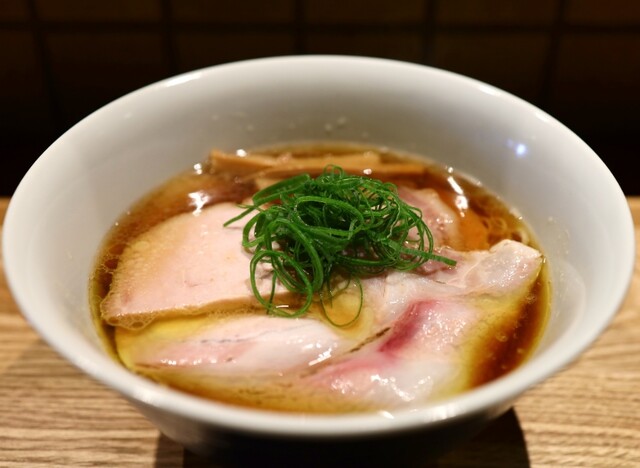
Approaching a serious Tokyo ramen counter is rarely theatrical. The signal is usually smaller: a short frontage, a line that forms with purpose, a ticket-machine rhythm, the quiet compression of diners turning over seats without wasting motion. Kameido sharpens that effect. This part of eastern Tokyo has none of the polished hotel-dining choreography of Marunouchi or Ginza; its food culture is more local, more repetitive, and often more revealing. Ramen fits that setting because it rewards concentration over ceremony.
Men Fujisaki sits inside that shift. Tokyo ramen has spent the past decade moving away from sheer volume and late-night stamina toward tighter, chef-led rooms where broth, noodle texture, seasoning balance, and service tempo carry the critical argument. The counter format matters here. Ten counter seats put the meal in the same visual field as preparation, and that scale changes the expectation: this is not a sprawling station-adjacent refuelling stop, but a small-format ramen shop competing in a city where a difference of a few millimetres in noodle thickness or a few seconds in boiling time can define reputation.
Kameido's ramen seriousness has moved beyond neighbourhood convenience
Kameido has long worked as an eating district for locals rather than a trophy map for visitors. The comparison set tells the story: Kameido Gyoza Honten anchors the area’s no-frills appetite, while Sumida Coffee and Coffee Dojo Samurai point to a slower café culture nearby. Shodai Yoshida operates in a higher spend band, and Mesebaba brings Italian dining into the same east-side orbit. Within that mix, ramen is not background food; it is part of the neighbourhood’s daily grammar, priced and paced for repeat use but judged with Tokyo’s intense specialist standards.
The important evolution is that ramen shops in districts like Kameido no longer need a central Tokyo postcode to enter the serious conversation. Selection for Tabelog Ramen TOKYO “Tabelog 100” in both 2024 and 2025 places Men Fujisaki in a curated group that matters to ramen obsessives precisely because Tokyo’s field is so crowded. The distinction is not a luxury signal in the European fine-dining sense. It is a specialist recognition inside a category where diners compare broth clarity, tare control, noodle structure, toppings, and queue discipline with forensic attention.
That recognition also says something about how Tokyo diners now read ramen value. A meal can remain in the everyday price tier while carrying a level of scrutiny closer to fine dining. The bargain is not cheapness alone; it is compression. A counter seat, a single bowl, a short service window, and a narrow margin for error create a format where technical ambition has to land quickly. In that sense, the modern ramen counter is one of Tokyo’s leanest critical stages.
The counter format makes precision visible
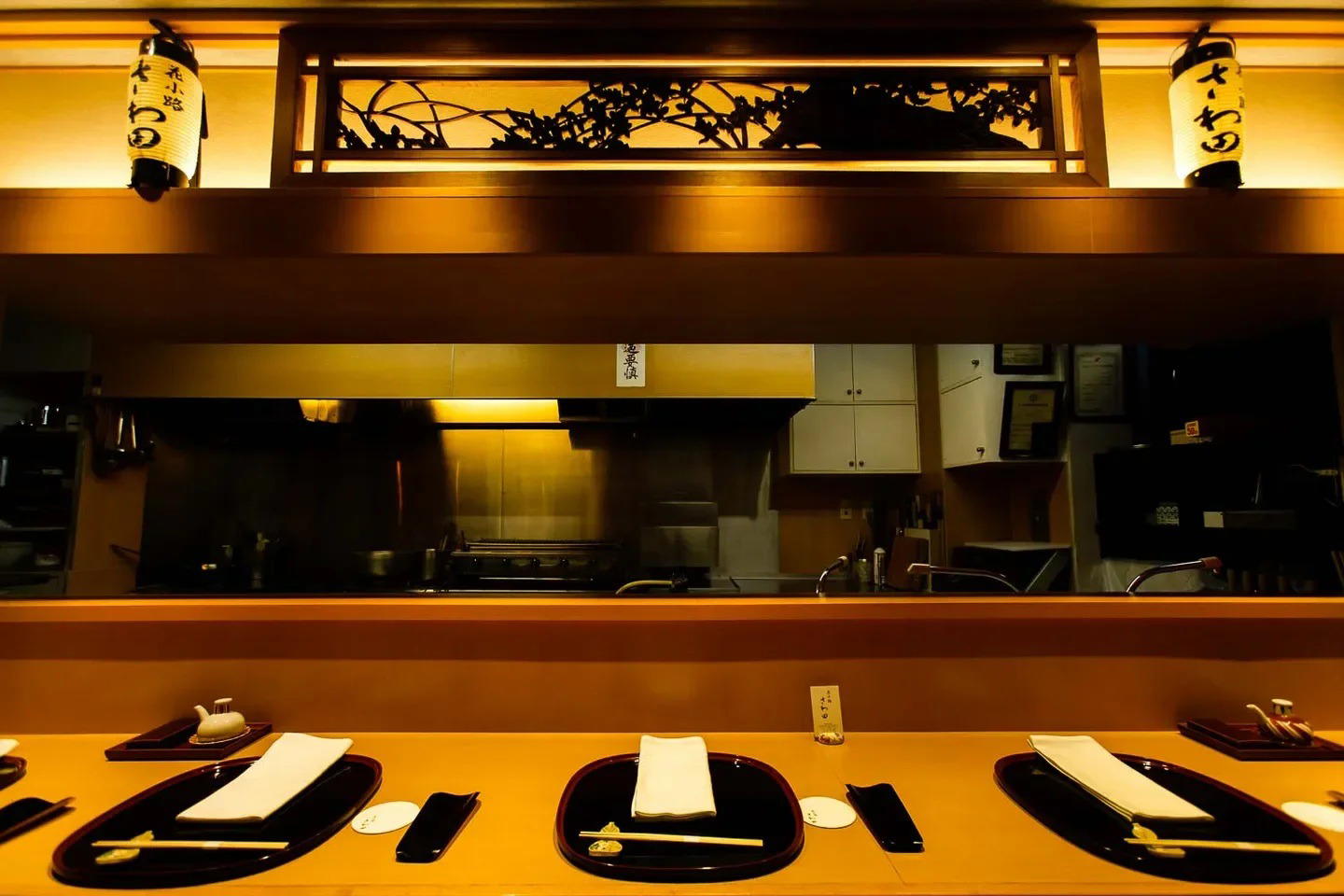
Tokyo’s strongest ramen rooms tend to make their argument through constraint. Small seating counts restrict the pace. Non-smoking rooms remove one old izakaya-era distraction. No private rooms means the social contract is public and efficient: arrive, eat, clear the seat. Men Fujisaki’s all-counter setup fits that code, and the solo-dining friendliness attached to the venue is not incidental. Ramen remains one of Tokyo’s great solo formats because it asks little from the diner except attention.
Family friendliness adds a different note. Many serious ramen counters are functionally adult spaces, not because children are forbidden, but because cramped seating and rapid turnover discourage lingering. A venue marked for children, strollers, and a kids’ menu broadens the usual ramen-counter image without turning the room into a casual chain proposition. That combination is rare enough to matter in planning: serious ramen can be compatible with a mixed-age meal when the format is clear and the expectations are understood.
There is also a practical old-Tokyo logic to cash-only dining and limited seating, even as the city around it becomes more digital and international. Ramen shops often keep overhead and service friction low, which helps preserve the category’s directness. For visitors used to booking apps and card-first dining, that can feel abrupt. For Tokyo regulars, it is part of the grammar: the fewer moving parts between order and bowl, the more pressure sits on the food itself.
Where it fits in a Tokyo eating itinerary
The restaurant is not the natural choice for a long, wine-led evening or a celebratory room. It makes more sense as a precision stop in an east-side day: Kameido for ramen, then a broader sweep through Tokyo’s smaller neighbourhood eating circuits. Readers building a wider map can pair this kind of counter with other city categories in Our full Tokyo restaurants guide, then separate dining from sleep, drinking, and cultural planning through Our full Tokyo hotels guide, Our full Tokyo bars guide, Our full Tokyo wineries guide, and Our full Tokyo experiences guide.
For contrast within Tokyo, the city’s range runs from casual visual concepts such as 2D Cafe to curry specificity at 3 Chome no Curry Ya San, yakitori focus at 124. KAGURAZAKA (Yakitori), casual seafood-and-grill formats such as. 鮪と炭火焼き うお炭 秋葉原店, and Shinjuku dining at 12/10 Shinjuku ten. That spread is the point: Tokyo’s food culture is not a single hierarchy but a set of specialist lanes, each with its own expectations.
Outside the city, the same planning logic applies across Japan and beyond. A Tokyo ramen stop can sit beside regional meals such as -Grilled beef Sukiyaki- KAMAKURA TANUKIAN 鎌倉 たぬき庵 in Kamakura.cafe in Osaka.know in Kumamoto, (Shoku) Vietnam in Kawasaki, [Curry Senmon Ten] Maruyama Kyoju. in Sapporo, and [ki:] in Kyoto. For Japanese food culture abroad, Jōdo Saké Bar in Los Angeles and Onigiri Time in Pasadena show how specific formats travel while changing their audience. The restaurant’s role is narrower and stronger: a compact Kameido ramen counter whose recent recognition reflects how much authority Tokyo now gives to small rooms with disciplined execution.
Cuisine and Recognition
Comparable venues at a glance for context.
| Venue | Cuisine | Price | Notes |
|---|---|---|---|
| Men FujisakiThis venue — the venue you are viewing | Modern Tokyo Ramen | $ | Not listed |
| Hokusai Sabo | Japanese sweets café & kakigori | $ | Sumida |
| Ten mame | Japanese Traditional Sweets | $ | Chūō |
| Chuka Soba Nishino | Tokyo ramen (chuka soba) counter | $ | Bunkyō |
| Kikumi Senbei Sohonten | Japanese senbei shop | $ | Bunkyō |
| Maihama | Japanese Izakaya | $ | Minato |
Recognition history
Dated appearances from independent guides and award organizations, with the underlying list record or original source where available.
Tabelog 100 #76 · No. 76
Tabelog · Tabelog 100 - Ramen - TOKYO - 2025







At a Glance
- Cozy
- Solo
- Family
- Casual Hangout
- After Work
- Late Night
- Chefs Counter
- Standalone
Small, counter‑only ramen shop with a relaxed, no‑frills atmosphere focused on solo and family diners, creating a cozy but lively feel around the open counter.