
Tabelog 100 #100
Our verdict
Meiyau belongs to Tokyo’s compact, lunch-driven Thai dining tier, where speed, consistency, and neighborhood loyalty matter as much as formal ceremony. Its Tabelog 100 selections for Asian and ethnic cuisine in Tokyo in 2023 and 2024 give it a clear signal beyond Shinanomachi, while the room keeps the appeal grounded and casual.

Pearl is the En Primeur Club membership app, where members save venues, book tables and use the concierge.
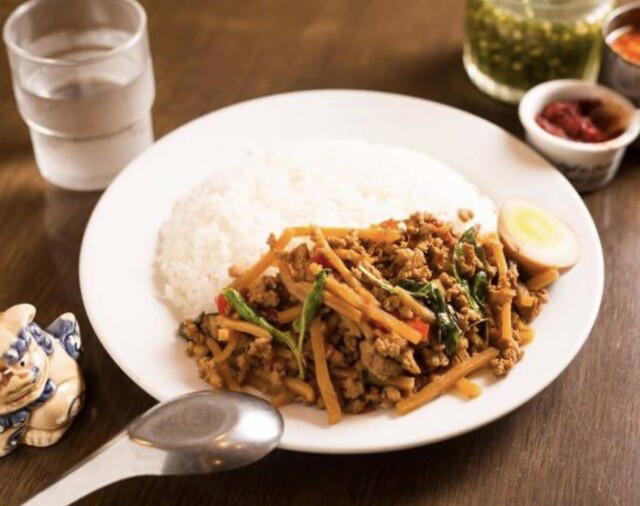
Tokyo is not only a city of destination dining rooms; it is also a city where everyday meals can carry serious local weight. The surrounding rhythm is practical rather than theatrical: station traffic, office lunches, and regulars moving through compact rooms built for repeat use. That setting matters. Tokyo’s Thai restaurants often split between nightlife-friendly rooms built for sharing and tighter daytime operations built around regulars, quick turnover, and a narrow sense of purpose. Meiyau sits in the second camp, where modest scale and a focused service rhythm shape the experience before any menu category does.
The appeal is calibration, not spectacle. Tokyo has long treated Southeast Asian cooking seriously, in specialist areas and workday districts where curry, noodle, and rice formats enter the city’s lunch grammar. In that context, a Thai restaurant selected for Tabelog 100 Asian and ethnic cuisine in Tokyo in 2024 is not being rewarded for novelty alone. It is recognized within a crowded category where reliability, repeat custom, and clear identity matter more than décor or chef mythology.
Thai cooking in Tokyo's workday rhythm
Tokyo’s premium dining reputation is often told through formal counters, traditional rooms, and tasting menus, but the city’s more revealing food culture appears at lunch. Offices, schools, and local routines create a demanding market: food must be fast enough for a break, disciplined enough for repeat visits, and priced for frequency rather than occasion-only dining. Thai restaurants that succeed compress heat, sourness, sweetness, herbs, and rice-based comfort into a format that absorbs regular traffic without losing definition.
Meiyau’s Tabelog 100 placement puts it in a narrower editorial frame than a standard neighborhood Thai address. The list is category-specific, focused on Asian and ethnic cuisine in Tokyo, and the restaurant’s 2024 recognition helps explain why it draws attention within overlapping lunch and casual-dining conversations. Curry in Tokyo is a full civic obsession, with Japanese curry shops, South Asian kitchens, spice-curry specialists, and Southeast Asian interpretations competing for lunch loyalty. A Thai address entering that recognition stream signals a kitchen whose identity is legible beyond simple cuisine labels.
That is the more useful comparison than prestige dining. Haramasa plays in a different register, with ceremony and seasonality leading the experience. Shinrakuki answers another set of cravings. BANDARA LANKA belongs to a separate specialist conversation. Meiyau fits Tokyo’s specialist casual tier: restaurants that matter because they become repeatable, not because they ask for a whole evening.
A small room changes the service contract
The team dynamic here is not the choreographed hierarchy of a grand dining room. It is a compact relay between kitchen, counter, and floor. In a small-format restaurant, timing is visible: orders must move cleanly, tables must turn without making the room feel rushed, and regulars add a second rhythm beside first-time diners. In Tokyo, these operations often reveal more about hospitality than formal service language does. The exchange is compact, practical, and judged by whether the meal lands consistently during the busiest part of the day.
That format also changes how diners should read the room. Casual, focused restaurants in Tokyo are usually best approached with practical expectations rather than occasion-dining assumptions. The point is not to linger over a long sequence or read the meal as a performance. It is to understand how a specialist kitchen meets the needs of diners who want clarity, speed, and enough character to make the address worth remembering.
The editorial value lies in that clarity. Tokyo visitors often over-plan for ceremony and under-plan for lunch, missing places that show how the city eats between appointments. Meiyau answers a different question from tasting-menu temples: where does recognition meet daily usefulness? The Tabelog score of 3.52 is not the story alone, but with a 2024 category selection it places the restaurant inside a credible local consensus. In a city with thousands of small restaurants, that combination matters.
How to place it in a Tokyo itinerary
Meiyau makes sense for travelers already moving through Tokyo rather than building a cross-city dinner plan around a single room. It can work as a practical lunch stop before an afternoon transfer, cultural visit, shopping route, or other city plan. Treat it as a daytime specialist rather than forcing it into a night-out template.
For broader planning, pair this kind of meal with the city’s other compact-format strengths. Tokyo rewards diners who alternate high-structure reservations with low-friction specialist stops. A traveler comparing casual curry and spice-led addresses can look to other Tokyo dining rooms without needing every meal to be formal. District-focused routing, visual café culture, grilled formats, and counter-led restaurants all point to another side of the city’s everyday dining discipline.
Readers extending the trip beyond Tokyo can use the same lens elsewhere in Japan: category focus over broad claims. Across Japanese cities, tightly defined formats often matter more than large dining-room ambition, especially when a restaurant becomes part of local routine. Even outside Japan, that logic holds for focused Japanese-adjacent addresses where a narrow format, clear identity, and repeatable usefulness do more work than spectacle.
Use Our full Tokyo restaurants guide to place Meiyau among the city’s wider dining options, then cross-check the rest of the trip through Our full Tokyo hotels guide, Our full Tokyo bars guide, Our full Tokyo wineries guide, and Our full Tokyo experiences guide. Meiyau does not replace Tokyo’s formal dining rituals. It fills the sharper, often more useful slot: a recognized Thai specialist in Tokyo where lunch carries the weight.
City Peers
Comparable venues to calibrate price, style, and recognition.
| Venue | Cuisine | Price | Awards | Notes |
|---|---|---|---|---|
| MeiyauThis venue (the venue you are viewing) | Thai curry house | Not listed | Tabelog 100 #100 | Not listed |
| BANDARA LANKA | Authentic Sri Lankan Cuisine & Ceylon Tea | $30–50 | Tabelog 100 #57 | JPY 4,000 - JPY 4,999 JPY 1,000 - JPY 1,999 |
| 懐石料亭 花がすみ | Traditional Japanese Kaiseki | $200–300 | Not listed | Not listed |
| Shinrakuki | Modern Hong Kong Cantonese | $300–500 | Michelin Bib Gourmand | Chinese |
| Haramasa | Modern Kaiseki | $200–300 | Tabelog Bronze #96 | Kaiseki |
Recognition history
Dated appearances from independent guides and award organizations, with the underlying list record or original source where available.
Tabelog 100 #100 · No. 100
Tabelog · Tabelog 100 - Asian cuisine / Ethnic cuisine - TOKYO - 2024
Continue exploring
More in Tokyo
Restaurants in Tokyo
All restaurants in Tokyo →

Bars in Tokyo
All bars in Tokyo →





Details
- Standalone
Current opening hours
- Monday
- 11:30 AM–3:30 PM
- Tuesday
- 11:30 AM–3:30 PM
- Wednesday
- 11:30 AM–3:30 PM
- Thursday
- 11:30 AM–3:30 PM
- Friday
- 11:30 AM–3:30 PM
- Saturday
- 11:30 AM–3:30 PM
- Sunday
- Closed
Hours can change for holidays and private events. Hours as of .